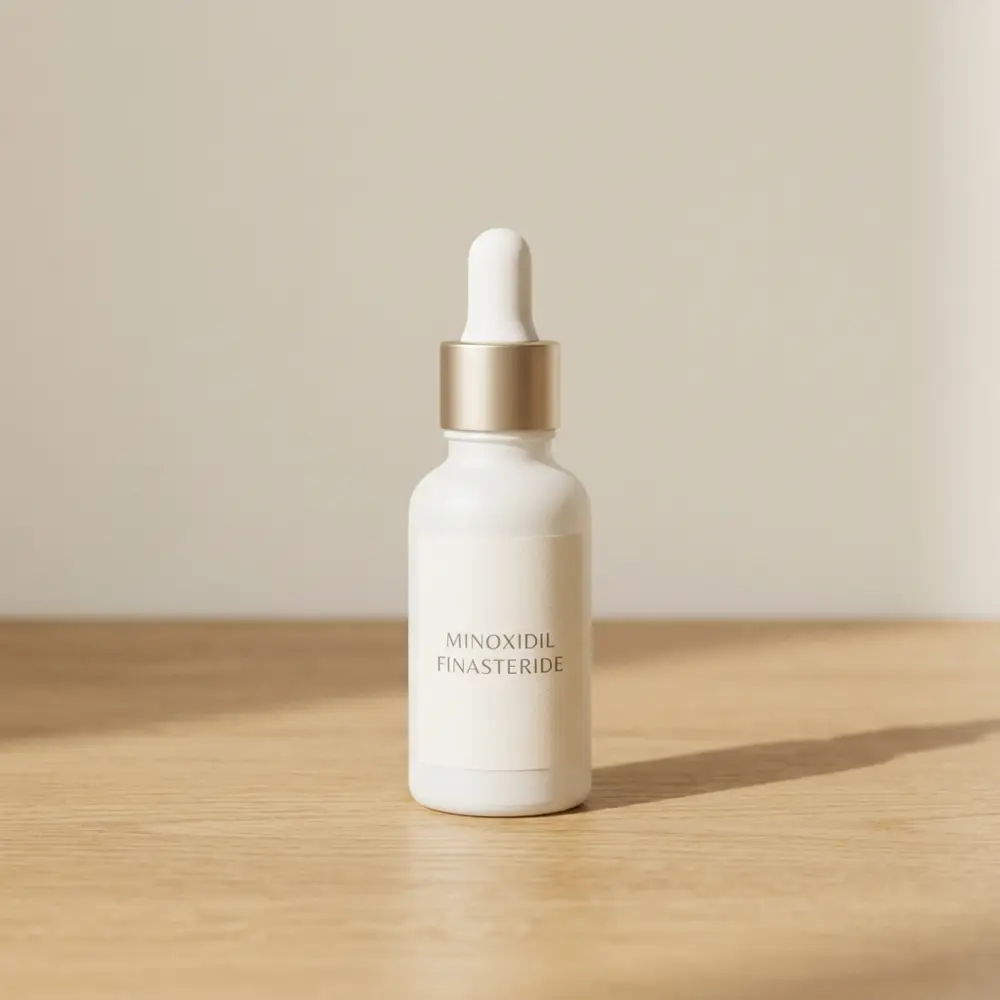
Oral Minoxidil at 2.5mg is now prescribed off-label by progressive dermatologists, with efficacy comparable to 5% topical Minoxidil and far better compliance. Tracking your density response at each dose level turns dose titration from guesswork into a data-backed protocol.
Why Oral Minoxidil Requires Dose Tracking
Topical Minoxidil comes in two fixed concentrations: 2% and 5%. Oral Minoxidil has a much wider dosing range. Dermatologists prescribe anywhere from 0.625mg to 10mg daily, depending on patient tolerance and response.
That wide range means your optimal dose is personal. Without objective density data, neither you nor your doctor can confirm whether 1.25mg is enough or whether 2.5mg provides a meaningful improvement worth the additional side effect risk.
Standard Oral Minoxidil Dose Tiers
| Dose (Daily) | Typical Use Case | Expected Timeline for Density Change |
|---|---|---|
| 0.625mg | Conservative start, female patients | 6-9 months |
| 1.25mg | Standard low dose, most male patients start here | 4-6 months |
| 2.5mg | Most common effective dose for males | 3-6 months |
| 5mg | Higher dose for non-responders | 3-5 months |
| 10mg | Maximum dose, rarely prescribed for hair loss | 2-4 months |
Each dose increase should be paired with a new tracking baseline in myhairline.ai. This creates a clear before-and-after comparison for that specific dose change.
Step 1: Establish Your Pre-Dose Baseline
Before starting oral Minoxidil or changing your dose, take a full set of tracking photos using myhairline.ai. Capture your hairline, temples, vertex, and mid-scalp under consistent lighting.
Record these baseline metrics:
- Current Norwood stage
- Density readings at each tracked zone
- Date and exact dose you are starting or switching to
- Any concurrent treatments (Finasteride, PRP, topical Minoxidil)
Step 2: Set Your Tracking Intervals
For oral Minoxidil dose tracking, photograph the same zones every 2-4 weeks. Monthly is the minimum frequency that captures meaningful density changes over a 6-month dose trial.
| Tracking Frequency | Best For |
|---|---|
| Every 2 weeks | First 3 months of a new dose |
| Monthly | Ongoing maintenance monitoring |
| Quarterly | Long-term stable dose confirmation |
Consistency matters more than frequency. The same camera, the same lighting, and the same angles produce reliable comparison data.
Step 3: Log Side Effects Alongside Density
Oral Minoxidil has systemic effects that topical does not. Track these side effects with timestamps that match your density entries:
- Hypertrichosis: Unwanted hair on the forehead, cheeks, arms, or back. This affects 15-25% of users at 2.5mg and increases with higher doses.
- Cardiovascular effects: Heart rate increases, ankle edema, or lightheadedness. Report these to your prescribing physician immediately.
- Blood pressure changes: Minoxidil was originally a blood pressure medication. Even at low doses, monitor for hypotension symptoms.
Logging side effects alongside density gives your doctor a complete picture. If 2.5mg produces a 20% density increase but causes significant hypertrichosis, dropping to 1.25mg and checking whether it maintains 80% of that gain is a data-driven decision.
Step 4: Compare Dose Response Curves
After 4-6 months at a given dose, myhairline.ai generates a density trend line for each tracked zone. When you switch doses, a new segment begins on that same trend line.
This creates a direct visual comparison: density slope at 1.25mg versus density slope at 2.5mg, on the same scalp, under the same conditions.
Key questions your data will answer:
- Did the higher dose produce faster density gains?
- Did density plateau at the lower dose before the increase?
- Is the difference between doses large enough to justify the side effect trade-off?
Step 5: Share Your Data with Your Prescriber
Export your myhairline.ai report as a PDF and bring it to your next dermatology appointment. The report includes timestamped photos, density measurements, and treatment logs that give your prescriber objective evidence for dose adjustments.
| What Your Doctor Sees | How It Helps |
|---|---|
| Density trend line per zone | Confirms treatment response by region |
| Side effect log with timestamps | Correlates side effects to specific doses |
| Before-and-after comparisons | Visual proof of dose impact |
This data replaces the standard "how do you think it's going?" conversation with measurable outcomes.
Oral vs. Topical: Why Tracking Matters More for Oral
Topical Minoxidil delivers medication directly to the scalp, and response is relatively binary: it works or it does not. Oral Minoxidil has a dose-response curve, meaning there is a meaningful difference between taking too little, the right amount, and too much.
That dose-response relationship is exactly why tracking is essential. Minoxidil in its topical form achieves 40-60% regrowth rates. Oral Minoxidil at the right dose may match or exceed this, but finding that right dose requires data.
Common Mistakes to Avoid
Changing doses too quickly. Give each dose at least 4 months before evaluating. Hair growth cycles are slow, and premature dose changes produce noisy data.
Inconsistent photo conditions. Switching between phone cameras, lighting setups, or angles makes density comparisons unreliable. Camera sensor differences between devices can introduce up to 8% density reading variation.
Ignoring the shedding phase. Oral Minoxidil can cause an initial shed at 2-6 weeks. This is the telogen hair making way for new anagen growth. Do not panic-quit or change doses during this phase.
Your Next Step
Start tracking your oral Minoxidil response today. Upload a photo at myhairline.ai/analyze to get your baseline Norwood stage and density reading before your next dose adjustment.
Medical disclaimer: This article is for educational purposes only and does not constitute medical advice. Oral Minoxidil is a prescription medication with cardiovascular side effects. Always consult a board-certified dermatologist before starting, stopping, or adjusting your dose.