Microneedling for Hair Growth: The Evidence Behind the Trend
How scalp microneedling works for hair loss, the clinical research behind it, and how to use it safely at home or in a clinic.
Why Microneedling Works for Hair
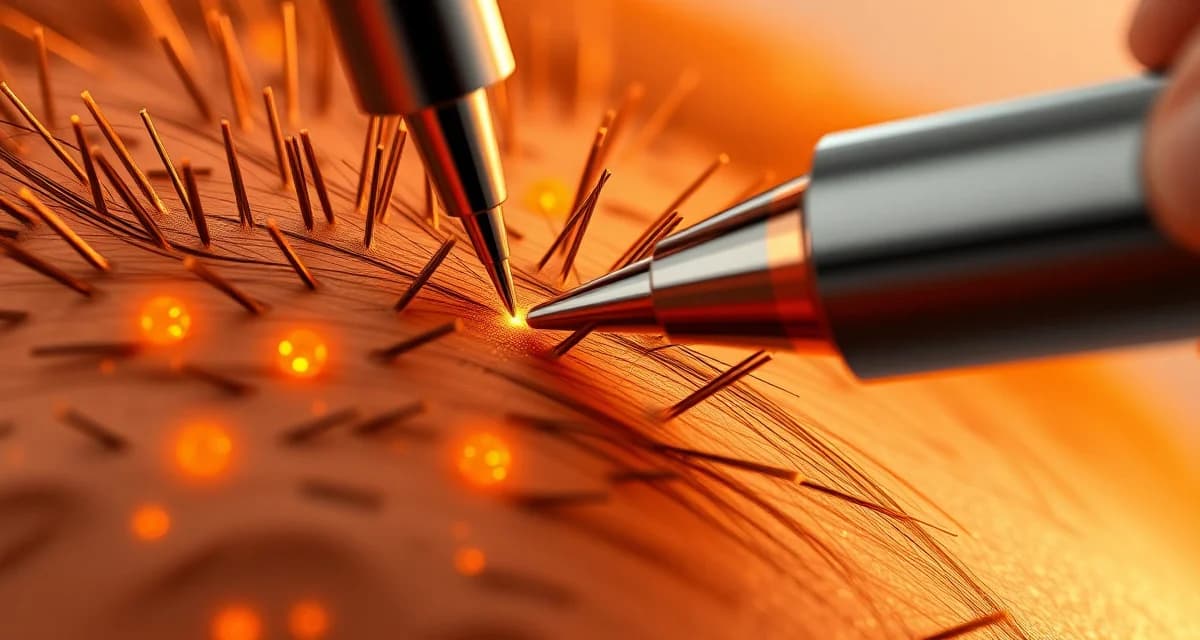
Microneedling creates controlled micro-injuries in the scalp using fine needles. This triggers a wound-healing response that releases growth factors, increases blood flow, and stimulates stem cells in the hair follicle bulge region. The landmark 2013 study by Dhurat and Mathews showed that microneedling combined with minoxidil produced significantly better hair counts than minoxidil alone - and the results weren't even close.
The Clinical Evidence
Multiple clinical trials have confirmed microneedling's effectiveness for hair growth. The most cited study (Dhurat & Mathews, International Journal of Trichology, 2013) found that 12 weeks of weekly 1.5mm microneedling plus minoxidil produced a mean hair count increase of 91.4 versus 22.2 for minoxidil alone. Subsequent studies have largely replicated these findings, though with varying magnitudes.
Optimal Needle Depth
Most clinical studies used a 1.5mm needle depth, which appears to be the sweet spot for scalp treatment. Shallower depths (0.25-0.5mm) may improve topical absorption but don't trigger the same wound-healing response. Deeper depths (2.0mm+) increase pain and bleeding without clear additional benefit. For home use, 1.0-1.5mm is most commonly recommended.
Treatment Protocol
The standard protocol is once weekly, timed with your hair loss treatment regimen. Apply minoxidil after microneedling (some practitioners recommend waiting 12-24 hours to avoid irritation). A typical session covers the entire thinning area with 4-8 passes in different directions. The scalp will be red for 24-48 hours afterward. Avoid sun exposure and harsh products for 2-3 days post-treatment.
Devices: Roller vs. Pen
Dermarollers are the most affordable option ($10-$30) and work well for flat areas of the scalp. Electric microneedling pens ($50-$200) offer adjustable depth and create perpendicular punctures (rollers create angled ones), which may be more effective and less traumatic. Professional-grade devices used in clinics deliver more consistent results but cost more per session.
Safety Considerations
Sterilize your device before each use. Replace dermaroller heads every 3-4 uses as needles dull. Do not microneedle over active skin infections, inflamed areas, or sunburned scalp. If you're on blood thinners, consult your doctor first. Bleeding should be minimal - pinpoint droplets, not running blood. If you experience persistent pain, swelling, or infection signs, stop and see a dermatologist.
Combining with Other Treatments
Microneedling works best as part of a multi-treatment approach. The combination with minoxidil is the most studied. Some clinics combine microneedling with PRP injections, applying PRP to the scalp immediately after needling for enhanced absorption. Microneedling can also be done alongside finasteride (oral), LLLT, and supplements without interactions.