FDA-Approved DHT Blocker for Male Pattern Baldness
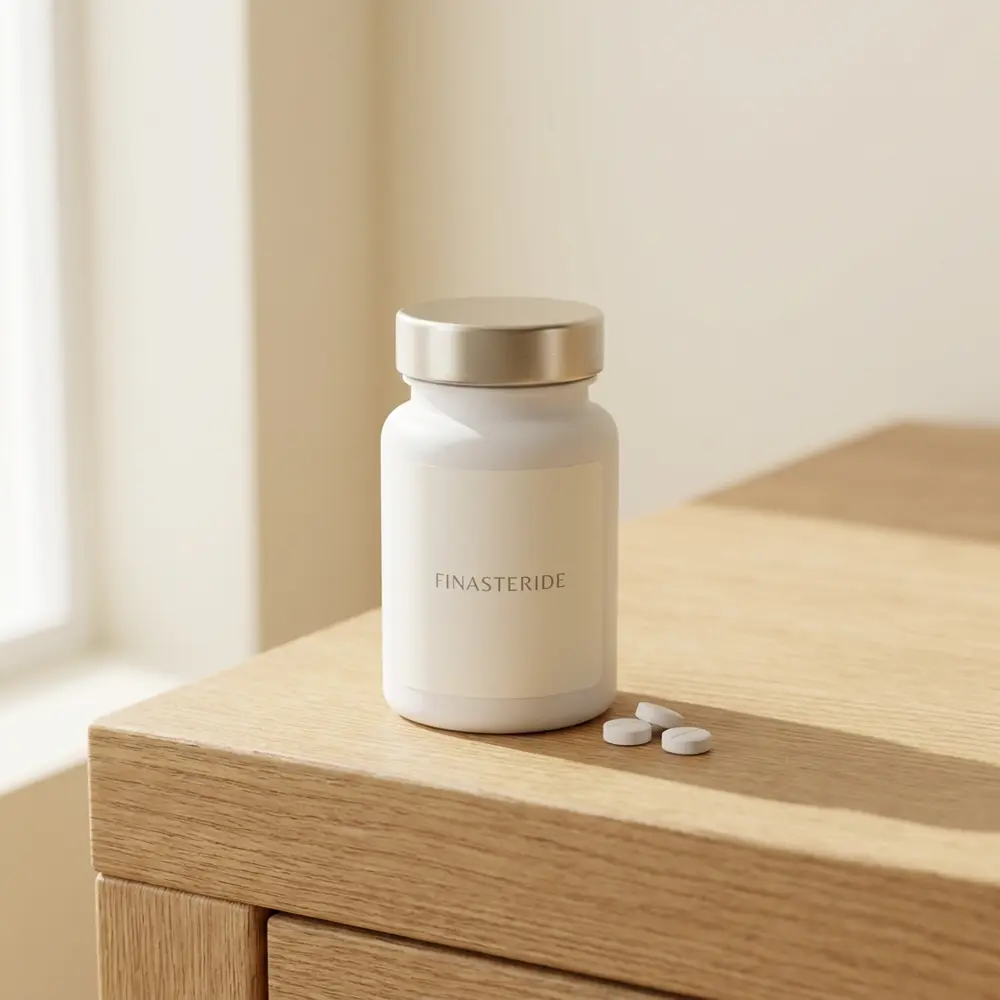
Finasteride (brand name Propecia) is an FDA-approved oral prescription medication for treating male pattern hair loss (androgenetic alopecia). It works by blocking the conversion of testosterone to DHT (dihydrotestosterone), the hormone primarily responsible for hair follicle miniaturization and male pattern baldness.
Clinical studies show finasteride is effective in approximately 85-90% of men for stopping further hair loss, and about 65% of men experience some degree of regrowth. It is most effective for crown and mid-scalp thinning and is typically prescribed as a 1mg daily tablet.
Step 1: Testosterone is converted to DHT by the enzyme 5-alpha reductase
Step 2: DHT binds to androgen receptors in genetically sensitive hair follicles
Step 3: This causes follicle miniaturization — hairs become thinner, shorter, and lighter
Step 4: Eventually, the follicle stops producing visible hair entirely
Finasteride blocks Step 1, reducing DHT levels by ~70% and protecting hair follicles from further damage.
Side effects are uncommon (1-2% of users) and typically reversible upon stopping:
Always consult a healthcare professional before starting finasteride. Not approved for use in women.
Finasteride works by blocking the enzyme 5-alpha reductase, which converts testosterone to dihydrotestosterone (DHT). DHT is the primary hormone responsible for miniaturizing hair follicles in androgenetic alopecia. By reducing DHT levels by approximately 70%, finasteride slows or stops hair follicle miniaturization and can allow some follicles to recover.
Side effects affect approximately 1-2% of users and may include decreased libido, erectile dysfunction, and decreased ejaculate volume. These side effects are typically reversible upon discontinuation. Rare reports of persistent side effects exist but are controversial. Women who are pregnant or may become pregnant should not handle crushed finasteride tablets.
Finasteride typically takes 3-6 months to show visible results in slowing hair loss, and 12-24 months for maximum regrowth. Some men experience initial shedding in the first few months (similar to minoxidil). Consistent daily use is essential — missing doses reduces effectiveness.
Yes, combining finasteride and minoxidil is considered the gold standard non-surgical treatment for male pattern baldness. Finasteride addresses the hormonal cause (DHT) while minoxidil stimulates growth locally. Studies show the combination produces significantly better results than either treatment alone.
Long-term studies spanning 10+ years show finasteride maintains a good safety profile. The medication has been FDA-approved for hair loss since 1997. Side effects, when they occur, are usually mild and reversible. Regular check-ups with your doctor are recommended during treatment.
Get a free AI analysis to see your Norwood stage and recommended treatment approach.
Start Free Analysis