TL;DR: Generic finasteride is the same drug as brand-name Propecia: 1 mg finasteride, same active ingredient, same bioequivalence standard, far lower price. Clinical trials show it slows or stops hair loss in roughly 83 to 90% of men and regrows some hair in about two-thirds. It requires a prescription, takes 6 to 12 months to show results, and carries real sexual side effect risks you should understand before starting.
What exactly is generic finasteride?
Generic finasteride is the off-patent version of Propecia, the brand-name 1 mg finasteride tablet Merck launched in 1997 specifically for male pattern baldness. When Merck's patent expired, other manufacturers got FDA approval to sell the exact same molecule under its generic name. The generic name of finasteride is simply "finasteride." [1]
A lot of people assume generics are somehow weaker or differently formulated. They're not. The FDA requires any generic drug to prove bioequivalence to the brand: same active ingredient, same dose, same route of administration, and blood levels that fall within 80 to 125% of the reference drug's exposure in pharmacokinetic testing. [2] Approved generics almost always land within 3 to 5% of the brand in practice, which is tighter than the batch-to-batch variation in the brand itself.
The only things that differ are the inactive fillers, the pill color, and the price. None of those change how the drug works in your scalp.
For the full pharmacology of how finasteride works before you decide on a form, see our overview of finasteride.
How does generic finasteride actually stop hair loss?
Finasteride blocks type II 5-alpha reductase, the enzyme that converts testosterone into dihydrotestosterone (DHT). DHT is the androgen that miniaturizes hair follicles in genetically susceptible men, progressively shrinking them over years until they stop producing visible hair. [3]
Oral finasteride 1 mg taken daily reduces scalp DHT by roughly 60 to 70% and serum DHT by roughly 65 to 70%, based on the Phase III trials submitted to the FDA. [1] That reduction isn't total, which is why it slows and often stops loss rather than guaranteeing full reversal.
Because the mechanism is entirely hormonal, finasteride works only for androgenetic alopecia (male pattern baldness). It does nothing for telogen effluvium, traction alopecia, alopecia areata, or other non-androgen-driven causes. If you're not sure what's driving your shedding, read about what causes hair loss before spending money on this drug.
Finasteride is also the most studied DHT blocker for hair loss. Saw palmetto, ketoconazole shampoo, and similar products inhibit DHT too, but none have trial data that comes close to finasteride's evidence base.
Does generic finasteride work as well as Propecia?
Yes, by regulatory definition and by clinical logic. The FDA's bioequivalence standard means the generic delivers the same systemic exposure to the same molecule. There are no head-to-head randomized trials comparing generic to brand-name finasteride for hair loss specifically, but that's true of virtually every generic drug: regulators accept bioequivalence data instead of requiring another multi-year efficacy trial.
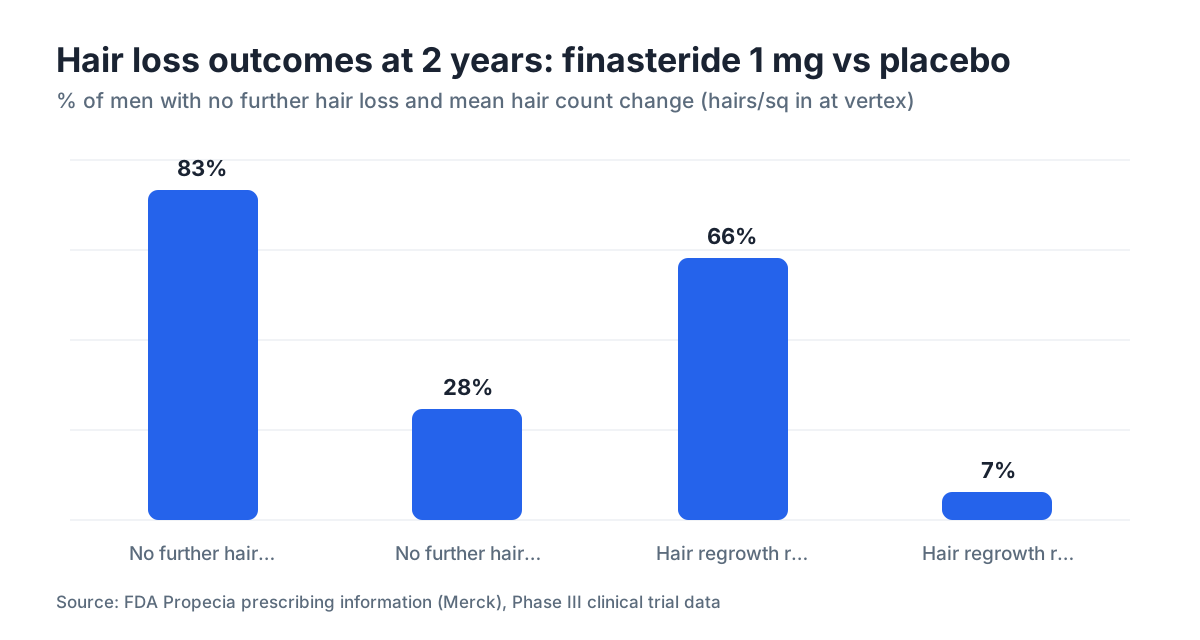
The efficacy numbers from the original Propecia trials are what you're buying into regardless of which manufacturer made your pill. In the 2-year Phase III studies: 83% of men on finasteride 1 mg had no further hair loss vs. 28% on placebo. Hair counts increased by roughly 107 hairs per square inch in the vertex (top of scalp) in finasteride users vs. a loss of 75 hairs in placebo users over 2 years. [1]
The 5-year follow-up data showed that men who stayed on the drug maintained most of that benefit, while men who stopped lost the gains within 9 to 12 months. [1]
So the drug works. Whether the brand name version works "better" is not something the evidence supports.
How much does generic finasteride cost?
This is where the generic version pays off. Brand-name Propecia runs roughly $70 to 100 per month out of pocket in the United States. Generic finasteride typically costs $10 to 30 per month, depending on where you fill it. [4]
GoodRx and similar discount services often bring 30-tablet supplies of generic 1 mg finasteride down to $12 to 20 at major pharmacy chains. Telehealth hair loss platforms often price it at $20 to 30 per month including the prescription service fee, though some charge separately for the consultation.
One practical trick: finasteride 5 mg tablets (the generic of Proscar, originally for enlarged prostate) cost about the same as the 1 mg tablets but give you five times the drug. Some prescribers will write for 5 mg with instructions to cut the pill into quarters or fifths, bringing the effective cost to under $5 per month. This is off-label dosing but pharmacologically sensible. Talk to your prescriber before doing it.
| Source | Approx. monthly cost (USD) |
|---|---|
| Brand Propecia (out of pocket) | $70 to 100 |
| Generic 1 mg (retail pharmacy) | $15 to 30 |
| Generic 1 mg (GoodRx discount) | $10 to 20 |
| Generic 5 mg (quartered, GoodRx) | $4 to 8 |
| Telehealth platform subscription | $20 to 35 |
Most insurance plans don't cover finasteride for hair loss because it's cosmetic. Some cover it for BPH (the 5 mg indication), which is another reason your prescriber might write for 5 mg.
Who should consider taking generic finasteride?
The FDA approved finasteride 1 mg specifically for men with mild to moderate androgenetic alopecia: typically Norwood stages 2 through 5. [1] It's indicated for adult men only. The label explicitly states finasteride is not for use in women or children.
It works best when you start early. Men who still have a fair amount of hair and start finasteride while actively losing it tend to keep most of what they have and often see some regrowth. Men at Norwood 6 or 7 with long-established bald areas are less likely to see meaningful regrowth in those regions because the follicles have miniaturized to near-death. Stopping further loss is still worth something, but expectations need to match the biology.
Women with female pattern hair loss are sometimes prescribed finasteride off-label, particularly post-menopausal women. This is an area where the evidence is thinner and the prescribing decision is more individualized. Finasteride is absolutely contraindicated in women who are or may become pregnant because of the risk of feminization of a male fetus. [1]
If you're also considering topical options, the combination of finasteride and minoxidil has better evidence than either drug alone.
What are the real side effects of generic finasteride?
The side effect profile is the same as Propecia because it's the same drug. The FDA label reports sexual side effects in about 3.8% of men in the 1-year trial: decreased libido (1.8%), erectile dysfunction (1.3%), and ejaculation disorder (1.2%), compared to 2.1% total in the placebo group. [1] These resolved in most men who stopped the drug.
Post-market surveillance has added more nuance. A syndrome called Post-Finasteride Syndrome (PFS) describes persistent sexual, neurological, and psychological side effects in a subset of men even after stopping the drug. The FDA expanded its label warning about persistent sexual dysfunction in 2012. The true prevalence is genuinely uncertain: a 2020 review in the Journal of Urology estimated PFS affected fewer than 1% of users, but patient registries report higher rates, and self-reported registries inflate estimates by design. [5] Nobody has good clean epidemiological data on this. The closest well-designed work found the persistent dysfunction rate was low but non-zero.
Other label-listed side effects include breast tenderness or enlargement (gynecomastia), skin rash, and testicular pain, all rare.
Finasteride also lowers PSA (prostate-specific antigen) by about 50%, which matters if your doctor uses PSA to screen for prostate cancer. Tell any urologist you're on it. [1]
Depression and mood changes have been reported, and the FDA label carries a note about this. If you have a history of depression, have that conversation with your prescriber before starting.
For a broader look at side effect profiles of drugs used alongside finasteride, see minoxidil side effects.
If you're trying to have children, finasteride may reduce sperm count in some men, though this is generally reversible. A prescriber should know if fertility is a near-term goal.
How long does generic finasteride take to work?
Slower than people want. Much slower.
For the first one to three months, many men actually see increased shedding. This is normal: finasteride shifts follicles from a miniaturized cycle into a normal growth cycle, pushing out old club hairs in the process. It's unsettling but not a sign the drug is failing.
By month three to six, shedding usually stabilizes. Most men don't see visible density improvement until months six to twelve. The full benefit takes two years in the clinical data, which is why the Phase III trials ran that long. [1]
If you stop after three or four months because "it isn't working," you've almost certainly quit too early. The 5-year data makes clear that continued use keeps producing incremental gains past year two, though the curve flattens.
Some men on oral minoxidil combined with finasteride report faster visible improvement, likely because minoxidil's growth-phase extension is additive to finasteride's DHT reduction.
Do you need a prescription for generic finasteride?
Yes, in the United States and most countries. Finasteride is a prescription-only drug. [1]
You can get a prescription through a traditional dermatologist or primary care doctor, or through telehealth platforms that specialize in hair loss. Telehealth options have made access much faster: most require a brief async questionnaire and photo submission, and many ship the medication directly to your door. The trade-off is that you're getting less thorough in-person evaluation, though for straightforward male pattern baldness the diagnosis is usually obvious from photos.
A dermatologist remains the better option if your hair loss pattern is atypical, if you have other scalp symptoms, or if you have the health history items (depression, liver disease, fertility plans) that warrant a real conversation before prescribing.
The American Academy of Dermatology lists finasteride among the treatments proven to work for male hereditary hair loss, which gives you a useful benchmark for whether a prescriber's recommendation matches mainstream standard of care. [6]
If you want a data-backed picture of your own hair loss stage before talking to a prescriber, a free AI hair analysis at MyHairline can help you understand what you're looking at and come to that appointment better prepared.
Is generic finasteride safe for long-term use?
The best long-term safety data we have comes from the 5-year Propecia trial and from the Prostate Cancer Prevention Trial (PCPT), which used finasteride 5 mg for up to 7 years. [7] In those populations, serious adverse events were not elevated versus placebo beyond the sexual side effects already discussed.
The PCPT found a 25% relative reduction in prostate cancer diagnosis in finasteride users, but a slightly higher proportion of high-grade tumors in those who did develop cancer. [7] This finding has been debated for years. Current understanding is that finasteride's PSA-lowering effect may have caused detection bias: lower PSA meant fewer biopsies in early-cancer patients, leaving only higher-grade tumors detected. The FDA and most urologists do not consider finasteride to increase actual high-grade prostate cancer risk. [8]
Liver toxicity is rarely reported and the drug is generally considered hepatically safe at 1 mg. Standard prescribing does not require routine liver function monitoring.
The honest bottom line: for most men, finasteride at 1 mg/day appears safe for years of use. The unknowns sit around post-finasteride syndrome and the small subset of men who seem to have persistent effects. Anyone who develops sexual side effects should contact their prescriber promptly.
How does generic finasteride compare to other hair loss treatments?
Finasteride attacks the cause of androgenetic alopecia: it reduces DHT. Minoxidil (topical or oral) doesn't affect DHT at all; it extends the anagen (growth) phase of the hair cycle through a different mechanism. The two drugs work on different pathways, which is why combining them is additive.
Head-to-head, finasteride generally outperforms topical minoxidil 5% for scalp vertex coverage based on comparative studies, but minoxidil works better at the frontal hairline in some data, and it's approved for women where finasteride is not. [6]
Hair transplants are the only option that actually moves permanent follicles to areas where they've been lost. They don't stop ongoing loss in non-transplanted areas, so most transplant surgeons recommend patients continue finasteride after a procedure. Read more about how these fit together in our hair transplant guide.
Hair loss supplements like biotin, saw palmetto, and various blends are heavily marketed but have minimal clinical evidence at the scale that finasteride does. If finasteride is appropriate for you and you can tolerate it, no supplement comes close on evidence.
| Treatment | Mechanism | Evidence level | Monthly cost (est.) | Regrowth potential |
|---|---|---|---|---|
| Generic finasteride 1 mg | DHT inhibition | Strong (Phase III RCTs) | $10 to 30 | Moderate (vertex) |
| Topical minoxidil 5% | Growth phase extension | Strong | $10 to 20 | Moderate |
| Oral minoxidil | Growth phase extension | Moderate | $20 to 40 | Moderate, high |
| Hair transplant | Follicle relocation | Strong (surgical) | $4,000 to 15,000 (one-time) | High (transplanted zones) |
| Supplements | Mixed | Weak | $20 to 60 | Minimal |
For men with a receding hairline who start early, finasteride plus minoxidil is the most evidence-backed combination available without surgery.
What about topical finasteride, is it a real option?
Topical finasteride is real, and in 2022 the FDA approved a branded spray combining finasteride and minoxidil. Compounded topical finasteride solution has been available for years through compounding pharmacies in concentrations like 0.1% or 0.25%, often mixed with minoxidil in a single solution.
The appeal is lower systemic absorption and, in theory, fewer systemic side effects. A 2020 study in JAMA Dermatology found a topical finasteride solution (0.25% with minoxidil 3%) reduced scalp DHT with much lower systemic exposure than oral finasteride. [9]
Compounded topical finasteride is not FDA-approved as a standalone hair loss treatment. It comes from compounding pharmacies, which means quality and consistency vary by pharmacy. It also costs more than oral generic: typically $40 to 80 per month.
If your main worry is sexual side effects from oral finasteride, topical finasteride is a reasonable thing to raise with a dermatologist. But it isn't a proven equal to oral finasteride yet, and the long-term efficacy data simply doesn't exist at the same scale.
What should you actually do if you're thinking about starting finasteride?
Get a proper diagnosis first. Male pattern baldness is the right indication. Other types of hair loss are not.
If that's confirmed, the evidence is strong enough that I'd say finasteride is genuinely worth considering, especially if you're catching loss early. The risk profile is real but the rate of serious persistent side effects is low. Many prescribers put this in the same risk category as a long-term NSAID: worth taking if the benefit means something to you, not something to fear, but worth monitoring.
Start with the generic. There is no clinical reason to pay for the Propecia brand. Pick a reliable pharmacy, use a GoodRx discount or the telehealth route, and set a realistic expectation: you are looking at 6 to 12 months before you know if it's working, and you need to stay on it indefinitely or the gains reverse.
Check your progress systematically. Take dated photos in consistent lighting every three months. Subjective impressions at the mirror are terrible for tracking slow changes; photos reveal what you'd otherwise miss or misread.
If you're unsure where you stand in your hair loss progression, a free AI scan at MyHairline gives you a baseline analysis before your first dermatology visit.
For men who are also curious about whether lifestyle or supplementation factors are contributing to their loss, the article on does creatine cause hair loss covers the DHT-elevation evidence in detail, since DHT is the exact pathway finasteride targets.
Sources
- FDA, Propecia (finasteride 1 mg) prescribing information (DailyMed)
- FDA, Generic Drug Facts
- NIH National Library of Medicine, StatPearls: Finasteride
- GoodRx, finasteride price comparison
- Irwig MS, Journal of Urology 2020: Post-finasteride syndrome
- American Academy of Dermatology, Hair loss: Diagnosis and treatment
- Thompson IM et al., New England Journal of Medicine 2003: Prostate Cancer Prevention Trial (PCPT)
- FDA, Drug Safety and Availability
- Caserini M et al., JAMA Dermatology 2020: Topical finasteride 0.25% systemic absorption study
- Hu R et al., Journal of the American Academy of Dermatology 2022: Finasteride plus minoxidil combination trial
- FDA, Proscar (finasteride 5 mg) prescribing information (DailyMed)