
TL;DR: Hair loss from GLP-1 drugs like Ozempic and Wegovy is real but almost always temporary. It's driven by telogen effluvium, a stress-triggered shedding response caused by rapid weight loss and caloric restriction, not by the drug molecule itself. Most people see shedding peak around 3 to 5 months and regrow fully within 6 to 12 months without any treatment.
What is GLP-1 hair loss and how common is it?
GLP-1 receptor agonists, the class that includes semaglutide (Ozempic, Wegovy), tirzepatide (Mounjaro, Zepbound), and liraglutide (Saxenda), are the dominant weight-loss drugs of the decade. That scale brings a flood of patients noticing hair thinning 3 to 6 months after they start.
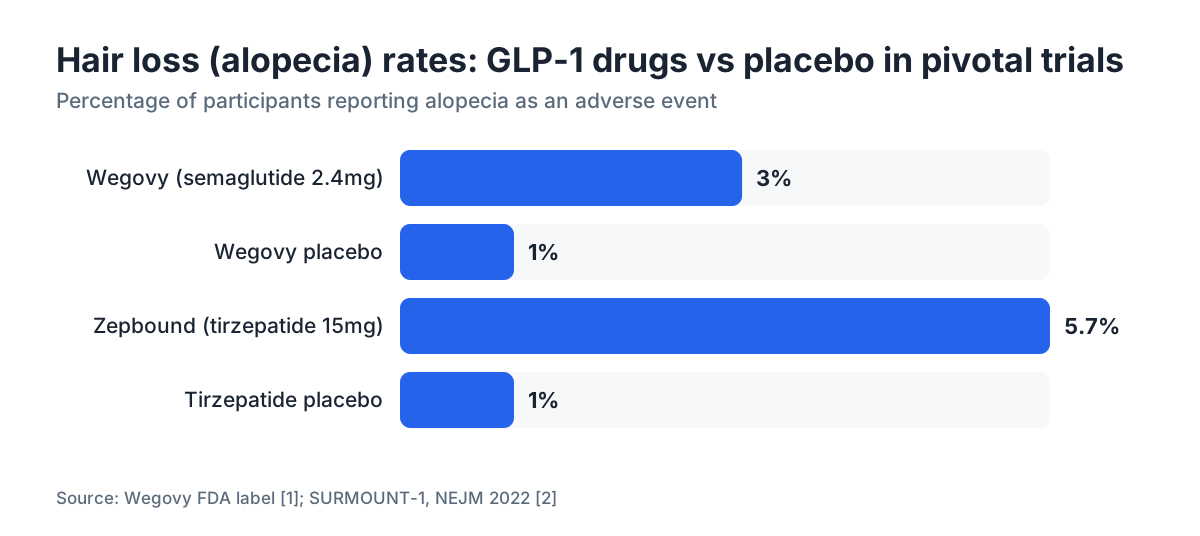
The FDA-approved prescribing information for Wegovy lists alopecia as an adverse reaction in 3.0% of patients, compared to 1.0% in the placebo group in the STEP trials [1]. Three percent sounds small. But Wegovy alone had roughly 7 million U.S. prescriptions filled in 2023, which puts hundreds of thousands of people in that bracket.
For tirzepatide, the SURMOUNT-1 trial reported hair loss in about 5.7% of the highest-dose group versus 1.0% on placebo [2]. The pattern holds across the class.
Here's what most prescribers don't say out loud: the drug is almost certainly not the direct cause. The mechanism is telogen effluvium, a documented shedding pattern triggered by physiological stress. Rapid caloric restriction and fast weight loss are among the most reliable triggers known. GLP-1 drugs work partly by crushing appetite. Eat far less for several months, drop weight fast, and your body reads that as a stress event. Follicles quit the growth phase and drop into rest en masse. Then the hair falls out.
The drug is the vehicle. The weight loss is the cause.
Why does rapid weight loss cause hair to fall out?
Normal hair growth runs on a cycle. The anagen (growth) phase lasts 2 to 6 years per follicle. Then follicles pass through catagen (transition) briefly, then telogen (rest) for about 3 months, then shed and restart. At any moment, roughly 85 to 90% of your scalp follicles are in anagen and 10 to 15% are in telogen.
Hit the body with real physiological stress, including severe caloric restriction, nutritional shortfalls, rapid weight loss, or major illness, and follicles jump early from anagen to telogen in unusually large numbers. This is telogen effluvium. Because telogen lasts about 3 months before shedding, you don't see the loss until roughly 3 to 4 months after the trigger. That lag is why GLP-1 patients are baffled. They feel great, the drug is working, and then their hair starts coming out. The delay hides the connection.
Protein deficiency and micronutrient shortfalls are the factors most often blamed. Hair is nearly all keratin, a protein. Eat 1,000 to 1,200 calories a day and hitting even a modest protein target of 0.8g per kilogram of body weight gets genuinely hard. Iron is the other big driver. A review in the Journal of the American Academy of Dermatology found ferritin levels below 30 ng/mL are associated with hair loss in premenopausal women [3]. GLP-1 users who aren't deliberate about food are exposed to both problems.
Zinc, biotin, and vitamin D matter too, but the protein and iron story is where the data actually lives. Hair loss supplements aimed at those deficiencies have real rationale here, unlike the rest of the hair loss market where the evidence is thin.
Women get hit harder. They already carry a higher baseline rate of telogen effluvium because hormonal swings, including postpartum and perimenopausal shifts, leave their follicles more reactive to physiological stress. That's why searches and support groups fill up with questions about how to stop hair loss from GLP-1 in women specifically.
How do you know if it's GLP-1 hair loss or something else?
Timing is the biggest tell. If shedding started 2 to 5 months after you began a GLP-1 drug or after rapid weight loss, telogen effluvium from the drug's effects is the leading explanation.
Still, rule out coincidental causes. A new or worsening thyroid condition is common in the same demographic and produces identical shedding. Androgenetic alopecia (pattern baldness) marches on independently and gets more visible as overall density drops from telogen effluvium. Women in perimenopause during GLP-1 use may be facing two causes at once.
The clinical signs that point to telogen effluvium specifically:
- Diffuse shedding across the whole scalp rather than a defined pattern
- Clearly more hair on the pillow, in the shower drain, and in the brush
- A positive pull test: gently grasping about 60 hairs and pulling yields more than 6 shed hairs
- No visible scalp inflammation, scaling, or scarring
A dermatologist can run trichoscopy (scalp dermoscopy) to see follicle miniaturization, which separates pattern baldness from telogen effluvium. Basic bloodwork, including TSH, ferritin, CBC, and vitamin D, comes back in about a week and flags the correctable deficiencies that make shedding worse.
If your hairline is receding at the temples and crown in a defined pattern, that's a different problem. A receding hairline points to androgenetic alopecia, which needs its own treatment entirely.
How long does GLP-1 hair loss last?
Most telogen effluvium clears on its own within 6 to 9 months once the trigger stabilizes [4]. That word, stabilizes, does the heavy lifting. If you're still in active rapid weight loss, the stress signal hasn't stopped. Hair won't fully recover until your weight plateaus and your nutrition normalizes.
The typical arc for GLP-1 users:
- Months 1 to 3 on drug: no visible change (follicles shifting but not shedding yet)
- Months 3 to 5: shedding begins, often alarming in volume
- Months 5 to 7: peak shedding, maximum panic
- Months 7 to 12: shedding slows as follicles re-enter anagen
- Months 12 to 18: most regrowth becomes visible
For a minority, maybe 10 to 15%, shedding drags on longer. That's chronic telogen effluvium, and it usually means an ongoing nutritional deficit, a concurrent hormonal problem, or androgenetic alopecia that's been unmasked.
Quitting the drug doesn't fix it fast. Stop semaglutide over hair loss and you'll regain weight (documented in the STEP 4 withdrawal trial [5]), the stress of that regain can set off another round of shedding, and you'll have thrown away the medication's metabolic benefits for nothing. In most cases the smarter move is to attack nutrition hard and wait it out.
Want a clearer read on your own scalp? A free AI hair scan at MyHairline tracks visible density changes over time, which genuinely helps separate the diffuse thinning of telogen effluvium from a patterned recession.
What actually works to stop hair loss from GLP-1 drugs?
No pill blocks telogen effluvium while you're in rapid weight loss. The real work is fixing the conditions that make it worse.
Protein is the biggest lever. Most GLP-1 patients eat 800 to 1,400 calories a day during active weight loss. At that intake, many fall short of 60 to 70g of protein, already the low end of adequate. For hair specifically, some dermatologists suggest 1.2 to 1.6g per kilogram of body weight, especially during active loss. A 2021 position stand from the International Society of Sports Nutrition notes protein needs rise during caloric restriction [6]. Lean on eggs, Greek yogurt, cottage cheese, lean meat, and protein shakes, because these drugs blunt appetite indiscriminately and you have to eat protein on purpose.
Check and correct ferritin. Get the ferritin number specifically, more than hemoglobin or a general iron panel. Serum ferritin below 30 ng/mL is a recognized threshold tied to hair loss even without frank anemia [3]. Oral iron can raise ferritin but takes 3 to 6 months to show up in hair.
Vitamin D and zinc. Both run low in people on restricted diets, and both track with hair shedding in observational studies. The evidence isn't as strong as for iron and protein, but correcting a documented deficiency costs almost nothing and carries low risk.
Minoxidil. This is the one drug with strong evidence for speeding hair regrowth in telogen effluvium. Topical minoxidil shortens telogen and pushes follicles back into anagen. The AAD lists minoxidil as a first-line treatment for hair loss in women [7]. Many dermatologists now reach for low-dose oral minoxidil (0.25 to 1.25mg daily for women) off-label because it's easier and better tolerated than topical. Read the full minoxidil side effects profile before starting, especially with any cardiac history.
What doesn't work. Biotin gets marketed hard, but the evidence for biotin causing measurable regrowth in people without a biotin deficiency is essentially absent. A 2017 review in Skin Appendage Disorders found no controlled trials supporting biotin for hair growth in non-deficient people [8]. Take it if you want. It won't hurt you and it won't counter telogen effluvium from a GLP-1 drug either.
Finasteride and other DHT blockers treat androgenetic alopecia driven by dihydrotestosterone. They have no mechanism against telogen effluvium. If you have both conditions, treating the androgenetic side with finasteride or spironolactone (for women) makes sense, but it won't stop the GLP-1-triggered shedding phase.
Are women more at risk for GLP-1 hair loss than men?
Yes, meaningfully. In the STEP trials for Wegovy, women reported alopecia at higher rates than men, which mirrors the broader epidemiology [1]. Women carry a higher baseline susceptibility to telogen effluvium for a few reasons.
First, female follicles look more sensitive to hormonal and metabolic swings. The postpartum shedding many women go through is a classic form of telogen effluvium triggered by hormone shifts after delivery. A similar sensitivity applies to nutritional and metabolic stress.
Second, the GLP-1 population skews heavily female. Obesity treatment trials usually enroll 70 to 80% women, so the raw number of women hitting this side effect is much higher.
Third, plenty of women on these drugs are also perimenopausal, and falling estrogen in perimenopause independently pushes follicles into telogen. Stack rapid weight loss on top of a hormonal transition and the shedding can be heavy.
The practical read: if you're asking how to stop hair loss from Ozempic as a woman, the answer matches the general approach but with extra attention to iron (premenopausal women already run a higher risk of deficiency), protein, and ruling out concurrent hormonal hair loss with a dermatologist. Understanding what causes hair loss in women more broadly puts the GLP-1 trigger in context.
Does stopping Ozempic or Wegovy fix the hair loss?
Stopping the drug doesn't fix the hair loss quickly, and it comes with real tradeoffs.
The STEP 4 trial showed patients who quit semaglutide after 20 weeks of weight loss regained two-thirds of the lost weight within a year [5]. That regain can itself set off another round of telogen effluvium, because rapid weight change in either direction is a physiological stressor. So stopping may not stop the hair loss, and it may start a second wave.
If hair loss is the only reason you're thinking about quitting, talk to your prescriber first. Most dermatologists who know this pattern will tell you to stay on the drug, fix nutrition, and give the telogen effluvium time.
If you do stop and your weight stabilizes, hair should recover on the same 6 to 12 month timeline as any other telogen effluvium episode.
There's a middle path too. Some clinicians have tried slower dose escalation to ease the pace of weight loss, which in theory softens the stress signal. Nobody has published a controlled trial on that specifically for hair loss outcomes.
Can you prevent GLP-1 hair loss before it starts?
You can't guarantee prevention, but you can blunt the severity. The window to act is the first 4 to 6 weeks on the drug, before the follicle shift happens.
Three moves at the start of GLP-1 therapy:
Get baseline labs. Check serum ferritin, TSH, vitamin D, zinc, and a CBC. If your ferritin sits below 40 ng/mL before you start, correct it before or alongside the drug. Entering rapid weight loss iron-deficient nearly guarantees heavy shedding.
Set a protein target and hit it every day. Start thinking about protein before the drug shuts your appetite down completely. Patients who build high-protein habits in month one keep them going more easily as appetite drops.
Tell your dermatologist you're starting a GLP-1 drug. If you have any history of hair loss, starting low-dose minoxidil preemptively is a fair conversation, though most dermatologists would rather watch first before adding another drug.
Aim for a weight loss rate of 0.5 to 1% of body weight per week if your prescriber can work with you on pacing. Crash-pace loss (more than 1.5% per week) is where the telogen effluvium studies show the worst outcomes. GLP-1 drugs can push past that, especially early.
When should you see a doctor about GLP-1 hair loss?
See a dermatologist or your prescribing physician if:
- Shedding is severe (filling your palm in the shower daily, visible scalp without parting)
- Shedding hasn't slowed after 9 to 12 months on a stable dose
- Your hairline or crown is receding in a defined pattern, not diffuse thinning
- You have symptoms of thyroid disease: fatigue, weight change beyond the drug's effect, cold intolerance
- You're postmenopausal or perimenopausal and the timing doesn't fit the telogen effluvium pattern
A dermatologist can do a scalp biopsy if the diagnosis is genuinely unclear. More often they'll run trichoscopy, review your bloodwork, and give you a confident answer in one appointment.
Don't self-diagnose androgenetic alopecia and start finasteride without a clinical assessment. Finasteride is teratogenic and contraindicated in women who may become pregnant [9]. Women with androgenetic alopecia who need a DHT-targeting drug usually use spironolactone, or in postmenopausal patients, sometimes low-dose finasteride under close supervision. These prescribing decisions matter.
For people who've been through repeated cycles of big weight loss and regain, or who have a family history of pattern baldness, GLP-1 use can genuinely unmask androgenetic alopecia rather than just cause temporary telogen effluvium. If hair doesn't fully recover, that's when more aggressive treatment becomes relevant, including long-term minoxidil or even a hair transplant evaluation, though transplants only make sense once loss has stabilized.
How does GLP-1 hair loss compare to other drug-related hair loss?
Perspective helps here. Drug-induced hair loss runs from mild and fully reversible to severe and stubborn.
| Drug/Cause | Hair loss mechanism | Rate in trials | Reversible? |
|---|---|---|---|
| Chemotherapy | Direct follicle toxicity (anagen effluvium) | Up to 65-100% depending on agent | Usually yes, 3-6 months post-treatment |
| Semaglutide (Wegovy) | Telogen effluvium via weight loss | ~3% vs 1% placebo [1] | Yes, 6-12 months |
| Tirzepatide (Zepbound) | Telogen effluvium via weight loss | ~5.7% at highest dose [2] | Yes, 6-12 months |
| Finasteride (hair loss treatment) | DHT reduction (paradox: treats one type, may rarely trigger shedding) | Rare, <1% | Yes |
| Isotretinoin (Accutane) | Mixed mechanism | 10-20% | Usually yes |
| Valproate | Telogen effluvium | 10-12% | Partially |
| Heparin/warfarin | Telogen effluvium | ~10% | Yes |
GLP-1 hair loss sits on the milder end of the drug-related spectrum for permanence. One more thing worth saying: obesity itself is tied to higher hair loss risk through inflammatory and metabolic pathways, so the GLP-1 drug may improve long-term hair health for some patients even while it causes short-term shedding.
What does recovery from GLP-1 hair loss actually look like?
Recovery is real, but it takes longer than most people expect, and it isn't always complete.
Regrowth comes in fine and short first, showing up as baby hairs along the hairline and part. That's a good sign. Full diameter and length take 12 to 18 months, because each follicle has to finish a whole new growth cycle.
For most people without underlying androgenetic alopecia, the end result is essentially full regrowth. For people with a genetic tendency toward pattern baldness, the telogen effluvium phase can push follicles that were already in slow decline past a line they don't fully come back from. That's unpredictable without a clinical evaluation.
Photographs are the best tracking tool. Take consistent shots (same lighting, same angle, same wet or dry state) every 4 to 6 weeks. What feels like nonstop shedding often looks very different in photos taken 3 months apart.
For women, a baseline selfie of your part width helps. A widening part is one of the earliest visible signs of diffuse thinning in female-pattern loss. If you're pairing GLP-1 use with a goal to stop female hair loss more broadly, that monitoring habit separates GLP-1 telogen effluvium recovery from ongoing androgenetic progression.
Track your regrowth over time with MyHairline's free AI hair scan, which compares scalp images to catch density changes that are hard to see with the naked eye.
Sources
- FDA, Wegovy (semaglutide) prescribing information, adverse reactions table
- Jastreboff AM et al., SURMOUNT-1 trial, NEJM 2022, tirzepatide adverse events table
- Trost LB, Bergfeld WF, Calogeras E. Journal of the American Academy of Dermatology, 2006; review of ferritin and hair loss
- American Academy of Dermatology Association, telogen effluvium overview
- Rubino DM et al., STEP 4 trial, JAMA 2021; semaglutide withdrawal and weight regain
- Stokes T et al., International Society of Sports Nutrition position stand, Nutrients 2021; protein needs during caloric restriction
- American Academy of Dermatology Association, guidelines for hair loss treatment in women
- Patel DP, Swink SM, Castelo-Soccio L. Skin Appendage Disorders, 2017; biotin supplementation review
- FDA, finasteride (Propecia) prescribing information, contraindications
- FDA, Zepbound (tirzepatide) prescribing information
- Headington JT. Telogen effluvium: new concepts and review. Archives of Dermatology, 1993