TL;DR: Finasteride is a prescription-only oral medication for male pattern hair loss. Generic 1 mg tablets run $1, $3 per month at most pharmacies with a GoodRx coupon. You need a licensed prescriber, either in person or through a telehealth platform. The FDA approved it for men only; women should not take it if pregnant.
What is finasteride and how does it work for hair loss?
Finasteride is a 5-alpha reductase inhibitor, meaning it blocks the enzyme that converts testosterone into dihydrotestosterone (DHT). DHT is the hormone that miniaturizes hair follicles in men with a genetic sensitivity to it. Lower DHT means the follicles stop shrinking, and many men see real regrowth over 12 to 24 months. [1]
The FDA approved the 1 mg dose (brand name Propecia) for male androgenetic alopecia in 1997. A higher 5 mg dose (Proscar) was approved earlier for benign prostatic hyperplasia. Off-label use of quartered 5 mg tablets to hit a ~1.25 mg daily dose is common because it's cheaper, though the 5 mg tablet is not FDA-approved for hair loss at that dose. [1]
If you want to understand the underlying biology before spending money on a drug, what causes hair loss and DHT blockers give good background.
Finasteride doesn't work overnight. The major efficacy study published in the Journal of the American Academy of Dermatology found that after two years of daily 1 mg dosing, 83% of men showed no further hair loss and 66% showed measurable regrowth versus placebo. [2] Those numbers are why this drug is the backbone of most hair loss treatment plans.
Do you need a prescription to buy finasteride?
Yes, everywhere in the United States. Finasteride is a prescription-only (Rx) drug under FDA classification, which means no pharmacy, online or offline, can legally dispense it without a valid prescription from a licensed prescriber. [1]
Some countries in Europe sell low-dose finasteride over the counter, but that does not apply to purchases in the US. If a US-based website is selling finasteride without asking for a prescription, that's a red flag. The FDA has issued multiple warning letters to online pharmacies selling prescription drugs without valid prescriptions. [3]
Your options for getting a prescription are simple: a dermatologist, a urologist, a primary care doctor, or a telehealth platform that employs licensed physicians. Each path has different costs and wait times, covered in detail below.
How much does finasteride cost at a pharmacy?
The price spread is wide, so let's be specific.
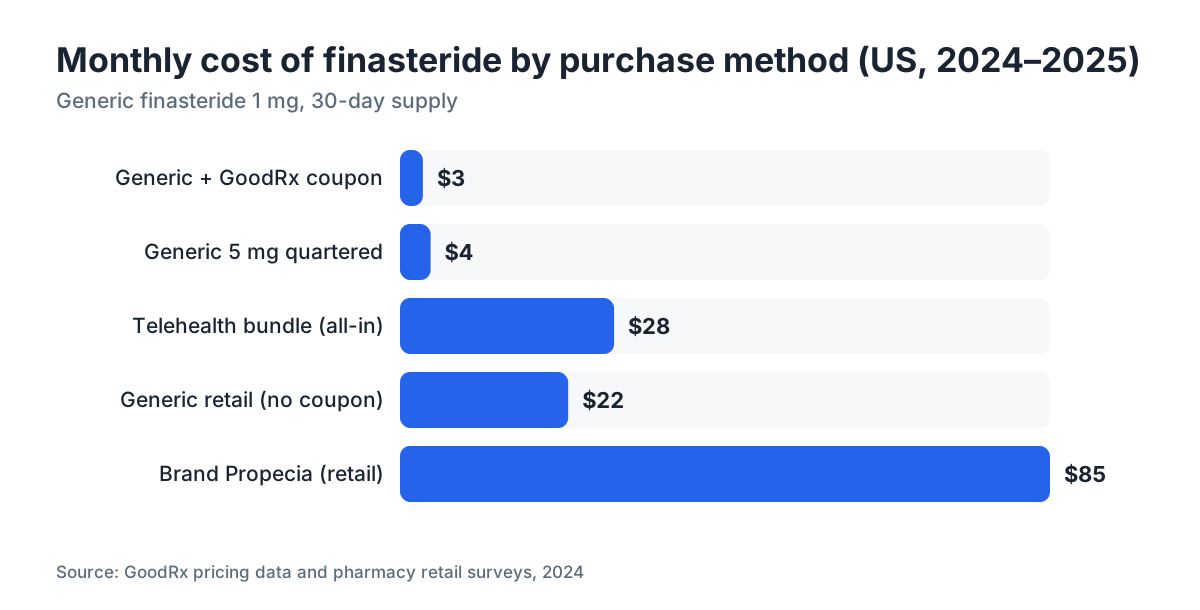
Brand-name Propecia (1 mg, 30 tablets) runs roughly $70 to $100 per month at retail without insurance, and most commercial insurance plans don't cover it for cosmetic hair loss. Generic finasteride 1 mg is dramatically cheaper. With a free GoodRx or RxSaver coupon, 30 tablets can cost as little as $1 to $3 at chains like Costco, Walmart, or Kroger pharmacies in many markets. The exact price depends on your location and the pharmacy's contracted rate. [4]
The 5 mg generic (Proscar equivalent) is often cheaper still, and some prescribers will write a script for 5 mg tablets with instructions to cut them into quarters. One 5 mg tablet produces four roughly 1.25 mg doses. At about $10 to $15 for 30 tablets of 5 mg generic, that's $2.50 to $3.75 per month of daily treatment. The pharmacokinetics are not perfectly linear so 1.25 mg is not identical to 1 mg, but many dermatologists use this approach in practice. [5]
Telehealth platforms typically charge a monthly subscription that bundles the physician visit and the medication, usually $20 to $40 per month all-in for generic finasteride. That's more than the raw pharmacy cost but less than paying a dermatologist out of pocket for a visit.
| Option | Monthly cost (approx.) | Notes |
|---|---|---|
| Brand Propecia, retail | $70, $100 | No generic savings, rarely covered by insurance |
| Generic 1 mg, retail (no coupon) | $15, $30 | Varies by pharmacy |
| Generic 1 mg, with GoodRx | $1, $5 | Requires free GoodRx account [4] |
| Generic 5 mg, quartered | $2.50, $4 | Off-label split; ask your prescriber |
| Telehealth bundle | $20, $40 | Includes provider fee and Rx |
| Branded telehealth (e.g. Hims, Keeps) | $20, $35 | Typically generic inside the brand |
Prices above are 2024 to 2025 US market estimates and can shift with pharmacy contracts.
How can you buy finasteride online legally?
The legal path to buying finasteride online has two steps: get a prescription through a licensed telehealth provider, then fill it at an online pharmacy or have it shipped directly.
Well-known telehealth platforms that prescribe finasteride include Keeps, Hims, Roman, and Ro. They all use real licensed physicians or nurse practitioners in your state, conduct an asynchronous or live consultation, and then either ship the medication themselves or send a prescription to a pharmacy of your choice. The convenience is real. For a lot of men, skipping the dermatologist waiting room (often 4 to 8 weeks in most US cities) for a 10-minute online form is worth the small markup. [6]
If you already have a prescription from your own doctor, you can fill it at mail-order pharmacies like Amazon Pharmacy, Costco's mail service, or a Canadian pharmacy operating legally for Canadian residents (which is not FDA-approved for US importation, so use caution). The safest move is a NABP-accredited online pharmacy. The National Association of Boards of Pharmacy maintains a verified list of accredited sites at nabp.pharmacy. [9]
Never buy finasteride from a site that doesn't ask for a prescription, doesn't display a US address and phone number, or prices it suspiciously below $1 per tablet without an obvious coupon. Counterfeit tablets have been seized by FDA and customs; they may contain the wrong dose or no active ingredient at all. [3]
For a fuller look at how finasteride fits with other treatments, finasteride and minoxidil combined is worth reading before you commit to one drug alone.
What are the real side effects you should know about before buying?
The FDA label is honest about side effects, and so should this article be. The most discussed ones are sexual: decreased libido, erectile dysfunction, and reduced ejaculate volume. In the clinical trials that supported approval, these occurred in about 3.8% of men taking 1 mg finasteride versus 2.1% on placebo. They resolved after stopping the drug in most (but not all) participants. [1]
The more contested issue is Post-Finasteride Syndrome (PFS), a term used to describe persistent sexual, neurological, and psychological symptoms that some men report continuing after they stop the drug. The FDA added a label update in 2012 noting that sexual side effects may persist after discontinuation. [1] The Post-Finasteride Syndrome Foundation has lobbied for more research, and some academic groups are studying it, but the mechanistic cause is not established and the prevalence is unknown. The honest answer is nobody has solid epidemiological data on the true rate of persistent symptoms.
Finasteride also lowers PSA levels (by roughly 50% at the 5 mg dose), which matters for prostate cancer screening. If you're over 40 and get a PSA test while on finasteride, tell your doctor, because your PSA needs to be interpreted with that in mind. [1]
For women who are pregnant or could become pregnant, finasteride is a hard no. It causes fetal harm. Even handling crushed tablets is contraindicated. This is FDA Pregnancy Category X. [1]
Read the full side effect picture in the finasteride deep-dive before starting.
Is finasteride effective enough to justify the cost and the risks?
For the right person, yes. The evidence base for finasteride in male androgenetic alopecia is among the strongest of any hair loss intervention.
A 2002 five-year study published in the Journal of the American Academy of Dermatology followed 1,879 men and found 48% showed hair growth, 42% showed no change, and only 10% showed continued loss after five years of daily 1 mg finasteride. [2] No other oral medication has a comparable long-term dataset.
The American Academy of Dermatology (AAD) includes finasteride as a first-line treatment recommendation for male pattern hair loss. Their clinical guidelines note that finasteride 1 mg daily is FDA-approved and that patients should be counseled about sexual side effects. [6]
That said, finasteride does nothing for hair loss that isn't driven by DHT. It won't help with telogen effluvium (shed from stress, illness, or crash diets), alopecia areata, or scarring alopecias. If you're not sure what's driving your loss, getting an accurate diagnosis first saves money and time.
If your hair loss is already at an advanced Norwood stage (5 to 7), finasteride can slow further loss but won't restore a fully bald crown. At that point, a hair transplant is usually the only way to restore density in the most affected zones, often combined with finasteride to protect remaining hair.
Tools like the free AI scan at MyHairline can give you a quick read on your Norwood stage and which treatments match your pattern, which helps you have a more informed conversation with a prescriber.
How do you actually get a prescription for finasteride step by step?
Option 1: your primary care doctor or dermatologist. Call and ask for an appointment to discuss hair loss treatment. If they're familiar with androgenetic alopecia, this is a 10-minute conversation. If they're not, they may refer you to a dermatologist. Expect a co-pay or a full visit charge ($150, $300 out of pocket without insurance for a dermatology visit). The upside is a face-to-face exam, which can catch other causes of hair loss you might miss.
Option 2: telehealth. Go to a platform like Keeps (keeps.com), Hims (forhims.com), or Roman (ro.co). Complete an online intake form with your medical history, current medications, and photos of your hair. A licensed provider reviews it (synchronously or asynchronously), and if appropriate, sends a prescription to your door or to a local pharmacy. Total time: 20 minutes to a couple of days depending on the platform. [6]
Option 3: direct primary care or concierge medicine. If you pay a monthly membership to a DPC practice, hair loss prescriptions are often part of the service and the cost per visit is zero beyond the membership.
What you'll need for any path: a brief medical history, a list of current medications (finasteride interacts with almost nothing, but they'll ask), and clarity on whether you want the brand or generic. Ask specifically for generic finasteride 1 mg daily. There's no meaningful clinical reason to pay for Propecia.
Once you have a prescription, compare prices across GoodRx, Cost Plus Drugs (Mark Cuban's transparent pricing pharmacy), and your local chains before you fill it. Cost Plus Drugs listed generic finasteride for under $2 for 30 tablets as of 2024. [4]
Can women buy or use finasteride for hair loss?
The FDA has not approved finasteride for women at any dose. The 1 mg dose in particular was studied in postmenopausal women and showed no benefit over placebo in a randomized controlled trial reviewed by Cochrane. [10]
That said, some dermatologists prescribe it off-label to premenopausal women on reliable contraception, particularly those with polycystic ovary syndrome (PCOS) where DHT is elevated. Dosing in those cases varies widely (0.5 mg to 2.5 mg daily), and the evidence is weaker than for men.
The absolute contraindication is pregnancy. Even potential exposure is dangerous. Women who are pregnant or planning pregnancy should not touch crushed or broken tablets.
If you're a woman dealing with hair loss, minoxidil has a stronger and cleaner evidence base and FDA approval for female pattern hair loss. Read minoxidil for men for the general pharmacology, and talk to a dermatologist about the specific formulations approved for women (2% topical solution or 5% foam used carefully).
Other options for women with androgen-driven hair loss include spironolactone (an anti-androgen widely used off-label) and low-level laser therapy. Finasteride is a distant option for women in clinical practice.
How does finasteride compare to minoxidil and other hair loss treatments?
These are genuinely different mechanisms, not competing alternatives. Finasteride is systemic and hormonal; it addresses the root cause of androgenetic alopecia (excess DHT shrinking follicles). Minoxidil is topical or oral and works by extending the anagen (growth) phase and widening blood vessels around follicles. They complement each other.
A 2002 combination study found that oral finasteride plus topical minoxidil produced significantly better results than either alone. [7] If you can tolerate both, combination is almost always the recommendation in clinical dermatology.
For a deeper look at pairing them, the finasteride and minoxidil article covers regimen, timing, and what to realistically expect. And if you're curious about side effects from the other half of that combination, minoxidil side effects has the specifics.
| Treatment | FDA approved for hair loss | Mechanism | Avg monthly cost | Evidence strength |
|---|---|---|---|---|
| Finasteride 1 mg | Yes (men) | Blocks DHT production | $1, $5 (generic) | High (5-yr RCT data) |
| Topical minoxidil 5% | Yes (men), 2% (women) | Vasodilation, prolongs anagen | $10, $20 | High |
| Oral minoxidil 2.5 to 5mg | No (off-label) | Same as topical, systemic | $10, $25 | Moderate-growing |
| Low-level laser therapy | FDA-cleared (device) | Photobiomodulation | $200, $400 one-time device | Moderate |
| PRP injections | No | Growth factor stimulation | $500, $1500/session | Weak-moderate |
| Hair transplant | N/A (surgical) | Follicle relocation | $4,000, $15,000 | High for coverage |
Oral minoxidil deserves a mention as an increasingly popular alternative or add-on with a different side-effect profile.
What are signs a finasteride seller online is not legitimate?
This deserves direct answers because counterfeit and gray-market drugs are a real problem.
Red flags: no prescription required, no licensed US prescriber listed, pricing below $0.50 per tablet without a documented coupon, no physical US address, payment via cryptocurrency or wire transfer only, domain registered in the last 12 months, and no NABP accreditation badge (verify any badge at nabp.pharmacy, since badges can be faked). [9]
The FDA's BeSafeRx campaign warns consumers that buying prescription drugs from unverified online pharmacies risks receiving medications with wrong ingredients, wrong doses, or outright contamination. [3]
Green flags: NABP .pharmacy domain or verified accreditation, licensed prescriber consultation required, clear state licensing, published company address, and US-based customer service phone number.
Some platforms that feel "direct to consumer" are actually operating legally. Hims, Roman, Keeps, and a few others have built their business model on the telehealth-then-pharmacy pipeline and use real licensed prescribers. The one test that matters: did a real licensed doctor review your case?
How long does it take finasteride to work, and how do you know it's working?
Twelve months is the minimum honest timeline before you evaluate results. Most men see the first signs of stabilization (the shedding slows down, the hairline stops receding) around months 3 to 6. Visible regrowth, when it happens, typically shows up between months 9 and 18. [2]
There's often a paradoxical early shed in the first few weeks as the hair cycle resets. This is temporary and does not mean the drug is failing.
Photographs in consistent lighting every three months are the most reliable way to track progress. Dermatologists who do serial trichoscopy (scalp microscopy) can measure follicle diameter objectively, which is the gold standard for research but not universally available in clinical practice.
If you've taken finasteride correctly for 12 to 18 months and see no change at all in rate of loss or density, the drug may simply not work for your physiology. A small minority of men are non-responders. At that point, escalation to oral minoxidil or a transplant consultation makes sense.
For early-stage loss, receding hairline covers the Norwood staging that helps you know where you're starting from. Hair loss supplements are also worth reviewing to understand what else might be affecting your regrowth.
What questions should you ask a prescriber before starting finasteride?
Ask these before you fill the first prescription.
First, is my hair loss DHT-driven? Androgenetic alopecia is the only type finasteride is indicated for. If you have diffuse shedding that started suddenly, that may be telogen effluvium or a nutritional deficiency, neither of which finasteride treats.
Second, should I start with topical finasteride instead? Topical finasteride (0.25% solution) has emerged as an option that achieves scalp DHT reduction with much lower systemic DHT suppression, which theoretically reduces sexual side effect risk. It's not FDA-approved and the long-term data are thinner, but some dermatologists prefer it for younger men worried about side effects. [8]
Third, what's your protocol if I develop sexual side effects? Having a plan before it happens (dose reduction, switching to topical, or stopping) beats panicking mid-treatment.
Fourth, do you need my PSA baseline? If you're over 40, getting a baseline PSA before starting finasteride is good practice because the drug suppresses PSA and can mask prostate cancer screening results. [1]
Fifth, generic or brand? The answer is almost always generic. They are bioequivalent under FDA standards. Propecia at $80 per month is money better spent elsewhere, like a combination minoxidil regimen.
Sources
- FDA, Propecia (finasteride 1 mg) prescribing information
- Kaufman KD et al., Journal of the American Academy of Dermatology, 2002 to 5-year finasteride data
- FDA, BeSafeRx: safely buying prescription medicine online
- GoodRx, finasteride price comparison
- Rossi A et al., International Journal of Immunopathology and Pharmacology, 2012, finasteride dosing pharmacokinetics
- American Academy of Dermatology, Hair Loss: Diagnosis and Treatment guidelines
- Khandpur S et al., Journal of Dermatology, 2002, finasteride + minoxidil combination study
- Caserini M et al., Journal of Drug Delivery Science and Technology, 2016, topical finasteride pharmacokinetics
- National Association of Boards of Pharmacy, NABP .pharmacy accreditation program
- van Zuuren EJ et al., Cochrane Database of Systematic Reviews, 2016, interventions for female pattern hair loss
- Eun HC et al., Journal of Dermatology, 2010, finasteride vs topical finasteride RCT
- van der Merwe J et al., Clinical Journal of Sport Medicine, 2009, creatine and DHT in college athletes