TL;DR: Finasteride (brand name Propecia) is an FDA-approved oral pill that blocks DHT, the hormone that shrinks hair follicles in male pattern baldness. Clinical trials show it stops further loss in roughly 83% of men and produces visible regrowth in about 66% over two years. It needs a prescription, costs $25-$80/month, and works only as long as you take it.
What is finasteride and how does it work for hair loss?
Finasteride is a 5-alpha reductase inhibitor. That means it blocks the enzyme that converts testosterone into dihydrotestosterone (DHT). DHT is the androgen that progressively shrinks hair follicles in men who carry the genetic sensitivity for male pattern baldness. Smaller follicles produce thinner, shorter hairs until they stop producing hair entirely. [1]
The pill doesn't target the scalp directly. It lowers DHT in your blood and scalp tissue by roughly 60-70% at the standard 1 mg dose. [2] Less DHT means follicles that were shrinking get a reprieve. In some men, partially miniaturized follicles recover enough to push out visible hair again.
Finasteride was originally developed at 5 mg doses to treat enlarged prostates (sold as Proscar). Merck's researchers noticed men in those trials were keeping their hair, which led to the 1 mg formulation (Propecia) approved by the FDA specifically for androgenetic alopecia in 1997. [10]
For a closer look at how DHT drives follicle shrinkage, see our guide on DHT blockers. If you want the broader picture of why hair falls out in the first place, what causes hair loss covers the full landscape.
The mechanism sets your expectations. Finasteride is not a cure. It suppresses a hormonal signal. The moment you stop taking it, DHT levels rebound within weeks, and so does the loss. Almost everything downstream flows from that single biochemical fact.
Does finasteride actually stop hair loss? What do the trials show?
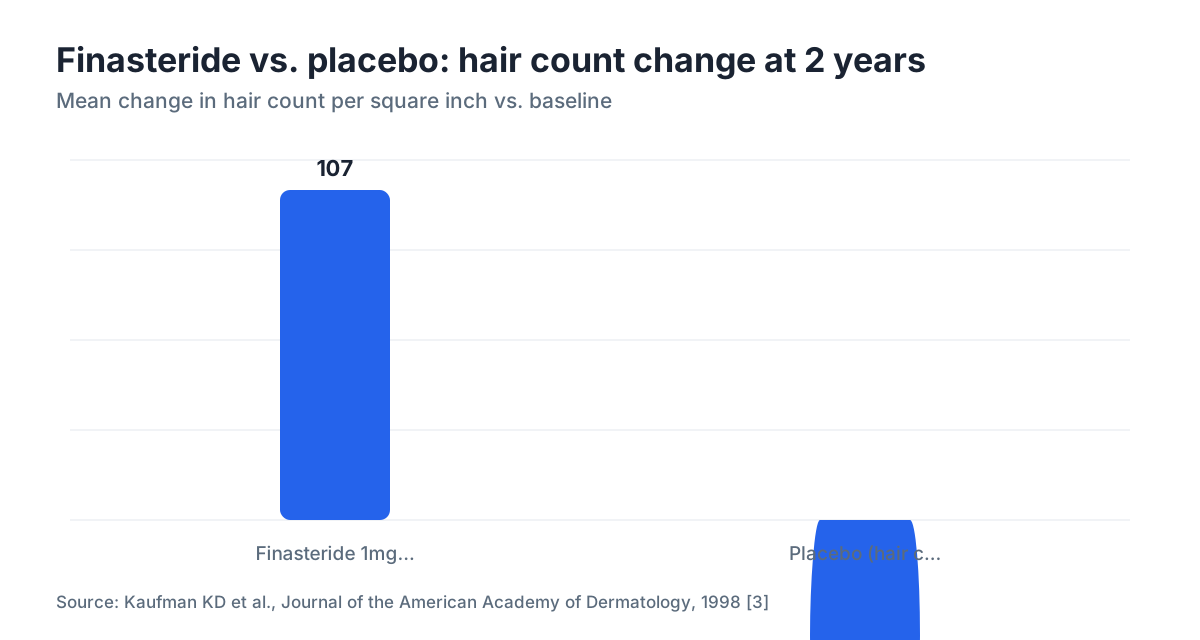
Yes, for most men, and the evidence is solid. The registration trials Merck ran before FDA approval enrolled about 1,879 men aged 18 to 41 with mild-to-moderate crown and frontal hair loss. After two years, 83% of men on 1 mg finasteride had stopped losing hair, compared to 28% on placebo. Hair count climbed by a mean of 107 hairs per square inch in the treated group, while placebo lost 75. [3]
At five years, the data still held up. Men who took finasteride continuously for five years kept their gains, while the placebo group had dropped well below baseline. [3]
A few caveats the marketing skips:
- The trials enrolled men 18 to 41. Less data exists for men over 60, where the hormonal picture is different.
- Most trial photography was scored at the vertex (crown). Evidence for frontal hairline regrowth is weaker, though real-world use suggests some benefit there too.
- "Stopping loss" is not the same as full regrowth. Many men stabilize. A smaller group see meaningful density increases.
- The trials were Merck-funded. Independent work generally confirms efficacy but sometimes reports smaller effect sizes. [11]
For men with a receding hairline, finasteride is more likely to slow progression than to rebuild the hairline outright. Combining it with minoxidil improves outcomes, which the finasteride and minoxidil comparison covers in detail. [4]
How much hair can you expect to regrow?
It varies a lot, and the range is wider than before-and-after photos online suggest. In the two-year Merck trial, 66% of men showed some measurable increase in hair count. [3] But "measurable" on a microscope-assisted count isn't the same as visually dramatic.
Dermatologists who prescribe this every day describe the realistic split like this: about a third of patients see real, visible improvement. Another third stabilize with no further loss. The remaining third keep losing hair despite treatment, either because they respond poorly or because something else is driving their loss.
Age at starting matters enormously. Men who begin in their early-to-mid twenties, when follicles are still partly working, tend to respond better than men who wait until follicles have been shrinking for a decade. A follicle that is completely dead, producing no hair at all, will not respond to finasteride. This is why early treatment earns the drug most of its reputation.
The Norwood scale gives you a rough benchmark. Men at Norwood 2 to 4 have the best published response rates. By Norwood 5 to 7, the scalp has large areas of completely bare skin, and finasteride can protect the remaining hair but cannot raise the dead zones. If you're already at advanced stages, a hair transplant may be needed to rebuild density, with finasteride used to protect native hair from further shedding.
Take finasteride to stop the bleeding, not to restore a full head of hair. That's the honest frame.
What are the real side effects of finasteride?
Side effects are the most contested part of the finasteride conversation, and they deserve careful handling, not dismissal or panic.
The FDA-approved label lists these sexual side effects from the clinical trials: decreased libido (1.8% vs 1.3% placebo), erectile dysfunction (1.3% vs 0.7% placebo), and ejaculation disorder (1.2% vs 0.7% placebo). [1] In the trials, these resolved in the men who stopped the drug.
Those are small absolute numbers. The relative increase is real but modest. Most men who take finasteride report no sexual side effects at all.
A more serious concern emerged after the drug was in wide use. A subset of men reported that sexual dysfunction, cognitive symptoms ("brain fog"), and depression persisted long after they stopped taking finasteride. This has been labeled Post-Finasteride Syndrome (PFS). The FDA added a label update in 2012 noting that libido decrease, ejaculatory disorders, and orgasm disorders continued after discontinuation in some patients. [1]
Here's the honest picture on PFS. It appears real in a subset of patients. The biological mechanism isn't fully understood. The true prevalence is unknown because it wasn't systematically tracked in the trials. The Post-Finasteride Syndrome Foundation has compiled case reports, but population-level incidence data is still being studied. [5]
Other label-listed items:
- Finasteride lowers PSA (prostate-specific antigen) by roughly 50%. If you're being screened for prostate cancer, your doctor needs to know you're on it, or a cancer can be masked. [1]
- The drug is a teratogen. Pregnant women must not handle crushed or broken tablets. The intact film-coated tablet has a protective coating, but the warning is serious. [1]
- A 2013 FDA safety communication flagged a possible (not confirmed) increased risk of high-grade prostate cancer from the PCPT trial, though later analyses questioned the methodology. [6]
If you're comparing side effect profiles with topical minoxidil, the minoxidil side effects article runs through that list separately.
Finasteride vs. minoxidil: which one should you use?
They work differently, which is why using both is often the strongest strategy. Finasteride addresses the hormonal cause of androgenetic alopecia. Minoxidil is a vasodilator that extends the growth phase of hair follicles through a different mechanism, unrelated to DHT. Neither works for everyone, and the side effect profiles are nothing alike.
| Finasteride 1mg | Minoxidil (topical) | |
|---|---|---|
| Mechanism | Blocks DHT production | Extends anagen phase, improves follicle blood flow |
| Administration | Daily oral pill | Topical liquid or foam, once or twice daily |
| FDA approval | Yes, male AGA | Yes, male and female AGA |
| Prescription needed | Yes | No (OTC) |
| Cost/month | $25-$80 | $15-$40 |
| Works on women | No (not approved, off-label concerns) | Yes |
| Main side effect concern | Sexual dysfunction (small %) | Scalp irritation, initial shedding |
| Stops when you quit | Yes, loss resumes | Yes, loss resumes |
A 2022 network meta-analysis published in JAMA Dermatology ranked combination finasteride plus minoxidil as the most effective regimen for male androgenetic alopecia, ahead of either drug alone. [4]
If you can only pick one, finasteride tends to be the better long-term foundation because it hits the cause, while minoxidil adds an anagen-extension boost on top. But if you have a reason to avoid finasteride (side effect worry, planning a family, cost), topical minoxidil for men alone still works meaningfully. Oral minoxidil is an emerging option worth knowing about, though it's off-label and carries its own tradeoffs.
Who should not take finasteride?
Finasteride is only FDA-approved for men. Period.
Women of childbearing potential should not take it. The drug causes genital abnormalities in male fetuses (hypospadias, ambiguous genitalia) in animal studies, and the human risk is considered real enough that the FDA label is emphatic: "Women who are pregnant or may become pregnant should not use PROPECIA" and should not handle crushed or broken tablets. [1]
For postmenopausal women with female pattern hair loss, some dermatologists use finasteride off-label at higher doses (2.5 to 5 mg). The evidence is weaker than for men, and there's no FDA approval here. If you're a woman looking at this route, have that conversation with a dermatologist, not with the internet.
Men with any of the following should talk it through with a physician before starting:
- A history of prostate cancer (the PSA masking problem)
- Current or past depression or mood disorders (PFS risk may run higher in this group, though data is limited)
- A plan to father children soon (finasteride can affect semen parameters in some men; effects look reversible but the data isn't clean)
- Liver disease (the drug is metabolized in the liver)
Age is worth thinking about too. Men under 20 should go slow. Their androgenetic alopecia trajectory isn't always predictable, and starting a lifelong medication at 18 without a clear diagnosis is premature. Get a proper evaluation first.
How long does finasteride take to work?
Slow. Slower than most people expect. DHT suppression happens within days of your first dose. The follicle response takes much longer because hair grows in cycles (anagen, catagen, telogen) that run for months. [7]
Here's the rough timeline most dermatologists use:
- Months 1-3: No visible change. Some men report an initial shed (finasteride can push telogen-phase hairs out slightly faster), which is alarming but usually means the follicle is starting a fresh growth cycle. It's similar to the telogen effluvium shed you see with other treatments.
- Months 3-6: Loss typically stabilizes. No dramatic regrowth yet.
- Months 6-12: First signs of improvement in responders. Texture and thickness often improve before density does.
- Months 12-24: Peak response for most men. The two-year mark is where the clinical trials measured their primary endpoint.
- Year 2 onward: Continued use maintains results. Some men see slow additional gains for up to five years.
Give it at least 12 months before deciding it's failed. Quitting sooner is a common mistake. If you stop at month four because you don't see anything, you've mostly just paid for four months of medication and walked away right before the payoff window opens.
How much does finasteride cost, and do you need a prescription?
Yes, you need a prescription. Finasteride is not sold over the counter in the United States.
Generic 1 mg finasteride, the same molecule as Propecia, runs roughly $25 to $80 per month depending on where you fill it. Brand-name Propecia costs a lot more, $70 to $100-plus per month, with no evidence it works better than generic. [8]
A common cost move: some physicians prescribe 5 mg finasteride (the prostate dose, same drug) and have patients quarter the pills. That drops the monthly cost to around $10 to $20. It's legal and widely done. The catch is that hand-splitting isn't perfectly even, so doses vary slightly. Pharmacokinetics are forgiving enough that this doesn't seem to matter clinically.
Telehealth platforms like Hims, Keeps, and Roman prescribe online with or without insurance, usually $15 to $35 per month for generic including the visit. These are licensed physicians in each state, not workarounds. The FDA has not objected to telehealth prescribing of finasteride.
Insurance rarely covers finasteride for hair loss because androgenetic alopecia is classified as cosmetic. If you take it at the 5 mg dose for BPH (enlarged prostate), insurance is far more likely to cover it, but that requires an actual BPH diagnosis.
If you're trying to figure out where finasteride fits in your plan, the myhairline.ai free AI hair scan (/scan) can help you read your current loss pattern and Norwood stage, which gives a dermatologist better information to work with.
Can you take finasteride long-term? Is it safe for decades of use?
The clinical trial follow-up runs to five years with clean safety signals. [3] Real-world use stretches past 20 years for men who started in the late 1990s, and there's no documented catastrophic long-term toxicity at the population level.
The legitimate long-term questions are these:
-
Prostate cancer risk: The Prostate Cancer Prevention Trial (PCPT), which used 5 mg finasteride (five times the hair loss dose), showed a lower overall rate of prostate cancer but a slightly higher rate of high-grade cancers in the treatment arm. [6] Later analyses argued that reflected better detection in smaller prostates rather than a real biological effect. The 1 mg hair loss dose has not shown this signal in any dedicated study.
-
Persistent sexual side effects: The 2012 FDA label update acknowledged that some men reported symptoms that continued after discontinuation. [1] Population-level PFS incidence studies don't yet exist in a form that gives clean numbers.
-
Male breast cancer: Extremely rare, but the label notes an association (fewer than 10 cases ever reported in men on finasteride). The absolute risk is tiny, but it's listed. [1]
The dermatology mainstream, reflected in American Academy of Dermatology guidance, treats finasteride as safe for long-term use in appropriate patients, with benefits outweighing risks for most men with androgenetic alopecia. [9] That doesn't mean it's right for every individual.
What happens when you stop taking finasteride?
All the ground you gained disappears, just slowly. When you stop, DHT rebounds to baseline within roughly one to two weeks. [2] The follicles that had been protected by lower DHT resume shrinking. Within three to six months of stopping, most men land back where they would have been without the drug, sometimes a bit worse, because they lost the time they spent on treatment.
This is the hardest thing for patients to absorb before starting. Finasteride is not a course with a finish line. It's maintenance for an indefinite stretch. If you're 25 when you start and male pattern baldness runs in your family, you might still be taking this pill at 55 to keep the benefit.
Some men choose a planned stop, usually over side effects or family planning. If you're stopping for side effects, they typically clear within weeks to months for the large majority of users (the exception being the PFS cases above).
If you stop and lose ground, you can restart. There's no evidence that stopping and restarting causes harm or permanently dulls your response, though re-response may take another 6 to 12 months to fully show.
Does finasteride work for women with hair loss?
Not in the same clear-cut way, and it's not FDA-approved for women.
For premenopausal women, finasteride is essentially off the table because of teratogenicity. The risk to a fetus is real enough that even dermatologists who use it off-label for postmenopausal women require reliable contraception or confirmed non-childbearing status.
For postmenopausal women with female pattern hair loss (androgenetic alopecia), some dermatologists do use finasteride off-label at 2.5 to 5 mg daily. A review in the Journal of the American Academy of Dermatology found modest evidence of benefit in this group, but trial quality was lower and sample sizes smaller than the male literature. [9]
The drug's mechanism (DHT suppression) is less clearly the main driver in female pattern hair loss, which involves a more complicated hormonal and non-hormonal picture. That's one reason minoxidil, which works regardless of hormonal cause, has a stronger evidence base for women.
If you're a woman with significant hair loss, the real first step is a proper diagnosis. Female hair loss has more possible causes (iron deficiency, thyroid disease, telogen effluvium, autoimmune conditions) than male loss, and chasing DHT when something else is driving the problem wastes time and money.
How do you know if finasteride is working for you?
Serial photography is the most reliable method. Take standardized photos (same lighting, same camera distance, same wet or dry hair state) every three months. The human eye under random conditions is a terrible judge of gradual change.
Dermatology offices use trichoscopy (dermoscopy of the scalp) and sometimes automated hair counts to track density objectively. If you're paying for a prescription and getting no measurable feedback, you're guessing.
A few honest signals that it's working:
- The rate of daily shed drops (counting hairs in the drain is crude but useful)
- Hair texture improves before density does; thin hairs often turn slightly coarser in the first year
- Photos from month six vs. month twelve show the same density or more
If you want a structured starting point, the free AI hair analysis at myhairline.ai (/scan) can document your baseline Norwood stage and pattern before you start, so you have something objective to compare against later.
If after 12 to 18 months of consistent use you see no stabilization at all, you're likely a non-responder. At that point the conversation shifts to whether combination therapy (adding minoxidil), switching DHT blockers, or a hair transplant makes more sense.
One thing worth resisting: staring at your hair in harsh bathroom lighting, which makes everyone look worse and makes the psychological weight of hair loss harder to carry.
Sources
- FDA, Propecia (finasteride) prescribing information label
- Clark RV et al., Journal of Clinical Endocrinology & Metabolism, 2004
- Kaufman KD et al., Journal of the American Academy of Dermatology, 1998
- Gupta AK et al., JAMA Dermatology, 2022
- Post-Finasteride Syndrome Foundation
- Thompson IM et al., New England Journal of Medicine, 2003 (Prostate Cancer Prevention Trial)
- Sinclair R, American Journal of Clinical Dermatology, 2004
- GoodRx, finasteride 1 mg price data
- American Academy of Dermatology
- FDA, drug approval database, Propecia NDA 020788
- Mella JM et al., Journal of the American Academy of Dermatology, 2010