TL;DR: The American Academy of Dermatology recommends topical minoxidil and oral finasteride as first-line treatments for androgenetic alopecia (pattern hair loss). Minoxidil is FDA-approved for both sexes; finasteride is FDA-approved for men only. Used together, studies show hair count improvements in roughly 80-90% of men. Neither is a cure. Both require ongoing use to hold results.
What does the AAD actually recommend for androgenetic alopecia?
The American Academy of Dermatology's clinical guidance names topical minoxidil and oral finasteride as the two most evidence-backed treatments for androgenetic alopecia, which is the medical term for male and female pattern hair loss [1]. These are not fringe suggestions. Both drugs have FDA approval behind them, decades of randomized trial data, and the kind of consistent real-world track record that earns a spot in a major medical society's guidelines.
The AAD recommends 2% or 5% topical minoxidil for women and 5% topical minoxidil or oral finasteride 1 mg daily for men [1]. Low-level laser therapy and platelet-rich plasma are listed as options but carry weaker or more mixed evidence. Hair transplant surgery gets a mention too, but as a later-stage option once medical therapy has been tried or when hair loss is stable.
One thing the AAD is clear about: treating androgenetic alopecia early matters. Hair follicles that have miniaturized fully are gone for good. The drugs on this list work by slowing or reversing miniaturization in follicles that still have some function, not by regrowing hair where none exists [1].
If you're trying to understand your own hair loss before picking a treatment, a receding hairline or diffuse thinning on the crown are the two most common presentations of androgenetic alopecia and they often call for slightly different approaches.
How does minoxidil work for pattern hair loss, and what results can you expect?
Minoxidil started life as an oral blood pressure drug. Hypertrichosis (unwanted hair growth) showed up as a side effect, and researchers eventually figured out a topical formulation could push that effect toward the scalp. The FDA approved topical minoxidil 2% for men in 1988 and for women in 1991, then cleared 5% foam for men in 2006 [2].
The mechanism isn't fully understood even now. Minoxidil appears to open ATP-sensitive potassium channels in dermal papilla cells, which prolongs the anagen (growth) phase of the hair cycle and improves blood flow to the follicle [3]. What that means practically: hairs that have been spending more time in a resting or shedding phase start spending more time growing.
A 1990 randomized controlled trial in the Journal of the American Academy of Dermatology found that 5% minoxidil produced significantly more hair regrowth than 2% minoxidil in men with vertex (crown) thinning, with 45% of the 5% group reporting moderate to dense regrowth versus 36% for the 2% group [3]. Response at the hairline is typically weaker.
For women, a 48-week placebo-controlled trial showed that 2% minoxidil increased hair count by roughly 13 hairs per cm² compared to placebo [4]. The 5% formulation likely works better in women too, but the side effect profile (facial hair, scalp irritation) makes dermatologists more cautious about recommending it as a first step.
Realistic timeline expectations:
- Months 1 to 3: often a shedding phase as resting hairs are pushed out to make room for new growth. This is normal, not a sign it's failing.
- Months 4 to 6: early regrowth in responders.
- Month 12: peak or near-peak results.
- After stopping: benefits reverse within 3 to 6 months as the follicle returns to its pre-treatment state.
See the minoxidil for men guide for a full breakdown of application technique, the 5% vs. 2% debate, and foam vs. liquid. For a deeper look at potential downsides, the minoxidil side effects article covers what's common, what's rare, and what usually resolves on its own.
How does finasteride work, and who should take it?
Finasteride blocks the enzyme 5-alpha reductase type II, which converts testosterone into dihydrotestosterone (DHT). DHT is the androgen mainly responsible for progressive follicle miniaturization in people with genetic susceptibility to androgenetic alopecia [5]. Lower DHT means slower (sometimes reversed) miniaturization.
The FDA approved finasteride 1 mg (brand name Propecia) for male pattern hair loss in 1997 [5]. It is not FDA-approved for women and is explicitly contraindicated in women who are pregnant or may become pregnant because of the risk of feminization of a male fetus.
The clinical evidence for finasteride in men is strong. The registration trial that led to approval, published in the Journal of the American Academy of Dermatology, followed 1,879 men over 2 years. Finasteride 1 mg increased hair count by a mean of 107 hairs per one-inch circle at the vertex, while the placebo group lost 50 hairs in the same area [6]. A 5-year extension study showed that benefit held and that men on placebo kept losing hair throughout.
Finasteride reduced serum DHT levels by about 70% in those trials [6]. That's measurable, consistent, and explains why it outperforms minoxidil on the crown for many men: it addresses the hormonal driver rather than just supporting follicle function downstream.
For women, finasteride is used off-label, typically at higher doses (2.5 mg to 5 mg daily), and some trials show modest benefit in postmenopausal women. The AAD does not list it as a first-line recommendation for women, largely because the evidence base is thinner and the safety data in women of reproductive age is poor [1].
The finasteride article covers dosing, the sexual side effect debate (including post-finasteride syndrome), and how to think about the risk-benefit decision honestly. If you want to understand the DHT mechanism in more depth, the DHT blocker guide is the right next read.
What happens if you use minoxidil and finasteride together?
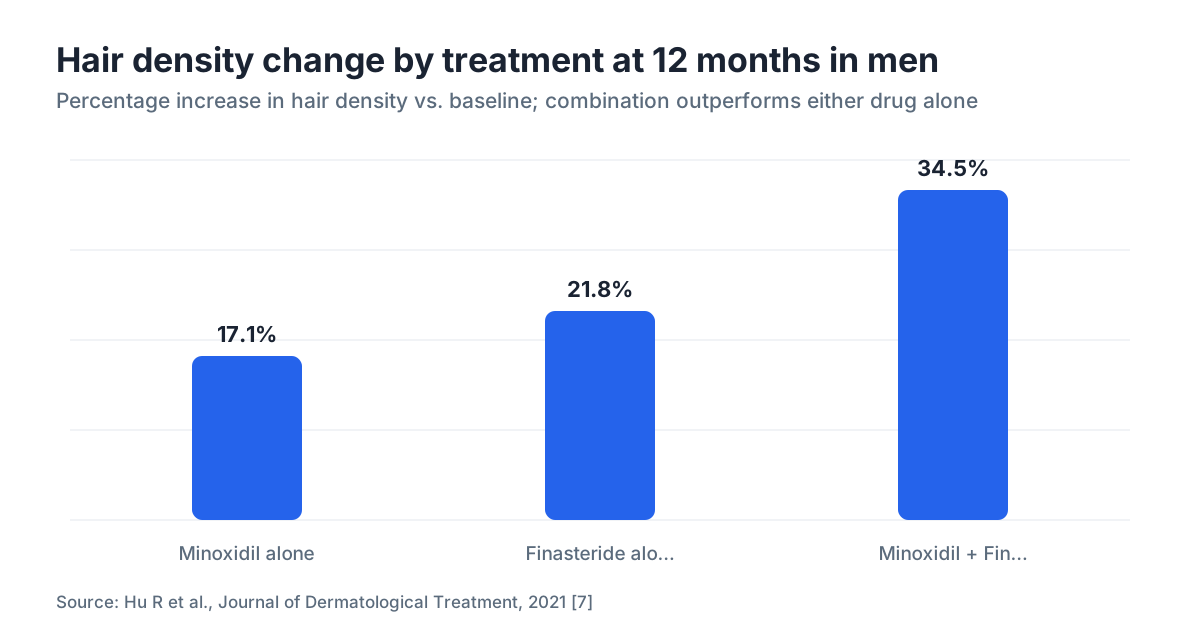
Combining both drugs is common practice and makes biological sense. They attack the problem from different angles. Finasteride reduces the hormonal signal that miniaturizes follicles; minoxidil supports follicle function and hair cycle duration regardless of the hormonal environment. Using both together typically produces better results than either alone [7].
A 2021 randomized trial in the Journal of Dermatological Treatment followed 450 men over 12 months and compared finasteride alone, minoxidil alone, and the combination. The combination group showed a 34.5% increase in hair density vs. 21.8% for finasteride alone and 17.1% for minoxidil alone [7].
Dermatologists often start men on minoxidil first because it's available over the counter and has no prescription barrier, then add finasteride after a conversation about side effect risks. The finasteride and minoxidil deep explainer covers dosing protocols, timing, and whether you need to use both forever once you start.
What's the evidence on oral minoxidil compared to topical?
Oral minoxidil has been gaining traction as an off-label option for androgenetic alopecia. At low doses (0.25 mg to 5 mg daily), it appears to work at least as well as topical minoxidil for many patients and solves the compliance problem of twice-daily scalp application [8].
A 2021 retrospective study in the Journal of the American Academy of Dermatology analyzed 1,404 patients using low-dose oral minoxidil. The researchers reported "a good-to-excellent response in 81.4% of patients" and that the 1 mg dose was effective for women while men generally needed 2.5 mg or higher [8]. Side effects at low doses were mostly mild (fluid retention, facial hair in women), but cardiovascular monitoring may be warranted at higher doses.
Oral minoxidil is not FDA-approved for hair loss specifically. Prescribers are using it off-label, which is legal and common in dermatology but means you need an actual prescription and a provider who's comfortable managing it. The oral minoxidil article goes into the dosing ladder, who's a good candidate, and what to watch for.
How is androgenetic alopecia diagnosed, and could something else be causing your hair loss?
Androgenetic alopecia has a recognizable pattern. In men, it follows the Norwood-Hamilton scale: recession at the temples and thinning at the crown, often progressing toward a horseshoe-shaped fringe. In women, it usually shows up as diffuse thinning over the crown with the frontal hairline mostly intact, classified on the Ludwig scale.
Dermatologists can often diagnose it clinically by pattern alone, combined with family history. When the picture is less clear, a trichoscopy (dermoscopy of the scalp) can show hair shaft diameter variability and miniaturized follicles. Blood work rules out other contributors: thyroid disease, iron deficiency, and hormonal imbalances (particularly in women) can all accelerate or mimic pattern loss [1].
Here's the part people skip: not every diffuse hair loss is androgenetic alopecia. Telogen effluvium (shedding triggered by stress, illness, or nutritional deficiency) is extremely common and often confused with early pattern loss. Telogen effluvium is usually temporary. Treating it with finasteride or minoxidil isn't wrong, but it isn't necessary either if the underlying trigger resolves. The what causes hair loss guide covers the full differential.
If you're trying to figure out which type of loss you're dealing with before booking a dermatology appointment, the free AI scan at MyHairline analyzes your hairline and crown from photos and gives you a pattern assessment to bring to that conversation.
How long do you have to take these treatments, and what happens if you stop?
This is the question that derails a lot of people who start strong and then get frustrated or complacent.
Both minoxidil and finasteride work only as long as you keep taking them. Stop either one and the hair loss process resumes. Most men who discontinue finasteride after sustained use see significant shedding within 6 to 12 months as DHT levels normalize [5]. Minoxidil-dependent hairs typically start falling out within 3 to 6 months after stopping [2].
This isn't a design flaw. It's just how androgenetic alopecia works. The genetic programming that causes follicle miniaturization doesn't go away. The drugs suppress the process; they don't fix the underlying biology.
Practically, that means the decision to start either treatment is a long-term commitment, probably lifelong. It's not unreasonable to try minoxidil for 12 months to assess response before deciding whether to continue. Stopping finasteride temporarily (for fertility reasons, for example) is possible, but plan for some regression.
Some men use both for a period of strong regrowth and then shift to finasteride alone as a maintenance strategy, accepting that they'll hold but not keep improving. That's a reasonable call. Talk to a dermatologist before making that switch rather than guessing.
Are there any other AAD-recognized treatments worth considering?
Beyond minoxidil and finasteride, the AAD's guidance acknowledges a few other options with varying degrees of evidence [1].
Low-level laser therapy (LLLT) devices cleared by the FDA include helmets and combs that deliver red light to the scalp. A 2009 randomized sham-controlled trial in the American Journal of Clinical Dermatology found a 39% increase in hair density over 26 weeks with an LLLT comb [9]. The evidence is real but modest, and LLLT devices aren't cheap (usually $200 to $600). Most dermatologists treat it as an add-on rather than a standalone.
Platelet-rich plasma (PRP) involves drawing a patient's blood, concentrating the platelets, and injecting the result into the scalp. Some trials show statistically significant hair count improvements, but the protocols vary so much across studies that drawing firm conclusions is hard. It's expensive (typically $500 to $1,200 per session, often requiring multiple sessions) and not covered by insurance. The AAD lists it as a possible option, not a first-line recommendation.
Hair transplant surgery (follicular unit extraction, or FUE, is now more common than follicular unit transplantation, or FUT) is genuinely effective for the right candidate. But it requires a stable, predictable loss pattern, and it doesn't stop ongoing loss in non-transplanted areas. The hair transplant guide explains candidacy criteria, cost ranges, and what the recovery actually looks like.
Supplements get a lot of attention but mostly don't have strong androgenetic alopecia trial data. Viviscal and Nutrafol have small company-funded trials showing some benefit in women with thinning, but the effect sizes are modest. The hair loss supplements article separates what has even marginal evidence from what's pure marketing.
How much do minoxidil and finasteride actually cost?
Cost is a real factor in whether people stick with treatment, and the range is wide depending on how you source these drugs.
Generic topical minoxidil 5% solution is available over the counter at most pharmacies and online retailers for roughly $10 to $25 per month. Branded Rogaine costs more (up to $50 per month) without a meaningful clinical advantage. Generic 5% foam runs slightly higher, around $15 to $35 monthly.
Generic finasteride 1 mg is prescription-only but widely available through compounding pharmacies and telehealth platforms for $10 to $30 per month. Through traditional pharmacy routes, it can run $20 to $60 per month without insurance. Brand-name Propecia lists at over $80 per month at retail, which is almost nobody's first choice when generics perform identically [5].
Oral minoxidil, prescribed off-label, is similarly affordable in generic form, often $10 to $25 per month at low doses.
The table below compares the main treatment options on cost, approval status, and evidence strength.
| Treatment | Monthly Cost (est.) | FDA Approval | AAD Evidence Level |
|---|---|---|---|
| Topical minoxidil 5% (generic) | $10-$25 | Yes (men) | First-line |
| Topical minoxidil 2% (generic) | $8-$20 | Yes (men, women) | First-line |
| Finasteride 1 mg (generic) | $10-$30 | Yes (men) | First-line |
| Oral minoxidil (off-label) | $10-$25 | No (off-label) | Emerging |
| LLLT device (amortized) | $15-$50 | Cleared | Adjunct |
| PRP (per session) | $500-$1,200 | No (off-label) | Adjunct |
| Hair transplant (one-time) | $4,000-$15,000 | N/A (procedure) | Later-stage |
Cost estimates are broad-range approximations from pharmacy pricing data and publicly reported dermatologist fees as of 2025-2026. Individual prices vary a lot by geography and provider.
What are the real risks of finasteride and minoxidil, and who shouldn't use them?
Both drugs have genuine safety profiles worth understanding before you start. Not to scare you off, but because informed patients do better.
Minoxidil's most common side effect is scalp irritation, especially with the liquid formulation (the propylene glycol in liquid but not foam is often the culprit). Unwanted facial hair is the most reported side effect in women. Systemic absorption from topical use is low but not zero. Serious cardiovascular effects are rare at topical doses but become more relevant with oral minoxidil, which is why some prescribers check blood pressure and run an ECG before starting oral therapy [2].
Finasteride's most discussed risks involve sexual function. The FDA label for finasteride 1 mg includes decreased libido, erectile dysfunction, and reduced ejaculate volume, each affecting roughly 1 to 2% of men in the original registration trials [5]. Post-finasteride syndrome (PFS), a cluster of persistent sexual, neurological, and psychiatric symptoms reported after stopping the drug, is real as a reported phenomenon but has no confirmed mechanism and is debated in the literature. The FDA updated its label in 2012 to include PFS-related language after receiving reports [5]. Finasteride also slightly lowers PSA levels, which matters for prostate cancer screening interpretation in older men.
Women who could become pregnant should not handle crushed or broken finasteride tablets because of fetal risk. This is on the label [5].
Neither drug is right for everyone. A dermatologist or prescribing provider should review your full health picture before you start, particularly finasteride.
Do diet, supplements, or lifestyle changes help androgenetic alopecia?
Honestly, less than most of the internet would have you believe.
Androgenetic alopecia is mostly genetic and hormonal. No diet reverses it. That said, nutritional deficiencies can accelerate shedding on top of pattern loss. Iron deficiency is common and underdiagnosed, especially in women, and correcting it can reduce the extra layer of telogen effluvium that gets stacked on top of androgenetic alopecia [1]. Vitamin D deficiency has a weaker but plausible link to hair loss. Protein intake matters; hair is keratin, and chronically inadequate protein does affect hair quality.
Creatine has gotten recent attention as a possible DHT raiser. The claim traces back to a single 2009 college rugby study that found a rise in the DHT-to-testosterone ratio after creatine loading, but that study didn't measure hair loss and has not been replicated in a hair-focused trial [see /blog/does-creatine-cause-hair-loss for a full breakdown]. The evidence isn't strong enough to tell most people to avoid creatine, but if you're borderline genetically and already noticing thinning, it's a reasonable thing to monitor.
Stress management is worth something. Acute severe stress causes telogen effluvium, which is separate from androgenetic alopecia but can make existing pattern loss look worse. Chronic stress likely doesn't directly drive pattern loss but does degrade everything generally.
If you're interested in what supplements have any real trial data behind them, the hair loss supplements article goes through the evidence on biotin, saw palmetto, keratin compounds, and more.
When should you see a dermatologist instead of self-treating?
Topical minoxidil is available without a prescription, and telehealth platforms have made finasteride easy to access. So you could, in theory, start both without ever seeing a doctor in person. Some people do fine with that. Others miss something important.
See a board-certified dermatologist, more than a telehealth intake form, if: your hair loss is rapid (losing large amounts over weeks rather than months), your pattern doesn't fit classic androgenetic alopecia (patchy loss, eyebrow or eyelash loss, scalp scaling or inflammation), you're a woman of reproductive age considering finasteride, you have other health conditions that interact with these medications, or you've been on one of these treatments for 12 months with zero response.
A dermatologist can do a trichoscopy to confirm the diagnosis, rule out alopecia areata or scarring alopecias (which minoxidil and finasteride won't fix), and order bloodwork to check for reversible contributors [11]. That visit costs money, but getting the diagnosis right before spending years on the wrong treatment costs more.
If you want a first-pass picture of your hair loss pattern before that appointment, the free AI scan at MyHairline can help you describe what you're seeing more precisely when you talk to a provider.
Sources
- American Academy of Dermatology, Hair Loss: Diagnosis and Treatment
- FDA, Minoxidil Drug Label and Approval History
- Olsen EA et al., Journal of the American Academy of Dermatology, 1990 to 5% vs 2% minoxidil RCT
- DeVillez RL et al., Archives of Dermatology, 1994, minoxidil 2% in women RCT
- FDA, Propecia (finasteride) Prescribing Information
- Kaufman KD et al., Journal of the American Academy of Dermatology, 1998, finasteride 2-year RCT
- Hu R et al., Journal of Dermatological Treatment, 2021, combination therapy RCT
- Randolph M and Tosti A, Journal of the American Academy of Dermatology, 2021, oral minoxidil retrospective study
- Leavitt M et al., American Journal of Clinical Dermatology, 2009, LLLT RCT
- NIH National Library of Medicine, MedlinePlus, Androgenetic Alopecia
- NIH National Institute of Arthritis and Musculoskeletal and Skin Diseases, Alopecia Areata