
TL;DR: A few supplements genuinely help hair loss, but only when you have a deficiency or a specific diagnosis. Vitamin D deficiency is linked to telogen effluvium and alopecia areata. Biotin works only if you're deficient. Iron, zinc, and lysine matter for some women. No over-the-counter supplement matches finasteride or minoxidil for androgenetic alopecia.
Why most hair supplements don't work the way the label implies
Walk into any pharmacy and you'll find shelves of "hair, skin, and nails" gummies promising thicker, faster-growing hair. Most of them are a waste of money. The biology is simple. Hair follicles are among the most metabolically active structures in your body, and they need a steady supply of micronutrients to stay in the growth phase. But if your levels are already normal, adding more of a nutrient does nothing. It's like pouring gasoline into a full tank.
The supplements that actually move the needle fall into two buckets. The first is correcting a real deficiency, because low ferritin, low vitamin D, low zinc, or low thyroid function can all push follicles into a resting phase called telogen. The second is a short list of compounds with evidence in androgenetic alopecia specifically, and saw palmetto is the main contender there. Everything else (collagen powders, marine proteins, horsetail extract, amla, the expensive multi-ingredient "hair growth" blends) has either no human trial data or only industry-funded pilot studies too small to trust.
Get bloodwork before you spend anything. A basic panel should include ferritin (more than hemoglobin), serum 25-hydroxyvitamin D, TSH, zinc, and a complete blood count. That runs roughly $100 to $200 out of pocket at a direct-to-lab service, and it tells you which supplements, if any, are justified for your biology. If your what causes hair loss is hormonal, no supplement touches that mechanism.
Does vitamin D deficiency cause hair loss?
Yes, real evidence links vitamin D deficiency to hair loss, though the relationship is messier than supplement marketers admit. Low vitamin D shows up alongside two conditions: telogen effluvium and alopecia areata. The data is mostly observational, so causality isn't nailed down, but the pattern keeps repeating.
Vitamin D receptors (VDR) sit in hair follicle keratinocytes, and mice bred without functional VDR develop almost complete hair loss after their first molt [1]. In humans, we lack randomized trials, so the direction of cause isn't perfectly settled. A 2013 study in Skin Pharmacology and Physiology found that women with female pattern hair loss and telogen effluvium had significantly lower serum 25-hydroxyvitamin D than controls [2]. Later analyses replicated that association.
Alopecia areata (the autoimmune type, not androgenetic loss) has the strongest vitamin D connection. A 2014 meta-analysis in PLOS ONE found mean vitamin D levels in alopecia areata patients were markedly lower than in controls, and the drop tracked with severity: worse hair loss, lower vitamin D [3].
Can low vitamin D cause hair loss on its own? Probably, though it usually looks like diffuse shedding, not a receding hairline. Severe, prolonged deficiency does more damage than mild insufficiency. The Endocrine Society defines deficiency as serum 25(OH)D below 20 ng/mL and insufficiency as 20 to 29 ng/mL [4]. If your level is below 20, supplementing to push it above 30 is cheap and low-risk.
The NIH's Office of Dietary Supplements sets the tolerable upper intake at 4,000 IU per day for adults, though clinicians sometimes use higher therapeutic doses under supervision [5]. For most adults with documented deficiency, 2,000 IU daily brings levels back to normal within a few months. Retest at three months. Don't take high doses indefinitely without monitoring. Vitamin D toxicity is real at sustained intakes above 10,000 IU per day.
So: if you're deficient, fixing it is one of the most justified moves you can make. If your levels are already normal, more vitamin D grows no extra hair.
Which vitamins and minerals have real evidence for hair loss?
Here's the honest breakdown by nutrient, with the evidence quality attached to each.
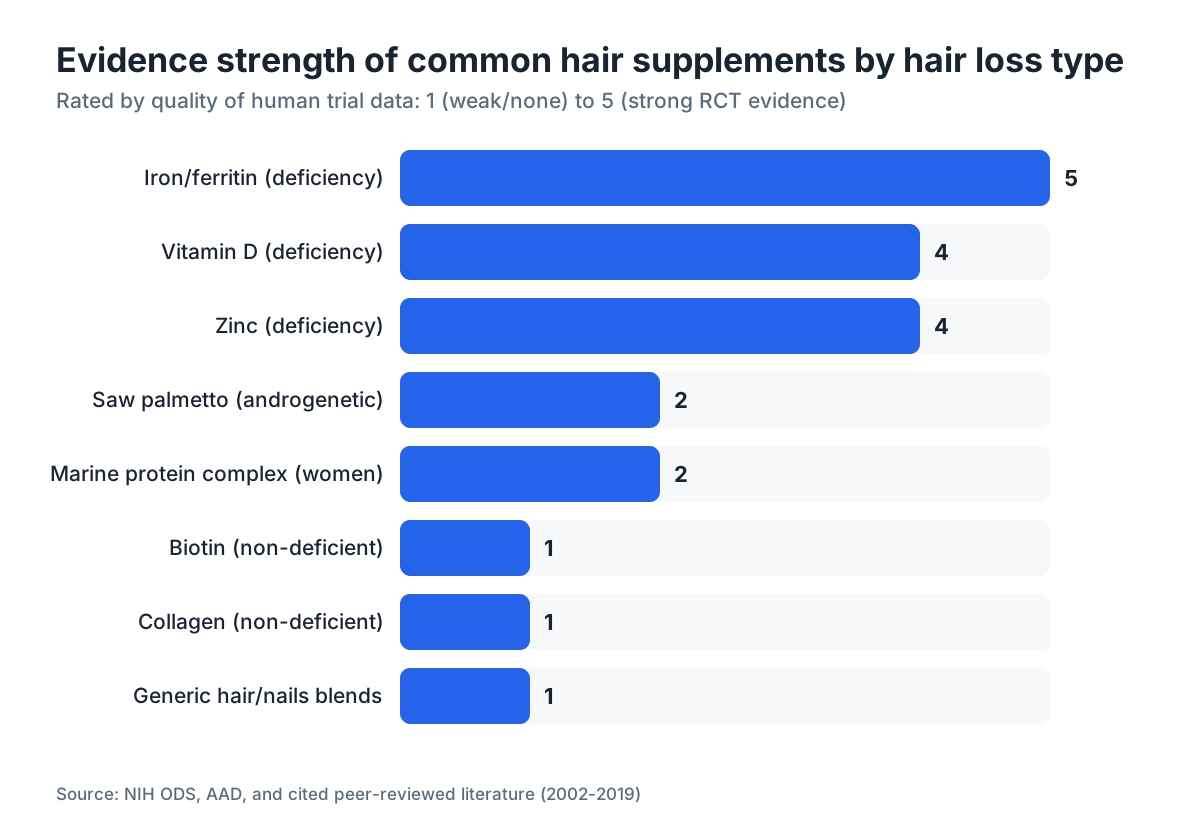
Iron and ferritin. Low ferritin is probably the most common and most under-diagnosed nutritional driver of hair shedding in women. Ferritin below 30 ng/mL is tied to telogen effluvium in several studies. Some dermatologists aim for 70 ng/mL when hair is the concern, though that higher target is debated [6]. Iron-deficiency anemia is a well-established cause of diffuse shedding. If your ferritin is low, iron supplementation (typically ferrous sulfate 325 mg, taken with vitamin C for absorption and away from calcium) can meaningfully cut shedding. Repletion takes 4 to 6 months to show in your hair because follicles need time to cycle back into growth.
Zinc. Zinc deficiency is linked to hair loss, and supplementation helps people who are actually deficient. One small randomized trial in alopecia areata patients found zinc sulfate improved regrowth [7]. Watch the dose. Above 40 mg per day long-term, zinc depletes copper, so don't stack it blindly without a baseline number.
Biotin (vitamin B7). Biotin deficiency causes hair loss, and that's documented. True deficiency in an adult eating a normal diet is rare. The FDA has warned that high-dose biotin interferes with troponin and thyroid lab tests, throwing off results [8]. If you take biotin and get bloodwork, tell your doctor. Most "hair growth" doses (5,000 to 10,000 mcg) sit far above the 30 mcg per day adequate intake and mostly get excreted. Evidence that megadoses grow hair in non-deficient people is essentially absent.
Vitamin D. Covered above. Supplement if deficient, skip it if not.
Vitamin E. One small randomized trial found tocotrienols (a form of vitamin E) improved hair count. It had only 38 participants, so treat it as preliminary [9].
Lysine. An essential amino acid that helps iron absorption. Some evidence it works alongside iron in women with telogen effluvium, but standalone trials are thin.
Niacin (B3). Common in hair blends. Niacin deficiency causes hair loss as part of pellagra, but that deficiency is rare in developed countries. No strong evidence that extra niacin helps anyone who isn't deficient.
The table below lays out the evidence by nutrient at a glance.
How do hair supplements compare to proven treatments like minoxidil?
This is the question people skip. The short answer: no supplement comes close to minoxidil or finasteride for androgenetic alopecia. Supplements only win when a nutritional deficiency is the actual cause.
Topical minoxidil at 5% is FDA-approved for androgenetic alopecia and shows visible regrowth in roughly 40 to 60% of men and women who use it consistently [10]. Minoxidil for men is the most-studied over-the-counter hair loss treatment there is. Oral finasteride (1 mg, prescription-only for men) does even better for male pattern baldness, stopping progression in about 83 to 87% of men across two-year trials.
Saw palmetto blocks 5-alpha reductase, the same enzyme finasteride hits, but far more weakly. One trial had about 38% of men on saw palmetto 320 mg per day reporting improvement versus 6% on placebo, and it had real methodological limits [11]. Better than nothing. Not in finasteride's league.
If you have androgenetic hair loss (the classic receding or thinning pattern), supplements are a supporting cast at most. The lead actors are minoxidil, finasteride, or for women low-dose oral minoxidil and anti-androgens. To figure out whether your pattern is androgenetic or something else, a free AI hair analysis at MyHairline gives you a starting point before you book a dermatologist.
If your loss is telogen effluvium driven by a nutrient deficiency, supplements can be the main treatment. Two very different situations.
| Treatment | Type | FDA status | Evidence level | Typical timeline |
|---|---|---|---|---|
| Finasteride 1 mg | Prescription drug | FDA-approved (men) | Multiple large RCTs | 6-12 months |
| Minoxidil 5% topical | OTC drug | FDA-approved | Multiple large RCTs | 4-6 months |
| Oral minoxidil (low-dose) | Prescription drug | Off-label | Growing RCT evidence | 4-6 months |
| Iron (if deficient) | Supplement | N/A | Strong observational, some RCTs | 4-6 months |
| Vitamin D (if deficient) | Supplement | N/A | Observational, mechanistic | 3-6 months |
| Saw palmetto 320 mg | Supplement | N/A | Small RCTs only | 4-6 months |
| Biotin (non-deficient) | Supplement | N/A | No good evidence | N/A |
| "Hair growth" blends | Supplement | N/A | Mostly none | N/A |
What is saw palmetto and does it work for hair loss?
Saw palmetto (Serenoa repens) is a plant extract that partially blocks 5-alpha reductase, the enzyme that converts testosterone to dihydrotestosterone (DHT). DHT is the main driver of androgenetic hair loss in men and women. Finasteride blocks that enzyme much more completely, which is why the drug wins.
A randomized trial in the Journal of Alternative and Complementary Medicine tested saw palmetto 200 mg twice daily against a low-dose finasteride-family drug in men with mild-to-moderate androgenetic alopecia. Finasteride clearly outperformed it, but 38% of saw palmetto users showed improvement versus 6% in the control group [11]. A separate small trial using a topical formulation found modest but real gains in hair count.
The appeal is obvious. Saw palmetto doesn't carry finasteride's risk of sexual side effects, though those risks are more nuanced than they're often made out to be; see finasteride and minoxidil for the fuller picture. The catch is a thin evidence base. If you try it, the studied dose is 320 mg per day of a liposterolic extract. Generic capsules run roughly $15 to $25 a month.
My honest take: if you have androgenetic loss and want an OTC option while you decide about a prescription, saw palmetto is a reasonable low-risk try. Expect modest results. It's no substitute for finasteride if you're losing ground fast.
Do collagen supplements or marine proteins help hair growth?
Collagen is one of the highest-grossing categories in the entire supplement industry, and hair claims drive a big chunk of that. The pitch sounds plausible: hair is mostly keratin, a protein; collagen provides amino acids like glycine and proline; so more collagen means better hair. The biology doesn't run that cleanly.
Hair follicles build keratin from whatever amino acids float in your bloodstream. If you eat adequate protein (roughly 0.8 g per kg of body weight at minimum, more if you're active), you almost certainly have enough. Collagen peptides don't preferentially route to your follicles.
The trials that exist are small, industry-funded, and lean on composite "skin, hair, and nails" endpoints that make the hair signal hard to isolate. A 2012 trial on a marine protein complex did show improvements in hair volume and scalp coverage in women over 16 weeks, but the manufacturer funded it and it enrolled only 44 women [9]. Not enough to hang a purchase on.
If you eat enough protein, collagen supplements probably do nothing for your hair. If you're protein-deficient (crash dieting, restrictive eating, recovering from illness), fixing total protein intake matters far more than which supplement form you pick.
Marine extracts like AminoMar, used in the branded supplement Viviscal, have slightly better data than generic collagen. A few industry-sponsored randomized trials showed statistically significant gains in hair count and thickness in women with self-perceived thinning. The effect sizes were real but modest. Viviscal runs about $50 a month.
For people with hair loss telogen effluvium after illness or surgery, adequate protein during recovery does matter. That's a different thing from marketing collagen as a hair treatment.
What blood tests should you get before buying any hair supplement?
Get your labs before you buy supplements. It's not over-cautious, it's just efficient. Here's what to ask for.
The core panel most dermatologists run for hair loss: serum ferritin (more than hemoglobin, because you can be ferritin-deficient without being anemic), TSH and free T4 (thyroid trouble is a common, treatable cause of shedding), serum 25-hydroxyvitamin D, zinc, a complete blood count, and a basic metabolic panel. In women, add DHEA-S, free and total testosterone, and prolactin to rule out hormonal causes.
Ferritin below 30 ng/mL probably warrants iron. Vitamin D below 20 ng/mL warrants correction. Off thyroid markers mean a conversation with an endocrinologist, not a supplement. If everything reads normal, don't supplement blind. Put the money toward a dermatologist visit instead.
Direct-to-consumer labs (LabCorp, Quest, and others) let you order ferritin and vitamin D panels without a doctor's visit for around $50 to $100. If you already have a doctor, these panels are often covered by insurance under a hair-loss or alopecia diagnosis code.
Knowing your numbers also protects you from overdoing it. High-dose zinc, iron, and vitamin A can all worsen hair loss at toxic levels. Vitamin A toxicity is especially underappreciated: chronic supplement intake above 10,000 IU per day can trigger shedding, the exact symptom you're trying to fix [5].
Are hair supplements safe? What are the risks?
The US supplement industry runs under the Dietary Supplement Health and Education Act (DSHEA) of 1994, which means manufacturers don't have to prove safety or efficacy before selling. The FDA can only act after a problem gets reported. Under DSHEA, as the FDA puts it, supplement firms are "responsible for evaluating the safety and labeling of their products before marketing." That's why a label can say "promotes healthy hair" without a single trial behind it [12].
Most hair supplements at normal doses are safe. A few specific risks are worth knowing.
High-dose biotin (5,000 to 10,000 mcg is standard in many hair gummies) interferes with immunoassay-based lab tests. The FDA issued a safety communication on this in 2019 [8]. If you take biotin and get troponin, TSH, or vitamin D tests, stop the biotin at least 48 to 72 hours beforehand and tell your lab.
Vitamin A toxicity is real. Many "hair and skin" multivitamins use retinol (preformed vitamin A) rather than beta-carotene. Stack a multivitamin with a separate hair supplement and you can push past safe long-term intake. Read the labels.
Iron supplements cause real GI side effects for many people (constipation, nausea). Excess iron is dangerous too, especially for men and post-menopausal women who don't menstruate. Only supplement iron if a ferritin test confirms you're low.
Herb-drug interactions matter. Saw palmetto can theoretically interact with anticoagulants. Check with a pharmacist or prescriber if you're on any medication.
The American Academy of Dermatology recommends checking for underlying deficiencies before starting supplements and choosing single-ingredient or well-characterized products over proprietary blends that hide the individual doses [6].
How long do hair supplements take to show results?
Patience is the price of admission here, and it's where people either quit too early or stay on something that isn't working. Plan on three to six months before you can judge anything.
Hair grows about half an inch a month. What matters more is the cycle: anagen (growth), catagen (transition), and telogen (resting and shedding). A telogen hair stays in the scalp about 100 days before it sheds, then the follicle sits dormant before a new anagen hair starts. Correcting a deficiency doesn't flip follicles back into growth overnight. You wait for the natural cycle to catch up.
For iron or vitamin D deficiencies, most dermatologists say three to six months of consistent supplementation at correct doses before you evaluate. Some people notice less shedding within two to three months but don't see density improve until closer to six.
For saw palmetto in androgenetic alopecia, the same timelines apply. The trials that showed benefit ran 6 to 12 months.
A practical routine: photograph your hairline or part width under the same lighting every four weeks. Shower-drain shedding counts can help too. Retest your ferritin and vitamin D at three months to confirm you've actually corrected the deficiency before deciding the supplement failed.
If you suspect your pattern might be androgenetic rather than deficiency-driven, the receding hairline guide walks through what to look for.
Which hair loss supplements are worth trying, ranked honestly
Here's the ranking, most to least evidence-backed, for an adult with non-androgenetic hair loss and a documented deficiency.
First priority: fix deficiencies. Ferritin, vitamin D, zinc, and thyroid are the big four. These aren't optional extras. They're the actual treatment when a deficiency is driving your loss. For vitamin D, if your 25(OH)D is below 20 ng/mL, 2,000 IU daily is a reasonable start with a retest at three months [5].
Second tier: saw palmetto for androgenetic loss. If you have androgenetic alopecia and want an OTC option with some mechanism and trial support, 320 mg per day of a liposterolic extract is the studied formulation. Manage expectations. It's much weaker than finasteride.
Third tier: marine protein complexes (like Viviscal) for women with diffuse thinning. The evidence is industry-funded and modest, but it exists. The amino acid profile may support follicles in women with dietary protein gaps.
Skip these. Generic "hair, skin, and nails" gummies with underdosed ingredients and hidden blends. Biotin above 30 mcg unless bloodwork confirms a deficiency. High-dose vitamin A. Horsetail, amla, MSM, and most exotic botanicals with zero human trial data.
If your pattern looks more like male or female pattern baldness than diffuse shedding, talk to a dermatologist about minoxidil for men or prescription finasteride. Either one beats any supplement. For people who've already tried the conservative route, hair transplant is the most permanent option, with its own costs and trade-offs.
MyHairline's free AI scan (/scan) helps you figure out whether your pattern looks androgenetic or more like diffuse shedding before you pick a category of treatment.
Sources
- Journal of Investigative Dermatology, Bikle et al. 2006, "Vitamin D receptor is required for hair follicle cycling"
- Skin Pharmacology and Physiology, Rasheed et al. 2013, "Serum Ferritin and Vitamin D in Female Hair Loss"
- PLOS ONE, Tsai et al. 2014, "Vitamin D and Alopecia Areata meta-analysis"
- The Endocrine Society, "Evaluation, Treatment, and Prevention of Vitamin D Deficiency" (Clinical Practice Guideline)
- NIH Office of Dietary Supplements, Vitamin D Fact Sheet for Health Professionals
- American Academy of Dermatology, "Hair Loss: Who Gets and Causes"
- International Journal of Dermatology, Sharquie & Al-Obaidi 2002, "Zinc Sulfate in Alopecia Areata"
- Journal of Cosmetic Dermatology, Glynis 2012, "A Double-blind, Placebo-controlled Study Evaluating the Efficacy of an Oral Supplement in Women with Self-perceived Thinning Hair"
- FDA, Minoxidil 5% topical solution label (OTC drug monograph)
- Journal of Alternative and Complementary Medicine, Prager et al. 2002, "A Randomized, Double-Blind, Placebo-Controlled Trial to Determine the Effectiveness of Botanically Derived Inhibitors of 5-Alpha-Reductase in the Treatment of Androgenetic Alopecia"
- U.S. FDA, Dietary Supplement Health and Education Act (DSHEA) 1994 overview