

TL;DR: Telogen effluvium is temporary, diffuse hair shedding set off by a physical or emotional stressor 2-3 months earlier. Most people recover fully within 3-6 months once the trigger is gone. Cases lasting past 6 months are chronic and need a workup for thyroid disease or low iron. Most acute cases need no treatment, though correcting a confirmed deficiency speeds things up.
What is telogen effluvium and why does hair fall out?
Hair grows in cycles. Each follicle spends 2-7 years in anagen (active growth), a brief transition in catagen, then 2-3 months resting in telogen before the hair sheds and a new one starts. Around 5-15% of your scalp follicles sit in telogen at any moment, which is why losing 50-100 hairs a day is normal [1].
Telogen effluvium is what happens when a stressor shocks a big chunk of those follicles out of anagen and into telogen all at once. Two to three months later, they shed together. That delay is why you usually can't connect the loss to anything happening right now. The trigger already came and went. During a flare you might lose 300 or more hairs a day. The scalp doesn't go bald in patches. The thinning is diffuse, all over.
The triggers are broad. High fever, surgery, childbirth (postpartum telogen effluvium is one of the most common triggers), rapid weight loss, severe illness, crash diets, iron deficiency, thyroid trouble, major psychological stress, stopping hormonal birth control, and certain medications all show up on the list [2][11]. The follicle is basically running a stress response: it conserves energy by dropping into a resting phase.
For more on the biology, see telogen effluvium and our broader guide on what causes hair loss.
How long does telogen effluvium recovery actually take?
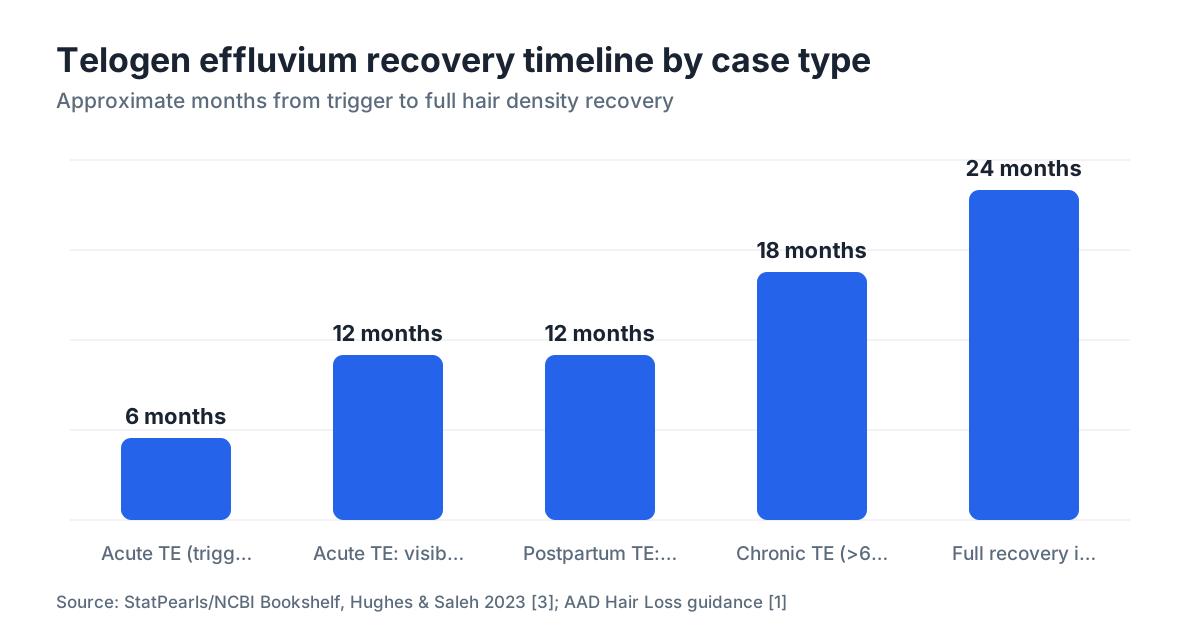
Most acute cases resolve within 3 to 6 months of removing or recovering from the trigger [1][3]. Some people don't see shedding normalize until closer to 9-12 months. Then regrowth follows the natural anagen cycle, so visible fullness can take another 6-12 months after the shedding stops. From trigger to looking fully recovered runs 12-18 months for some people, even when everything goes right.
Chronic telogen effluvium is diffuse shedding that keeps going for more than 6 months [3]. It hits women more often than men and usually ties back to a persistent cause rather than one clean stressor. Low iron and ferritin, thyroid disorders, and autoimmune conditions are the usual suspects.
There's a real difference between the telogen effluvium pattern and androgenetic alopecia (genetic hair loss). In telogen effluvium the density drops evenly and the hairline holds. In androgenetic alopecia the loss follows a map: recession at the temples and thinning at the crown in men (see receding hairline), a widening part in women. The two can overlap, which is what makes diagnosis harder.
The table below lays out the general recovery timeline by case type.
What does the recovery timeline look like month by month?
Knowing the phases takes the edge off the panic, because the worst shedding shows up before any regrowth is visible.
| Phase | Approximate timing | What you notice |
|---|---|---|
| Trigger event | Month 0 | Illness, surgery, crash diet, childbirth, etc. |
| Shedding begins | Weeks 6-12 post-trigger | Sharp rise in daily shed hair |
| Peak shedding | Months 2-4 post-trigger | Handfuls in the shower, diffuse thinning visible |
| Shedding slows | Months 3-6 post-trigger (acute cases) | Daily count drops toward baseline |
| Early regrowth | Months 4-8 | Short "baby hairs" appear, especially at the hairline |
| Visible recovery | Months 9-18 | Density returns, texture may differ for a while |
| Full recovery | 12-24 months (varies) | Most acute cases fully recover with no lasting loss |
Regrowth is slow because of physics, not pathology. Hair grows about 1 centimeter per month [4], so it needs roughly 6 inches just to reach chin length. Coverage fills in gradually, and you'll spot short new hairs poking up well before the hair looks full again.
One thing worth knowing: shedding can tick up again when new anagen hairs push the old resting hairs out. People read this second wave as a relapse. It usually isn't.
What lab tests and diagnosis actually matter?
A dermatologist diagnosing telogen effluvium starts with the history: what happened 2-3 months ago? They may run a gentle pull test, gripping 40-60 hairs close to the scalp and tugging. Pulling out more than 6 counts as positive and suggests active effluvium [3]. The test misses cases, but it's quick and painless.
Blood work is where the real information lives. The minimum useful panel includes ferritin (more telling than hemoglobin, since ferritin can bottom out long before anemia shows), thyroid-stimulating hormone (TSH), complete blood count, and sometimes 25-OH vitamin D, zinc, and B12 [2]. Some clinicians add sex hormone levels if there's reason to suspect polycystic ovary syndrome or another hormonal issue.
Ferritin is the one that surprises people most. Serum ferritin below 30 ng/mL has been linked to telogen effluvium in some studies, though the cutoff dermatologists actually use varies [2]. The American Academy of Dermatology recommends screening ferritin in women with chronic telogen effluvium [5].
Dermoscopy (a handheld magnifier for scalp and follicles) separates telogen effluvium from androgenetic alopecia by the ratio of terminal to vellus hairs and the follicular unit pattern. If you want a visual starting point before your appointment, the free AI hair analysis at MyHairline can flag diffuse thinning worth raising with your doctor. It doesn't replace blood work.
A scalp biopsy is rarely needed for classic cases. It earns its place when the diagnosis stays murky after labs and exam.
Which nutritional deficiencies slow recovery and what should you actually do about them?
Correcting a confirmed deficiency is probably the single highest-yield move in telogen effluvium recovery. The word "confirmed" carries weight. Supplementing nutrients you don't lack does little, and sometimes it backfires (vitamin A toxicity is itself a trigger for hair loss).
Iron and ferritin are the most studied. A 2002 review in the Journal of the American Academy of Dermatology concluded that iron deficiency without overt anemia was associated with hair loss in women, while noting the causal link needed more study [6]. If your ferritin is low, refilling it takes time. Oral iron usually raises ferritin over 1-2 months, but restocking tissue stores can take 3-6 months, and the hair response lags behind even that.
Vitamin D deficiency turns up in a disproportionate share of hair loss patients, though the causal data are thin [2]. Zinc deficiency has a documented tie to hair loss, and zinc in the follicle may shift the anagen-to-telogen ratio [2]. B12 deficiency, more common in vegetarians and people on metformin, sometimes contributes.
Protein counts too. Hair is roughly 91% protein (keratin). Crash diets or very-low-calorie eating that drops protein below about 0.8 g per kilogram of body weight per day starves follicles of raw material.
For a closer look at supplements with actual evidence behind them, see hair loss supplements.
Does minoxidil help telogen effluvium recovery?
Here's where I'd keep expectations honest. Minoxidil is FDA-approved for androgenetic alopecia (pattern hair loss), not for telogen effluvium [8]. Plenty of dermatologists use it off-label anyway, and there's logic to it: minoxidil shortens the telogen phase and can nudge follicles back into anagen sooner.
But most acute telogen effluvium recovers on its own once the trigger clears. Reaching for minoxidil first makes sense only if the effluvium is severe, dragging on, or overlapping with androgenetic alopecia. If you've got both, treating the androgenetic part with minoxidil (and finasteride if you're male, see finasteride) is the smarter play, because that loss won't fix itself.
One genuine catch: minoxidil often triggers a burst of shedding in its first 4-8 weeks as it pushes late-telogen hairs out. That's brutal timing when you're already losing a lot of hair. If you start it, know that upfront. See minoxidil side effects for the full picture, and minoxidil for men for the standard application routines.
Low-dose oral minoxidil (0.625-2.5 mg/day) is increasingly used by dermatologists and may suit diffuse shedding, though it carries more systemic side effects. See oral minoxidil for the comparison.
Do DHT blockers like finasteride have any role in telogen effluvium?
Finasteride and other DHT blockers cut dihydrotestosterone, the androgen that shrinks follicles in androgenetic alopecia. Telogen effluvium isn't a DHT-driven process, so a DHT blocker on its own won't touch it.
The overlap case is where it matters. A man with both genetic thinning and a superimposed telogen effluvium after surgery might benefit from finasteride for the androgenetic part, while the effluvium clears on its own. The finasteride-plus-minoxidil combination often comes up here; see finasteride and minoxidil for how they work together.
For women, finasteride isn't FDA-approved for hair loss. Spironolactone and low-dose oral minoxidil are the more common picks when women have chronic telogen effluvium with a hormonal or androgenetic component.
What lifestyle factors actually speed up recovery?
Removing the trigger is the whole ballgame. Everything else just sets up the conditions for normal follicle cycling.
Sleep is underrated. Growth hormone, which supports anagen, releases mostly during slow-wave sleep. Chronically bad sleep keeps you in the stress state that drove the effluvium to begin with. Seven to nine hours is the actual target, not a suggestion.
Eating enough matters more than any supplement. If you're still restricting hard after a weight-loss-triggered effluvium, you're keeping the trigger alive. A moderate deficit (no more than about 500 calories below maintenance) is the standard advice for people who still need to lose weight without setting off another episode.
Stress management is real medicine here. Chronic psychological stress raises cortisol, which disrupts follicle cycling [10]. Exercise helps both cortisol and sleep. No supplement fixes stress, but the basics do work.
Gentle hair care cuts down on mechanical loss layered on top of the effluvium. Skip the aggressive brushing of wet hair, tight ponytails and braids, and heavy heat. None of that causes or cures telogen effluvium, but when follicles are already fragile, breaking hairs off adds insult to injury.
Scalp massage has a thin evidence base. A 2016 study in ePlasty found that 9 minutes of daily standardized scalp massage over 24 weeks was associated with thicker hair in healthy Japanese men [9]. The sample was tiny, nine men, so this isn't a strong recommendation. The downside risk is zero, though.
When does telogen effluvium become chronic and what changes?
By convention, telogen effluvium that runs past 6 months is chronic [3]. The management changes at that point.
In chronic cases, the single-trigger story usually stops fitting. More often the triggers stack: someone under constant psychological stress who also has borderline ferritin and terrible sleep won't recover by waiting. Dermatologists sometimes call this a low-grade, diffuse loss that needs every contributing factor tracked down.
The American Academy of Dermatology recommends checking for thyroid disease, iron deficiency, and nutritional deficiencies as first steps in chronic cases [5]. If the labs come back clean, the differential widens to include diffuse alopecia areata (which looks similar but has different dermoscopic features) and female pattern hair loss.
The psychological toll is real and serious in chronic cases. Research on the burden of hair loss reports higher rates of anxiety and depression in people dealing with persistent shedding compared to controls [10]. It cuts both ways: anxiety worsens the shedding, and the shedding worsens the anxiety. Treating both at once beats treating only the hair.
Hair transplants are not a treatment for telogen effluvium. Transplanting into an unstable scalp risks shock loss of both the grafts and your existing hair. A hair transplant only makes sense after the effluvium has fully resolved and only if there's a stable androgenetic component causing permanent loss.
How do you tell if your hair is actually recovering?
The clearest early sign is the daily shed count dropping back toward normal. Most people don't count exactly, but collecting hairs from a morning brush or the shower floor over a few days gives you a rough read. A move from a peak of 300-plus back toward 50-100 a day is real progress.
New growth shows up as short, fine hairs, especially along the hairline and in the part. These hairs often start out a little different in texture. Softer, wavier, sometimes lighter. That's normal and temporary.
Photos under the same lighting are genuinely useful. Hair changes slowly enough that day-to-day looking misses real progress. One photo every 4 weeks from the same angle and light shows trends you'd otherwise never catch.
For a more structured way to track diffuse thinning over time, MyHairline's AI scan tool maps scalp coverage from photos and gives you a baseline to measure future images against.
Persistent or worsening loss after 6 months, despite removing the triggers you identified, is the main reason to go back to a dermatologist. At that point chronic telogen effluvium, androgenetic alopecia, and diffuse alopecia areata all need a second look.
What should you avoid during telogen effluvium recovery?
A handful of things will genuinely slow recovery or make it worse.
High-dose vitamin A or retinoid supplements. Vitamin A toxicity is a documented, independent cause of telogen effluvium [2]. Many hair growth supplements stack beta-carotene and retinol, and someone already eating a varied diet can tip into excess without realizing it.
Another crash diet. The most common cause of a repeat telogen effluvium in the clinical literature is a second round of extreme caloric restriction before follicles have recovered from the first. Follicles need stable nutrition to finish a full anagen cycle.
Ignoring medication triggers. Anticoagulants, retinoids, beta-blockers, lithium, and some antidepressants sit on the standard list of drugs that can trigger telogen effluvium [2]. If you started a new medication 2-3 months before the shedding began, that link is worth a conversation with the prescriber. Never stop a prescribed medication on your own, even if you suspect it's the culprit.
Over-supplementing deficiencies you don't have. More selenium, zinc, or biotin won't speed anything up if your levels are already normal. Excess selenium is associated with hair loss [2]. Biotin, for all the marketing, has essentially no evidence of benefit unless you're actually biotin-deficient [5].
And harsh chemical processing while hairs are fragile. Bleach, relaxers, and tight braiding on a scalp that's already losing volume make the appearance worse and add breakage on top.
What do dermatologists actually recommend as a recovery protocol?
Pulling from published AAD guidance and standard practice, the approach to telogen effluvium recovery runs in a clear order [3][5].
First, find and remove or treat the trigger. Obvious, and still often skipped. Second, get blood work: ferritin, TSH, CBC, and vitamin D at minimum. Third, correct confirmed deficiencies at therapeutic doses, not maintenance doses. Fourth, hit adequate protein and enough total calories. Fifth, manage ongoing stress with real interventions, more than intentions.
Medication (topical or oral minoxidil) gets added if the shedding is severe enough to cause real cosmetic distress before natural recovery is due, or if androgenetic alopecia is riding along. The FDA label for minoxidil 2% and 5% solution lists androgenetic alopecia in adults as its approved use [8], so off-label use for effluvium should be a shared decision with a dermatologist.
Follow-up at 3-6 months tells you whether the trajectory is improving. If it isn't, go back and question the diagnosis.
Most acute cases never need anything past the first four steps. Patience isn't a cop-out here. It's what the evidence supports.
Sources
- American Academy of Dermatology, Hair loss types: Telogen effluvium overview
- Almohanna HM et al., Dermatology and Therapy 2019, 'The Role of Vitamins and Minerals in Hair Loss: A Review'
- Hughes EC, Saleh D. Telogen Effluvium. StatPearls, NCBI Bookshelf, 2023
- Trüeb RM, International Journal of Trichology 2015, 'Effect of ultraviolet radiation, smoking and nutrition on hair'
- American Academy of Dermatology, Hair loss: Diagnosis and treatment guidance
- Rushton DH, Journal of the American Academy of Dermatology 2002, 'Nutritional factors and hair loss'
- FDA, Minoxidil topical solution drug label (OTC, Rogaine)
- Koyama T et al., ePlasty 2016, 'Standardized Scalp Massage Results in Increased Hair Thickness'
- Hadshiew IM et al., Journal of Investigative Dermatology 2004, 'Burden of hair loss: stress and the underestimated psychosocial impact'
- Phillips TG, Slomiany WP, Allison R. American Family Physician 2017, 'Hair Loss: Common Causes and Treatment'