

TL;DR: Telogen effluvium (TE) is diffuse hair loss that hits when a physical or emotional shock pushes too many follicles into the resting phase at once. The shed shows up 2 to 4 months after the trigger. Most acute cases fix themselves within 6 months once the trigger clears. Chronic TE can drag on for years and sometimes hides underlying pattern baldness, which changes the treatment entirely.
What is telogen effluvium and how is it different from regular hair loss?
Hair grows in cycles. Each follicle spends roughly 2 to 6 years in the active growth phase (anagen), a few weeks in a transitional phase (catagen), and then 2 to 4 months in a resting phase called telogen before the old hair sheds and a new one starts growing [1]. Normally about 5 to 15 percent of your follicles are in telogen at any moment, which is why the average person loses 50 to 100 hairs a day and barely notices.
Telogen effluvium happens when some kind of systemic stress forces an unusually large number of follicles into telogen all at once. Two to four months later, those follicles all shed their hairs in a wave. The result is diffuse thinning across the whole scalp, sometimes including the temples and crown, but the hairline itself usually stays intact. That last detail is one of the clearest ways to tell TE apart from androgenetic alopecia (pattern hair loss), which targets specific zones and follows the receding hairline pattern most people picture when they think about balding [2].
TE is one of the most common causes of hair loss dermatologists see, and it hits women more often than men, largely because pregnancy and thyroid disorders are two of the biggest triggers. Men get it too. And in men it gets misread as early pattern baldness all the time. Getting that distinction right matters, because the two are managed differently.
What causes telogen effluvium? The most common triggers
The mechanism is almost always some kind of metabolic or psychological shock to the body. Dermatologists sort the triggers into a few broad buckets [1][3].
Physiologic triggers are physical events that demand enormous energy. Childbirth is the most famous, which is why postpartum telogen effluvium affects a large share of new mothers, usually 2 to 4 months after delivery. Major surgery, a high fever from any cause, severe illness (COVID-19 set off an enormous wave of TE cases in 2020 and 2021), and rapid significant weight loss all sit in this bucket.
Nutritional deficiencies are a big one, and often missed. Iron deficiency is the most studied. A 2017 review in the Journal of the American Academy of Dermatology found ferritin levels below 30 ng/mL consistently correlated with TE in premenopausal women, though the authors noted the causality isn't perfectly clean [3]. Low zinc, low protein, and rarely low biotin can do the same thing. Crash dieters and bariatric surgery patients carry higher risk for exactly this reason.
Medications are a trigger many people never connect to their hair. Anticoagulants, beta-blockers, retinoids (high-dose vitamin A), some antidepressants, and certain cholesterol drugs all show up on lists of known TE culprits [4]. If your hair started falling out 2 to 4 months after starting or switching a medication, that timing is not a coincidence.
Psychological stress works through neuroendocrine pathways, spiking cortisol and other hormones that disrupt follicle cycling. The research here is softer than for physiologic triggers, but clinically it's well accepted.
Thyroid dysfunction, both hypothyroidism and hyperthyroidism, is a systemic cause that reverses once the thyroid is treated. If you have TE with no obvious trigger, checking thyroid-stimulating hormone (TSH) is one of the first moves a dermatologist makes.
For the full picture of what causes hair loss, TE is one piece of a much bigger map.
What does telogen effluvium look like? How to recognize it
The classic sign is a sudden jump in shedding, spotted on the shower floor, on pillows, or in the brush. People describe finding clumps, though "clump" is relative: 200 hairs a day feels alarming but still doesn't look dramatic in the drain.
The shedding is diffuse. It comes from all over the scalp rather than piling up at the crown or temples. The part may widen. Overall density drops. But full bald patches are not typical of TE. If you have discrete bald circles, alopecia areata is the likelier answer.
A simple in-office test is the pull test: a dermatologist gently tugs 40 to 60 hairs from different scalp regions. Pulling more than 6 telogen-phase hairs per grasp counts as positive. The pulled hairs in TE have a white bulb (telogen root) rather than a pigmented anagen bulb [1].
Trichoscopy (a handheld dermoscope used on the scalp) helps too. In TE you see a high proportion of short, regrowing hairs and relatively few follicular units producing more than two hairs. In androgenetic alopecia you see hair caliber variation and miniaturized follicles [2].
One thing worth knowing: TE and androgenetic alopecia can co-exist. TE stress can unmask latent pattern baldness, and pattern baldness can throw off some TE-like shedding around miniaturized follicles. That combination is a headache to untangle, and it's one of the better reasons to see a board-certified dermatologist instead of diagnosing yourself.
How long does telogen effluvium last? Acute vs. chronic
Acute telogen effluvium lasts less than 6 months by definition. The trigger hits, shedding peaks 2 to 4 months later, then hair regrows. Most people with a single clear trigger, like childbirth or surgery, are back to baseline density within a year. Regrowth feels slow because anagen hairs grow only about 1 centimeter per month [1].
Chronic telogen effluvium is loosely defined as diffuse shedding that runs past 6 months. It's less understood. Some cases have an ongoing trigger, like untreated hypothyroidism or persistent iron deficiency. Others seem cyclical or self-perpetuating in ways researchers haven't fully mapped. A 1996 paper by Sinclair in the Journal of the European Academy of Dermatology and Venereology described chronic TE in middle-aged women as often running 2 to 7 years before resolving on its own, with no cause found in many patients [5].
Here's the frustrating truth: chronic TE with no fixable cause has few good treatment options. Correcting nutritional deficits, treating thyroid disease, reviewing medications, and easing physiologic stress are the moves with the clearest logic. Time is often the main treatment.
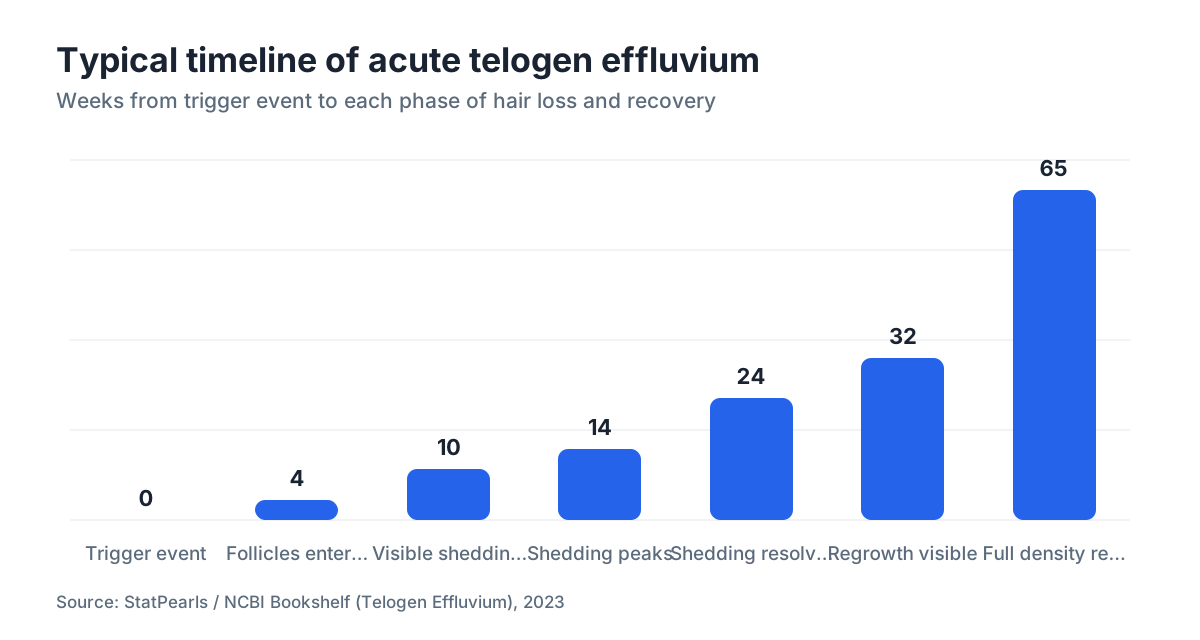
A rough timeline to set expectations:
| Phase | Typical timing |
|---|---|
| Trigger event | Week 0 |
| Follicles enter telogen | Weeks 1 to 4 |
| Visible shedding begins | Months 2 to 4 after trigger |
| Shedding peaks | Month 3 to 4 after trigger |
| Shedding resolves (acute TE) | Months 4 to 6 after trigger |
| Regrowth visible | Months 6 to 12 after trigger |
| Full density recovery | 12 to 18 months after trigger |
How is telogen effluvium diagnosed? What tests do doctors run?
There's no single definitive lab test for TE. Diagnosis is mostly clinical, built from your history, the pattern of shedding, and ruling out other causes.
A dermatologist usually starts with a detailed history: when the shedding started, what happened 2 to 4 months before that, any new medications, recent illnesses, dietary changes, surgeries. The timing question is often the single most useful data point.
Blood work usually covers a complete blood count (to check for anemia), ferritin (stored iron), TSH (thyroid function), and sometimes a full metabolic panel, vitamin D, and zinc. These don't diagnose TE directly. They find treatable causes underneath it.
A scalp biopsy with horizontal sectioning can quantify the ratio of anagen to telogen follicles and is the gold standard for confirming TE. In TE, telogen follicles run above roughly 25 percent of the total follicle count [1]. Biopsies aren't routine for straightforward cases, but they earn their keep when the diagnosis is uncertain or when androgenetic alopecia needs to be ruled out more firmly.
Dermatoscopy, as noted, adds useful information without cutting anything and is now standard in most dermatology offices.
Does telogen effluvium grow back? What to expect with recovery
For acute TE with a resolved trigger, yes. Regrowth is expected. The follicles aren't destroyed; they were just parked in the wrong phase for a while. Once they re-enter anagen, they make normal hairs. Most people see fine, short regrowth hairs appearing 3 to 6 months after the peak of shedding.
Full density recovery can take 12 to 18 months, because each new hair has to grow from near-zero length. During that stretch, hair looks thinner than it will once everything catches up, which feeds the fear that it's still falling out. The shedding and the regrowing overlap, so progress is hard to judge day to day.
It gets more complicated when TE lands on top of underlying androgenetic alopecia. In those cases, some of the apparent TE won't fully recover, because the miniaturized follicles from pattern hair loss are permanently compromised. If regrowth seems slower than expected, or if the thinning concentrates at the crown or hairline instead of being truly diffuse, a dermatologic exam makes sense.
Track progress objectively. Serial photos of the part and the temples, same light and same angles, every 8 to 12 weeks, give you a real record instead of leaning on daily impressions, which are notoriously unreliable.
What treatments actually work for telogen effluvium?
Honest answer: the most effective treatment for TE is finding and fixing the trigger. Not satisfying when you want a pill or a bottle, but it's what the evidence supports.
Iron supplementation for iron-deficient patients is the clearest example. If ferritin is low, correcting it with oral iron (typically ferrous sulfate, 325 mg once or twice daily) can normalize the hair cycle in 4 to 6 months [3]. The key word is deficient. Loading up on iron when you aren't deficient doesn't help and can hurt you.
Thyroid treatment works the same way. Treating hypothyroidism with levothyroxine normalizes TSH and usually clears thyroid-related TE within 6 to 12 months.
Minoxidil is the one topical with FDA approval for hair loss and some evidence in TE specifically. It works mainly by prolonging anagen and increasing follicle size. In TE it may help by nudging follicles back into anagen and softening the severity of the shed, though it hasn't been tested in large randomized TE-specific trials. The FDA-approved topical formulations are 2% and 5% for women and 5% for men [4]. Minoxidil for men and topical minoxidil both have more detail on using it properly. Oral minoxidil at low doses (0.5 to 2.5 mg daily) is increasingly used off-label for TE-associated shedding, though data are still thin. Read up on minoxidil side effects before you start.
Finasteride has no established role in uncomplicated TE. It works on the androgen pathway behind pattern hair loss, not the stress or metabolic pathway that drives TE. If your TE has uncovered underlying androgenetic alopecia, finasteride and minoxidil together might fit, but that's a call for a dermatologist who has looked at your scalp.
Nutritional supplements marketed for hair are a mixed bag. Biotin, sold everywhere for hair, has no credible evidence for TE in people who aren't biotin-deficient (which is rare). The AAD has flatly stated that most people don't need biotin supplements for hair loss [6]. Some evidence exists for multi-nutrient supplements with iron, zinc, and amino acids, but the study quality is low. See hair loss supplements for a fuller breakdown of what has evidence and what doesn't.
Platelet-rich plasma (PRP) and low-level laser therapy (LLLT) come up for TE now and then. The evidence is mixed and mostly for androgenetic alopecia, not TE. If you're spending money, fixing nutritional deficits and ruling out medical causes comes first.
Myhairline's free AI scan (/scan) can help you spot whether your shedding pattern looks more like TE or pattern hair loss, which is often the first genuinely useful data point when you're trying to figure out where to start.
Can stress alone cause telogen effluvium?
Yes, but probably not everyday stress. The stress that reliably triggers TE is acute and severe, physiologic or psychological, not the low-grade grind of a hard week at work. Think bereavement, a stretch of extreme sleep deprivation and physical illness, trauma, or prolonged fasting.
The biology runs through corticotropin-releasing hormone (CRH), produced by the skin's own stress-response system, which can push follicles into catagen and then telogen early [7]. Animal models back this up, and the mechanistic logic is solid, but clean human studies isolating psychological stress as the single variable in TE are hard to run.
What clinicians actually see: TE patients often report a big stressful event 2 to 4 months before shedding, but separating out whether the stress caused the TE or whether a concurrent illness or nutritional change was the real driver is usually impossible. The honest position is this. Stress can do this. The timing suggests it often does. It's rarely the only thing going on.
Is telogen effluvium the same thing as postpartum hair loss?
Postpartum hair loss is TE. It's just the most common and most predictable version of it.
During pregnancy, elevated estrogen prolongs anagen, which is why many pregnant women notice their hair looking thicker and shedding less. After delivery, estrogen drops sharply, and all those follicles held in extended anagen shift to telogen at the same time. Two to four months later, the shed hits.
Postpartum TE typically peaks around 3 to 4 months after delivery and resolves by 12 months postpartum in most women [1]. Breastfeeding doesn't meaningfully worsen or drag it out, despite the common belief. Iron deficiency from pregnancy, which is very common, can stretch the shedding period, so a ferritin check is reasonable if the loss is severe or prolonged.
No treatment has been proven to prevent or meaningfully shorten postpartum TE. Good nutrition, correcting deficiencies, and time are the whole toolkit. In the absence of other complicating factors, it fixes itself.
Can COVID-19 cause telogen effluvium?
Yes. Post-COVID TE became one of the most frequently reported post-acute COVID-19 symptoms in 2020 and 2021. A study published in The Lancet in 2021 reported hair loss in about 22 percent of COVID-19 survivors at 6 months post-infection, the fourth most common lingering symptom after fatigue, sleep difficulties, and anxiety [8].
The trigger is the systemic inflammatory stress of the infection itself: fever, immune activation, general metabolic disruption. The timing follows the usual TE script, with shedding showing up 2 to 4 months after the acute illness.
Post-COVID TE is generally acute and resolves within 6 to 12 months. Severity tracks roughly with illness severity, which makes sense given that the worse the physiologic insult, the more follicles get shoved into telogen at once. Management is the same as for any TE: rule out nutritional deficiencies, support overall health, and wait.
How do you tell telogen effluvium apart from androgenetic alopecia?
This is the diagnostic question that matters most, because the treatments differ and mixing up the two is common. Several clinical features help split them.
Distribution is the first clue. TE is diffuse across the whole scalp. Androgenetic alopecia concentrates at the crown and/or temples, following predictable Norwood (in men) or Ludwig (in women) patterns. If your part is widening at the very top of your scalp specifically, androgenetic alopecia moves up the list.
Timing and trigger come next. A clear onset 2 to 4 months after a specific event (illness, delivery, surgery, weight loss, medication change) points hard at TE. Androgenetic alopecia is gradual and progressive over years with no triggering event.
Hair caliber matters. In androgenetic alopecia, affected follicles miniaturize, making progressively thinner hairs over time. In TE, the hairs that remain are normal caliber. The problem is fewer of them, not thinner ones.
Age and sex add context. Androgenetic alopecia is extremely common in men over 30 (about 50 percent show some degree by age 50) [9]. TE in a man that age with no identifiable trigger should still prompt a look for underlying androgenetic alopecia.
If you need clarity, a dermatologist with a dermoscope and possibly a scalp biopsy can give you a definitive answer. The distinction genuinely matters. Going down the finasteride path for what is actually TE wastes money and carries needless side-effect risk. Waiting out what is actually androgenetic alopecia as if it'll self-resolve means losing ground you can't get back without more aggressive treatment. If pattern hair loss turns out to be part of the picture, the full range of options including a hair transplant may eventually come into play.
What should you do first if you think you have telogen effluvium?
Start with the obvious: think backward 2 to 4 months from when the shedding started. Was there an illness? A crash diet? A medication change? A brutal stretch of sleep deprivation or emotional crisis? That timeline exercise is genuinely diagnostic and costs nothing.
Then get basic bloodwork. At minimum: ferritin (more telling than hemoglobin, since you can be iron-deficient before you're anemic), TSH, and a complete blood count. Many primary care doctors will order these without a dermatology referral if you frame it as "I'm shedding a lot of hair and want to rule out thyroid or iron issues." The AAD lists this workup as the starting point for diffuse hair loss [6].
If bloodwork is normal and you have a clear trigger that's already resolved, the honest advice is to wait 3 to 6 months while eating well. A supplement with iron, zinc, and adequate protein is low-risk if your diet is uncertain, but buying a shelf full of expensive hair supplements before you know whether you're deficient is usually the wrong move.
If shedding is severe, runs past 6 months, or leaves any ambiguity about whether androgenetic alopecia is also involved, see a board-certified dermatologist. Early pattern hair loss treated early responds better than late-stage loss. Myhairline's AI scan (/scan) can give you a preliminary read on your shedding pattern and help you decide whether to see a dermatologist urgently or take a watchful-waiting approach for your specific situation.
Sources
- StatPearls (NCBI Bookshelf) - Telogen Effluvium
- American Academy of Dermatology - Hair Loss Types: Alopecia Areata Overview
- Journal of the American Academy of Dermatology - Iron deficiency and hair loss (2017 review)
- FDA - Minoxidil Drug Label (DailyMed)
- Journal of the European Academy of Dermatology and Venereology - Sinclair R, Chronic telogen effluvium, 1996
- American Academy of Dermatology - Hair Loss: Diagnosis and Treatment
- PNAS - Stress and hair follicle biology (Peters et al., 2006)
- The Lancet - 6-month consequences of COVID-19 in patients discharged from hospital (Huang et al., 2021)
- American Hair Loss Association - Men's Hair Loss Statistics
- Dermatology and Therapy - Nutritional deficiencies and hair loss review (Almohanna et al., 2019)