
TL;DR: Hair loss has dozens of causes. The most common by far is androgenetic alopecia, a genetic sensitivity to DHT that affects roughly 50% of men by age 50 and up to 40% of women in their lifetime. After that come thyroid disease, iron deficiency, physical stress, autoimmune conditions like alopecia areata, medications, and hormonal disorders like PCOS. Most causes are treatable once identified correctly.
What actually causes hair loss? The short answer
Hair loss is not one disease. It's a symptom, and the underlying cause determines whether it's temporary or permanent, patchy or diffuse, and what treatment (if any) will actually help.
The hair follicle runs on a cycle: active growth (anagen), a brief transition (catagen), and rest (telogen), after which the old hair sheds and new growth starts. Most causes of hair loss either shorten the anagen phase, push too many follicles into telogen at once, or physically destroy the follicle itself.
Dermatologists broadly split hair loss into two buckets. Scarring alopecias destroy the follicle permanently. Non-scarring alopecias leave the follicle intact, which means regrowth is possible if you remove the cause. Knowing which category you're in changes everything about how aggressive you need to be.
The sections below go cause by cause, with the evidence on how common each one is and what the data say about reversal.
Is hair loss genetic? How androgenetic alopecia works
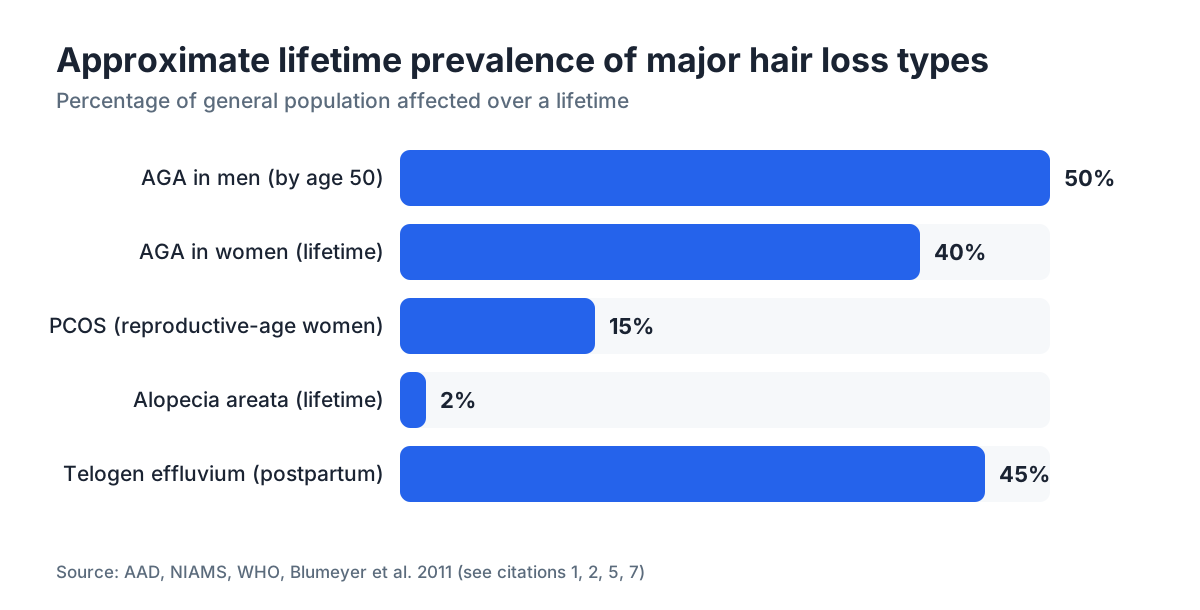
Yes, genetics is the dominant cause for most people who lose hair. Androgenetic alopecia (AGA), also called male-pattern or female-pattern hair loss, is the most common form worldwide. About 50% of men show significant AGA by age 50 [1], and estimates for women range from 12% to 40% depending on age and population studied [2].
The mechanism is specific. The hormone dihydrotestosterone (DHT), a potent metabolite of testosterone made by the enzyme 5-alpha reductase, binds to receptors in genetically sensitive follicles. Over years this miniaturizes the follicle: each new hair grows thinner and shorter until the follicle eventually stops producing a visible strand. The process is gradual, which is why people rarely notice until 30-50% of density is already gone.
In men the pattern is predictable: the hairline recedes at the temples first, then the crown thins, and eventually the two areas merge. Dermatologists use the Norwood scale to stage this. If you're seeing the classic M-shape at your receding hairline, that's almost certainly AGA.
In women the pattern is different. The hairline usually stays put, but the part widens and overall density drops. This is staged with the Ludwig or ISGA scale. Severity that reaches Ludwig III is associated with a 3-4 times higher rate of androgen abnormalities, including PCOS [3].
AGA is not purely your mother's side. The genetics are polygenic, meaning dozens of genes contribute, on both sides of your family. A 2017 genome-wide study identified more than 280 independent genetic signals associated with male-pattern baldness [4].
Finasteride and minoxidil for men are the two FDA-approved treatments for AGA in men. Used together, the evidence for finasteride and minoxidil combined is stronger than either alone.
What causes hair loss in women specifically?
Women lose hair for all the same reasons men do, plus several that are far more common in female biology. The practical challenge is that female hair loss is more often multi-causal: a woman might have mild AGA, iron deficiency, and a thyroid problem at the same time, each contributing a little.
The causes of hair loss in women that deserve the most attention:
Androgenetic alopecia is still the most common single cause, even in women. Estrogen partially counteracts DHT, which is why women rarely go fully bald, but the protection diminishes after menopause.
Iron deficiency is the most commonly overlooked cause. Ferritin (stored iron) below roughly 30 ng/mL is associated with increased shedding in multiple studies, though the causal relationship is still debated. Women who menstruate heavily or follow plant-based diets are at particular risk. Your doctor should check serum ferritin specifically, more than hemoglobin.
Thyroid disease (both hypothyroidism and hyperthyroidism) disrupts the hair cycle. Hair loss from thyroid disease is diffuse and tends to involve the whole scalp. The good news: it usually reverses once thyroid levels normalize, though this takes months.
Postpartum shedding hits many women 2-4 months after delivery. During pregnancy, high estrogen prolongs the anagen phase, so you shed less than normal. After delivery, estrogen drops sharply and all those retained hairs enter telogen together. This is called telogen effluvium; it's almost always self-limiting and resolves by 12 months postpartum without treatment.
Traction alopecia comes from chronic tension on the follicle: tight ponytails, braids, extensions, or weaves worn daily for years. It's mechanical, not hormonal, and it's increasingly recognized as a significant cause of hair loss in Black women and athletes. Caught early it reverses. Caught late, the follicle scars and the loss is permanent.
If you're a woman losing hair and you haven't had a basic blood panel (ferritin, TSH, free T4, CBC, DHEA-S, total and free testosterone), that's the logical first step before trying any treatment.
Does PCOS cause hair loss? What the research says
PCOS hair loss is real, and it's underdiagnosed. Polycystic ovary syndrome affects 6-15% of reproductive-age women globally [5], and hair thinning at the crown or temples is one of its recognized androgen-excess features.
The mechanism is the same as male AGA: elevated androgens (testosterone, DHEA-S, androstenedione) sensitize follicles to DHT and drive miniaturization. Women with PCOS also tend to have higher 5-alpha reductase activity in their scalp tissue. The result looks like female-pattern hair loss, sometimes accompanied by increased facial or body hair (hirsutism), acne, and irregular cycles.
Diagnosis matters here. Hair loss in women with PCOS is not well addressed by minoxidil alone if the underlying androgen excess isn't treated. Dermatologists and endocrinologists often use spironolactone, an androgen-receptor blocker, which has good evidence for reducing androgen-driven hair loss in women [2]. Treating insulin resistance (metformin, lifestyle changes) can also lower androgen levels and has been shown to improve hair density in some PCOS patients, though the hair-specific trial data are limited.
If you're a woman with pcos hair loss concerns, the Rotterdam criteria require two of three features for diagnosis: irregular cycles, clinical or biochemical hyperandrogenism, or polycystic ovaries on ultrasound. An endocrinologist or reproductive endocrinologist is the right specialist, more than a dermatologist.
One important note: not all hair loss in women with PCOS is androgen-driven. PCOS is associated with thyroid disease, insulin resistance, and nutritional deficiencies, all of which cause hair loss independently. Treating all the contributing factors matters.
What is telogen effluvium and what triggers it?
Telogen effluvium (TE) is the medical term for sudden, diffuse shedding triggered by a physical or emotional shock that pushes a large number of follicles into the resting (telogen) phase simultaneously. It typically starts 2-4 months after the trigger and resolves 6-12 months after the trigger is removed.
Common triggers include: major surgery, high fever or severe infection (including COVID-19), rapid weight loss (crash dieting, bariatric surgery), significant psychological stress, childbirth, and starting or stopping certain medications.
The shed count goes up dramatically, sometimes 300-500 hairs per day versus the normal 50-100. That sounds catastrophic, but the total follicle count isn't reduced, so regrowth happens once the body stabilizes. This is the most important distinction between TE and AGA: in TE, the hairs shed are full-thickness normal hairs with a white bulb at the root. In AGA, the new hairs growing back are thinner than the ones they replaced.
Chronic telogen effluvium lasts more than 6 months and often doesn't have a single identifiable trigger. It's more common in women and tends to fluctuate. The evidence base for treating chronic TE beyond identifying and correcting nutritional deficiencies is thin.
For a deeper look at the biology of this phase, the article on hair loss telogen walks through the cycle in more detail.
Which medications cause hair loss?
Drug-induced hair loss is more common than most people expect, and it's often missed because the shedding starts weeks to months after starting the medication.
The FDA labels of many common drug classes list alopecia as a known adverse effect. Categories with the strongest evidence include:
| Drug category | Common examples | Mechanism |
|---|---|---|
| Anticoagulants | Heparin, warfarin | Telogen effluvium |
| Chemotherapy agents | Cyclophosphamide, doxorubicin | Anagen effluvium (rapid) |
| Retinoids | Isotretinoin, acitretin | Telogen effluvium |
| Beta-blockers | Propranolol, metoprolol | Telogen effluvium |
| Mood stabilizers | Lithium, valproate | Telogen effluvium |
| Thyroid medications | Levothyroxine (excess dose) | Telogen effluvium |
| Hormonal contraceptives | Some progestin-dominant pills | AGA acceleration in susceptible women |
Chemotherapy-related hair loss (anagen effluvium) is different from all the others. It happens fast, within weeks, because chemo targets rapidly dividing cells, which follicle cells in active growth phase are. In most cases hair regrows after treatment ends, though texture and color sometimes change.
Never stop a prescription medication because of hair concerns without talking to your prescribing doctor first. The tradeoffs are almost always worth discussing, and there are often alternatives.
If you're curious about one supplement people frequently ask about: the creatine-hair-loss question has a more nuanced answer than most people expect. The article on does creatine cause hair loss goes through the one frequently cited study and what it actually showed.
Can nutritional deficiencies cause hair loss?
Yes, and several specific deficiencies have decent evidence behind them. The follicle is metabolically demanding tissue. It needs a steady supply of protein, iron, zinc, biotin, and other micronutrients to sustain its rapid cell division during anagen.
Iron / ferritin is the most studied. Multiple observational studies link low ferritin to diffuse shedding, and some clinicians treat with iron supplementation when ferritin falls below 30-40 ng/mL even without frank anemia [11]. The randomized trial data are mixed, but the nutritional correction is harmless and warranted on its own merits.
Protein deficiency causes hair loss because hair is almost entirely keratin. Crash diets and extreme restriction are common culprits. This is part of why many people shed after rapid weight loss.
Zinc deficiency has been linked to alopecia areata and diffuse loss. Zinc supplementation has shown benefit in deficient individuals, but supplementing when you're not deficient doesn't help and high-dose zinc is actually toxic to the hair cycle.
Biotin is the most over-marketed nutrient in the hair loss space. Genuine biotin deficiency does cause hair loss, but it's rare in people eating a normal diet [10]. The American Academy of Dermatology states that biotin supplementation has not been proven to treat hair loss unless a true deficiency exists [6]. Most biotin supplements are a waste of money for the average person. A more honest look at what the evidence shows for supplements generally is in the hair loss supplements article.
Vitamin D is increasingly studied in alopecia areata specifically. Several studies have found lower vitamin D levels in AA patients compared to controls, though whether supplementation reverses AA is not yet established.
The practical takeaway: if you're shedding and your diet is restricted in any way, a blood panel looking at ferritin, zinc, vitamin D, and B12 is worth doing before spending money on supplements.
What autoimmune conditions cause hair loss?
Several autoimmune diseases target hair follicles or disrupt the systems that support them.
Alopecia areata (AA) is the most well-known. The immune system mistakenly attacks the hair follicle, causing smooth, round patches of hair loss that can appear suddenly. AA affects about 2% of the population over a lifetime [7]. In most cases the follicle is not destroyed, so regrowth is possible, but the disease is unpredictable. Mild cases often resolve on their own. Severe cases (alopecia totalis, alopecia universalis) can be permanent.
In 2022, the FDA approved baricitinib (a JAK inhibitor) for severe alopecia areata, the first systemic drug approved specifically for AA. The main phase 3 trial showed about 35-40% of patients achieving significant hair regrowth at 36 weeks [8]. Ritlecitinib received FDA approval in 2023. These are prescription medications with significant side-effect profiles; they're reserved for moderate to severe disease.
Lupus (SLE) causes hair loss in two ways: diffuse thinning from systemic inflammation, and scarring lesions on the scalp called discoid lupus that permanently destroy follicles.
Hashimoto's thyroiditis causes hypothyroidism, which in turn causes diffuse hair loss. Treating the thyroid disorder improves hair.
If you have patches of hair loss with no obvious trigger, see a dermatologist. Alopecia areata needs to be distinguished from tinea capitis (a fungal infection), which looks similar in children and requires antifungal treatment, not immunosuppression.
Does stress cause hair loss?
Yes, but almost always indirectly and temporarily. Severe physical or psychological stress is a classic trigger for telogen effluvium. The shed doesn't happen during the stressful period; it happens 2-4 months after, which is why people often can't connect the cause and effect.
Chronic low-grade stress is harder to evaluate. There's reasonable mechanistic evidence that elevated cortisol can disrupt the hair cycle and that stress activates mast cells in the scalp, but the clinical evidence that ongoing everyday stress causes permanent hair loss in otherwise healthy people is limited.
The practical answer is: acute major stressors (job loss, divorce, illness, bereavement) can trigger a noticeable shed. That shed is almost always self-limiting once the acute phase passes. Stress management is good for your health broadly, but don't expect it to be a hair-loss cure.
If you're losing hair and stress is the only thing you can point to, it's still worth ruling out nutritional deficiencies and thyroid dysfunction, since both cause stress-like diffuse shedding and are often present alongside periods of high stress.
What scalp conditions cause hair loss?
The scalp itself can be the problem, independent of anything systemic.
Seborrheic dermatitis is a chronic inflammatory condition driven by Malassezia yeast overgrowth. Severe, untreated seborrheic dermatitis creates an inflammatory environment that can accelerate shedding in people already predisposed to AGA, though the yeast itself doesn't directly attack follicles.
Tinea capitis is a fungal infection of the scalp more common in children. It causes scaly, sometimes inflamed patches and can scar if not treated with systemic antifungals (topical antifungals don't penetrate the follicle adequately).
Lichen planopilaris (LPP) and frontal fibrosing alopecia (FFA) are inflammatory scarring alopecias. FFA specifically causes a receding hairline in a band-like pattern and is increasingly common, particularly in postmenopausal women. The cause isn't fully understood; proposed triggers include environmental exposures and possibly sunscreen ingredients (still debated in the literature). Both LPP and FFA require dermatologic treatment to slow progression.
Central centrifugal cicatricial alopecia (CCCA) primarily affects Black women and causes scarring that starts at the crown and radiates outward. The name reflects both the location (central, centrifugal) and the pathology (cicatricial = scarring). Genetic variants in the LMNTD1 gene are associated with CCCA [9]. Early treatment matters because hair lost to scarring does not return.
Any hair loss accompanied by scalp redness, itching, burning, or scaling should be evaluated by a dermatologist, not self-treated.
How do doctors diagnose the cause of hair loss?
A good diagnostic workup starts with the pattern (where on the scalp), onset (sudden vs. gradual), and associated symptoms.
The tools dermatologists use:
Dermoscopy (trichoscopy) lets the doctor examine the scalp at 10-70x magnification without a biopsy. It can distinguish AGA (miniaturized follicles, perifollicular discoloration) from alopecia areata (yellow dots, broken hairs) from scarring alopecias (fibrosis around follicles) quickly and non-invasively.
Scalp biopsy is the definitive test for diagnosing scarring alopecias and ambiguous cases. A 4mm punch biopsy sent for horizontal and vertical sectioning can identify inflammatory infiltrate, follicle destruction, and fibrosis.
Blood work should cover: TSH and free T4, CBC, ferritin, serum iron, zinc, vitamin D, and in women presenting with diffuse or patterned loss: total and free testosterone, DHEA-S, prolactin, and SHBG.
Pull test is simple: grasp 50-60 hairs and pull with gentle traction. More than 6 hairs is considered positive for active shedding.
If you want a starting point before seeing a doctor, the free AI scan at MyHairline uses photos to characterize your hair loss pattern and generate a prioritized question list for your appointment. It doesn't replace a diagnosis, but it helps you go in with better information.
Once you have a probable cause, treatment options come into better focus. For the two most evidence-backed treatments for AGA specifically, topical minoxidil and oral minoxidil both have distinct profiles worth understanding before you choose.
When does hair loss become permanent and is it reversible?
The reversibility question depends entirely on whether the follicle is still alive.
Non-scarring alopecias (AGA, telogen effluvium, alopecia areata, nutritional deficiencies, thyroid-related loss, medication-induced loss) leave the follicle structurally intact. Regrowth is biologically possible if the cause is removed or treated. The catch with AGA is that "treating" it means suppressing DHT or stimulating the follicle indefinitely; stopping minoxidil or finasteride means the miniaturization process resumes.
Scarring alopecias (LPP, FFA, CCCA, discoid lupus, severe traction) replace follicles with scar tissue. Once that happens, no medication regrows hair in those follicles. Hair transplantation is sometimes possible, but only after the inflammatory disease is quiescent, otherwise the transplanted follicles are destroyed too.
For androgenetic alopecia specifically: the earlier you treat, the more you can preserve. Follicles that are miniaturized but still producing some visible hair can respond to treatment. Follicles that have been dormant for years (shiny bald scalp with no hair at all) are unlikely to respond to medication. This is why early intervention matters more than most people think.
For advanced AGA where medical treatment isn't sufficient, hair transplant surgery moves permanent donor follicles from the back of the scalp to thinning areas. Understanding the hair transplant expenses is a practical step if you're at that point.
Sources
- American Academy of Dermatology, Hair loss: who gets and causes
- Blumeyer A et al., Evidence-based guideline for the treatment of androgenetic alopecia in women, Journal of the German Society of Dermatology, 2011
- Carmina E et al., Female hair loss and hyperandrogenism, American Journal of Clinical Dermatology, 2006, cited via PubMed
- Hagenaars SP et al., Genetic prediction of male pattern baldness, PLOS Genetics, 2017
- World Health Organization, Polycystic ovary syndrome fact sheet
- American Academy of Dermatology, Do you have hair loss or hair shedding?
- National Institute of Arthritis and Musculoskeletal and Skin Diseases (NIAMS), Alopecia areata
- King B et al., Two phase 3 trials of baricitinib for alopecia areata, New England Journal of Medicine, 2022
- Malki L et al., Variant in LMNTD1 associated with central centrifugal cicatricial alopecia in women of African descent, New England Journal of Medicine, 2019
- National Institutes of Health, Office of Dietary Supplements, Biotin fact sheet for health professionals
- Goldberg LJ, Lenzy Y, Nutrition and hair, Clinics in Dermatology, 2010, cited via PubMed