
TL;DR: A hair transplant surgically moves follicles from a dense donor area to thinning or bald spots. FUE is now the dominant method. US costs run $4,000, $15,000; Turkey costs $1,500, $3,500. Results take 12 to 18 months to fully show. The surgery does not halt ongoing hair loss, so most patients pair it with finasteride or minoxidil long-term.
What is a hair transplant and how does it actually work?
A hair transplant is an outpatient surgery performed under local anesthesia. A surgeon removes follicular units (tiny bundles of one to four hairs) from a donor site, usually the back and sides of the scalp where DHT-resistant follicles live, and implants them into bald or thinning areas. Because those donor follicles keep their genetic resistance to dihydrotestosterone (DHT), they tend to keep growing for life in their new location [1].
Two techniques dominate modern practice. FUT (follicular unit transplantation) cuts a strip of scalp from the donor area, then technicians dissect it into individual grafts under a microscope. FUE (follicular unit extraction) punches out individual follicular units one by one with a small circular tool, typically 0.8 to 1.0 mm in diameter, leaving tiny round scars instead of a linear one. FUE is now the more common choice in the US and Europe because recovery is faster and patients can wear their hair short without a visible scar [2].
Neither method creates new hair. They move around what you already have. That sounds obvious, but it matters. If your donor area is sparse, a surgeon can only move so many grafts before the back of your head starts to look thin too. A realistic candidate has stable, sufficient donor density. Someone with diffuse loss across the whole scalp, like an advanced Norwood 6 or 7, may not have enough donor hair to get a result worth paying for.
If you want to understand why you're losing hair in the first place before committing to surgery, see what causes hair loss.
FUE vs. FUT: which technique is better for you?
It depends on how many grafts you need and whether you care about a linear scar. That's the honest answer.
FUT lets a skilled surgeon harvest more grafts in one session, sometimes 3,000 to 4,000+ from a strip roughly 25 to 30 cm long [3]. The tradeoff is a linear scar across the back of the head. Keep your hair at least a centimeter long and the scar is invisible. Shave your head and it shows. Recovery from FUT also takes longer because the incision has to heal.
FUE leaves no linear scar, which is why most patients under 45 prefer it today. The downside: harvesting 2,500 to 3,000 grafts via FUE takes much longer (sometimes two days for large sessions), and the per-graft cost runs higher because it's more labor-intensive. Graft survival rates between the two methods are roughly equal when an experienced team does the work [2].
A third option you'll see marketed is DHI (direct hair implantation), which uses a pen-like implanter tool to place grafts without pre-made recipient sites. It's a variation of FUE, not a different technique. Some clinics charge a premium for it. The evidence that outcomes differ meaningfully from standard FUE is thin.
| Feature | FUT | FUE |
|---|---|---|
| Scar type | Linear (back of head) | Tiny round dots, diffuse |
| Grafts per session | Up to 4,000+ | Typically 1,500 to 3,000 |
| Recovery time | 10 to 14 days | 7 to 10 days |
| Best for | Large sessions, shaved look not needed | Short hair, smaller sessions |
| Relative cost | Lower per graft | Higher per graft |
How much does a hair transplant cost in the United States?
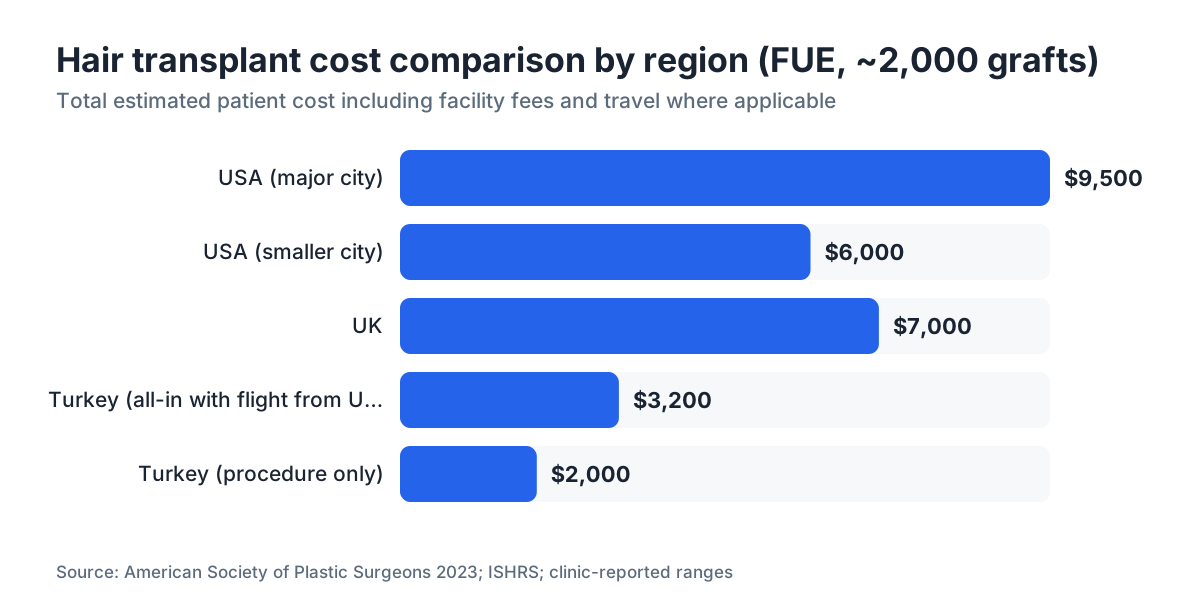
The short answer: $4,000 to $15,000 for a typical session in the US, and almost no insurance covers it because it's classified as cosmetic [4]. Most patients pay $6,000, $10,000 for a mid-size session of 1,500 to 2,500 grafts.
Pricing is almost always quoted per graft. US clinics typically charge $3, $10 per graft depending on location, surgeon reputation, and technique. A solo procedure in a smaller city with a competent but less famous surgeon often lands around $3, $5 per graft. Top-tier surgeons in New York, Los Angeles, or Miami may charge $8, $10 per graft. You can see a detailed breakdown in our hair transplant expenses guide.
What drives the cost up? The surgeon's time and credentials matter most. A large FUE session can take 6 to 10 hours with the surgeon working continuously alongside a team of technicians. Facility fees, anesthesia staff, and post-op care packages add to the total. Some clinics bundle PRP (platelet-rich plasma) treatments into packages, but the evidence for PRP as a standalone booster for transplant survival is mixed at best [5].
Hair transplants are not eligible for HSA or FSA reimbursement in most cases because the IRS classifies cosmetic surgery as a non-deductible expense unless the procedure corrects a deformity arising from disease, injury, or congenital abnormality [4]. Financing through third-party lenders like CareCredit is common; rates vary widely.
One number worth anchoring on: the American Society of Plastic Surgeons reported the average surgeon fee for hair transplantation in the US at roughly $4,400 in recent years, though that figure reflects surgeon fees only and not total procedure costs [6].
How much does a hair transplant cost in Turkey, and is it worth going?
Turkey is the single most popular destination for hair transplant tourism, doing an estimated 500,000+ procedures a year, more than any other country [7]. The cost gap is stark: $1,500, $3,500 all-in for a session that would run $8,000, $12,000 in the US.
That price usually includes the procedure, hotel, airport transfers, and sometimes a city tour. Established clinics in Istanbul are transparent about the package. The lower cost isn't mainly about cheaper materials. It reflects lower labor costs, higher procedure volume, and government subsidies for medical tourism infrastructure that Turkey has deliberately built.
So what's the catch? A few real ones.
First, quality varies enormously. Turkey has hundreds of clinics and they are not equal. Some operate with unlicensed technicians doing the extractions and implantations while a supervising surgeon pops in briefly. In 2021, Turkish authorities increased oversight of hair transplant clinics after reports of infections and botched procedures, but enforcement is inconsistent [7]. The phrase "best hair transplant in Turkey" gets searched a lot, but there's no single independent registry you can consult. You have to vet the specific surgeon's credentials, before-and-after photos, and whether the surgeon personally performs the procedure or hands most of it off.
Second, if something goes wrong, follow-up care is complicated. Flying back to Istanbul for a correction is expensive and disruptive. US-based surgeons are sometimes reluctant to take on revision cases from overseas clinics.
Third, the "all-inclusive" packages sometimes carry hidden upsells: PRP add-ons, hair care products, extra grafts at the clinic.
That said, genuinely excellent surgeons practice in Istanbul, Ankara, and other Turkish cities. Patients who research carefully, verify surgeon credentials with the Turkish Medical Association, and hold realistic expectations often report good outcomes. The cost gap can fund multiple flights and still leave money on the table compared to a US price.
| Cost item | US clinic | Turkey clinic |
|---|---|---|
| Procedure (2,000 grafts, FUE) | $6,000, $10,000 | $1,500, $2,500 |
| Hotel (5 nights) | N/A (local) | Often included |
| Flights (round trip from US) | N/A | $600, $1,200 |
| Total estimated | $6,000, $10,000 | $2,100, $3,700 |
Who is a good candidate for a hair transplant?
The ideal candidate has androgenetic alopecia (male or female pattern hair loss), has stabilized that loss, has a healthy donor area with enough density, and holds realistic expectations about what surgery can do.
Age matters more than people realize. A 22-year-old with a Norwood 2 receding hairline who gets a transplant today may watch the native hair behind the transplanted zone keep falling out over the next decade, leaving an odd island of thick hair surrounded by thin. Most surgeons prefer to operate on patients whose hair loss has been stable for at least two years and who are committed to medication (typically finasteride) to slow ongoing loss [1]. You can read more about how a receding hairline progresses to understand how loss usually unfolds.
Women are considered less often but can be good candidates when they have localized thinning rather than diffuse loss across the whole scalp, or when the loss comes from traction alopecia or scarring conditions. Female pattern hair loss often affects the donor area too, which limits what's available to move.
Contraindications include uncontrolled medical conditions (diabetes, hypertension), blood thinners that can't be paused, active scalp infections or inflammatory conditions like lichen planopilaris, and unrealistic expectations. A good surgeon turns away patients who aren't good candidates. If a clinic promises to fix everything no matter your situation, that's a warning sign.
What happens during the surgery and recovery?
Most transplant procedures run 6 to 10 hours depending on the graft count. You're awake the entire time under local anesthesia. Surgeons typically offer mild oral sedation if needed. The donor area is shaved (in FUE) or trimmed, injected with lidocaine, and then extraction begins. For a 2,000-graft session, this can take 3 to 4 hours. Graft implantation takes another 3 to 5 hours.
Immediately after surgery the scalp looks rough. Recipient sites are red, tiny scabs form over each implanted graft, and the donor area is tender. Most patients look presentable in public within 10 to 14 days, though redness can linger 4 to 6 weeks.
The first month is disorienting because of shock loss. Between weeks two and six, the transplanted hairs fall out. This is normal. The follicle stays intact; the shaft sheds while the follicle enters a resting phase. New growth typically starts at 3 to 4 months and grows about half an inch per month from there. Meaningful cosmetic coverage shows up around 6 to 9 months, and full results take 12 to 18 months to judge [1].
Post-op instructions matter a lot. Sleeping with your head elevated (30 to 45 degrees) for the first week reduces swelling. No strenuous exercise for two weeks because elevated blood pressure can dislodge new grafts. Gentle washing of the recipient area starts around day 3 to 5, following the clinic's specific protocol. Sun protection of the scalp is important for at least three months.
Complications are uncommon but real. Infection occurs in roughly 1% of procedures. Cyst formation, ingrown hairs, and numbness of the donor area are possible. The most feared complication is poor graft survival, which can come from surgical technique errors, patient non-compliance, or insufficient blood supply [2].
Do hair transplants actually work, and how long do results last?
For the right candidate, performed by an experienced surgeon, hair transplants work well. A well-executed FUE procedure can hit graft survival rates of 85 to 95% [2]. Those surviving follicles, because they came from the DHT-resistant donor zone, should keep growing for the rest of your life.
Here's what the before-and-after photos don't always show: the native hair around the transplant keeps thinning if you don't treat the underlying cause. Male pattern hair loss is driven by genetics and DHT. A transplant doesn't touch that process. A 30-year-old who gets a transplant and does nothing else may look great at 35, then watch the surrounding native hair thin out, leaving the transplanted area sitting like a patch of thick hair in a sea of thin.
This is why the serious hair loss community treats transplant surgery as one tool, not a standalone cure. Finasteride 1 mg/day cuts scalp DHT by roughly 60% and has the strongest evidence for slowing ongoing male pattern hair loss [8]. Pairing it with minoxidil adds more benefit for many patients. See the guide on finasteride and minoxidil for a detailed look at combination therapy.
The honest outcome: a good procedure adds density in targeted areas that stays there permanently. It won't restore a fully juvenile hairline for someone with Norwood 5 to 7 loss. Managing expectations before surgery is arguably the most important conversation to have with your surgeon.
Should you use finasteride or minoxidil alongside a hair transplant?
Most hair transplant surgeons recommend starting finasteride before or shortly after surgery if you haven't already. The reasoning is simple: finasteride slows the loss of the native hair you still have, which decides how much ongoing loss will undermine your transplant result over time.
Finasteride (1 mg/day, brand name Propecia) is FDA-approved for male pattern hair loss [8]. It works by inhibiting the 5-alpha reductase enzyme that converts testosterone to DHT. The New England Journal of Medicine trial that anchors the evidence found that 83% of men taking finasteride for two years had no further hair loss, and 66% had measurable regrowth [8]. It is not safe for women who are pregnant or of childbearing age because of teratogenicity risk.
Minoxidil (topical or oral) often gets added as a second layer. It lengthens the hair growth cycle and may improve scalp blood flow. Some surgeons recommend topical minoxidil starting 2 to 4 weeks post-transplant once the scalp has healed, to support both the transplanted and native follicles. The evidence for minoxidil supporting transplant graft survival specifically is limited, but its effect on surrounding native hair is well established [9].
If you want to check side effect profiles before committing to these medications, minoxidil side effects and minoxidil for men cover the specifics. The oral minoxidil article is worth reading if you want to understand the lower-dose systemic alternative.
The bottom line: a transplant without medication is a reasonable choice if your hair loss is truly stable and your donor area is abundant. For most men in their 30s and 40s, adding finasteride protects the long-term investment in a real way.
What are the risks and things that can go wrong?
Hair transplant surgery is generally safe, but it's real surgery and real things can go wrong.
Infection is the most common serious complication, occurring in roughly 1% of cases [2]. It's treatable with antibiotics when caught early. Signs include increasing redness, warmth, pus, or fever in the first two weeks.
Poor graft survival is the most common disappointing outcome. Grafts can die from too much time outside the body before implantation (more than 6 to 8 hours is a risk), poor handling by technicians, recipient site trauma, or post-op patient behavior (touching, scrubbing, or exercising too early). This leaves less density than expected and sometimes forces a second procedure.
Scarring beyond the expected dot scars (FUE) or linear scar (FUT) can happen, particularly in patients with darker skin tones prone to keloid formation. A consultation should cover your personal scar history.
Numbness of the donor or recipient area is common in the first few weeks and almost always resolves. Persistent numbness beyond six months is rare.
Hirsuties papillaris genitalis (cobblestoning) is a bumpy texture at the recipient site from grafts implanted at the wrong angle or depth. That's a technique error.
Unnatural-looking hairlines are the most visible form of a botched transplant. Hairlines placed too low, grafts implanted in straight rows rather than irregular patterns, or large multi-hair grafts set at the hairline edge all look artificial. Fixing them requires more surgery.
The FDA has not approved any specific device or drug to improve transplant outcomes beyond the general approval of surgical tools. Clinics advertising proprietary "growth activators" or "stem cell boosts" are usually selling you something with very limited evidence [10].
How do you choose a hair transplant surgeon you can trust?
This is where most people underinvest their research, and it's the most consequential decision in the process.
Verify board certification first. In the US, look for surgeons certified by the American Board of Hair Restoration Surgery (ABHRS) or who are fellows of the International Society of Hair Restoration Surgery (ISHRS). These credentials require training and case volume standards [11]. The ISHRS also keeps a "find a physician" directory.
Ask to see at least 20 to 30 before-and-after photos of patients with hair loss patterns like yours, not cherry-picked Instagram highlights. Ask whether the surgeon personally performs the extractions and implantations or hands most of the work to technicians. In many high-volume clinics, including some very famous ones, the surgeon designs the hairline and supervises but technicians do most of the graft work. That isn't necessarily bad, but you should know what you're getting.
Get a graft count estimate in writing. A surgeon who promises a large number of grafts without examining your donor density in person should raise a flag. Graft counts should be based on your specific scalp, not a package tier.
Ask about the revision policy. What happens if graft survival lands well below expected? What does a touch-up cost?
For anyone tracking their baseline before a consultation, a free AI analysis tool like the one at MyHairline.ai (/scan) can give you a read on your current hair density and loss pattern to bring to the conversation with a surgeon.
Two or three consultations at different clinics is reasonable. The variation in the assessments you get is itself informative.
What's the difference between a hair transplant and non-surgical treatments?
Surgery permanently redistributes existing follicles. Non-surgical options slow loss or improve the density of existing hair, but they can't restore an area that has been bald for years.
Finasteride and minoxidil are the two treatments with the best evidence for ongoing hair loss. Neither regrows hair in fully bald areas with no remaining follicle activity. They work on miniaturizing follicles that still exist [8][9]. If you haven't tried medication and your loss is relatively early, starting there before surgery is sensible and much cheaper.
Low-level laser therapy (LLLT) devices (combs, caps, helmets) are FDA-cleared for hair loss, meaning they met safety and efficacy standards for that use [10]. The evidence for meaningful regrowth is modest. The FDA-cleared label does not mean they match finasteride; the clearance standard is lower than the drug approval standard.
PRP (platelet-rich plasma) injections use your own blood plasma, centrifuged to concentrate growth factors, then injected into the scalp. Studies show mixed results. A 2019 systematic review in the Journal of the American Academy of Dermatology found promising results in some trials but noted methodological limitations across the field [5]. It's a reasonable adjunct for some patients, but the evidence doesn't support it as a primary treatment.
The practical decision most people land on: start with medication if your loss is recent and mild to moderate. If loss has moved past the point where medication is likely to be cosmetically meaningful, or if you have localized bald patches you want filled for good, surgery becomes worth exploring. The does minoxidil work article lays out the realistic ceiling of what medication alone can do.
If you're weighing whether supplements might be the right first move instead of surgery, hair loss supplements covers the evidence on biotin, saw palmetto, and others.
Sources
- American Academy of Dermatology, Hair Loss: Diagnosis and Treatment
- International Society of Hair Restoration Surgery, ISHRS Practice Census
- Dermatologic Surgery Journal, FUT vs FUE comparative analysis (NCBI/PubMed indexed)
- IRS Publication 502, Medical and Dental Expenses
- Journal of the American Academy of Dermatology, Systematic Review of PRP for Hair Loss (2019)
- American Society of Plastic Surgeons, Plastic Surgery Statistics Report
- ISHRS, Warning on Hair Transplant Tourism and Safety (ishrs.org)
- New England Journal of Medicine / FDA Propecia label, finasteride efficacy data
- National Library of Medicine (MedlinePlus), Minoxidil topical
- FDA, 510(k) Clearances for Low-Level Laser Devices for Hair Loss
- American Board of Hair Restoration Surgery (ABHRS), Certification Standards