
TL;DR: Minoxidil is the only FDA-approved topical treatment for female-pattern hair loss. The women's formula is 2% applied twice daily, though dermatologists increasingly use 5% or low-dose oral off-label. About 60% of women see meaningful regrowth after 32 weeks. It doesn't cure the underlying cause and must be used indefinitely to hold gains.
What is minoxidil and why is it approved for women?
Minoxidil started life as an oral blood pressure drug in the 1970s. The side effect nobody planned for was hair growth, sometimes all over the body. Researchers figured out the scalp-only version fast, and by 1988 the FDA approved topical minoxidil for men. The women's 2% formula got its own approval in 1991 [1].
The mechanism isn't fully understood, which sounds alarming but is actually common for dermatology drugs. What we know: minoxidil shortens the resting phase of the hair cycle (telogen), pushes follicles earlier into growth phase (anagen), and widens the follicle so the hair it produces is thicker. It also appears to open potassium channels in the follicle itself, improving local circulation. None of this addresses the hormonal root cause of female-pattern hair loss, but it compensates for it well enough to produce measurable regrowth in most women who stick with it.
The FDA-approved indication is "androgenetic alopecia in women," meaning the hereditary thinning that typically shows up as widening at the part rather than a receding hairline. That distinction matters. Minoxidil has the best evidence for that specific pattern. Its evidence is weaker for scarring alopecias, patchy alopecia areata, or hair loss from telogen effluvium, though some dermatologists use it there too.
What dose of minoxidil do women actually need: 2% vs 5%?
The FDA-approved dose for women is 2% topical solution, applied 1 mL twice daily. That's what the label says. What actually happens in dermatology offices is messier.
Several head-to-head trials have compared 2% twice daily against 5% once daily in women. A 48-week randomized trial published in the Journal of the American Academy of Dermatology found that 5% once daily produced statistically similar hair count improvements to 2% twice daily, with a slight edge for 5% [2]. The 5% foam is not FDA-approved for women but gets used off-label constantly, because the foam vehicle carries less propylene glycol. Less propylene glycol means less scalp irritation and less unwanted facial hair (more on that below).
Here's the practical takeaway. The 2% solution twice daily is the proven, label-compliant starting point. If you're not getting enough response at six months, or twice-daily application is a hassle you won't keep up, a dermatologist may reasonably switch you to 5% foam once daily. Don't just grab the men's 5% liquid off the shelf without guidance. That liquid vehicle carries more propylene glycol and a higher rate of facial hair transfer in women.
Low-dose oral minoxidil at 0.25 mg to 1.25 mg daily is an increasingly popular off-label option. It sidesteps the application mess entirely and has shown good results in small trials. It also carries different risks: fluid retention, unwanted body hair, and heart palpitations in a small minority. Talk to a doctor before going that route.
How effective is minoxidil for women: what do the trials actually show?
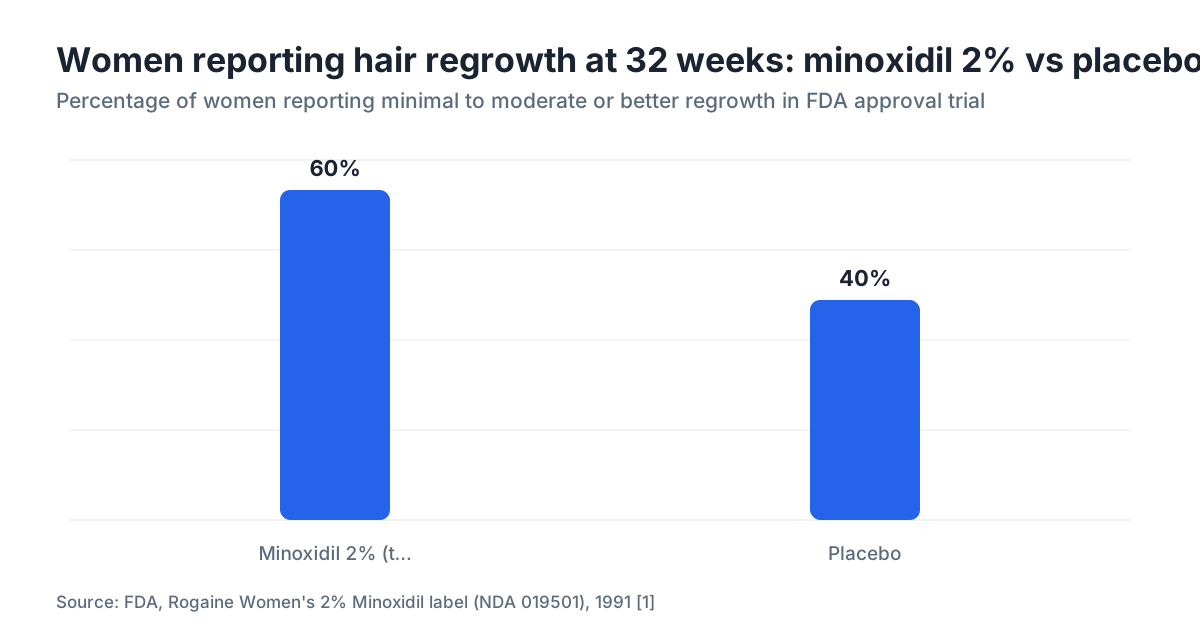
The original FDA-approval trial for women's 2% minoxidil found that after 32 weeks, 60% of women using the active drug reported minimal to moderate hair regrowth, compared to 40% on placebo [1]. That 20-point gap is real but not dramatic. It means roughly one in three women using minoxidil won't get a cosmetic result worth writing home about.
Hair count studies tell a sharper story. A placebo-controlled trial published in the Archives of Dermatology found that 2% minoxidil produced an increase of about 23 hairs per square centimeter in the target zone after 32 weeks, versus a small increase of around 11 hairs for placebo [3]. "Nonvellus hair counts increased significantly" was the study's stated conclusion.
Response is better in women who:
- Have had thinning for less than five years
- Still have visible follicles (thinning, not bald patches)
- Are younger (follicle miniaturization is less advanced)
- Don't smoke (smoking reduces scalp circulation)
Response is worse or uncertain in women with diffuse shedding from nutritional deficiency, thyroid disease, or recent physical stress. In those cases, fixing the underlying trigger usually does more than minoxidil alone. A dermatologist can run labs to rule those out before you spend six months on something that won't help much.
One honest note: shedding increases in the first four to eight weeks. This is real, it's documented, and it's temporary. Minoxidil synchronizes follicles into active growth, which pushes out the old resting hairs first. Most women who quit during this phase never see the regrowth that would have followed.
How long does it take for minoxidil to work for women?
Four to six months for visible improvement. Eight to twelve months to see the peak response. This is the honest timeline, not the optimistic one printed on some product boxes.
Week 1-8: Increased shedding. Don't panic. Those are follicles resetting.
Month 2-4: Shedding slows. You might notice tiny, fine hairs at the hairline or part. They look unpromising at this stage.
Month 4-6: Those fine hairs thicken. Part width may visibly narrow. Most clinical trials use 32 weeks (about 8 months) as the primary endpoint because meaningful cosmetic change takes that long [1][2].
Month 8-12: Peak response. Hair density at its best.
After 12 months: Maintenance. Minoxidil doesn't reprogram your follicles. It only works while you're using it. Stop, and most of the regrown hair sheds within three to four months. This isn't a flaw in the drug. It's how it works. If you're not ready for an open-ended commitment, factor that in before starting.
How do women apply minoxidil correctly?
Application matters more than most people realize. Scalp contact is everything. The active ingredient needs to reach the follicle, not sit on top of the hair.
For 2% solution: Part your hair over the thinning area. Use the dropper or applicator tip to apply 1 mL directly to the scalp skin. That's roughly 20 drops. Spread with your fingertips. Do this twice a day, morning and evening. Let it dry completely (about 4 hours) before any styling products, and don't wet your hair for at least 4 hours after.
For 5% foam: Measure half a capful. Apply directly to the scalp with your fingers. The foam melts on contact with warm skin, which helps it spread. Once daily.
Wash your hands after both. Thoroughly. Minoxidil transferred to your face from unwashed hands is one of the more common causes of facial hair growth in women using the drug.
Timing tip: many women find it easiest to apply the evening dose to dry hair before bed and the morning dose right after showering on a towel-dried scalp. The variable that matters is consistency, not the exact clock time.
What are the side effects of minoxidil for women?
Most women tolerate topical minoxidil well. The side effects that do occur are worth knowing before you start.
Scalp irritation and dryness is the most common complaint, affecting maybe 7% of users on the solution [4]. The propylene glycol vehicle is usually the culprit. Switching to the foam version (which uses ethanol instead) often solves it.
Unwanted facial hair (hypertrichosis) affects a small but real proportion of women, maybe 3-5% based on trial data. It typically shows up on the forehead or cheeks. In most cases it comes from product transfer (unwashed hands touching your face, or pillow contact right after application) rather than systemic absorption. It reverses after stopping the drug, but the reversal can take months.
Initial shedding, as covered above, is a mechanism rather than a side effect, but it scares a lot of women into quitting early.
Systemic effects from topical application are rare, because absorption through intact skin is low. Still, some women report headaches or dizziness, especially early on. If you have cardiovascular disease or low blood pressure, discuss this with a doctor before starting.
For a full breakdown of the risk profile, see minoxidil side effects. Oral minoxidil carries a different and broader set of systemic risks that deserve their own conversation.
Pregnancy: Minoxidil is Category C in pregnancy. Animal studies showed adverse fetal effects at high doses. The FDA label advises against use during pregnancy. If there's any chance you're pregnant or planning to become pregnant, stop minoxidil and talk to your OB [1].
Can women use men's minoxidil (the 5% version)?
Technically yes, practically with caveats.
The active ingredient is identical. Minoxidil is minoxidil no matter what's on the box. The differences are concentration (5% vs 2%), the vehicle, and the approved dosing frequency.
The 5% liquid marketed for men uses a higher propylene glycol concentration. In women, that means more irritation and more facial hair risk from pillow or hand transfer. The 5% foam is the better pick if you're going off-label for the higher dose, because the foam vehicle is gentler.
Cost is a fair reason to consider the 5% option. Generic 5% liquid often costs less per milliliter than name-brand 2% women's products. If money is the barrier and you understand the trade-offs, this is a reasonable conversation to have with a dermatologist.
The American Academy of Dermatology's guidelines for female-pattern hair loss acknowledge that "5% minoxidil is more effective than 2% minoxidil" while also noting the higher side effect rate [5]. That's the clearest professional guidance available.
Are there other treatments women can combine with minoxidil?
Minoxidil alone is a floor, not a ceiling, for female hair loss treatment.
Finasteride is FDA-approved for men and used off-label in postmenopausal women with androgenetic alopecia. The evidence in women is mixed. A 2023 review in JAMA Dermatology found modest benefit in postmenopausal women but cautioned strongly against use in premenopausal women because of teratogenicity risk (severe birth defects if taken during pregnancy) [6]. This is not a drug to experiment with on your own.
Spironolactone is probably the most commonly prescribed add-on for premenopausal women. It's an anti-androgen diuretic that blunts the hormonal signal driving follicle miniaturization. Studies suggest it adds meaningful benefit alongside minoxidil, though randomized trial data in women is thin compared to the minoxidil literature. The combination of finasteride and minoxidil shows stronger results in men; the spironolactone-minoxidil pairing is the closer analog for premenopausal women.
Platelet-rich plasma (PRP) injections are getting popular. The evidence is promising but not settled. A 2019 review in Dermatologic Surgery found significant hair count improvements in androgenetic alopecia patients, but trial quality was all over the map [7].
Low-level laser therapy (LLLT) devices, including the FDA-cleared combs and caps, show modest evidence as an add-on. They won't do much on their own.
Hair loss supplements like biotin, iron, zinc, and saw palmetto get a lot of attention. Biotin only helps if you're actually deficient (rare). Iron matters if ferritin is low, which is common in premenopausal women and worth testing. Saw palmetto has weak DHT-blocking properties; the evidence doesn't come close to minoxidil.
If you've run minoxidil for 12 months at the right dose with consistent application and you're still not satisfied, a dermatologist conversation about what to add or switch is reasonable. A hair transplant is an option for some women with stable, well-defined hair loss, but the candidacy criteria are strict.
What type of hair loss in women does minoxidil not help?
Minoxidil works on miniaturized but living follicles. If a follicle is gone, minoxidil cannot bring it back. That's the hard limit.
Scarring alopecias (like lichen planopilaris or frontal fibrosing alopecia) destroy the follicle and replace it with scar tissue. Minoxidil has no mechanism to help there, and dermatologists generally don't use it as a primary treatment for those conditions.
Alopecia areata, the autoimmune patchy loss, doesn't respond reliably to minoxidil. It can be added alongside other therapy but isn't the first choice. JAK inhibitors (the FDA approved baricitinib for severe alopecia areata in June 2022) are changing the picture there [10].
Telogen effluvium from a specific trigger (a crash diet, surgery, childbirth, thyroid disease) usually resolves once the trigger is removed. Using minoxidil for telogen effluvium may modestly speed recovery, but treating the cause is what actually fixes it.
Traction alopecia from tight hairstyles can turn permanent if the follicles are chronically damaged. Early cases may respond to minoxidil once the traction stops. Advanced cases with follicle destruction won't.
If you're not sure what type of hair loss you have, a dermatologist can diagnose it. Guessing wrong and using minoxidil for a condition it doesn't treat is six wasted months and money you didn't need to spend.
How much does women's minoxidil cost and where do you get it?
This is one of the more affordable treatments in dermatology.
| Product | Form | Price range (monthly) | Prescription needed? |
|---|---|---|---|
| Generic 2% minoxidil solution | Topical liquid | $5-$15 | No |
| Rogaine Women's 5% foam | Topical foam | $25-$40 | No |
| Generic 5% minoxidil solution | Topical liquid | $8-$20 | No |
| Oral minoxidil 0.25-2.5 mg | Pill | $10-$40 with Rx discount cards | Yes |
Topical 2% is available over the counter at any pharmacy. Generic versions are chemically equivalent to name brands and cost a fraction. The FDA's Orange Book confirms therapeutic equivalence for generic minoxidil products [8].
Oral minoxidil requires a prescription because it's a blood pressure drug used off-label. Telehealth platforms have made it more accessible, though you should still have a scalp examination (in person or via a quality photo-based tool) before anyone prescribes it. MyHairline's free AI scan at /scan gives you a structured starting point on the type and severity of thinning you're dealing with, which helps any prescriber make a better call.
Insurance rarely covers minoxidil because it's sold OTC. Oral minoxidil prescribed for hair loss is usually off-label and also unlikely to be covered. Discount cards like GoodRx can cut the oral option's cost significantly.
For comparison, minoxidil for men runs in the same price range, which is one reason it's the most widely used hair loss treatment on earth.
Should women with female-pattern hair loss just use minoxidil forever?
Possibly yes, and that's not a bad thing.
Female-pattern hair loss is a chronic, progressive condition for most women. Minoxidil controls it the way blood pressure medication controls hypertension: effectively, indefinitely, with consistent monitoring. Stop after you've achieved good regrowth and you lose most of that regrowth within three to four months.
Some women use minoxidil for years without losing efficacy. There's no strong evidence of tachyphylaxis (the drug fading in effect over time) with topical minoxidil in women, though the underlying hair loss does keep progressing slowly with age. Over time you may find you need to add another treatment to hold the same result.
The strategy most dermatologists suggest is simple. Start minoxidil. Assess at 12 months. If results are good, continue indefinitely and revisit annually with a dermatologist to check whether anything else is warranted given your age, hormone status, and how your hair is doing.
If you decide to stop for any reason, discuss a taper with your doctor first, and plan for a transition period where shedding resumes. There's no medical danger in stopping, but the cosmetic consequence is real and worth knowing about in advance.
Knowing what's actually driving your hair loss is useful context before you commit to a lifelong medication. A good starting point is understanding what causes hair loss in women specifically, including the role of androgens and genetics.
Sources
- FDA, Rogaine Women's 2% Minoxidil Topical Solution label (NDA 019501)
- Blume-Peytavi U et al., Journal of the American Academy of Dermatology, 2011 to 5% foam vs 2% solution in women
- DeVillez RL et al., Archives of Dermatology, 1994, placebo-controlled trial of 2% minoxidil in women
- Shapiro J, New England Journal of Medicine, 2003, clinical review of hair loss
- American Academy of Dermatology, Hair Loss: Diagnosis and Treatment guidelines
- Randolph M, Tosti A, JAMA Dermatology, 2023, oral finasteride for female-pattern hair loss
- Gupta AK et al., Dermatologic Surgery, 2019, systematic review of PRP for androgenetic alopecia
- FDA, Orange Book: Approved Drug Products with Therapeutic Equivalence Evaluations
- Olsen EA et al., Journal of the American Academy of Dermatology, 2002, female-pattern hair loss classification
- FDA, baricitinib (Olumiant) approval press release, June 2022