TL;DR: Low-dose oral minoxidil (typically 0.25 to 2.5 mg daily) is an off-label treatment that dermatologists increasingly prescribe to women with androgenetic alopecia and other hair loss types. Multiple trials show meaningful regrowth in 60 to 80% of women. The main side effects are facial hair and fluid retention. It is not FDA-approved for hair loss in women at any oral dose.
What is oral minoxidil and how does it differ from the topical version?
Minoxidil started life as a blood pressure pill in the 1970s. Researchers noticed patients growing unexpected hair all over their bodies, and that side effect became the product. Topical minoxidil (2% and 5% solutions, foam) was FDA-approved for women's scalp use in 1991 [1]. The oral tablet was never approved for hair loss in anyone, male or female. Dermatologists prescribe it anyway, because the evidence is good and the doses used for hair are far below the doses used for hypertension.
The topical version works locally. It soaks into the scalp, extends the anagen (growth) phase of follicles, and very little enters the bloodstream. Oral minoxidil works systemically. Every follicle on your body gets the drug. That is both the reason it can outperform topical application on the scalp and the reason side effects like body hair growth are more common.
For oral minoxidil specifically, doses for hair loss range from 0.25 mg to 2.5 mg per day in women. Blood pressure doses start at 5 mg and go up to 100 mg daily. So the gap is enormous. A 1.25 mg hair dose is roughly 4 to 40 times lower than any antihypertensive dose, which is why cardiovascular effects are usually mild at hair-relevant doses [2].
Some women also use both: oral minoxidil for systemic coverage, topical minoxidil or other agents for local concentration. Whether that combination adds meaningful benefit over either alone is not well-studied.
What does the research actually say about effectiveness in women?
The most-cited prospective study in dermatology is the 2021 paper by Sinclair et al. in the Journal of the American Academy of Dermatology. It followed 100 women with female pattern hair loss who took 0.25 mg oral minoxidil daily for 24 weeks. Eighty percent showed hair density improvement on phototrichogram. The study reported "a reduction in hair shedding, an increase in hair density, and an increase in hair diameter" as the primary finding [3]. That is a direct quote from the paper.
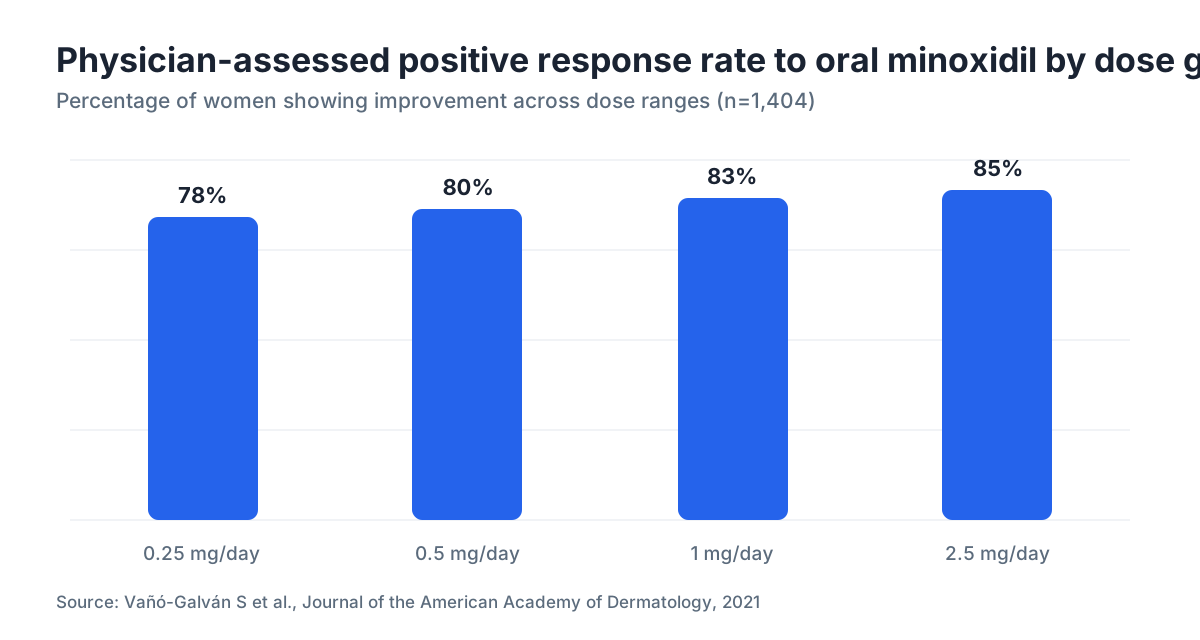
A 2021 retrospective analysis of 1,404 women treated with low-dose oral minoxidil (0.25 mg to 2.5 mg) found that 81.4% had a physician-assessed positive response after a median treatment duration of 11.8 months [4]. Responders improved across all Sinclair hair loss grades, including the most severe.
A 2022 randomized controlled trial compared 5% topical minoxidil to 1 mg oral minoxidil in women. The oral arm showed comparable or slightly better hair count improvement at 24 weeks, with similar overall tolerability [5]. That matters, because many women find topical minoxidil irritating or hard to apply without leaving residue.
Longer-term data is thinner. Most published trials run 24 weeks. A few go to 12 months. Nobody has clean 5-year randomized data in women specifically. The consensus from dermatology conferences and registry data is that the drug needs to be continued indefinitely, like topical minoxidil, to hold gains. Stop it and shedding typically returns within 3 to 6 months.
Results also vary by hair loss type. The evidence is strongest for female androgenetic alopecia (female pattern hair loss). There is weaker but plausible evidence for telogen effluvium, alopecia areata, and traction alopecia, though those conditions have less controlled trial data.
What dose of oral minoxidil do dermatologists prescribe for women?
Most dermatologists start women at 0.25 mg or 0.5 mg once daily and reassess at 3 months [3][4]. Some move to 1 mg or 2.5 mg if response is incomplete and side effects are tolerable. Very few go above 2.5 mg in women, because cardiovascular risk increases and the hair benefit does not clearly scale above that dose.
The 0.25 mg tablet does not exist as a commercial product in most markets. Patients typically get 2.5 mg tablets cut in quarters, or a compounding pharmacy makes a custom-strength capsule. Compounding adds cost and introduces variability in dose accuracy, which matters for a drug with a fairly narrow therapeutic window for side effects.
Here is a rough summary of how doses map to outcomes and risk based on published data:
| Daily dose | Typical hair response rate | Main added risk vs. lower dose |
|---|---|---|
| 0.25 mg | ~70 to 80% positive response [3] | Minimal cardiovascular effect |
| 0.5 mg | Similar or modestly better | Slight increase in hypertrichosis |
| 1 mg | Comparable to 5% topical [5] | Fluid retention becomes more notable |
| 2.5 mg | Used in partial non-responders | Higher hypertrichosis, BP monitoring advised |
| 5 mg+ | Not recommended for hair in women | Antihypertensive effect, pericardial risk |
The dose that works for you depends on your baseline blood pressure, kidney function, cardiac history, and how much body hair growth you can tolerate. Your prescribing dermatologist should check at minimum a baseline blood pressure reading and ideally an ECG and kidney panel before starting [2].
What are the side effects women should actually expect?
Hypertrichosis is the one side effect that catches most women off guard. It means hair growing where you do not want it: upper lip, sideburns, chin, forearms. In the Sinclair 0.25 mg trial, about 14% of women reported it at that low dose [3]. In the large retrospective series using doses up to 2.5 mg, hypertrichosis rates climbed to around 20 to 30% [8]. It is dose-dependent. If it bothers you, a dose reduction usually helps. If you stop the drug entirely it resolves, typically within 1 to 3 months.
Fluid retention and leg edema is the second most common complaint. At 0.25 to 1 mg it is mild in most women. At 2.5 mg it is more noticeable. Women with heart failure, severe kidney disease, or a tendency toward edema should be cautious and may need a low-dose diuretic alongside it.
Dizziness or lightheadedness from blood pressure lowering affects a small percentage of women, particularly those who already have low-normal blood pressure. Taking the pill at night reduces this, because any drop in BP occurs during sleep. Women with baseline systolic BP below 100 mmHg should discuss this carefully with their doctor.
Headache is reported in roughly 5 to 10% of users in most trials and usually resolves after the first few weeks.
Pericardial effusion (fluid around the heart) is a real concern at full antihypertensive doses and is on the FDA label for oral minoxidil tablets [2]. At doses of 0.25 to 2.5 mg used for hair, no cases have been reported in published trial literature [10], but this does not mean zero risk. Women with existing cardiac conditions should not take oral minoxidil without cardiology sign-off.
For a fuller picture of how these side effects compare between topical and oral forms, the minoxidil side effects overview covers the full range.
Is oral minoxidil safe during pregnancy or while breastfeeding?
No. Oral minoxidil is FDA Pregnancy Category C, meaning animal studies show harm and there are no adequate human studies [2]. The drug crosses the placenta. Case reports of newborns with hypertrichosis and cardiac effects exist in the literature when mothers took antihypertensive doses. Hair-loss doses are far lower, but the risk is unquantified and the conservative answer from every major dermatology society is: do not take it during pregnancy.
Minoxidil is also excreted in breast milk. The AAD guidance on hair loss in postpartum women specifically cautions against any minoxidil use while breastfeeding [6]. If you are planning pregnancy soon, discuss the timing of stopping the drug with your dermatologist. Most recommend stopping at least one month before trying to conceive, though some advise a longer washout.
Postpartum hair loss (a form of telogen effluvium) often resolves on its own within 6 to 12 months without treatment. Starting a drug during that window adds risk with unclear benefit for a self-limiting condition.
Who is a good candidate and who should not take it?
Good candidates are women with androgenetic alopecia (female pattern hair loss) who have not responded well to topical minoxidil, find it too messy to use consistently, or have scalp sensitivity to the propylene glycol vehicle in liquid formulations. Post-menopausal women tend to tolerate the hypertrichosis side effect with less distress because they often have less baseline concern about facial hair. That said, this is highly individual.
Women who are likely poor candidates include anyone who is pregnant or planning pregnancy soon, anyone breastfeeding, women with symptomatic low blood pressure (below 90/60 mmHg consistently), women with significant kidney or liver impairment (minoxidil is renally cleared), and women with congestive heart failure or known pericardial disease.
Women with androgenetic alopecia who also have elevated androgens (polycystic ovary syndrome, for instance) may benefit more from adding a DHT blocker like spironolactone than from minoxidil alone, or from combining both. Minoxidil does not address the hormonal driver of androgenetic alopecia in women. It is not anti-androgenic.
Age matters less than comorbidities. A 30-year-old woman with low blood pressure is a worse candidate than a 65-year-old with normal cardiovascular health.
If you are unsure where your hair loss falls on the spectrum, getting a clear picture of your hair density and loss pattern first makes the conversation with a dermatologist much more productive. The free AI hair scan at MyHairline can help you document your current pattern before your appointment.
How long does it take to see results?
Be patient. Most women see a reduction in shedding within 6 to 8 weeks. Visible density improvement takes 3 to 6 months, and maximum benefit is typically reached at 9 to 12 months [3][4]. This is not unique to oral minoxidil; topical minoxidil follows the same timeline because you are working within the follicle's natural growth cycle.
The first thing many women notice, counterintuitively, is more shedding in weeks 2 to 6. This is the "minoxidil shed," where follicles stuck in a prolonged telogen phase get pushed into a new anagen cycle. The old hairs fall before the new ones show. It is temporary. Most dermatologists warn about this upfront, but it still causes patients to stop the drug too early.
Photographs every 3 months under consistent lighting and parting are the only reliable way to track progress at home. Hair counts and phototrichograms (used in research) are not practical for home use. If you are still seeing no improvement at 6 months with adequate dosing and no adherence lapses, talk to your doctor about whether the dose needs adjusting or whether a different treatment is warranted.
Can oral minoxidil be combined with other hair loss treatments for women?
Yes, and many dermatologists do exactly this. The most common combination for women with androgenetic alopecia is oral minoxidil plus spironolactone. Spironolactone is an anti-androgen that blocks DHT at the follicle level. Minoxidil promotes growth; spironolactone addresses the hormonal cause. The combination has a logical rationale and is common in clinical practice, though head-to-head combination trial data in women is limited.
Oral minoxidil plus topical minoxidil is also used. Whether the combination adds more than either alone is unclear. Some dermatologists argue it layers systemic and local action. Others think it mostly adds side effect risk without proportional benefit.
Finasteride is FDA-approved for men but not women of reproductive age due to teratogenicity risk. Post-menopausal women sometimes use it off-label. If you want to understand how finasteride fits in for women specifically, the finasteride article covers the nuances.
Combining oral minoxidil with platelet-rich plasma (PRP) or low-level laser therapy has anecdotal support but no high-quality randomized trial data showing additive benefit in women specifically.
A hair transplant is sometimes considered when medical treatment stabilizes loss but density cannot be recovered enough to satisfy the patient. Most surgeons want to see stable loss and a patient on maintenance medical therapy before operating, because continuing hair loss after a transplant produces a patchy result.
How does oral minoxidil compare to topical minoxidil for women?
This gets debated at every hair loss conference. The short answer: oral and topical 5% minoxidil produce roughly comparable scalp hair results in women, with oral possibly edging ahead on hair caliber in some trials, while topical has a cleaner facial-hair side effect profile [5].
Topical minoxidil's main problems for women are scalp irritation from the propylene glycol vehicle (less of an issue with foam formulations), difficulty applying without leaving residue on hair, and the need to let it dry before styling. Adherence suffers.
Oral minoxidil is one pill a day. Adherence is dramatically better. In a disease that requires indefinite treatment, adherence arguably matters more than a small pharmacological edge.
Topical minoxidil is available over the counter (2% women's formula, 5% foam). Oral minoxidil requires a prescription. The cost difference matters. Generic oral minoxidil tablets are cheap, often under $15 per month for standard 2.5 mg tablets that get quartered, but compounded low-dose capsules can run $30 to 80 per month depending on the pharmacy.
For minoxidil for men, the comparison shifts because 5 mg oral is more commonly used in men. Women should not use 5 mg doses without specific medical direction.
| Factor | Topical 5% minoxidil | Oral 0.25 to 1 mg minoxidil |
|---|---|---|
| FDA approved for women? | Yes (2%, 5% foam) | No (off-label) |
| Prescription needed? | No | Yes |
| Monthly cost (approx.) | $20 to 40 OTC [7] | $15 to 80 depending on form |
| Main side effect | Scalp irritation, residue | Hypertrichosis, edema |
| Systemic absorption | Low | Complete |
| Adherence in practice | Moderate | High (once daily pill) |
What does it cost and how do you get a prescription?
Getting a prescription requires a visit to a dermatologist or, increasingly, a telehealth provider specializing in hair loss. Most in-office dermatology visits for hair loss run $150 to 400 for an initial consultation in the United States, varying by geography and whether you use insurance [7]. Telehealth platforms that prescribe for hair loss typically charge $50 to 150 for an initial visit.
The drug itself is cheap if you use a standard 2.5 mg minoxidil tablet (cut in quarters for a 0.625 mg dose, or halved for 1.25 mg). Generic minoxidil 2.5 mg tablets often retail for $10 to 20 per month at major pharmacies on GoodRx pricing. Compounded 0.25 mg or 0.5 mg capsules from specialty pharmacies run higher, often $30 to 80 per month, because compounding adds labor cost.
Insurance rarely covers oral minoxidil for hair loss because it is prescribed off-label. The FDA-approved indication for the oral tablet is hypertension, and hair loss does not qualify [2]. Some patients have success getting reimbursement by billing through hypertension codes, but this requires an actual diagnosis of hypertension, which most women seeking hair treatment do not have.
Lab work before starting (CBC, metabolic panel, thyroid, ECG if indicated) adds $50 to 300 depending on your insurance status. Some dermatologists skip baseline labs for otherwise healthy women under 50 starting at 0.25 mg, but this varies by practice.
If you want to understand what causes hair loss at a deeper level before your appointment, going in informed saves time and leads to better shared decision-making.
What happens if you stop taking oral minoxidil?
Hair loss returns. This is the reality of minoxidil in any form. The drug does not change the underlying cause of androgenetic alopecia. It extends the anagen phase and improves follicle size while you are taking it. Stop the drug and those follicles drift back toward their genetically programmed miniaturization.
Most women notice shedding within 3 to 6 months of stopping. Some report it faster, within 6 to 8 weeks. The hair you regrew is not permanently retained.
This is the main argument for starting cautiously and at a low dose: you are signing up for a long-term commitment. If you cannot tolerate the side effects or the cost, the drug is not for you, because stopping means losing whatever you gained.
That said, some women do stop intentionally, for pregnancy, surgery requiring blood pressure management, or personal preference. The shedding after stopping is not worse than your baseline before treatment; you are just returning to where you would have been.
A small subset of women with telogen effluvium (not androgenetic alopecia) may only need a time-limited course if the underlying trigger is resolved. But for androgenetic alopecia, the honest answer is indefinite use.
Are there any hair supplements worth taking alongside oral minoxidil?
The honest answer: most supplements marketed for hair have very thin evidence. The exceptions are specific deficiency corrections. If you are iron deficient (ferritin below 30 to 40 ng/mL is often cited as a threshold in hair loss literature, though the exact cutoff is debated), repleting iron can meaningfully help shedding. Vitamin D deficiency is similarly linked to hair cycling abnormalities. Zinc deficiency is a cause of hair loss that reverses with supplementation.
Biotin is over-marketed. Unless you have a true biotin deficiency (rare outside of prolonged raw egg consumption or certain rare metabolic disorders), extra biotin does not improve hair growth. The AAD does not recommend routine biotin supplementation for hair loss [6].
Amino acid supplements, marine collagen products, and saw palmetto get advertised heavily but have weak or conflicting trial evidence in women specifically. Saw palmetto has mild anti-androgenic properties and a few small trials suggest modest benefit for androgenetic alopecia, but the effect size sits far below minoxidil.
Before adding any supplement to a minoxidil regimen, confirm you are not deficient in the basics first. Blood work for ferritin, vitamin D, zinc, thyroid (TSH), and CBC covers most correctable causes and is worth doing regardless of whether you start oral minoxidil.
For a broader look at what supplements actually have evidence behind them, the hair loss supplements overview ranks the main options by evidence quality.
Sources
- FDA, Minoxidil Topical Solution 2% and 5% labeling history
- FDA, Loniten (minoxidil tablets) prescribing information
- Sinclair R et al., Journal of the American Academy of Dermatology, 2021; 84(3):745-748
- Vañó-Galván S et al., Journal of the American Academy of Dermatology, 2021; 85(3):767-770
- Ramos PM et al., Journal of the American Academy of Dermatology, 2020; 82(1):252-253
- American Academy of Dermatology, Hair loss: Diagnosis and treatment
- GoodRx, minoxidil pricing data
- Pirmez R et al., International Journal of Dermatology, 2022; 61(6):685-693
- FDA, Drug label for baricitinib (Olumiant) alopecia areata indication, 2022
- Gupta AK et al., Dermatologic Therapy, 2022; 35(6):e15381