
TL;DR: Telogen effluvium is sudden, diffuse shedding triggered by a stressor (illness, crash diet, surgery) that usually reverses in 3-6 months. Hair miniaturization is a permanent, progressive shrinking of follicles driven by DHT or scarring that does not reverse without treatment. Both can occur together, which is why getting the diagnosis right matters before spending money on anything.
What is hair miniaturization, and why does it matter?
Miniaturization means a hair follicle is physically shrinking over successive growth cycles. Each time it cycles through anagen (growth), it produces a thinner, shorter, less pigmented strand than it did before. Eventually the follicle may produce only a fine vellus hair, the kind you see on a baby's forehead, and if the process is not interrupted it can stop producing anything visible at all.
The driver in most cases is dihydrotestosterone (DHT). DHT binds to androgen receptors inside genetically susceptible follicles, and with each cycle those follicles shrink a little more. This is androgenetic alopecia, the formal name for male and female pattern hair loss. It affects roughly 50% of men by age 50 and around 40% of women by age 70, according to the American Academy of Dermatology [1].
Miniaturization matters for one blunt reason: it is the only common hair loss process that does not reverse on its own. Remove the trigger for shedding and the shed hairs come back. You cannot un-shrink a follicle once it has miniaturized past a threshold without intervention. That distinction is the most important thing to understand before you spend a dollar on treatment.
A dermatologist confirms miniaturization with dermoscopy, a handheld magnifying device that lets them measure hair shaft diameter variability across the scalp. More than 20% of hairs showing diameter variation in a given area is the threshold many clinicians use to call it significant miniaturization [2]. If you want a first read without a clinic visit, tools like the free AI scan at MyHairline can flag diameter changes across a photo grid, though a dermatologist should confirm anything that looks progressive.
What is telogen effluvium, and how much hair do you actually lose?
Telogen effluvium (TE) is a mass shift of hair follicles from the active growth phase (anagen) into the resting phase (telogen), triggered by a systemic shock. About 6-8 weeks after the trigger, those resting follicles shed their hairs all at once. The result is alarming: handfuls of hair on the pillow, the shower drain clogged every morning, an obvious thinning across the entire scalp.
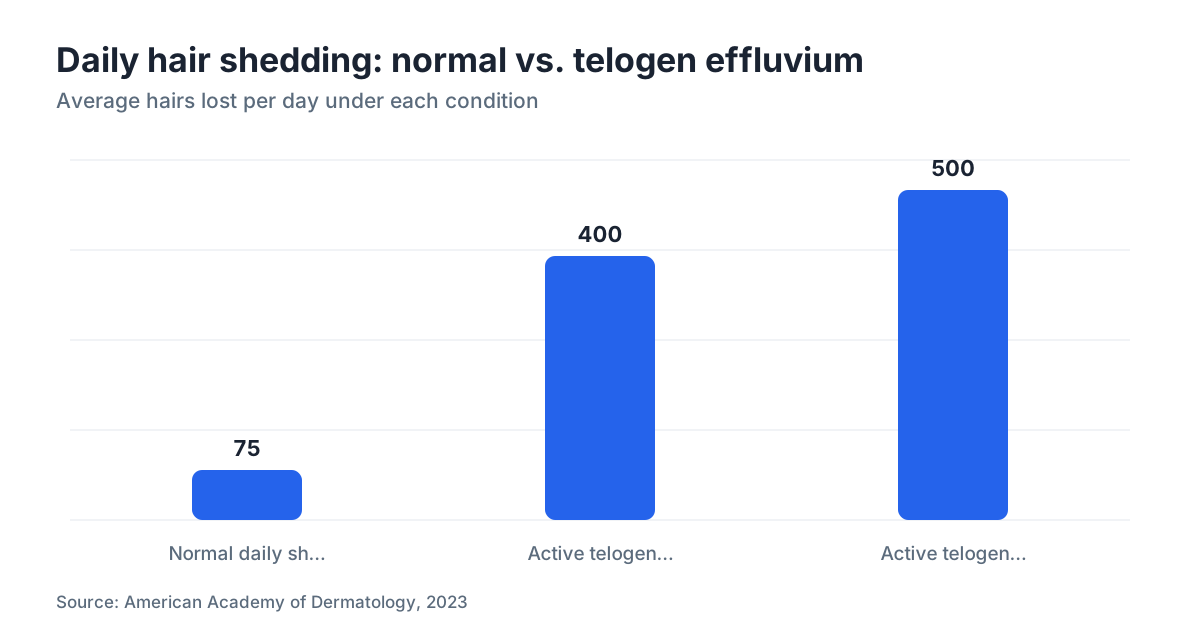
The scale of shedding is something people rarely see quantified honestly. Under normal circumstances, you lose roughly 50-100 hairs per day [1]. During an acute TE episode, daily loss commonly runs 300-500 hairs, and some case series document even higher counts in severe illness-related TE. The total count shed over a 3-6 month episode can exceed 30,000 hairs, which sounds catastrophic but is recoverable because the follicles themselves are intact.
Common triggers include:
- Major surgery or prolonged anesthesia
- High fever or severe systemic illness (COVID-19 has been a well-documented trigger [3])
- Childbirth (postpartum TE typically peaks around 3-4 months after delivery)
- Crash dieting or protein deficiency
- Thyroid disorders (both hyper- and hypothyroidism)
- Abrupt discontinuation of oral contraceptives
- Iron deficiency, even without frank anemia
- Significant psychological stress
Chronic TE is a separate, more contested entity where shedding persists beyond 6 months without an obvious ongoing trigger. Ferritin levels below 30 ng/mL appear in a meaningful proportion of chronic TE cases, though the causal direction is still debated in the literature [4].
For a full breakdown of what else can trigger diffuse shedding, see our guide to what causes hair loss.
How do you tell miniaturization and telogen effluvium apart?
This is the question that trips people up, because both conditions produce visible scalp and diffuse thinning. The clinical features that distinguish them are worth knowing.
| Feature | Telogen Effluvium | Hair Miniaturization (AGA) |
|---|---|---|
| Onset | Sudden, weeks after trigger | Gradual, years |
| Pattern | Diffuse across whole scalp | Patterned (crown, temples, part) |
| Hair shaft diameter | Uniform (no miniaturization) | Highly variable |
| Scalp dermoscopy | Normal follicle caliber | >20% diameter variation |
| Pull test | Often positive (6+ hairs) | Usually negative or mildly positive |
| Recovery | Typical without treatment | Progressive without treatment |
| Age of peak | Any age after trigger | Increases with age |
The pull test: a clinician grasps 40-60 hairs near the root and pulls with moderate, smooth force. Extracting 6 or more hairs is considered a positive result and suggests active shedding consistent with TE [2]. A trichogram (microscopic exam of pulled hairs) adds more information by showing the ratio of telogen to anagen roots.
The tricky part is that both conditions coexist all the time. A 45-year-old man with androgenetic alopecia gets COVID-19 and three months later his shedding becomes dramatically worse. The miniaturization was already there. The TE layered on top. Treating only one while ignoring the other leads to incomplete recovery, which is why a systematic exam, including bloodwork for thyroid, ferritin, and complete blood count, is worth doing before you assume anything. Telogen effluvium has its own full guide if you want to go deeper on the shedding side of this.
Can telogen effluvium cause permanent miniaturization?
This is the question people search for at 2 a.m., and the honest answer is: usually no, but there are exceptions.
TE by definition does not damage the follicle. The follicle enters telogen prematurely, rests, then re-enters anagen and produces a normal-caliber hair. Recovery is usually complete within 6-12 months of resolving the trigger, and the regrown hair matches the pre-shed hair in diameter. That is why the vast majority of TE cases do not produce lasting thinning.
The exceptions are worth knowing. First, chronic TE with a prolonged nutrient deficiency (especially severe protein or iron depletion) can eventually affect hair shaft quality if the deficiency is serious enough. Second, and more commonly, TE in someone who already has a genetic predisposition to androgenetic alopecia can unmask or accelerate the miniaturization that was quietly progressing underneath. The shed hairs regrow, but the underlying follicle miniaturization that was always present may become noticeable for the first time.
A review in the International Journal of Women's Dermatology noted that postpartum TE sometimes reveals androgenetic alopecia that had been hormonally masked during pregnancy [5]. Women in that situation often feel their hair never fully recovered, and technically it did not, because the TE recovery exposed the AGA that was already there.
If you are six months past your trigger and your hair is still noticeably thinner than before, a dermoscopy exam is the next step. That distinguishes regrowth lag from actual miniaturization.
What treatments actually work for miniaturization?
Two treatments have FDA-approved evidence for reducing miniaturization and slowing pattern hair loss. Everything else is either adjunctive or insufficiently proven.
Minoxidil is a topical (and now oral) vasodilator that prolongs the anagen phase and increases follicle size. It does not block DHT, so it works on the growth side of the equation rather than stopping the miniaturization trigger. The original FDA approval for topical 2% was in 1988 for men; 5% topical followed; oral minoxidil at low doses (0.625-2.5 mg daily in women, 2.5-5 mg in men) is used off-label and has strong recent trial data behind it [6]. For side effects to know before starting, read our piece on minoxidil side effects, and the dedicated minoxidil for men guide covers dosing specifics.
Finasteride (1 mg oral, FDA-approved 1997 for men) blocks the 5-alpha-reductase enzyme that converts testosterone to DHT, directly attacking the miniaturization mechanism. In the 5-year trials submitted to the FDA, 48% of men taking finasteride showed hair count increases versus 6% on placebo, and 83% maintained or improved their hair count at year 2 [7]. It does not work in postmenopausal women according to a large randomized trial, and it is contraindicated in women of childbearing potential due to teratogenicity [11]. The finasteride article covers the sexual side effect data, which is real and should be read.
Combining both: the evidence for finasteride and minoxidil together is stronger than either alone for men with androgenetic alopecia. A randomized trial found the combination produced significantly greater hair count improvements than either monotherapy [8].
For those who want to understand the DHT mechanism more deeply before deciding on treatment, see our guide to DHT blockers.
What about supplements? Saw palmetto, biotin, and various vitamin blends are popular. The evidence is weak and inconsistent. Biotin deficiency causes hair loss, but biotin deficiency is rare in people eating a normal diet; taking extra biotin when you are not deficient adds nothing. Saw palmetto has a plausible mechanism (mild 5-alpha-reductase inhibition) but no large randomized trial. The hair loss supplements guide summarizes what has at least some trial data and what is basically marketing.
Hair transplant surgery is the only option that restores hair to miniaturized or lost areas permanently, by moving DHT-resistant follicles from the back and sides of the scalp to the affected areas. It does not stop ongoing miniaturization in native hairs, which is why surgeons typically want to see a stable pattern before operating and recommend continued finasteride or minoxidil after surgery. See our hair transplant guide for an honest look at costs, techniques, and realistic outcomes.
What treatments work for telogen effluvium?
The primary treatment for most TE is finding and fixing the underlying cause. That sounds obvious, but it means doing bloodwork: ferritin, TSH (thyroid), complete blood count, and in some cases zinc and vitamin D. Low ferritin is the most commonly correctable finding. Some clinicians use a ferritin threshold of 70 ng/mL as a treatment target for hair-related iron deficiency, which is well above the standard anemia threshold of 12 ng/mL. Getting ferritin into that range takes 3-6 months of supplementation and dietary change, and hair improvement follows 2-3 months after that.
For TE triggered by illness, surgery, or childbirth, the treatment is largely patience. Hair typically starts recovering 3-6 months after the trigger resolves, with full density returning by 9-12 months in most cases. The AAD notes that TE hair loss is almost always reversible when the underlying cause is addressed [1].
Minoxidil is sometimes used off-label during TE to shorten the recovery period. There is logic to it (minoxidil pushes follicles back into anagen), and some clinicians recommend it in people with moderate-to-severe TE. The evidence is less rigorous than for AGA, but it has a favorable safety profile in adults. Oral minoxidil at low doses is increasingly preferred because compliance is higher than with topical application. See the oral minoxidil article for the current data.
Biotin supplementation for TE: there is no good trial evidence that it accelerates TE recovery in people who are not biotin-deficient. It is safe and cheap, but do not expect a dramatic effect.
How do doctors measure miniaturization in the clinic?
The two main tools are dermoscopy and trichoscopy (which is just dermoscopy applied specifically to the scalp and hair).
Dermoscopy magnifies the scalp at 10x-70x and lets a clinician see individual follicular units. In a healthy scalp, most follicles contain 2-4 hairs of similar diameter. In androgenetic alopecia, you see a high proportion of single-hair units and obvious diameter variability: thick terminal hairs next to thin miniaturized ones next to very fine vellus hairs. The AAD endorses dermoscopy as a standard tool for diagnosing and staging hair loss [2].
For research purposes or tracking treatment response, a TrichoScan is sometimes used. This is a digital image analysis system that measures hair density (hairs/cm2), anagen/telogen ratio, and mean shaft diameter from a standardized scalp area. It requires clipping a small area and is more common in academic dermatology centers than community practice.
A scalp biopsy is reserved for ambiguous cases. A 4 mm punch biopsy from an active shedding area can show the telogen-to-anagen ratio directly in tissue. Horizontal sectioning is preferred over vertical because it samples more follicles. This is the gold standard but is rarely needed when dermoscopy and clinical history point clearly in one direction.
For TE specifically, the pull test (described earlier) and a 24-hour hair collection (counting shed hairs over a full day) are practical bedside measures. A 24-hour count above 100 hairs on multiple consecutive days strongly supports active TE.
Does telogen effluvium from COVID-19 cause permanent hair loss?
COVID-19-associated TE became one of the most widely reported long-COVID symptoms. Multiple studies documented shedding starting 6-12 weeks after acute illness, consistent with classic post-illness TE timing.
A 2021 survey-based study published in The Lancet found that hair loss was reported by 22% of hospitalized COVID-19 patients at 6 months follow-up, making it one of the most common persistent symptoms [3]. The mechanism is the physiologic stress of acute illness, the same as any severe febrile infection, rather than anything specific to SARS-CoV-2 attacking follicles.
For the vast majority of people, COVID-related TE resolves completely. Permanent loss is not the expected outcome unless the person also has underlying androgenetic alopecia that was unmasked or accelerated by the episode.
If your shedding from a COVID episode is still active at the 9-12 month mark and dermoscopy shows diameter variation, that is when to think about whether AGA was already present and is now the dominant process. At that point, the treatments are finasteride and/or minoxidil, not waiting for more TE recovery.
Can stress alone cause miniaturization, or just shedding?
Stress reliably causes TE (the shedding kind). The direct evidence that psychological stress alone drives follicle miniaturization is much weaker.
Animal models show that chronic stress elevates cortisol and substance P levels, which can affect follicle cycling, but translating that to "stress causes permanent miniaturization" in humans requires more evidence than currently exists. What the evidence does support is that chronic stress can prolong or worsen TE, and that in people with the genetic susceptibility for AGA, any factor that dysregulates the hair cycle can accelerate the progression of miniaturization that was already underway.
The practical takeaway: if you are stressed and shedding, managing the stress is a legitimate part of treatment. It probably will not reverse miniaturization by itself, but it can stop the TE component from adding to the visible thinning.
If you are also concerned about supplements or specific behaviors influencing hair loss, the does creatine cause hair loss article is a good example of how to evaluate a specific claim: what the mechanism theory is, what the actual human trial data shows, and how to weigh weak evidence.
What are realistic timelines for recovery or stabilization?
People want numbers. Here is what the evidence supports, honestly stated.
Telogen effluvium (acute): Shedding typically peaks 3-4 months after the trigger. With the trigger resolved, most people see shedding return to baseline by month 6. Visible density recovery takes another 3-6 months, because new hairs grow at about 1 cm per month and have to reach perceivable length. Full cosmetic recovery often takes 12-18 months from trigger. If you are still shedding heavily at 6 months with no ongoing trigger, look for an ongoing cause (ferritin, thyroid) before concluding it is just slow recovery.
Chronic TE: By definition this lasts more than 6 months. It tends to fluctuate and can persist for years. Most cases eventually resolve, but the timeline is much less predictable.
Androgenetic alopecia with miniaturization: Finasteride and minoxidil slow or halt miniaturization in most responders. You will not see full regrowth in heavily miniaturized areas; you will see stabilization and modest improvement in areas where follicles are still functional. The 5-year finasteride trial showed that men who stopped taking it returned to the same hair count as the placebo group within 2 years, meaning the drug does not cure the underlying susceptibility [7]. Treatment is ongoing, not a course.
Being clear about those timelines before you start any treatment saves a lot of frustration and wasted money.
When should you see a dermatologist versus managing this yourself?
You can reasonably try to identify your own TE trigger and address modifiable causes (nutrition, thyroid, ferritin) with your primary care doctor. If shedding resolves over 6-12 months with a known correctable trigger, you may never need a dermatologist.
See a dermatologist when:
- Shedding has not improved after 6 months with no obvious ongoing trigger
- You see a patterned thinning (temples, crown, widening part) rather than diffuse shedding
- Your family history includes significant hair loss and you are in the age range where it typically starts (late 20s onward for men, around menopause for women)
- You are considering finasteride (a prescription drug with meaningful side effects that warrant proper evaluation)
- Any patchy or scarring pattern, which suggests a completely different diagnosis like alopecia areata or lichen planopilaris
A receding hairline is almost always a sign of androgenetic alopecia rather than TE. The receding hairline article covers the Norwood staging system that helps place you on the spectrum and match treatments to your stage.
If you want an early-stage signal before booking an appointment, the free AI scan at MyHairline can assess your photos for hairline recession and diameter variability, which gives you a clearer picture of whether you are looking at a shedding problem, a miniaturization problem, or both.
Sources
- American Academy of Dermatology, Hair loss types: alopecia areata overview and general hair loss statistics
- American Academy of Dermatology, Dermoscopy clinical guidance
- Huang C et al., 6-month consequences of COVID-19 in patients discharged from hospital, The Lancet, 2021
- Trost LB, Bergfeld WF, Calogeras E. The diagnosis and treatment of iron deficiency and its potential relationship to hair loss. J Am Acad Dermatol. 2006
- Motosko CC et al., Physiologic changes of pregnancy: a review of the literature. Int J Womens Dermatol. 2017
- Randolph M, Tosti A. Oral minoxidil treatment for hair loss: A review of efficacy and safety. J Am Acad Dermatol. 2021
- Kaufman KD et al., Finasteride in the treatment of men with androgenetic alopecia. J Am Acad Dermatol. 1998
- Hu R et al., Combined treatment with oral finasteride and topical minoxidil in male androgenetic alopecia: a randomized and comparative study on efficacy and safety. Dermatol Ther. 2015
- Olsen EA et al., Female pattern hair loss. J Am Acad Dermatol. 2001
- Shapiro J, Hair loss in women. N Engl J Med. 2007