

TL;DR: Telogen effluvium is temporary shedding triggered by physical or emotional stress. Most cases reverse on their own within 3 to 6 months once the trigger is gone. The changes with real evidence behind them: remove the root stressor, correct iron and protein deficiencies, sleep 7 to 9 hours, and cut physical stress on the scalp. No supplement or product replaces those basics.
What is telogen effluvium and why does stress trigger it?
Telogen effluvium (TE) is diffuse, non-scarring hair loss caused by a disruption to the normal growth cycle. Normally, roughly 85-90% of your scalp hairs are in anagen (active growth), about 1-2% are in catagen (transition), and 10-15% are in telogen (resting, soon to shed) [1]. A big stressor, physical or psychological, shocks a disproportionate number of follicles out of anagen and into telogen all at once. About 2 to 3 months later, those hairs shed together. That delayed shed is when most people first notice something is wrong.
The trigger usually happened months earlier. Common ones: major surgery, serious illness, rapid weight loss, childbirth, crash dieting, severe psychological stress, or starting certain medications [2]. That time gap is exactly why people blame the wrong cause.
The mechanism runs through cortisol. Elevated cortisol suppresses hair follicle proliferation and pushes follicles early into the telogen phase [3]. This is a measurable biological pathway, not a folk observation.
Acute TE usually clears within 6 months once the trigger is gone. Chronic TE, defined as shedding lasting more than 6 months, is less common. It may point to a persistent stressor, an undiagnosed nutritional deficiency, thyroid dysfunction, or an underlying androgenetic component [2]. If you have been shedding diffusely for more than 6 months, see a dermatologist before assuming lifestyle changes alone will fix it.
How long does telogen effluvium last, and will it reverse on its own?
For most people, yes. Acute telogen effluvium resolves on its own in 3 to 6 months after the trigger is addressed [2]. Regrowth is usually complete because TE does not kill the follicle. It just interrupts the cycle for a while.
Here is the timeline. The stressor hits. Then 2 to 3 months of quiet with no obvious shedding. Then the shed itself, which runs 1 to 3 months. Then density returns gradually over the next 3 to 6 months. Total time from stressor to full recovery is commonly 6 to 9 months, sometimes up to a year.
Chronic TE is the exception. A 1996 paper in the Journal of the American Academy of Dermatology described middle-aged women with shedding lasting more than 6 months and found the course was often prolonged by ongoing subclinical stressors, nutritional gaps, or coexisting androgenetic alopecia [4]. If your shedding is still heavy after 6 months, a scalp biopsy or trichoscopy can confirm the diagnosis and rule out scarring alopecia, which will not recover on its own.
One honest caveat. Some people carry a genetic predisposition to androgenetic alopecia, and a TE episode can unmask it. The TE resolves, but some permanent thinning from the androgenetic component stays. That is not stress causing permanent loss. It is two conditions happening at the same time. Understanding telogen effluvium and how it relates to other hair loss types matters before you decide how to respond.
Which lifestyle changes have the strongest evidence for reducing telogen effluvium?
The honest answer: most lifestyle interventions have been studied through the nutritional and physiological triggers of TE, not through randomized trials of "stress reduction vs. control" for shedding. Even so, the evidence points clearly in a few directions.
Identify and remove the primary stressor. This is the only step that reliably resolves TE. Everything else is supportive. If the stressor keeps going, whether that is a high-cortisol job, a restrictive diet, or an unresolved illness, no supplement or topical reverses the shed.
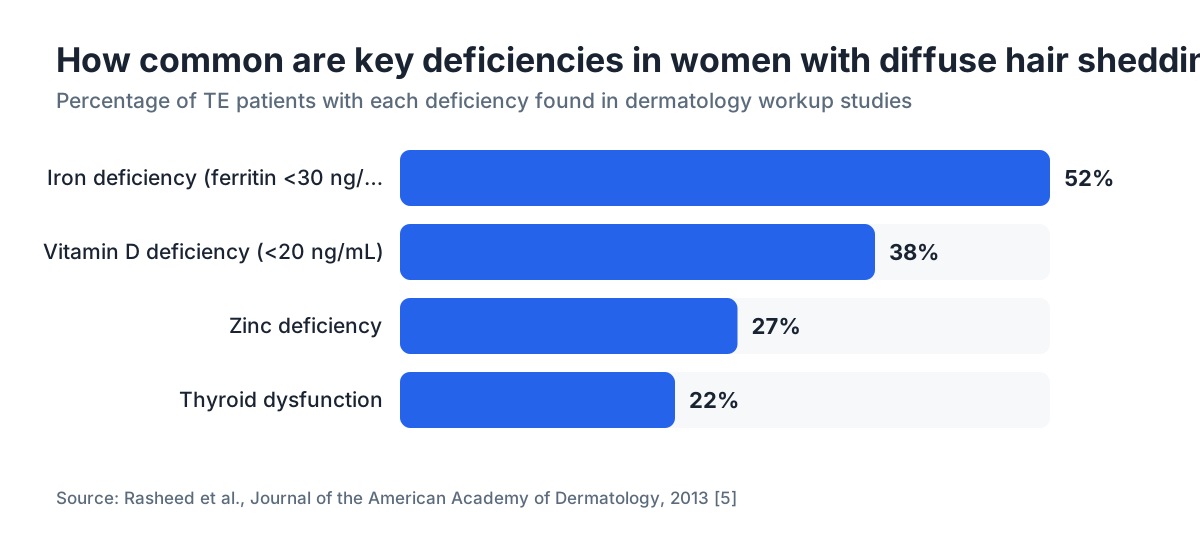
Correct iron deficiency. Iron is one of the most consistently documented nutritional triggers of TE. A 2013 study in the Journal of the American Academy of Dermatology found serum ferritin below 30 ng/mL was associated with hair loss in women, and correcting iron stores improved regrowth [5]. The AAD recommends checking ferritin in any woman with diffuse shedding [6]. Getting ferritin above 40 to 70 ng/mL (the therapeutic range varies by study) matters more than just clearing the lab's lower limit.
Eat enough protein. Hair is roughly 95% keratin, a protein. Even moderate protein restriction from a low-calorie diet can trigger TE within weeks [2]. The U.S. Dietary Reference Intake is 0.8 g of protein per kilogram of body weight per day, but some hair-focused clinicians suggest 1.0 to 1.2 g/kg for people actively regrowing hair [7].
Protect your sleep. Sleep is when cortisol hits its daily low and growth hormone peaks. Both favor healthy follicle cycling. Chronic sleep loss raises cortisol and disrupts the hypothalamic-pituitary-adrenal axis in ways that plausibly sustain TE [3]. The direct TE data is thin. The cortisol-follicle mechanism is not.
Cut psychological stress. Easier said than done. But validated practices, specifically mindfulness-based stress reduction (MBSR), cognitive behavioral therapy (CBT), and regular aerobic exercise, have measurable effects on cortisol and inflammatory cytokines [3]. Nobody has run a dedicated trial proving these speed TE recovery directly. The cortisol-follicle biology gives you a mechanism worth acting on.
Does diet actually affect telogen effluvium, and what should you eat?
Diet is one of the clearest levers you have. Three deficiencies show up again and again in TE cases: iron, zinc, and protein. Less often, vitamin D and biotin come up. Biotin deficiency is genuinely rare in people eating a normal diet, which makes the flood of biotin supplements for hair loss a waste of money in biotin-sufficient adults [6].
Iron-rich foods to prioritize: lean red meat, lentils, beans, fortified cereals, and spinach. Pair plant iron with vitamin C to improve absorption. Keep calcium and tea at least 2 hours away from iron-rich meals, since both block uptake.
Protein: eggs, fish, chicken, legumes, Greek yogurt, and cottage cheese are practical daily sources. A 150 lb (68 kg) person needs at least 55 g of protein per day at the baseline DRI, and probably closer to 70 to 80 g while recovering from TE [7].
Zinc: oysters, beef, pumpkin seeds, and cashews. Zinc deficiency is linked to TE and other alopecias, and supplementing deficient people reduced shedding in small trials [5].
Vitamin D: deficiency is common (roughly 35% of U.S. adults) and has been tied to hair loss in cross-sectional studies, though nobody has proven cause [8]. Reaching a serum 25-OH vitamin D level of at least 30 ng/mL through sun, diet, or a supplement is a low-risk step.
Skip the crash diets. Dropping below about 1,000 to 1,200 calories a day has been documented to trigger TE within 2 to 3 months, even in people who are not otherwise deficient [2]. Losing more than 1 to 1.5 lbs per week puts your follicles under real physiological stress.
For a wider look at what actually has evidence, the hair loss supplements article covers that ground in detail.
How does chronic stress physically affect hair follicles?
The follicle is not a bystander here. Cortisol, the main chronic stress hormone, has receptors in dermal papilla cells, the cells at the base of the follicle that control growth. Elevated cortisol suppresses local production of insulin-like growth factor 1 (IGF-1), which shortens the anagen phase [3].
There is an inflammatory arm too. Chronic stress raises systemic substance P and pro-inflammatory cytokines including IL-1 and TNF-alpha. Those signals around the follicle can block its move from telogen back into anagen, dragging out the shedding phase [3].
A 2021 study in Nature found that in mice, chronic stress raised corticosterone (the mouse version of cortisol) and held follicles in a prolonged resting state by suppressing GAS6, a signaling molecule that normally wakes up follicle stem cells [9]. This is mouse data, and human follicle biology is not identical. But the pathway is plausible and fits what dermatologists see in the clinic.
What does that mean for you? The point of stress management in TE is more than feeling calmer. It is lowering the physiological cortisol load on your follicles long enough for them to re-enter anagen. That takes consistent, multi-week practice, not the occasional bath and candle.
What stress management techniques actually lower cortisol?
Not all "stress relief" moves the needle on measurable cortisol. Here is what the evidence supports.
Aerobic exercise. Regular moderate-intensity aerobic exercise, the 150 minutes per week the CDC recommends, lowers baseline cortisol over time and improves sleep [3]. High-intensity exercise acutely spikes cortisol, so during a TE episode, two-a-day HIIT sessions probably work against you in the short term.
Mindfulness-based stress reduction (MBSR). An 8-week MBSR program has lowered cortisol and self-reported stress across multiple trials. A 2013 meta-analysis in Health Psychology Review covering 10 studies found MBSR produced statistically significant reductions in cortisol [10].
Sleep hygiene. Aim for 7 to 9 hours on a consistent schedule. Cortisol follows a daily rhythm, and chronic sleep disruption blunts the morning peak and lifts the evening trough, which leaves your background level higher all day.
Therapy and connection. CBT has documented effects on HPA-axis reactivity. This is a physiological effect, not soft advice.
What to skip: most adaptogens (ashwagandha, rhodiola, and the rest) have small or mixed human evidence, limited long-term safety data, and zero clinical evidence for TE specifically. Do not spend on them before you have handled diet, sleep, and the primary stressor.
Tracking your shed helps you stay rational. Many people catastrophize normal regrowth shedding and create a second stress loop. Counting hairs in a drain trap (60 to 100 per day is normal) gives you data instead of dread.
How much do sleep deprivation and poor sleep quality contribute to hair shedding?
Sleep deprivation is a physiological stressor in every measurable sense. Just one week of sleeping 6 hours or fewer per night raises cortisol, lowers testosterone, and impairs insulin sensitivity [3]. All three shifts are, at minimum, theoretically unfriendly to follicle cycling.
No dedicated trial has compared sleep-deprived and normal-sleep groups in a hair loss study, so the direct evidence is indirect. The mechanism is solid, though. Growth hormone, which is anabolic and supports follicle proliferation, is released mostly during slow-wave (deep) sleep. Cut sleep and you cut that nightly pulse.
Practical targets: 7 to 9 hours per night for adults (National Sleep Foundation), a consistent bedtime and wake time even on weekends to anchor your circadian cortisol rhythm, a dark and cool room, and no screens 30 to 60 minutes before bed.
If you have clinical insomnia that hygiene changes do not fix, CBT for insomnia (CBT-I) is the first-line treatment per the American Academy of Sleep Medicine, ahead of sleeping pills, which blunt sleep architecture.
Should you take any supplements for telogen effluvium?
Only if you have a confirmed deficiency. That is not a hedge. It is the actual guidance from the American Academy of Dermatology [6]. Supplementing nutrients you already have enough of does not speed regrowth, and some supplements at high doses cause their own problems. Excess vitamin A, for example, is a documented cause of TE.
Get bloodwork before you buy anything. A standard TE panel includes complete blood count (CBC), serum ferritin, serum iron and TIBC, thyroid-stimulating hormone (TSH), free T4, zinc, vitamin D (25-OH), and a basic metabolic panel. Ask your doctor or dermatologist for this before self-treating.
If you are iron deficient, supplement with ferrous sulfate or ferrous gluconate (better tolerated) at the dose your doctor sets, typically 150 to 200 mg elemental iron per day in divided doses [5]. Take it with vitamin C, away from calcium and coffee.
If you are vitamin D deficient, 1,500 to 2,000 IU per day of vitamin D3 is a reasonable starting dose for most adults. Your doctor may prescribe 50,000 IU weekly for severe deficiency [8].
For zinc, if deficient, 25 to 40 mg of elemental zinc per day is the common therapeutic range in dermatology literature [5]. Do not go past the tolerable upper intake of 40 mg per day without medical supervision, because too much zinc can itself cause hair loss.
Biotin: only if you have a documented deficiency (rare) or take drugs that deplete it. High-dose biotin (more than 5 mg/day) interferes with thyroid and troponin lab tests, which can produce genuinely dangerous false results [6].
For the full landscape beyond stress, read what causes hair loss before deciding on treatment.
Does minoxidil help telogen effluvium, or is it just for androgenetic alopecia?
Minoxidil is FDA-approved for androgenetic alopecia, not for TE [11]. Some dermatologists still use it off-label for TE, and the rationale is reasonable: minoxidil shortens telogen and extends anagen, which could in theory speed recovery from an episode.
A few small studies have looked at this. None are large or definitive. The honest consensus is that minoxidil is not the first move for pure TE, because TE usually resolves on its own, and stopping minoxidil can trigger a temporary shed on its own (a well-documented "doffing" effect). Start it during TE, stop it after recovery, and you may hit a second shed.
If TE drags past 6 months, or if your dermatologist suspects a coexisting androgenetic component, minoxidil becomes more relevant. The minoxidil for men article covers how it works and what to realistically expect, and the minoxidil side effects profile is worth reading before you start.
Finasteride and other DHT blockers target androgenetic alopecia and are not appropriate for pure stress-induced TE. If you are losing hair in a pattern (temples, crown) rather than diffusely, that changes the conversation. See finasteride for that path.
Are there specific scalp or hair care habits that make telogen effluvium worse?
A few physical habits add to the shed load or slow recovery, and they are worth fixing.
Tight hairstyles (ponytails, braids, extensions) pull on the follicle. That traction is its own condition (traction alopecia), and stacking it on a follicle already stressed by TE is bad physics. Loose styles during recovery make sense.
Heat styling does not cause TE. TE is a systemic event, not a shaft event. But high-heat tools cause mechanical breakage that makes thinning hair look worse, and during recovery your density is already down, so the breakage stands out. Use heat protectant, or back off heat for a few months.
Brushing or combing wet hair hard. Wet hair is more elastic and breaks easily. A wide-tooth comb on damp, conditioned hair is gentler than a paddle brush on soaking hair.
Frequent harsh chemical treatments (bleaching, perming, relaxing) also weaken shafts that are already thinner during recovery. Not a systemic TE trigger, still a visible problem.
Scalp inflammation from dandruff (seborrheic dermatitis) can make the shedding environment worse. Keeping the scalp clean and managing dandruff with a zinc pyrithione or ketoconazole shampoo 2 to 3 times per week is low risk.
The rule during a TE episode: reduce every physical and chemical stressor to the hair shaft. Not because they cause TE, but because they make the visible impact worse and the recovery feel longer than it is.
When should you see a dermatologist instead of managing this yourself?
Managing TE yourself is reasonable for the first 3 to 4 months after an identifiable stressor, especially if the shed is tapering. There are clear points where you should stop and get a professional look.
Book a dermatology appointment if any of these apply: shedding is still heavy after 6 months, you cannot identify a trigger, you are also losing hair in a pattern (temples, crown) rather than diffusely, you have other symptoms like fatigue, cold intolerance, or irregular periods that point to thyroid or hormonal problems, or your scalp shows redness, scaling, or inflammation.
A dermatologist can do trichoscopy (non-invasive scalp imaging), a pull test, and order the right blood panel. If the diagnosis is unclear, a scalp biopsy under local anesthesia gives definitive histology. In TE the biopsy shows a raised ratio of telogen to anagen follicles, typically more than 20% telogen versus the normal 10-15% [1].
To see where your hairline and density stand before that appointment, the free AI hair analysis at MyHairline gives you a baseline to bring to the consultation, including your approximate Norwood or Ludwig stage if androgenetic loss is also present.
Do not let cost or time push a visit past 6 months of heavy shedding. Scarring alopecias can look like TE early on, and they need prompt treatment to save follicles.
What is a realistic timeline and what does recovery actually look like?
Recovery from acute TE follows a recognizable arc, though the pace differs by person.
Months 1 to 2 after the stressor: the shed begins. Most people first see clumps on the shower floor, hair on the pillow, or a wider part. Panic is common.
Months 2 to 3: peak shedding. For acute TE, this is usually the worst of it. The scalp may show, especially at the part and temples.
Months 3 to 4: shedding slows. Regrowth starts, but it is short (1 to 2 cm at most) and often shows only as fuzzy scalp texture or baby hairs at the hairline.
Months 4 to 9: density visibly returns. Most people report that by month 6 to 9 their hair looks close to pre-TE normal, assuming the stressor is gone and nutrition is corrected.
Full return to pre-TE density can take 12 to 18 months in some cases, especially if the shed was severe or deficiencies were slow to correct. Regrown hairs may feel finer for a while before reaching mature shaft diameter.
Nobody has clean data on exactly what share of people recover fully versus partially. The closest figures come from specialist clinic series, which skew toward harder cases. In those series, most patients with acute TE have a favorable prognosis, while chronic TE is more variable [4].
Photos help here. Take a standardized shot (same lighting, same part position) every 4 weeks. Felt shedding volume is unreliable. A photo series shows real density change. For a more rigorous method, MyHairline's AI scan compares images over time and gives you a structured density estimate.
Sources
- American Academy of Dermatology (AAD), Hair Loss Overview
- Sinclair R. Diffuse hair loss. International Journal of Dermatology, 1999
- Thom E. Stress and the hair growth cycle: Cortisol-induced hair growth disruption. Journal of Drugs in Dermatology, 2016
- Whiting DA. Chronic telogen effluvium: increased scalp hair shedding in middle-aged women. Journal of the American Academy of Dermatology, 1996
- Rasheed H et al. Serum ferritin and vitamin D in female hair loss. Journal of the American Academy of Dermatology, 2013
- American Academy of Dermatology, Hair Loss: Tips for Managing
- USDA Dietary Reference Intakes for Protein
- National Institutes of Health Office of Dietary Supplements, Vitamin D Fact Sheet
- Choi S et al. Corticosterone inhibits GAS6 to govern hair follicle stem-cell quiescence. Nature, 2021
- Chiesa-Fuxench ZC et al. Meta-analysis of mindfulness-based stress reduction effects on cortisol. Health Psychology Review, 2013
- U.S. Food and Drug Administration, Drugs@FDA Database