

TL;DR: Telogen effluvium is a reversible shedding disorder triggered by nutritional deficits, illness, stress, or hormonal shifts. Correcting proven deficiencies, especially iron, vitamin D, and zinc, is the highest-yield move. Biotin, marine collagen blends, and most branded hair supplements have weak or no clinical proof. Most TE resolves within 6 to 12 months once the trigger is gone.
What is telogen effluvium and why does it cause so much shedding?
Telogen effluvium (TE) is a diffuse, non-scarring hair loss condition where an abnormally high percentage of scalp follicles shift from the active growth phase (anagen) into the resting phase (telogen) at the same time. Normally about 10 to 15 percent of follicles are in telogen at any moment. In TE, that figure can spike to 30 percent or higher, flooding your drain with hair anywhere from six weeks to three months after the triggering event. [1]
The delay is the part that confuses most people. You crash-diet in January, and by March you're watching clumps come out in the shower. The shedding feels sudden, but the biology was set in motion months earlier.
Common triggers include rapid weight loss, major surgery, high fever, childbirth (postpartum TE is among the most common types), thyroid dysfunction, crash dieting, and, yes, nutritional deficiencies. That last category is where supplements become relevant, because if a deficiency kicked off the shed, correcting it can cut the episode short. If something else triggered it, most supplements are unlikely to do much.
To understand the full picture of what drives this condition, the telogen effluvium overview covers the biology and clinical classification in detail. And if you're unsure whether you're dealing with TE or a different type of hair loss, what causes hair loss walks through the differential.
Which nutritional deficiencies are actually linked to telogen effluvium?
Not every supplement on the shelf has evidence behind it. A few nutrients have real mechanistic and clinical data connecting deficiency to TE onset.
Iron and ferritin. This is the strongest link. Iron is required for ribonucleotide reductase, an enzyme follicle cells need to divide rapidly during anagen. A 2006 review in the Journal of the American Academy of Dermatology concluded that iron deficiency, even without overt anemia, may be associated with hair loss, though the authors noted the relationship is not definitively established. [2] Most dermatologists use a serum ferritin threshold of 30 to 70 ng/mL as their working target for hair-related repletion; some use 70 ng/mL as the minimum because ferritin can be falsely elevated by inflammation. If your ferritin is in the teens, iron supplementation is a reasonable first move.
Vitamin D. Vitamin D receptors are present in hair follicle keratinocytes, and several studies have found lower serum 25(OH)D levels in women with TE compared to controls. A 2013 study published in Skin Pharmacology and Physiology found significantly lower vitamin D levels in women with TE and female-pattern hair loss versus controls. [3] The NIH Office of Dietary Supplements notes that the daily tolerable upper intake level for vitamin D is 4,000 IU for adults, so high-dose supplementation without blood testing carries its own risk. [4]
Zinc. Zinc has a role in keratin synthesis and follicle cycling. Severe zinc deficiency clearly causes hair loss; the data on borderline deficiency are thinner. A 2013 study in Annals of Dermatology found serum zinc levels were significantly lower in patients with TE, alopecia areata, and androgenetic alopecia compared to controls. [5] If you're eating a restricted diet or have absorption issues, a zinc test is worth getting.
Protein and essential amino acids. Hair is about 91 percent protein (keratin), so severe protein restriction will accelerate shedding. This is the crash-diet mechanism in a nutshell. Getting adequate dietary protein, at minimum 0.8 g per kilogram of body weight per day per the DRI, matters more than any branded supplement.
B vitamins (biotin, niacin, riboflavin). True biotin deficiency causes hair loss, but true biotin deficiency is rare in people eating a varied diet. The FDA has warned that high-dose biotin supplements (common in hair supplements) can interfere with dozens of lab tests, including cardiac troponin assays, potentially causing missed heart attack diagnoses. [6] That is a real risk you should know about before popping 5,000 to 10,000 mcg daily. Niacin deficiency (pellagra) causes hair changes, but again, this is uncommon without a specific dietary restriction or malabsorption disorder.
What does the clinical evidence say about popular hair supplements?
Here's the honest picture. The evidence base for hair supplements is thin, most trials are small, industry-funded, and short, and very few are designed specifically for TE patients.
Viviscal / marine protein complex. Viviscal's key ingredient is a marine protein complex called AminoMar C. A randomized, double-blind trial published in the Journal of Clinical and Aesthetic Dermatology in 2015 found significant increases in hair count and thickness in women with thinning hair over 6 months versus placebo. [7] This is one of the better-designed industry-funded trials in this space. The effect size was modest, the subjects were not specifically diagnosed with TE, and the company funded the research, which matters when reading the results.
Nutrafol. Nutrafol contains a mix of ashwagandha, saw palmetto, tocotrienols, and other botanicals. A 2021 randomized controlled trial published in the Journal of Drugs in Dermatology showed improvements in hair growth parameters in women with self-perceived thinning. [8] Again, industry-funded, small, and not TE-specific. Saw palmetto is a mild DHT blocker, which is more relevant to androgenetic alopecia than to TE.
Tocotrienol (vitamin E complex). A 2010 trial in Tropical Life Sciences Research found that tocotrienol supplementation significantly increased hair count in volunteers with hair loss versus placebo over 8 months. [9] Tocotrienols are thought to reduce oxidative stress in the scalp. The trial was small (38 people) but well-run.
Spermidine. Early data, mouse models, and a small human pilot. Not ready to recommend for clinical use yet.
Collagen peptides. No well-controlled human RCT demonstrates hair regrowth in TE. Collagen supplements break down to amino acids in the gut before absorption, so the "delivered directly to follicles" marketing language is not accurate.
The bottom line: if you have a confirmed deficiency, correcting it is the most evidence-backed thing you can do. A branded supplement stacked on top of a nutrient-sufficient diet is unlikely to meaningfully change your trajectory, though it's also unlikely to harm you (biotin interference with labs aside).
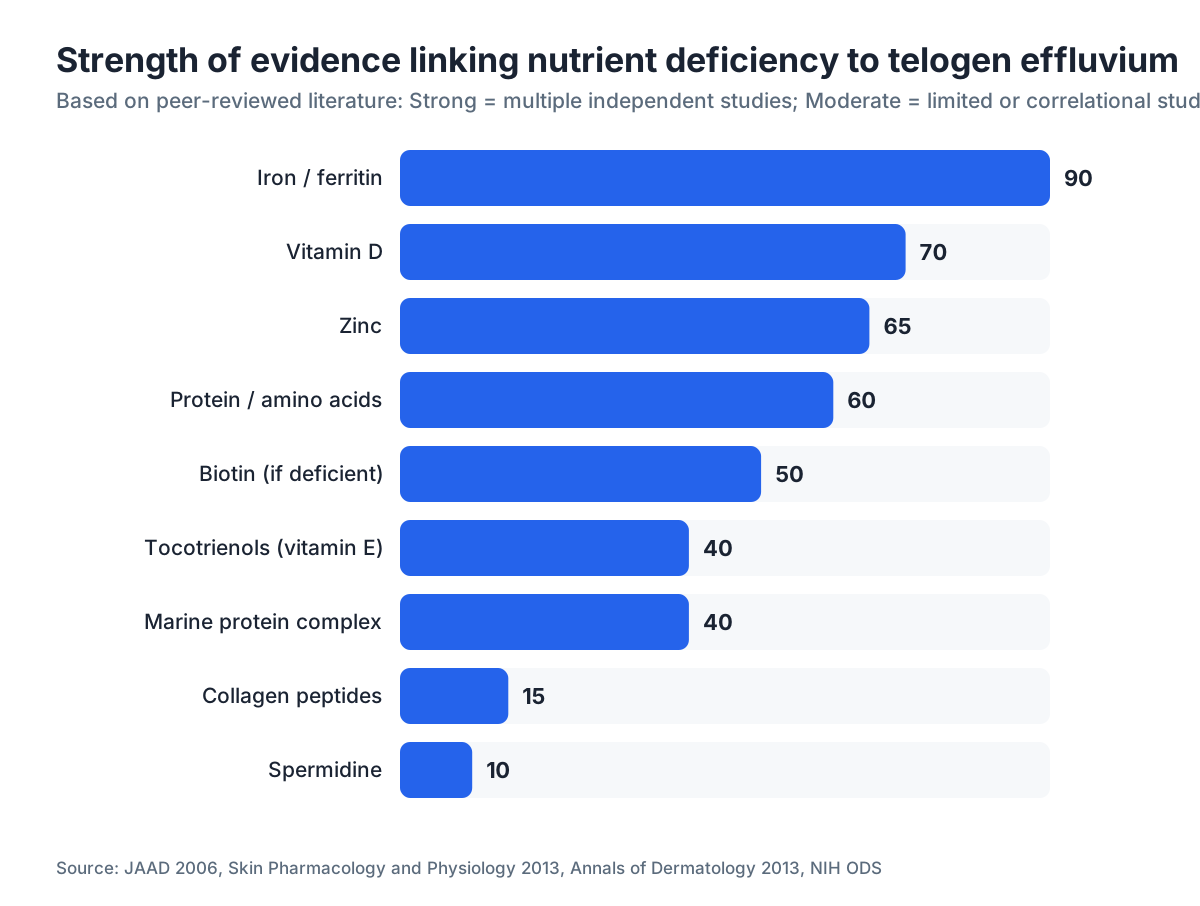
Which supplements are worth trying vs. which are a waste of money?
| Supplement | Evidence for TE | Recommended if deficient | Risk of harm |
|---|---|---|---|
| Iron (ferritin repletion) | Strong association | Yes, test first | GI upset if over-dosed; test, don't guess |
| Vitamin D3 | Moderate association | Yes, test first | Toxicity at very high doses (>4,000 IU long-term without monitoring) |
| Zinc | Moderate association | Yes, test first | Copper depletion at high doses |
| Biotin (high-dose) | Weak; deficiency is rare | Only if deficiency confirmed | Interferes with multiple lab tests [6] |
| Marine protein complex (Viviscal) | Some RCT support, industry-funded | Reasonable trial if budget allows | Low, but expensive |
| Tocotrienols | Small positive RCT | Reasonable low-risk trial | Low |
| Nutrafol / botanical blends | Modest industry-funded RCT | Unproven for TE specifically | Low; saw palmetto may affect PSA tests |
| Collagen peptides | No RCT for TE | Not specifically | Low |
| Spermidine | Very early data | Not yet | Unknown |
A few practical notes. Zinc supplementation over 40 mg per day long-term can deplete copper, which has its own hair and neurological consequences. Iron supplementation without testing can push ferritin too high, which is also associated with negative health outcomes. "Test, then treat" is the only responsible approach to micronutrient supplementation for TE.
If you want to look at the broader supplement landscape for hair loss beyond TE, the hair loss supplements page covers androgenetic alopecia options alongside the TE-specific picture.
How long does it take for supplements to stop hair shedding from TE?
Patience is genuinely required here, and most people underestimate the timeline.
Once you start correcting a deficiency, follicles need to complete their current telogen phase before new anagen growth begins. That transition typically takes 6 to 12 weeks. Then visible hair needs to grow several centimeters before you notice density improvement, which adds another 3 to 6 months. So realistically, you're looking at 4 to 9 months from the start of treatment before you can see meaningful regrowth.
Shedding usually slows before regrowth appears, which is reassuring. If shedding hasn't slowed at all after 3 to 4 months of correcting a confirmed deficiency, something else may be going on, and a dermatologist visit is warranted.
Acute TE (triggered by a single event like surgery or childbirth) typically resolves fully within 6 to 12 months regardless of supplementation, as long as the trigger has resolved. Chronic TE (lasting more than 6 months) is more likely to involve an ongoing trigger that hasn't been identified and corrected. [1]
Should you get blood tests before starting supplements for TE?
Yes. Without question.
The reason is simple: iron toxicity is real, vitamin D toxicity is real, and zinc-induced copper deficiency is real. Taking high-dose supplements for nutrients you're not actually deficient in is not a neutral act.
A standard workup for suspected nutritional TE typically includes: complete blood count (to check for anemia), serum ferritin (more than hemoglobin), serum 25-hydroxyvitamin D, zinc, TSH (thyroid), and a full metabolic panel. Some dermatologists also check selenium, B12, and folate.
The cost of this panel varies, but most can be ordered through a primary care physician and covered by insurance if there's a documented clinical indication. Direct-to-consumer lab services (like LabCorp's patient portal or Ulta Lab Tests) let you order many of these yourself for $50 to $150 total without a prescription in most US states.
Once you have results, you can supplement precisely, at the right dose, for the right duration, and then retest to confirm levels have normalized. That's the approach that actually moves the needle.
Can minoxidil or finasteride help while you're waiting for TE to resolve?
Sometimes, and it depends on what else is happening with your hair.
Minoxidil is a vasodilator that prolongs the anagen phase and can theoretically counteract some of the telogen-shifting that occurs in TE. Dermatologists do sometimes use topical minoxidil off-label during a TE episode to support existing follicles during the recovery period, particularly when there's concern about underlying androgenetic alopecia accelerating alongside the TE shed. The evidence isn't from large TE-specific trials, but the tolerability is well established. The minoxidil for men page has dosing and formulation details, and minoxidil side effects covers what to watch for.
Finasteride is a DHT blocker primarily indicated for androgenetic alopecia, not TE. Finasteride would only be relevant if there's a concurrent pattern of androgenetic alopecia layered on top of the TE shed, which does happen and can make the total loss look worse than either condition alone. Combining finasteride and minoxidil is the most evidence-backed drug approach to androgenetic alopecia if that's the co-diagnosis.
For pure TE without concurrent pattern hair loss, the goal is to remove the trigger and correct deficiencies, and most patients don't need prescription intervention.
What dietary changes help alongside supplements?
Supplements fill gaps; whole food fills the foundation. For someone recovering from TE, a few dietary shifts tend to matter more than any individual pill.
Protein adequacy is the first priority. A serving of meat, fish, legumes, or eggs at every meal gets most people to the 0.8 to 1.2 g/kg/day range that supports active hair growth. Vegans and vegetarians run somewhat higher risk for iron, zinc, and B12 gaps that can trigger or prolong TE.
Iron-rich foods combined with vitamin C improve non-heme iron absorption significantly. Pairing lentils or spinach with citrus or bell peppers is a practical application of this chemistry.
Omega-3 fatty acids from fatty fish (salmon, sardines, mackerel) have some limited evidence supporting scalp health, primarily through anti-inflammatory mechanisms. Nothing dramatic in RCTs, but the cardiovascular benefits are real regardless.
Caloric restriction is the enemy of TE recovery. If you dropped below 1,200 calories per day at any point (common in crash diets), that alone can trigger a shed, and staying below maintenance calories while trying to regrow hair puts you in a contradictory position. Eating at or slightly above maintenance during recovery matters more than people expect.
One more thing worth flagging: if you've been wondering whether creatine might have played a role in your shedding, the does creatine cause hair loss article addresses the DHT-and-creatine question directly.
Are there any supplements that could make hair shedding worse?
A few categories are worth knowing about.
High-dose vitamin A (retinol, not beta-carotene) is a well-documented cause of telogen effluvium. Toxicity from preformed retinol lists alopecia among its symptoms, and isotretinoin (a vitamin A derivative) can drive shedding too. [10] Multivitamins that contain more than 10,000 IU of preformed retinol per day are worth scrutinizing.
Excess selenium. A narrow U-shaped dose-response exists for selenium and hair health. Deficiency causes shedding; excess causes it too. Brazil nuts are notoriously high in selenium (a single nut can contain 68 to 91 mcg), and eating them in large quantities is a real way to tip into toxicity.
Any dramatic weight-loss supplement or thermogenic that drives rapid body weight reduction can trigger TE through the caloric restriction mechanism regardless of what's in the capsule.
Herbal supplements marketed for hormone balance, particularly those with phytoestrogen activity, can occasionally shift hormone profiles enough to affect the hair cycle in susceptible individuals, though this is not well-quantified in trials.
How do you know if your TE is actually improving?
The shedding tally is the first signal. Most people with active TE lose 200 to 400 or more hairs per day versus the normal 50 to 100. [1] Counting hairs on your pillow and in the shower drain over a week, then comparing to 8 weeks later, gives you a rough trajectory. It's not precise, but it's better than feeling like nothing is changing.
The pull test is a quick clinical proxy. Grab a small bunch of 40 to 60 hairs near the scalp and pull firmly with moderate traction. In active TE, 10 percent or more of the pulled hairs come out, meaning 4 to 6 or more in a single pull. As TE resolves, the positive pull test normalizes.
New short hairs, what people sometimes call "baby hairs," appearing along the hairline and part line are a reliable sign of regrowth. They may look like frizz or flyaways at first. That's a good sign.
If you want a more systematic read of your scalp density before and after supplementation, MyHairline's free AI scan (/scan) can quantify hair density from photographs and track changes over time without a clinic visit. That kind of baseline is useful because the human eye is notoriously bad at detecting gradual change.
If you're not seeing improvement by the 6-month mark despite correcting deficiencies, a dermatologist and trichoscopy (dermoscopy of the scalp) can rule out chronic TE, alopecia areata, and early androgenetic alopecia.
What do dermatologists and the AAD recommend for TE?
The American Academy of Dermatology's official guidance on hair loss emphasizes identifying and treating the underlying cause rather than reaching for any supplement first. [11] For TE specifically, the AAD recommends addressing nutritional deficiencies identified by bloodwork, managing the triggering condition, and being patient, because most acute TE resolves on its own.
The AAD does not endorse any specific supplement brand, and the guidance is deliberately conservative: "treating an identified underlying cause is the most effective strategy."
In practice, most dermatologists working with TE patients order the nutrient panel described earlier, recommend correcting any deficiencies found, and advise against spending heavily on unproven supplements. Many do discuss topical minoxidil as a supportive option when the wait is prolonged or when androgenetic alopecia is suspected to coexist.
For cases that aren't improving, a scalp biopsy can definitively confirm TE (showing elevated telogen-phase follicles) versus other diagnoses. That's a conversation worth having with a board-certified dermatologist if you're past the 6-month mark with no improvement.
Is a hair transplant ever appropriate for telogen effluvium?
No. And this is a hard no.
Telogen effluvium is a temporary, diffuse condition. The hair is not permanently lost; the follicles are dormant and will cycle back. Transplanting hair into a scalp that is actively shedding due to TE often results in shock loss of both the transplanted grafts and existing surrounding hairs. [12]
The prerequisite for any hair transplant is that the hair loss is stable and the pattern is established. TE by definition is unstable and in flux. Any surgeon recommending a transplant for isolated TE without a confirmed concurrent androgenetic alopecia diagnosis is not someone you want operating on your scalp.
Once TE has fully resolved and the baseline density is clear, if there turns out to be underlying androgenetic alopecia that wasn't visible before, then transplant candidacy can be assessed. But that's a separate question evaluated after recovery.
Sources
- StatPearls (NCBI Bookshelf), 'Telogen Effluvium'
- Journal of the American Academy of Dermatology, Trost et al. 2006, 'The diagnosis and treatment of iron deficiency and its potential relationship to hair loss'
- Skin Pharmacology and Physiology, Rasheed et al. 2013, 'Serum Ferritin and Vitamin D in Female Hair Loss'
- NIH Office of Dietary Supplements, 'Vitamin D Fact Sheet for Health Professionals'
- Annals of Dermatology, Park et al. 2013, 'The Role of Zinc in the Treatment of Alopecia'
- U.S. FDA, Safety Communication, 'Biotin May Interfere with Lab Tests'
- Journal of Clinical and Aesthetic Dermatology, Ablon 2015, 'A 6-Month, Randomized, Double-Blind, Placebo-Controlled Study Evaluating the Safety and Efficacy of a Nutraceutical Supplement for Promoting Hair Growth in Women'
- Tropical Life Sciences Research, Beoy et al. 2010, 'Effects of Tocotrienol Supplementation on Hair Growth in Human Volunteers'
- NIH Office of Dietary Supplements, 'Vitamin A and Carotenoids Fact Sheet for Health Professionals'
- American Academy of Dermatology, 'Hair Loss: Diagnosis and Treatment'
- International Society of Hair Restoration Surgery, 'Hair Transplant Patient Selection'