

TL;DR: Inadequate protein intake forces hair follicles into a resting phase called telogen effluvium, causing diffuse shedding roughly 2 to 3 months after the deficiency begins. Most adults need at least 0.8 g of protein per kilogram of body weight daily just to maintain basic function, and follicles need more. Shedding usually reverses within 3 to 6 months of restoring adequate intake, provided no other cause is driving it.
What exactly is telogen effluvium and why does protein trigger it?
Telogen effluvium is diffuse shedding that starts 2 to 3 months after a physiological stressor pushes too many follicles into their resting phase at once. Protein shortage is one of the most common triggers, and one of the most overlooked, because the shedding shows up months after the diet that caused it.
Hair follicles are not passive. They cycle through three phases: anagen (active growth, lasting 2 to 6 years), catagen (a brief 2-week transition), and telogen (rest, lasting roughly 3 months before the old hair sheds and a new one replaces it) [1]. At any moment, about 85 to 90 percent of your scalp follicles should be in anagen, and around 10 to 15 percent in telogen [1].
In telogen effluvium, that balance breaks. A stressor shoves an unusually high share of follicles from anagen into telogen all at once. Two to three months later, those resting hairs let go in a wave. The follicles are not dead. They are dormant. That distinction changes the whole prognosis.
Protein is the stressor most people underestimate. Hair is made almost entirely of keratin, a fibrous structural protein. When the body runs short on dietary amino acids, it triages. Hair growth is metabolically expensive and biologically nonessential for survival, so the body sends available protein to organs and immune function first. Follicles starved of amino acids downregulate and slip into telogen [2].
The lag is why people miss the connection. Someone who slashed calories aggressively in January sees alarming diffuse shedding in March or April and blames stress, a new shampoo, or almost anything other than what happened months earlier.
See the broader picture of what causes hair loss to understand where protein deficiency fits among other common triggers.
How much protein does your hair actually need?
The U.S. recommended dietary allowance (RDA) for protein is 0.8 grams per kilogram of body weight per day for sedentary adults [3]. That number was designed to prevent clinical deficiency in most people, not to keep keratin synthesis humming.
For a 70 kg (154 lb) person, 0.8 g/kg works out to 56 grams of protein per day. That sounds like enough, and for organ function it probably is. Follicles, though, appear sensitive to protein at the lower end of the normal range. Clinical reports have described telogen effluvium in people eating well above overt deficiency thresholds but below what their total metabolic demand required, especially during caloric restriction [2].
Research in protein-energy malnutrition, specifically kwashiorkor, shows that hair changes (diffuse loss, color change, structural fragility) are among the earliest and most consistent signs [4]. You do not need kwashiorkor-level deficiency to trigger effluvium. Crash diets under 1,000 calories, or very low protein diets (under roughly 50 g/day for most adults), appear to carry real risk.
Some people run a higher demand and a higher risk: those recovering from surgery, illness, or significant blood loss; athletes in heavy training blocks; pregnant or breastfeeding women; and anyone on a poorly planned vegan or vegetarian diet that skips complementary protein sources. Older adults absorb and retain dietary protein less efficiently, so their threshold for functional deficiency may sit above the standard RDA.
There is no single magic number. Most hair-focused dermatologists suggest aiming for 1.0 to 1.2 g per kilogram per day if shedding is already happening and protein may be a factor, though randomized data confirming that exact threshold for regrowth are thin.
Which protein deficiencies and nutritional gaps cause hair shedding?
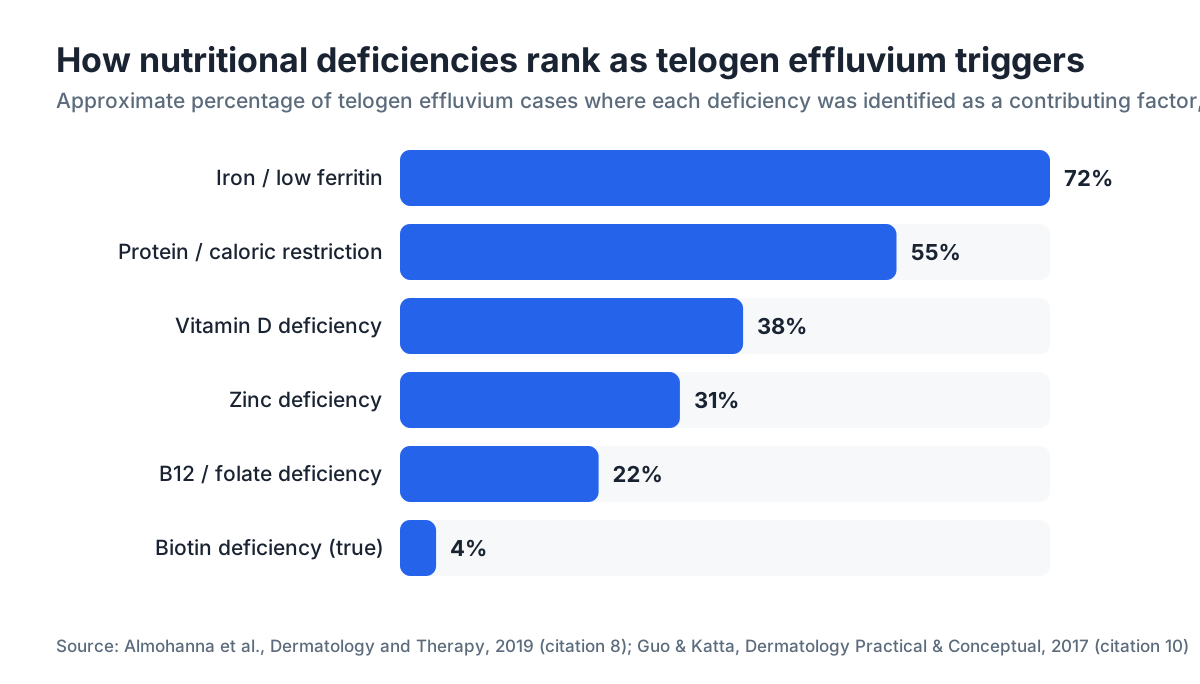
Pure protein deficiency is one mechanism. Several related gaps often travel with it, and each can trigger or worsen telogen effluvium on its own.
Iron. Iron deficiency is the nutritional cause of telogen effluvium with the best evidence base. Ferritin, the iron storage protein, is a cofactor in DNA synthesis and cell proliferation, both of which follicles need constantly. A 2006 review in the Journal of the American Academy of Dermatology found that iron deficiency may be associated with hair loss in women, though it called the relationship complex and not fully resolved [5]. Serum ferritin below 30 ng/mL is the threshold most commonly cited in practice, though some dermatologists target 40 to 70 ng/mL for hair specifically.
Zinc. Zinc is a cofactor for more than 300 enzymes, including those involved in protein synthesis and cell division. Severe zinc deficiency causes hair loss in animals and humans. Marginal deficiency in people eating low-protein or mostly plant-based diets may contribute to shedding without obvious clinical signs [6].
Biotin. Biotin deficiency is rare in anyone eating a mixed diet. Despite the enormous supplement market built on biotin, there is no strong evidence that supplementing it in people with normal levels improves hair growth [8]. If labs show a true deficiency, correcting it helps. Supplementing blindly is a waste of money.
Essential amino acids. The sulfur-containing amino acids cysteine and methionine are concentrated in keratin. Diets very low in animal protein and lacking complementary plant proteins can produce relative shortfalls in these specific amino acids even when total gram intake looks fine.
Caloric restriction as a compounding factor. Aggressive dieting rarely restricts protein alone. Very low calorie diets drain multiple micronutrients at once: iron, zinc, vitamins B12, D, and A, and folate. That is why crash dieters often get severe effluvium that takes longer to recover from than people who simply nudged protein down a little [2].
You can explore the full list of nutritional supplements commonly used for hair loss at hair loss supplements.
How is protein-deficiency telogen effluvium diagnosed?
Diagnosis starts with a detailed history. A good dermatologist or trichologist asks about dietary changes, caloric restriction, surgeries, illnesses, medications, and major life stressors in the three to four months before shedding began. That 2 to 3 month lag is a diagnostic clue that makes the history more useful than almost any single lab test.
The exam looks for a diffuse pattern. Androgenetic alopecia (male or female pattern baldness) thins preferentially at the crown or temples. Telogen effluvium hits the whole scalp relatively evenly. Shedding 100 to 150 hairs per day or more from diffuse areas points toward effluvium; normal shedding is commonly cited as up to 100 hairs daily.
The pull test is simple and useful. The examiner grips 40 to 60 hairs and pulls with gentle tension. More than 6 hairs releasing per pull suggests active effluvium [1].
Blood work matters. A reasonable baseline panel for suspected nutritional telogen effluvium includes:
- Complete blood count (CBC) to check for anemia
- Serum ferritin (more than iron or hemoglobin)
- Thyroid-stimulating hormone (TSH), because hypothyroidism mimics and compounds the picture
- 25-hydroxyvitamin D
- Zinc
- Total protein and albumin, as rough markers of protein status
- B12 and folate if diet is restricted
Albumin below 3.5 g/dL is a clinical marker of protein deficiency, but it takes weeks to drop and weeks to recover, so it can read normal even during real protein restriction. Prealbumin (transthyretin) turns over faster and may reflect more recent status, though outpatient workups do not always order it.
For a broader understanding of the different types of hair loss, the telogen effluvium explainer covers diagnosis in detail.
What does the timeline of protein-deficiency hair loss actually look like?
The timeline runs on the hair cycle, not on how fast you fix your diet. Knowing it prevents panic and tells you whether treatment is working.
Week 1 to 8 after the protein shortfall: Follicles begin entering telogen. You feel nothing. Hair looks normal. The shift is happening silently.
Week 8 to 16 (roughly months 2 to 4): The resting hairs shed. This is usually when people notice clumps in the shower drain, hair on the pillow, or startling amounts on the brush. The scalp may feel more tender.
Month 3 to 6 after restoring adequate protein: With protein and other gaps corrected, follicles return to anagen. Anagen hair has to grow from scratch, so density does not bounce back right away. Fine regrowth hairs (often called "baby hairs") show up first. Full cosmetic recovery can take 6 to 12 months and sometimes longer.
Chronic telogen effluvium, lasting longer than 6 months, happens when the cause is not corrected, when stressors pile up, or when a person has a background of androgenetic alopecia that was previously masked by normal density.
Here is the honest part: not all diffuse shedding resolves completely. If pattern thinning was hiding under normal density, a bout of effluvium can expose it. That is not treatment failure. It just means two separate processes need attention.
Can you see protein deficiency hair loss in bloodwork?
Yes and no. Standard protein markers, serum albumin and total protein, reflect chronic status and are buffered to stay in normal range for a surprisingly long time. A person can eat a protein-poor diet for months before albumin drops below the clinical deficiency line of 3.5 g/dL.
Prealbumin turns over in 2 to 3 days, making it a faster snapshot, but inflammation (a common companion to illness or surgery) suppresses it too, so it is not a clean protein marker.
Hair shaft analysis shows up in research settings but is not standardized or routinely available in clinics.
The most useful test in practice stays serum ferritin, because iron deficiency co-occurs with protein deficiency so often and because ferritin responds within weeks to months of dietary correction. When ferritin is low and the history fits an inadequate diet, treating the whole nutritional picture together (protein, iron, and micronutrients) beats chasing one number at a time.
If every lab is normal and the history still points to effluvium, trichoscopy (dermoscopy of the scalp) can show a higher ratio of telogen to anagen follicles directly. Some dermatology practices also run trichograms or phototrichograms that count follicles per square centimeter, which help track recovery over time [1].
If you are trying to read your own shedding before seeing a doctor, the free AI hair scan at MyHairline can help you tell whether your loss looks more diffuse (consistent with effluvium) or patterned (consistent with androgenetic alopecia), useful information to bring to an appointment.
How do you treat protein-deficiency telogen effluvium?
The main treatment is dietary correction, not a pill or a topical. That sounds obvious, yet plenty of people buy topical treatments while the underlying deficit keeps running.
Increase dietary protein. Aim for 1.0 to 1.2 g per kilogram of body weight per day, spread across meals rather than dumped into one. The body uses roughly 25 to 40 grams of protein per meal effectively for muscle protein synthesis, and spreading intake seems to support better amino acid availability through the day [3]. Good sources: eggs (about 6 g each), chicken breast (about 30 g per 100 g), Greek yogurt (15 to 20 g per serving), lentils (18 g per cooked cup), tofu (10 to 15 g per 100 g), and fish.
Address specific deficiencies. If ferritin is low, iron supplementation (typically 150 to 200 mg of elemental iron per day in divided doses, as ferrous sulfate or ferrous gluconate) with vitamin C to aid absorption can raise levels over 3 to 6 months [11]. Zinc at 25 to 50 mg elemental per day corrects deficiency, but excess zinc suppresses copper absorption and causes its own problems, so test before you supplement [6].
What about biotin supplements? The evidence does not support biotin for people who are not deficient. Worse, high-dose biotin (10 mg or more, which is what many "hair, skin, and nails" supplements contain) interferes with troponin assays, thyroid tests, and other biotin-based immunoassays, potentially producing falsely normal or falsely abnormal results [8]. The FDA issued a safety communication about this in 2017.
Minoxidil. Topical minoxidil is sometimes used as an adjunct during recovery, not because it fixes the cause but because it shortens the anagen latency period and can speed follicle return to active growth. Worth discussing with a dermatologist, but no substitute for fixing nutrition. Read about minoxidil for men if you are considering it, and check the minoxidil side effects before starting.
What you probably do not need. Finasteride (a DHT blocker for androgenetic alopecia) does nothing for nutritional telogen effluvium. If you are shedding from protein deficiency, blocking DHT will not help. The two conditions can coexist, which is exactly why a proper diagnosis comes before spending money.
How long does it take for hair to grow back after protein deficiency?
The honest answer: longer than most people want to hear, shorter than they fear.
Once you restore adequate protein and correct co-occurring deficiencies, follicles usually start returning to anagen within 1 to 3 months. Anagen hair grows at roughly 1 centimeter per month on average [1], so meaningful cosmetic recovery (visible density change) usually takes 6 to 12 months. After severe or prolonged deficiency, a full return to previous density can take up to 18 months.
Here is the practical arc:
- Month 1 to 3 after correction: shedding slows, feels like nothing is changing
- Month 3 to 6: fine regrowth appears, the part or hairline looks slightly less sparse
- Month 6 to 12: density visibly improves, texture may feel different as new hairs mature
- Month 12 to 18: most people with isolated protein-deficiency effluvium are at or near their old density
Two things slow this down. Ongoing stress, illness, or caloric restriction will restart the cycle. And a background of androgenetic alopecia means some density loss may be permanent through a different mechanism that needs separate evaluation. For persistent pattern thinning, the evidence-based options are finasteride and minoxidil, sometimes used together as finasteride and minoxidil.
Patience is non-negotiable. The hair cycle does not compress, no matter how many supplements you take.
Does protein powder or supplementing amino acids help hair grow faster?
If you are genuinely deficient, correcting it with any high-quality protein source, protein powder included, will help. Food and powder are metabolically equivalent when total amino acid content and digestibility match.
Whey protein has a high digestibility-corrected amino acid score (PDCAAS and DIAAS near 1.0) and is rich in cysteine, a keratin precursor [3]. Casein, egg white, and soy are also complete, high-quality proteins. Collagen, despite its popularity in the hair aisle, is not a complete protein. It lacks tryptophan and has a poor amino acid profile for tissue repair compared to whey or egg white.
If your protein intake is already adequate, more powder will not speed hair growth. Follicles do not respond to protein surplus above the body's need; they respond to deficiency. No published randomized trial shows that supraphysiological protein intake improves hair density in well-nourished people.
Specific amino acid supplements like L-cysteine, lysine, or methionine get marketed for hair. Lysine appears in case reports to matter when iron supplementation alone fails to raise ferritin (lysine may aid iron absorption), but the evidence is limited and mostly from small studies [10]. L-cysteine's role is biologically plausible but not backed by large trials.
So: fix the diet first, test before you supplement minerals, skip the biotin megadose, and stay skeptical of any product promising fast regrowth.
Who is most at risk for protein-related hair loss?
A few groups carry clearly higher risk and are worth naming.
Crash and yo-yo dieters. Rapid caloric restriction, especially below 1,000 to 1,200 calories per day, almost always delivers inadequate protein. "Cleanse" diets, juice fasts, and very low calorie programs are frequent culprits [10]. The shedding follows reliably 2 to 3 months after the restriction.
Post-bariatric surgery patients. Gastric bypass and sleeve gastrectomy sharply cut food intake capacity and alter nutrient absorption. Telogen effluvium in the 3 to 6 months after surgery is common enough that surgeons routinely warn patients about it. Post-bariatric protein goals run 60 to 80 grams per day minimum, and compliance is hard in the early months [9].
Athletes and bodybuilders during cuts. Aggressive deficits plus high training volume can drain protein for non-muscular tissues. People who track macros carefully can still shortchange follicles if their protein goes mostly to muscle repair.
People with gastrointestinal conditions. Crohn's disease, celiac disease, and other malabsorptive conditions cut protein and micronutrient uptake even when the diet looks adequate. Active inflammatory disease also raises metabolic protein demand.
Older adults. Sarcopenia risk means the evidence favors higher protein intake past 65, roughly 1.0 to 1.2 g/kg/day. Many older adults fall short of that, and reduced gastric acid secretion cuts iron and B12 absorption too.
People on vegan or restrictive vegetarian diets without planning. A well-planned plant-based diet is not inherently protein-deficient. A poorly planned one, leaning on refined grains and vegetables while skipping legumes, tofu, tempeh, or protein-rich grains, can fall short in both total protein and specific amino acids. Plant iron (non-heme) is also less bioavailable than heme iron from meat, which compounds the risk [11].
If you are in one of these groups and also seeing a receding hairline, read about receding hairline to work out whether pattern loss is running alongside the effluvium.
Is protein-deficiency hair loss different from other types of hair loss?
Yes, and the differences decide the right response.
| Feature | Protein-deficiency telogen effluvium | Androgenetic alopecia | Alopecia areata |
|---|---|---|---|
| Pattern | Diffuse, all over scalp | Patterned (crown/temples in men; diffuse crown in women) | Patchy, smooth bald spots |
| Cause | Nutritional deficiency or stress | Genetics, DHT sensitivity | Autoimmune |
| Follicle status | Alive, temporarily dormant | Progressively miniaturizing | Attacked by immune cells |
| Reversible? | Yes, with correction | Partially, with ongoing treatment | Variable |
| Blood tests useful? | Yes (ferritin, albumin, zinc) | TSH to rule out thyroid; otherwise not diagnostic | Autoimmune panel sometimes |
| First-line treatment | Dietary correction | Minoxidil, finasteride | Corticosteroids, immunosuppressants |
The most common clinical mix-up is diffuse androgenetic alopecia in women versus chronic telogen effluvium. They can coexist, and teasing them apart takes trichoscopy or biopsy in some cases. A dermatologist who specializes in hair loss is the right person to sort it out.
Some popular supplements like creatine raise questions about whether they affect DHT and therefore hair. If you are curious about that separate issue, see does creatine cause hair loss.
To understand every mechanism that can thin hair at once, what causes hair loss covers the full taxonomy.
Can you prevent protein-deficiency hair loss before it starts?
Yes, and prevention is far easier than treatment.
Before any planned caloric restriction (a diet, pre-surgical weight loss, or an athletic cut), build the plan around protein. Set a floor of 1.0 g per kilogram of your current body weight per day, even in a deficit. Protein has a strong satiety advantage and a high thermic effect anyway, so prioritizing it rarely fights the diet's goals.
Having elective surgery? Talk perioperative nutrition with your surgeon or a registered dietitian. Adequate protein before and after surgery cuts the inflammatory burden on follicles.
Check ferritin before you start a prolonged restrictive diet, not after your hair starts falling out. Plenty of people discover low-normal ferritin only once effluvium is underway. Getting ahead of it takes one blood test.
On a plant-based diet, pair legumes with whole grains at most meals to cover complementary amino acid profiles. A handful of hemp seeds, some edamame, or a decent plant protein powder can close gaps without giving up your preferences.
And slow the weight loss down. The evidence is not precise on the exact rate, but losing more than 1 to 1.5 pounds per week on average has been linked to nutritional deficiencies that show up in hair [10]. Gradual deficits give the body time to adapt without setting off the alarm response that pulls protein away from follicles.
The MyHairline AI scan at myhairline.ai/scan can help you tell whether your current shedding looks more like diffuse effluvium or patterned loss, a useful data point when you are deciding whether to prioritize nutrition, see a dermatologist, or chase both.
Sources
- American Academy of Dermatology, Hair Loss Types: Alopecia Overview
- Rushton DH, Nutrition and Hair. Clinics in Dermatology, 2002, Elsevier
- National Academies of Sciences, Dietary Reference Intakes for Energy, Carbohydrate, Fiber, Fat, Fatty Acids, Cholesterol, Protein, and Amino Acids (2005)
- World Health Organization, Malnutrition fact sheet
- Trost LB, Bergfeld WF, Calogeras E. The diagnosis and treatment of iron deficiency and its potential relationship to hair loss. Journal of the American Academy of Dermatology, 2006;54(5):824-844
- National Institutes of Health Office of Dietary Supplements, Zinc Fact Sheet for Health Professionals
- Almohanna HM, Ahmed AA, Tsatalis JP, Tosti A. The Role of Vitamins and Minerals in Hair Loss: A Review. Dermatology and Therapy, 2019;9(1):51-70
- National Institute of Diabetes and Digestive and Kidney Diseases (NIDDK), Bariatric Surgery
- Guo EL, Katta R. Diet and hair loss: effects of nutrient deficiency and supplement use. Dermatology Practical & Conceptual, 2017;7(1):1-10
- National Institutes of Health, Office of Dietary Supplements, Iron Fact Sheet for Health Professionals