
TL;DR: Telogen effluvium is the medical name for stress-triggered hair shedding. A physical or emotional stressor pushes large numbers of hair follicles into the resting (telogen) phase at once. Shedding usually starts 2 to 3 months after the trigger and peaks around month 4. Most people recover fully within 6 to 9 months once the stressor resolves, no medication needed.
What is telogen effluvium and why does Cleveland Clinic call it a 'reactive' hair loss?
Telogen effluvium (TE) is not a disease. It's a reaction. Something disrupts the normal hair growth cycle, and the follicles respond by quitting early and shedding. Cleveland Clinic's dermatology team describes it as one of the most common causes of hair loss they see, and they frame it as reactive because it always has an upstream cause you can find if you look back 2 to 3 months in a patient's history. [1]
Normal hair grows in three phases: anagen (active growth, lasting 2 to 6 years), catagen (a brief 2-week transition), and telogen (resting, lasting about 3 months before the hair falls out naturally). [2] At any given moment, roughly 85 to 90 percent of your scalp hairs are in anagen and about 10 to 15 percent are in telogen. You lose 50 to 100 hairs a day and never notice, because new ones are always coming in behind them.
When a big stressor hits, a large cohort of follicles shifts into telogen together. Three months later, those hairs all shed at once. That's why the clumps in the shower drain feel so alarming. You're not going bald. You're seeing a synchronized exit.
Cleveland Clinic separates TE from androgenetic alopecia (pattern baldness) partly on this timeline. Pattern baldness is slow, progressive, and driven by DHT acting on genetically sensitive follicles. TE is abrupt, spread across the whole scalp, and tied to a specific event. If you want the wider picture of what triggers hair loss, what causes hair loss is a good starting point.
What types of stress cause telogen effluvium?
The word 'stress' covers a lot of ground here. Emotional stress (a divorce, a job loss, grief) can absolutely trigger TE, but physical stressors are stronger triggers and show up more consistently in the research. [1][3]
Physical triggers documented in the dermatology literature include:
- High fever or severe infection (COVID-19 became a textbook example after 2020)
- Major surgery or general anesthesia
- Childbirth (postpartum hair loss, one of the most common forms of TE)
- Rapid weight loss or crash dieting, especially protein restriction
- Iron deficiency anemia
- Thyroid dysfunction, both hypo and hyperthyroid
- Starting or stopping certain medications, including hormonal contraceptives
- Severe nutritional deficiencies, particularly ferritin below about 30 ng/mL [4]
Emotional or psychological stress is a real trigger, but the biology is messier. Chronic psychological stress raises cortisol and activates substance P, a neuropeptide that can disrupt the hair follicle cycle. A 2021 study in Nature found that sustained stress-induced corticosterone suppressed the hair follicle stem cell activator GAS6 in mice, effectively keeping follicles stuck in the resting phase instead of returning to growth. [5] Whether the exact mechanism scales to humans is still being studied, but the direction of the finding matches what dermatologists see in clinic.
Here's the practical part. If you're shedding heavily, think back 2 to 4 months. An illness, a hard life event, a strict diet, or a long hospital stay is usually sitting right there as the cause.
How much hair loss is normal versus a sign of telogen effluvium?
The American Academy of Dermatology (AAD) puts normal daily shedding at 50 to 100 hairs. [6] In active telogen effluvium, daily shedding often climbs past 300 hairs. Some patients count or weigh their shed hairs. Most just notice that the drain, pillowcase, and brush look genuinely alarming.
A simple clinical test called the pull test helps. Grasp 40 to 60 hairs between two fingers, apply gentle tension, and pull slowly. Losing more than 6 hairs counts as a positive result and points to active shedding. Dermatologists use this as a quick bedside screen, though it isn't perfectly standardized.
Diffuse thinning all over the scalp is the signature. TE doesn't carve out a receding hairline at the temples or a bald patch at the crown the way pattern baldness does. If you're seeing a defined receding hairline pattern, that's a different conversation.
One number worth knowing: the average scalp has about 100,000 hair follicles. Even shedding 300 hairs a day for several months is a small slice of that total, which is partly why most people with TE don't look dramatically bald even at the worst point. The hair looks thinner, especially when wet, and the ponytail (if there is one) feels noticeably smaller.
How long does stress-related hair loss last?
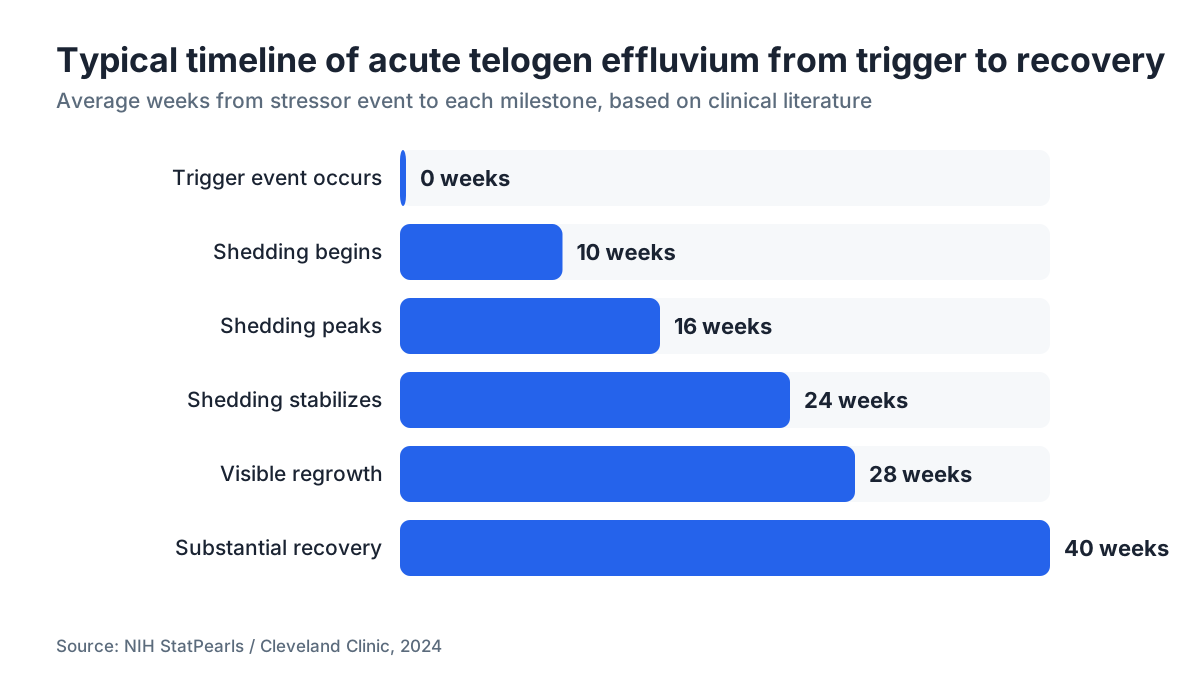
Acute telogen effluvium usually resolves on its own within 3 to 6 months after the trigger is removed or resolved. [1] Counting from trigger to peak shedding to full recovery, the whole experience typically runs 6 to 9 months.
Chronic telogen effluvium is a different animal. It's defined as TE lasting more than 6 months, and it's more likely when:
- The underlying trigger was never identified or addressed
- There's an ongoing medical problem like untreated thyroid disease or persistent iron deficiency
- Several triggers overlap at once
- Underlying pattern baldness is being unmasked by the TE
The honest answer on timing is that nobody has a precise clock for any one person. The closest real-world data suggests most acute TE cases settle within 6 months, but some studies report patients still shedding heavily at 12 months, especially when the original stressor dragged on. [3]
One thing that frustrates a lot of patients: regrowth starts before shedding stops. New hairs come in short and fine, so for a while your scalp is sprouting fresh growth while still losing older hairs from the previous telogen wave. That overlap isn't a sign the treatment failed. It's a sign recovery is underway.
How do doctors diagnose telogen effluvium versus other types of hair loss?
Diagnosis is mostly clinical. A good dermatologist makes it by listening carefully and looking at the scalp, not by ordering an expensive test. The history carries most of the weight: what happened 2 to 4 months before the shedding started?
Blood work is standard when the trigger isn't obvious. The typical panel includes:
- Complete blood count (to check for anemia)
- Ferritin (iron stores, more useful than serum iron)
- Thyroid-stimulating hormone (TSH)
- Vitamin D and B12
- Zinc
- In women, hormonal panels if there are other symptoms
Ferritin deserves a flag. Many labs mark ferritin as 'normal' above 12 or 15 ng/mL, but dermatologists often cite a threshold closer to 40 to 70 ng/mL as adequate for hair growth, based on studies linking low ferritin with TE severity. [4] If your result comes back 'normal' at 18, your dermatologist may still want to treat it.
A scalp biopsy is rarely needed for TE, but it can help when the diagnosis is genuinely uncertain, particularly to separate chronic TE from early androgenetic alopecia. Under the microscope, TE shows a higher-than-normal ratio of telogen follicles (above 20 to 25 percent) without the follicular miniaturization that marks pattern baldness. [7]
Dermoscopy, examining the scalp with a handheld magnifier, lets a skilled clinician spot the short regrowing hairs and assess follicle density with no invasive procedure.
Does stress hair loss grow back on its own?
Yes, in most cases. This is the single most reassuring fact about acute telogen effluvium: the follicles are not destroyed. They're dormant, not dead. Once the stressor resolves and the follicles cycle back into anagen, hair regrows from the same follicles that shed. [1][6]
The AAD says hair lost to telogen effluvium typically grows back without treatment once the trigger is addressed. [6] That sets TE apart from scarring alopecias, where the follicle is permanently damaged, and from late-stage androgenetic alopecia, where follicles have miniaturized beyond recovery.
There are caveats. If someone already has underlying pattern baldness and TE piles on top, the TE hairs regrow but the pattern loss won't self-correct. That combination is fairly common and can muddy the picture, because density improves a lot after TE clears but never quite returns to the pre-TE baseline. The pattern loss was there the whole time, just masked.
For people with no underlying pattern baldness, full recovery is the realistic expectation. Patience is the hard part. Hair grows roughly half an inch per month. If you lost 3 inches of visible density through heavy shedding, it takes about 6 months just to replace that length, and the new hairs need more time to thicken and mature.
What treatments actually help telogen effluvium?
The most effective treatment is fixing the underlying cause. That sounds anticlimactic, but it's genuinely true and backed by the research. Correct iron deficiency, treat the thyroid disorder, stabilize nutrition after crash dieting, manage the chronic stressor. The hair almost always follows. [1][3]
Beyond root causes, the evidence base for specific TE treatments is surprisingly thin. Here's the honest breakdown:
Minoxidil: Approved by the FDA for androgenetic alopecia, not TE specifically. [8] It prolongs the anagen phase and may speed the shift back to active growth after a TE episode. Some dermatologists suggest it for TE that's slow to recover, especially if there's suspected overlap with pattern hair loss. If you're considering it, minoxidil for men covers dosing and realistic expectations, and minoxidil side effects is worth reading before you start.
Iron and ferritin supplementation: If ferritin is low, correcting it is one of the better-supported moves. A 2006 study by Trost et al. in the Journal of the American Academy of Dermatology found that iron deficiency, especially low ferritin, is associated with TE and that correcting it can support recovery. [4]
Nutritional support: Adequate protein (at least 0.8 g per kg of body weight, higher if you were restricting) and micronutrients matter. Hair loss supplements covers which ones have real evidence and which are marketing.
Finasteride and DHT blockers: These are for androgenetic alopecia, not TE. If your hair loss is pure TE with no pattern component, finasteride won't help and carries side effect risks that aren't warranted. If there's a genuine AGA overlap, that's a different calculation.
Stress management: Easier said than done, but legitimate. Chronic cortisol elevation has measurable effects on the follicle cycle. Consistent sleep, exercise, and cutting ongoing stressors isn't a soft answer here. It's the mechanistic one.
Want a quick read on where your hair loss stands right now? MyHairline's free AI scan (/scan) shows you the pattern and severity before you decide whether to see a dermatologist or wait it out.
What is the difference between telogen effluvium and androgenetic alopecia?
This is the question that causes the most confusion, and the answer matters because the treatments are completely different.
| Feature | Telogen effluvium | Androgenetic alopecia |
|---|---|---|
| Pattern | Diffuse, all over scalp | Patterned (temples, crown, hairline) |
| Onset | Sudden, 2-3 months after trigger | Gradual, over years |
| Reversible | Yes, usually fully | No (follicles miniaturize permanently) |
| Trigger | Identifiable stressor or deficiency | Genetic, driven by DHT |
| Daily shed count | Often 300+ | Typically closer to normal range |
| Scalp appearance | Normal follicle density | Follicular miniaturization visible |
| Diagnosis | Clinical history + blood work | Dermoscopy, pattern assessment |
| Primary treatment | Address the trigger | Minoxidil, finasteride, transplant |
The two can coexist. In fact, a TE episode sometimes reveals androgenetic alopecia that was building quietly, because the combined shedding makes the scalp look far thinner than either condition alone would. For a deeper look at the diagnostic picture, telogen effluvium covers it in full, and if you're wondering whether DHT is involved in your case, dht blocker explains how those medications work.
Can COVID-19 or illness cause stress hair loss?
Yes, and this became one of the most widely recognized examples of telogen effluvium in recent medical memory. Post-COVID hair loss was reported by a large number of survivors, with some 2020 and 2021 surveys citing rates between 22 and 25 percent among hospitalized patients. [9] The AAD acknowledged it as a recognized post-COVID symptom.
The mechanism is the same as any febrile illness. High fever and systemic physiological stress push follicles into telogen. COVID-19 stood out because the illness was severe for many people, the psychological stress was high, and nutritional gaps sometimes followed prolonged illness or hospitalization.
The good news matches the general TE prognosis. Post-COVID hair loss is diffuse, not patterned, and the large majority of affected people saw meaningful regrowth within 6 to 9 months of the acute illness resolving. [9] Treatment is generally supportive: optimize nutrition, correct any deficiencies that developed during illness, and wait.
Other illnesses that commonly trigger TE include influenza, severe pneumonia, and any infection causing sustained high fever. Major surgery is another well-documented trigger, probably through a mix of anesthesia stress, blood loss, and post-operative nutritional demands.
Does diet or nutritional deficiency cause telogen effluvium?
Absolutely, and it's often missed. Crash dieting is a classic trigger. When calories drop sharply, or protein intake is heavily restricted, the body pulls scarce resources away from hair growth, which is metabolically expensive and not needed for survival. [3]
Very low calorie diets (below about 1,000 kcal per day for most adults), popular plans that cut entire macronutrient groups, and bariatric surgery without careful nutritional monitoring all have documented links to TE in the literature.
Iron is the most common specific nutritional driver. Ferritin, which reflects stored iron rather than circulating iron, is the most sensitive marker. Standard lab reference ranges often don't match what dermatologists consider optimal for hair. A ferritin of 15 ng/mL is technically 'not anemic' but may be too low to support normal follicle cycling. [4]
Zinc deficiency has a similar but less well-studied relationship with TE. Zinc drives protein synthesis and cell division in the follicle matrix. Deficiency is more common in vegetarians, people who eat little animal protein, and those with gut absorption problems.
Vitamin D's link with hair is more complicated. Low vitamin D tracks with alopecia areata more than TE specifically, but it gets checked routinely because deficiency is common and cheap to fix.
The honest summary: if you've been dieting hard, cutting protein, or eating poorly for a sustained stretch, that's a plausible and correctable cause. Food first (adequate protein, varied micronutrients) should come before any supplement spending. If your diet has been restricted, targeted supplementation based on blood work is reasonable.
When should you see a dermatologist about stress-related hair shedding?
Not every episode of stress shedding needs a specialist. If you had an obvious trigger (a major illness, childbirth, a stretch of extreme stress), the shedding is diffuse rather than patterned, and it's been less than 3 to 4 months, watchful waiting with good nutrition is reasonable.
See a dermatologist when:
- Shedding has run more than 6 months with no clear improvement
- You can't identify a trigger in the preceding 2 to 4 months
- You're seeing patterned hairline recession or crown thinning rather than diffuse loss
- There are other symptoms (fatigue, weight changes, feeling cold constantly) pointing to a systemic condition
- The shed hairs have visible bulbs that look off (white versus pigmented, misshapen)
- The hair loss is affecting you psychologically, regardless of severity
A dermatologist can run the blood panel, assess the scalp properly, and tell you whether you have pure TE, TE on top of AGA, or something else. That clarity alone is often worth the visit.
Want a starting point before the appointment? MyHairline's free AI scan (/scan) can photograph and assess your current shedding pattern. It won't replace a clinical exam, but it gives you something concrete to bring to the discussion.
For people who turn out to have androgenetic alopecia alongside their TE, the options range from topical or oral minoxidil to finasteride and minoxidil combined, to surgical routes like hair transplant for advanced cases. None of those apply to pure TE, but they matter if the pattern loss is real and progressing.
Sources
- Cleveland Clinic Health Library, 'Telogen Effluvium'
- MedlinePlus (National Library of Medicine), 'Hair loss'
- Hughes EC & Saleh D, 'Telogen Effluvium', StatPearls, NCBI Bookshelf
- Trost LB et al. (2006), 'The diagnosis and treatment of iron deficiency and its potential relationship to hair loss', Journal of the American Academy of Dermatology
- Choi S et al. (2021), 'Corticosterone inhibits GAS6 to govern hair follicle stem-cell quiescence', Nature
- American Academy of Dermatology, 'Hair loss: Who gets and causes'
- Whiting DA (1996), 'Chronic telogen effluvium: increased scalp hair shedding in middle-aged women', Journal of the American Academy of Dermatology
- U.S. Food and Drug Administration, Drugs
- American Academy of Dermatology, 'Hair loss: Diagnosis and treatment'
- MedlinePlus (National Library of Medicine), 'Hair loss'