

TL;DR: Yes, radiotherapy almost always causes hair loss in the treated area. Low doses (under roughly 4 Gy to the scalp) usually mean temporary loss with regrowth in 3 to 6 months. Doses above 45 Gy can destroy follicles for good. The loss is local: only hair inside or next to the radiation field falls out.
How does radiotherapy cause hair loss?
Radiation targets rapidly dividing cells. That is the whole point: it kills tumour cells that replicate faster than most normal tissue. Hair follicles happen to be among the fastest-dividing structures in the human body, so they become collateral damage almost every time a beam crosses the scalp.
Inside each follicle, matrix cells in the bulb divide constantly to push the hair shaft upward. Ionising radiation damages the DNA in those cells, which triggers apoptosis (programmed cell death) or stops the cell cycle entirely. The follicle quits working. The existing hair shaft, already dead keratin, hangs on briefly then sheds once the base can no longer hold it.
This is a dose-dependent process, not an on-off switch [1]. At very low doses, only some matrix cells take a hit and the follicle recovers. At high doses the entire follicle unit, including the stem cell niche in the bulge region of the outer root sheath, gets wiped out. Once the stem cells are gone, regrowth is off the table.
The hair loss is strictly regional. If your scalp sits outside the radiation field, those follicles never get exposed and they do not shed. Patients treated for prostate, breast, or lung cancer usually see no scalp hair loss from radiation at all. This is the opposite of chemotherapy shedding, which circulates through the bloodstream and can thin the whole scalp and body hair at once.
Is radiation-induced hair loss permanent or temporary?
The honest answer is that it depends on dose, and that is the answer most patients actually want.
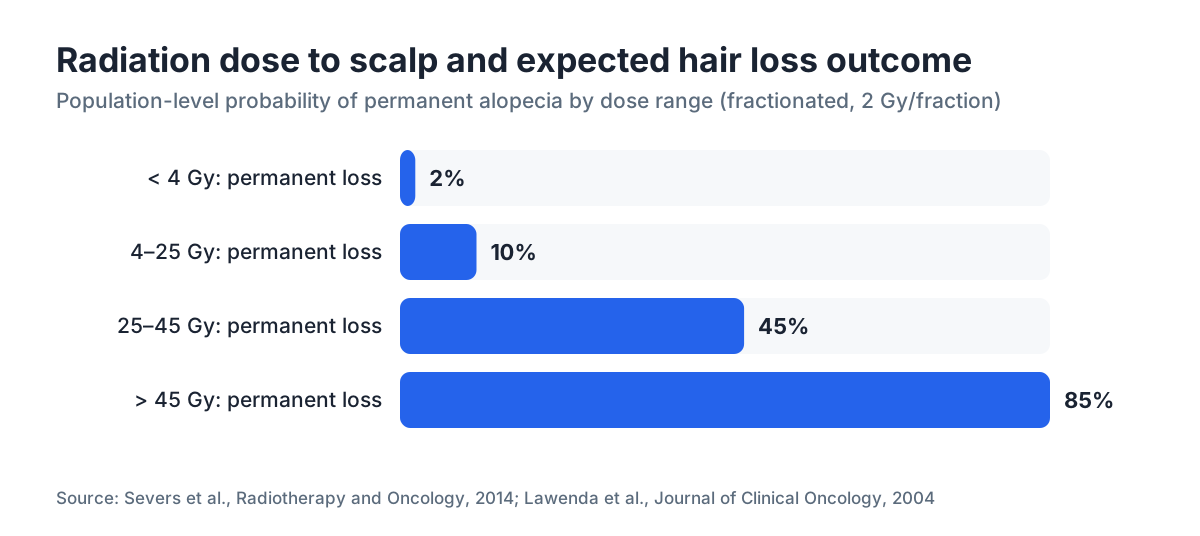
The threshold most cited in radiation biology sits around 40 to 45 Gy for permanent alopecia when radiation is delivered in standard 2 Gy daily fractions [1]. Below roughly 25 to 30 Gy, most patients see temporary loss with regrowth starting around 3 to 6 months after treatment ends. Between 25 and 45 Gy the result is a coin toss: some follicles recover, some do not, and patchy regrowth is common.
Work on cranial irradiation patients published in the Journal of Clinical Oncology found nearly all patients experienced temporary hair loss, and permanent alopecia correlated with higher doses above 45 Gy [2]. Even when regrowth counts as a success, the new hair often comes back thinner, a different texture, or a slightly off shade.
Single high-dose treatments carry a different risk profile than fractionated courses. Stereotactic radiosurgery delivering 15 to 20 Gy in one shot can cause permanent loss in a spot the size of a coin, even though the total dose is lower than a full fractionated course. Dose per fraction matters as much as the cumulative dose.
Here is a working summary of dose thresholds from published radiation biology data [1][2]:
| Dose to scalp (Gy) | Expected outcome |
|---|---|
| < 4 Gy | Transient thinning, full regrowth typical |
| 4 to 25 Gy | Temporary hair loss, regrowth in 3 to 6 months |
| 25 to 45 Gy | Variable: partial regrowth likely, some permanent patches |
| > 45 Gy | Permanent alopecia in the treated field very likely |
These are population-level estimates. Individual variation is real. Skin colour, prior chemotherapy, field size, and concurrent systemic treatment all move the odds.
Which cancer treatments are most likely to cause scalp hair loss?
Not every radiotherapy patient loses scalp hair. The beam has to cross the head.
Brain tumours, including glioblastoma, meningioma, and brain metastases, need fields that cover the scalp. Whole-brain radiotherapy (WBRT) covers the entire scalp surface and almost always causes complete temporary loss. Partial-brain fields, used for focal gliomas or stereotactic treatments, cause patchy loss that maps to the beam entry and exit points.
Head and neck cancers, including pharyngeal, laryngeal, and oral cavity tumours, sometimes graze the lower scalp or the nape of the neck. Patients can lose hair at the back of the head or behind the ears even when the tumour sits in the throat.
Nasopharyngeal carcinoma often needs fields that take in much of the posterior scalp, so posterior hair loss is nearly universal in that group.
Scalp metastases are sometimes treated with superficial electron beam radiation, which dumps almost all of its dose in the skin and scalp. That produces very localised, often permanent, alopecia.
For cancers elsewhere in the body, radiation never reaches the scalp and head hair is untouched by radiation alone. If those patients lose scalp hair, it is the chemotherapy drugs doing it, not the radiation. Knowing what causes hair loss in your specific case matters, because the treatment and the odds of regrowth are completely different depending on the source.
When does hair fall out after starting radiotherapy?
The timeline tracks follicle biology closely.
Most patients notice shedding around 2 to 3 weeks after radiation begins [3]. That is roughly how long it takes for irradiated matrix cells to stop building new shaft and for the hair to lose its anchor. Shedding often runs for several weeks past the end of the course, because the damage built up over the whole treatment.
Peak loss usually lands between weeks 3 and 6 of a standard fractionated course. If you are having whole-brain radiotherapy over 3 to 6 weeks, expect heavy thinning by the midpoint and near-complete loss in the field by the end.
When regrowth is coming, the first fine, vellus-like hairs usually show up around 3 to 4 months after the last fraction. Normal-density regrowth, when it happens, takes 6 to 12 months. Texture changes, where the new hair comes in curlier or finer, are common and may or may not stick around.
Patients who also get chemotherapy, particularly taxanes, anthracyclines, or alkylating agents, tend to have worse and longer hair loss because both treatments hit follicles at once or back to back. In combined treatment, pinning the loss on one cause versus the other is close to impossible.
Can anything prevent or reduce radiation-induced hair loss?
Prevention is an active research area, but the honest menu of options is short right now.
The most promising approach is scalp cooling. Scalp cooling devices, cleared by the FDA for chemotherapy-induced hair loss [4], narrow blood vessels in the scalp and cut drug delivery to follicles. They are not built for radiation and do nothing to block ionising radiation. As of this writing, no scalp cooling device is approved for preventing radiation-induced hair loss.
Minoxidil has been studied for post-radiation recovery, and the evidence is modest. A randomised trial in the Journal of the American Academy of Dermatology found 2% topical minoxidil sped up regrowth after chemotherapy-induced loss, and clinicians sometimes stretch that finding to radiation cases [5]. The drug is used off-label to nudge recovery where follicles survive, but it is not a standard treatment for radiation-induced alopecia. There is more on how it works at minoxidil for men.
Platelet-rich plasma (PRP) injections are being tried for post-radiation alopecia in small case series. There is no randomised evidence strong enough to call it standard care.
Technique changes help too. Intensity-modulated radiation therapy (IMRT) and hippocampal-sparing whole-brain radiotherapy can drop the dose to specific scalp regions. Those are driven by neurological goals rather than hair, but any dose cut to a scalp segment is good news for the follicles under it.
If temporary regrowth is the likely path and you just want to manage appearance during the shed, the American Academy of Dermatology recommends gentle hair care, skipping heat and chemical processing, and fitting a wig before hair loss begins so it can be matched to your natural colour [6].
Does spironolactone cause hair loss, or can it help?
Spironolactone comes up in hair loss talk constantly because it is widely used off-label for androgenetic alopecia in women. The relationship runs both ways, so it is worth laying out clearly.
Spironolactone is a potassium-sparing diuretic and aldosterone antagonist that also blocks androgen receptors. In women with pattern hair loss, it dials down the effect of androgens like DHT on follicles, which slows the miniaturisation process. That is the mechanism behind its use for regrowth. Doses for this run about 50 to 200 mg per day.
Can spironolactone cause hair loss? In some cases, yes. Three mechanisms are worth knowing. First, telogen effluvium: any new medication can set off a temporary shed in susceptible people as the body adjusts, and spironolactone is no exception. Second, it affects aldosterone, which steers fluid and electrolyte balance, and big electrolyte swings can in theory disturb hair cycling. Third, at very high doses it has weak estrogenic effects that may occasionally affect hair in odd ways. In practice, spironolactone-linked hair loss is uncommon and usually clears on its own. The FDA label for spironolactone lists alopecia as a reported adverse event without pinning down a clear mechanism or frequency [7].
Bottom line on spironolactone and hair loss: for most women using it for androgenetic alopecia, it helps rather than hurts. Whether it is causing loss in one specific person is a question for a dermatologist who can weigh hormone levels, pattern of loss, and medical history. It has no established role in radiation-induced alopecia, which is a mechanically different problem.
If you are weighing all your hair loss options beyond radiation, what causes hair loss covers the main categories and is worth reading first.
How is radiation-induced alopecia diagnosed and distinguished from other causes?
In a patient who has recently had radiotherapy, the diagnosis is usually obvious: hair loss shows up precisely in the radiation field, roughly 2 to 3 weeks after treatment starts [3]. No bloodwork needed. No scalp biopsy required in a typical case.
It gets tricky when several hair loss processes run at once. A patient on chemotherapy and radiation can shed diffusely from the drugs and locally from the beam at the same time. Cancer patients also sit at higher risk for telogen effluvium, a diffuse shed triggered by physiological stress like surgery, illness, or fast weight change. The mechanics behind hair loss telogen help separate what is going on.
If permanent alopecia shows up in an unexpected pattern, or a patient who finished treatment cannot regrow hair in an area that only got a low-to-moderate dose, a dermatologist can do a scalp biopsy. In radiation-induced permanent alopecia, the biopsy usually shows fibrous replacement of follicles and loss of normal follicular units, without the inflammatory infiltrates you see in scarring alopecias like lichen planopilaris [8].
Blood tests for thyroid function, ferritin, and nutritional deficiencies are worth running if there is any chance a correctable systemic cause is adding to the radiation effect. Fixing an iron deficiency will not regrow permanently destroyed follicles, but it gives surviving follicles their best shot.
A free AI hair analysis like the one at MyHairline can map which areas are thinning and track changes month to month. That helps when you are trying to separate radiation-field loss from diffuse loss and want a documented baseline before starting any recovery treatment.
What are the options for permanent radiation-induced hair loss?
Permanent radiation-induced alopecia is scarring alopecia at the follicle level. The follicle unit is gone. Minoxidil and other topicals cannot stimulate regrowth where there is no follicle left to stimulate. That is a hard biological fact, and anyone telling you otherwise is not being straight with you.
For patients with clearly defined bald patches after radiation, hair transplantation is sometimes possible but comes with real caveats. Transplanting into irradiated skin is harder than working with normal scalp. The irradiated recipient area has altered vascularity, less blood supply, and fibrotic tissue that is less friendly to newly placed grafts. Graft survival in heavily irradiated skin runs lower than in untouched scalp, and most surgeons want at least 12 to 24 months of stable disease and healing before they attempt a procedure there [9].
When a transplant does go ahead in previously irradiated skin, the donor area is fine (it is usually the back and sides of the scalp, outside any brain radiation field), so the grafts themselves are healthy. The whole question is recipient site survival. Some surgeons run a small test session first to check how grafts take before committing to a full procedure. There is a detailed breakdown of what these involve and cost at hair transplant and hair transplant expenses.
Scalp micropigmentation (SMP) is a non-surgical option that tattoos pigment dots to mimic closely shaved follicles. It does not restore hair, but it can make patchy alopecia, including radiation patches, look much better.
Wigs, hairpieces, and hair systems have gotten far better and are a practical, immediate answer for larger areas of permanent loss. Many cancer centres run wig programmes and can connect you with fitters who specialise in post-treatment hair loss.
Does whole-brain radiotherapy always cause complete hair loss?
Whole-brain radiotherapy (WBRT) covers the entire cranial vault, so the field crosses the full scalp surface. Nearly all patients on standard WBRT lose essentially all scalp hair within the treatment period [2].
Standard WBRT usually runs as 30 Gy in 10 fractions over two weeks, or 37.5 Gy in 15 fractions over three weeks [12]. Those doses sit in the range where temporary loss is expected, though some patients keep permanent thinning, especially where the dose peaks. Because the beam enters from both sides of the head, entrance and exit dose across the whole scalp is substantial.
Hippocampal-avoidance WBRT (HA-WBRT), a technique built to protect cognitive function, also cuts dose to the mid-scalp over the hippocampal region, which happens to reduce hair loss severity in that zone. It is not designed as a hair-preservation method, but that is a welcome side effect.
Stereotactic radiosurgery (SRS) for brain metastases treats small volumes with high single-dose radiation. Hair loss stays limited to the small entry zones of each beam and is often barely noticeable. A patient having SRS for two or three small metastases might get small patches of thinning that are easy to hide. Many are surprised at how little hair they lose after SRS compared to WBRT.
Can children's hair loss from radiotherapy differ from adults?
Yes, in ways that matter for families going through paediatric cancer treatment.
Children treated for brain tumours often get cranial radiation. Their follicles tend to be more radiosensitive than an adult's, probably because growing tissue has higher baseline proliferation, which makes radiation damage hit harder. The thresholds for permanent alopecia in children may run somewhat lower than the adult estimates above, though head-to-head data comparing paediatric and adult thresholds at equivalent doses is limited [10].
The psychosocial hit of hair loss is heavy for school-age children and teenagers, and paediatric oncology teams usually address it head-on. Many paediatric cancer centres bring in child life specialists, and organisations like the National Children's Cancer Society provide wig resources aimed at children.
Long-term follow-up of childhood cancer survivors shows that permanent alopecia from cranial radiation is one of the physical late effects that keeps hurting quality of life into adulthood [10]. That is one reason teams keep working to cut or drop cranial radiation from paediatric protocols where systemic therapies can stand in, especially in acute lymphoblastic leukaemia.
For parents trying to understand the wider hair loss picture in a child who has also had chemotherapy, what causes hair loss is a decent starting point for the general biology, though it deals mainly with adult androgenetic alopecia.
What does recovery look like and what should patients expect?
Recovery from temporary radiation-induced hair loss follows a rough arc, though individual experiences vary a lot.
Months 1 to 2 after treatment ends: the scalp may still be shedding if treatment ran long. The skin in the field is often tender, sometimes red or dry from radiation dermatitis. Go easy: no tight styles, minimal heat, gentle sulfate-free shampoos.
Months 3 to 4: most patients with temporary loss start to see fine regrowth. It usually comes in soft, light, sometimes unpigmented vellus hair before it thickens up.
Months 6 to 12: regrowth keeps going and thickens. Texture changes are common. The new hair may be curlier, finer, or a slightly different shade. For many patients, hair returns close to its old self by 12 months.
Beyond 12 months: if an area has shown no meaningful regrowth by 12 to 18 months, the follicles there are most likely gone for good. This is the point to have a frank talk with a dermatologist about options.
During recovery, some patients look at supplements marketed for hair growth. The evidence base for hair loss supplements in radiation-induced alopecia specifically is basically empty. Biotin, collagen, and similar products may help general hair health but will not rescue destroyed follicles, and they have not been studied in this population.
The free AI scan at MyHairline can help you photograph and track thinning zones month to month, giving you a visual record of whether regrowth is moving. That kind of documentation is also handy to share with your oncologist or dermatologist.
Sources
- Severs et al., 'Radiation-Induced Epilation', Radiotherapy and Oncology, 2014 (PMC)
- Lawenda et al., 'Permanent alopecia after cranial irradiation', Journal of Clinical Oncology, 2004
- National Cancer Institute, 'Hair Loss (Alopecia) and Cancer Treatment'
- U.S. Food and Drug Administration
- Duvic et al., 'Randomized trial of minoxidil for chemotherapy-induced alopecia', Journal of the American Academy of Dermatology, 1996
- American Academy of Dermatology, hair loss patient resources
- FDA, Aldactone (spironolactone) Prescribing Information
- Trueb et al., 'Radiation-induced alopecia', International Journal of Trichology, 2013
- International Society of Hair Restoration Surgery
- Childhood Cancer Survivor Study, National Cancer Institute
- Huang et al., 'CDK4/6 inhibition protects against radiation-induced alopecia', Nature, 2021
- National Comprehensive Cancer Network, NCCN Clinical Practice Guidelines in Oncology