
TL;DR: Finasteride does not lower testosterone. It blocks the enzyme 5-alpha reductase, which converts testosterone into dihydrotestosterone (DHT). With less DHT being made, testosterone levels in the blood typically rise slightly or stay flat. Studies show DHT drops 60-70% on a 1 mg daily dose, while total testosterone often increases modestly.
What does finasteride actually do to your hormones?
The short answer: finasteride leaves testosterone mostly alone and hits DHT hard. Most men taking 1 mg daily (the standard hair loss dose) see their serum DHT fall by roughly 60-70% within a few weeks [1]. Testosterone, meanwhile, tends to stay flat or tick up slightly, because the conversion pathway to DHT is now partially blocked.
Here's the mechanism in plain terms. Your body makes testosterone in the testes and adrenal glands. From there, an enzyme called 5-alpha reductase converts some of that testosterone into dihydrotestosterone, a significantly more potent androgen. Finasteride inhibits that enzyme, specifically the type II isoform, so less testosterone gets converted. The testosterone that would have become DHT now just... stays as testosterone [2].
That's the opposite of what most people fear when they first hear "finasteride lowers your hormones." The drug doesn't suppress your testes. It doesn't block the hypothalamic-pituitary axis. It doesn't reduce luteinizing hormone or follicle-stimulating hormone. It simply interrupts one downstream conversion step.
To understand why this matters for hair loss, see our primer on DHT blockers and on what causes hair loss in the first place.
How much does DHT actually drop on finasteride 1 mg?
The main trials submitted to the FDA for Propecia (finasteride 1 mg) measured scalp and serum DHT in men with androgenetic alopecia. In the 1998 trials published in the Journal of the American Academy of Dermatology, serum DHT fell by approximately 68% in men taking 1 mg daily [1]. Scalp tissue DHT dropped even further, by around 64% in those same studies.
The 5 mg dose used for benign prostatic hyperplasia (BPH, sold as Proscar) pushes that number higher, suppressing serum DHT by roughly 70-75%, but for hair loss purposes the 1 mg dose is the standard and does most of the work [3].
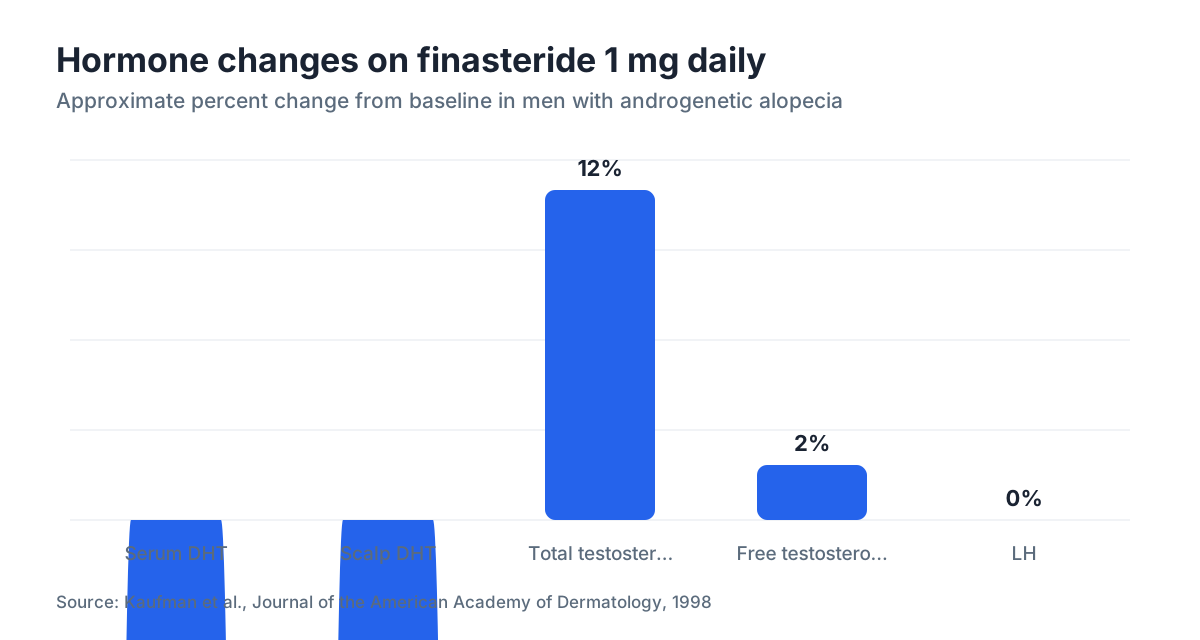
One thing that surprises people: even with a 68% drop in DHT, the absolute testosterone level often rises 10-15% because the conversion pathway is blocked and testosterone has nowhere to go except stay in circulation [1]. That rise is modest and stays within normal lab reference ranges for nearly all men. It is not equivalent to taking a testosterone supplement.
| Hormone | Change on Finasteride 1 mg | Source |
|---|---|---|
| Serum DHT | Down ~68% | Kaufman et al., 1998 [1] |
| Scalp DHT | Down ~64% | Kaufman et al., 1998 [1] |
| Total testosterone | Up ~10-15% | Kaufman et al., 1998 [1] |
| Free testosterone | Minimal change | Kaufman et al., 1998 [1] |
| LH (luteinizing hormone) | No significant change | FDA Prescribing Information [2] |
| FSH | No significant change | FDA Prescribing Information [2] |
Does finasteride affect free testosterone specifically?
Free testosterone is the fraction not bound to sex hormone-binding globulin (SHBG) or albumin, and it's the biologically active portion your tissues can actually use. This is the number men on hormone replacement often track closely.
Finasteride has minimal effect on free testosterone. The small rise in total testosterone mostly results in a proportional but modest rise in bound testosterone. Free testosterone in the major finasteride trials changed by amounts that didn't reach statistical significance [1][2]. So if you're worried finasteride will meaningfully change how much free testosterone your body has access to, the data don't support that concern.
That said, lab variation is real. Individual results vary, and a small minority of men in studies did show larger shifts. If you're already monitoring your hormones closely, running a baseline serum DHT and total/free testosterone panel before starting finasteride and again at three months is a reasonable thing to ask your doctor about. It gives you actual data rather than anxiety.
If testosterone rises, why do some men report sexual side effects?
This is the question that trips everyone up, and it's fair. If testosterone goes up (or stays flat) on finasteride, why do some men report reduced libido, erectile dysfunction, or ejaculatory changes?
The answer is that DHT itself has direct roles in sexual function that are separate from testosterone. DHT acts on penile tissue, the nervous system, and the brain in ways that testosterone does not fully replicate, even at higher levels. Animal models and human studies suggest that 5-alpha reductase activity in genital tissue and neuronal tissue affects arousal and erectile response [4].
The FDA prescribing information for Propecia (finasteride 1 mg) lists sexual adverse effects in clinical trials: decreased libido occurred in 1.8% of finasteride users vs. 1.3% of placebo users; erectile dysfunction in 1.3% vs. 0.7%; ejaculation disorder in 1.2% vs. 0.7% [2]. These differences are real, though the absolute rates are low. The causation isn't "low testosterone." It's "lower DHT in tissues where DHT matters for sexual function."
A separate and more contested question involves Post-Finasteride Syndrome (PFS), where a small number of men report persistent sexual and neurological symptoms after stopping the drug. The FDA added a label update acknowledging these reports [2]. The mechanism is not well understood and is an active area of research. Saying PFS is definitively proven or definitively myth would be dishonest. The honest position is that persistent effects are reported, the biological mechanism is unclear, and the incidence appears rare but is likely undercounted.
For a full look at the side effect profile more broadly, you can compare what the evidence says about minoxidil side effects as well.
Does finasteride affect testosterone in women?
Women have 5-alpha reductase activity too, and finasteride is sometimes used off-label for female pattern hair loss (androgenetic alopecia in women) or excess androgen conditions, typically at the 2.5-5 mg dose range since 1 mg appears less effective in women based on available data.
In women, finasteride similarly raises circulating testosterone modestly by blocking the DHT conversion pathway. One 2003 study in postmenopausal women found that 5 mg daily significantly reduced serum DHT while testosterone increased [5]. The clinical significance of that testosterone rise in women is less studied than in men.
Here's the line no woman should cross: finasteride is contraindicated in women who are or may become pregnant. The FDA classifies it as Pregnancy Category X. Even skin contact with crushed tablets is warned against in pregnant women because DHT is essential for normal male fetal genital development [2]. This is non-negotiable. The hormone changes finasteride causes in a pregnant woman aren't the concern. The DHT suppression is, for the developing fetus.
Women interested in finasteride for hair loss should have a direct conversation with a dermatologist or endocrinologist who can weigh individual risk and order the appropriate hormone panel first.
How quickly do hormone levels change after starting or stopping finasteride?
DHT suppression happens fast. Within one to two weeks of starting finasteride 1 mg, serum DHT is already meaningfully reduced [2]. Maximum suppression, around that 68% figure, is generally reached within a few weeks and stays there as long as you take the drug consistently.
When you stop finasteride, the enzyme activity recovers and DHT levels return to baseline relatively quickly. Most sources describe a reversal within roughly one to two weeks after discontinuation [2]. Testosterone, which had risen slightly, also returns to its original level as more of it converts back to DHT.
This reversibility matters because it means the hormonal effects of finasteride are not permanent in the vast majority of users. Hair loss effects, though, are another story. Hair you've regrown or maintained on finasteride typically sheds again within six to twelve months of stopping, because DHT-driven miniaturization resumes [6].
If you're also using minoxidil alongside finasteride, stopping one while continuing the other changes your treatment picture in ways worth understanding. Our piece on finasteride and minoxidil covers how the two work together.
Does finasteride affect testosterone in men who exercise or use creatine?
Bodybuilders and gym-focused men often ask this because they're cautious about anything touching their androgen profile. The concern usually goes: if finasteride raises testosterone, will that affect muscle growth or make me test positive for something? And if I'm already taking supplements like creatine, does that compound the effect?
To the first question: the testosterone rise from finasteride is small, within normal physiological range, and is unlikely to produce meaningful changes in muscle mass or strength. Testosterone at, say, 650 ng/dL versus 600 ng/dL is not a performance difference you'd measure. Finasteride is not a performance-enhancing drug in any practical sense.
On creatine: there's a separate (and genuinely complicated) question about whether creatine raises DHT. A small 2009 study in South African rugby players found a significant rise in serum DHT after creatine loading [7]. This has worried people who are already prone to hair loss. But finasteride works downstream of wherever creatine might raise DHT, by blocking the conversion enzyme. So in theory, men who are both concerned about creatine-related DHT and actively taking finasteride may actually have that specific pathway covered. That said, the creatine-DHT connection rests on limited data. We've covered this question in depth at does creatine cause hair loss.
For men on finasteride who want a complete hormone picture, a sports medicine doctor or endocrinologist can run a panel that includes total testosterone, free testosterone, SHBG, and DHT and give you real numbers rather than speculation.
Should you get blood work before and during finasteride?
Most dermatologists and primary care doctors who prescribe finasteride for hair loss don't routinely order a hormone panel first. For an otherwise healthy young man with male pattern baldness, the evidence doesn't strongly support it as a medical requirement.
That said, there are reasonable situations where baseline labs make sense. If you already have low testosterone or symptoms of hypogonadism, you'd want that documented before starting any drug that touches your androgen system. If you have a personal or family history of prostate issues, that's a separate conversation (finasteride is actually used to treat BPH, but your urologist should be in the loop). And if you want objective data to compare against if you later develop symptoms, a baseline panel is cheap peace of mind.
What finasteride does require monitoring-wise is an awareness of PSA levels in older men. The drug reduces PSA by roughly 50% at steady state, so a PSA reading while on finasteride needs to be interpreted with that in mind, essentially doubled to reflect the "true" value [2][3]. Urologists are well aware of this; general practitioners sometimes aren't.
If you haven't gotten a hair loss assessment yet, the free AI scan at MyHairline can help you understand your current loss pattern before you and your doctor discuss treatment options.
What does the research say about finasteride and testosterone long-term?
The longest-running finasteride trial for hair loss followed men for five years. Published data from those trials show that the hormonal effects stay consistent over time: DHT stays suppressed at roughly the same level and testosterone remains modestly elevated, with no progressive changes in either direction [6].
There are no good data showing that long-term finasteride use causes permanent suppression of testosterone production or permanently damages the hypothalamic-pituitary-gonadal axis in typical users. The drug isn't acting on those systems. It's acting on a single enzyme downstream.
For the prostate indication (Proscar at 5 mg), even longer follow-up data exist because men have used it for decades. The hormonal picture there looks similar: DHT suppressed, testosterone modestly elevated, no cascade of downstream hormonal damage [3].
One nuance worth knowing: men over 50 already have naturally declining testosterone. If such a man starts finasteride and later notices low-T symptoms, attribution gets complicated. Low energy, reduced libido, and mood changes in a 55-year-old on finasteride could easily be age-related hypogonadism that has nothing to do with the drug. That's why a baseline lab is genuinely more useful in older men.
Is the concern about finasteride and testosterone mostly a myth?
The specific fear, that finasteride tanks your testosterone, is not supported by the evidence. That part is myth-adjacent. Testosterone does not fall on finasteride in the published clinical literature.
But dismissing all hormonal concerns about finasteride as myth would also be wrong. DHT is a hormone, and finasteride does substantially reduce it. DHT has real biological roles, including in sexual function, mood, and potentially brain neurosteroid production (some research has looked at neurosteroid changes as a possible PFS mechanism, though this remains preliminary) [4]. Saying "finasteride is completely hormonally inert" is false.
The accurate version is more specific: finasteride doesn't lower testosterone, it lowers DHT specifically, and DHT has its own functions that matter. For most men, a 68% reduction in serum DHT produces good hair results and tolerable or absent side effects. For a minority, the reduction in DHT does produce meaningful sexual or psychological side effects. Both things are true at once.
If you're weighing all your options, including whether to do nothing, try topical minoxidil, or eventually consider a hair transplant, understanding what finasteride actually does to your hormones is foundational. Our main finasteride article covers efficacy, dosing, and the full side-effect picture in detail.
What are the alternatives if you want to reduce DHT without finasteride?
Some men want DHT reduction without committing to finasteride, usually because of side-effect concerns. The honest answer is that nothing available over the counter comes close in proven efficacy for DHT suppression.
Saw palmetto is the most commonly marketed alternative. In vitro studies show it inhibits 5-alpha reductase, but human clinical data are inconsistent and the magnitude of DHT reduction is far smaller and less reliable than finasteride [8]. It's not nothing, but it's not a replacement.
Ketoconazole shampoo (prescription strength) has weak anti-androgen activity topically and is sometimes used as an adjunct, not a standalone treatment. Topical finasteride is in development and available through some compounding pharmacies, with the theory that it suppresses scalp DHT while minimizing systemic DHT reduction and thus side effects. Early studies are interesting but the long-term data aren't there yet.
Dutasteride is a more complete 5-alpha reductase inhibitor that blocks both type I and type II isoforms, suppressing DHT by roughly 90% compared to finasteride's 68-70% [3]. It's approved in some countries for hair loss (Japan, South Korea) and prescribed off-label in the US. It has a similar side effect profile to finasteride with potentially more DHT suppression and a longer half-life, making it harder to reverse quickly.
For men who are also looking at the role of hair loss supplements or want to understand where topical options fit alongside oral treatments, our minoxidil for men guide is a good next read, since minoxidil works on a completely different mechanism unrelated to DHT or testosterone.
Sources
- Kaufman KD et al., Journal of the American Academy of Dermatology, 1998, Finasteride 1 mg Hair Loss Trial
- FDA Prescribing Information for Propecia (finasteride 1 mg), U.S. Food and Drug Administration
- FDA Prescribing Information for Proscar (finasteride 5 mg), U.S. Food and Drug Administration
- Traish AM et al., Journal of Sexual Medicine, 2011, Minireview: The Dark Side of 5-Alpha Reductase Inhibitors' Therapy
- Castelo-Branco C et al., Gynecological Endocrinology, 2003, Finasteride in postmenopausal women
- Kaufman KD et al., European Journal of Dermatology, 2002, Five-year follow-up data for finasteride 1 mg
- van der Merwe J et al., Clinical Journal of Sport Medicine, 2009, Creatine supplementation and DHT in rugby players
- National Institutes of Health, National Center for Complementary and Integrative Health, Saw Palmetto
- American Academy of Dermatology Association, Hair Loss: Diagnosis and Treatment
- National Institutes of Health, National Library of Medicine, MedlinePlus: Finasteride