
TL;DR: Finasteride regrows measurable hair in about two-thirds of men with male-pattern hair loss, and stops further loss in roughly 83-86% over two years. It works by blocking DHT, the hormone that shrinks follicles. Regrowth takes 3-6 months to appear and up to 2 years for full effect. It doesn't work for everyone, and results reverse within 12 months of stopping.
How does finasteride actually work on hair loss?
Hair loss in men (and in many women) is driven by dihydrotestosterone, or DHT. DHT binds to receptors in genetically susceptible follicles and slowly shrinks them over years until they stop producing visible hair. Finasteride doesn't block DHT at the receptor. It stops DHT from being made in the first place.
The drug inhibits type II 5-alpha-reductase, the enzyme that converts testosterone into DHT. At the standard 1 mg oral daily dose, finasteride reduces scalp DHT by roughly 60-70% and serum DHT by about 70% [1]. That reduction takes the hormonal pressure off follicles that are still alive but shrunken, giving them a chance to recover and grow thicker, longer hairs again.
The follicle doesn't need to be rebuilt from scratch. As long as the miniaturized follicle still exists and hasn't been replaced by scar tissue, it can, in many cases, resume something closer to normal cycling. That's the biological reason finasteride can produce real regrowth rather than just slowing loss. It's also why it works far better early than after years of advanced thinning.
For a broader look at the hormones involved, see our guide on dht blocker treatments.
Will finasteride regrow hair, or just stop loss?
Both, in most men, though the balance matters.
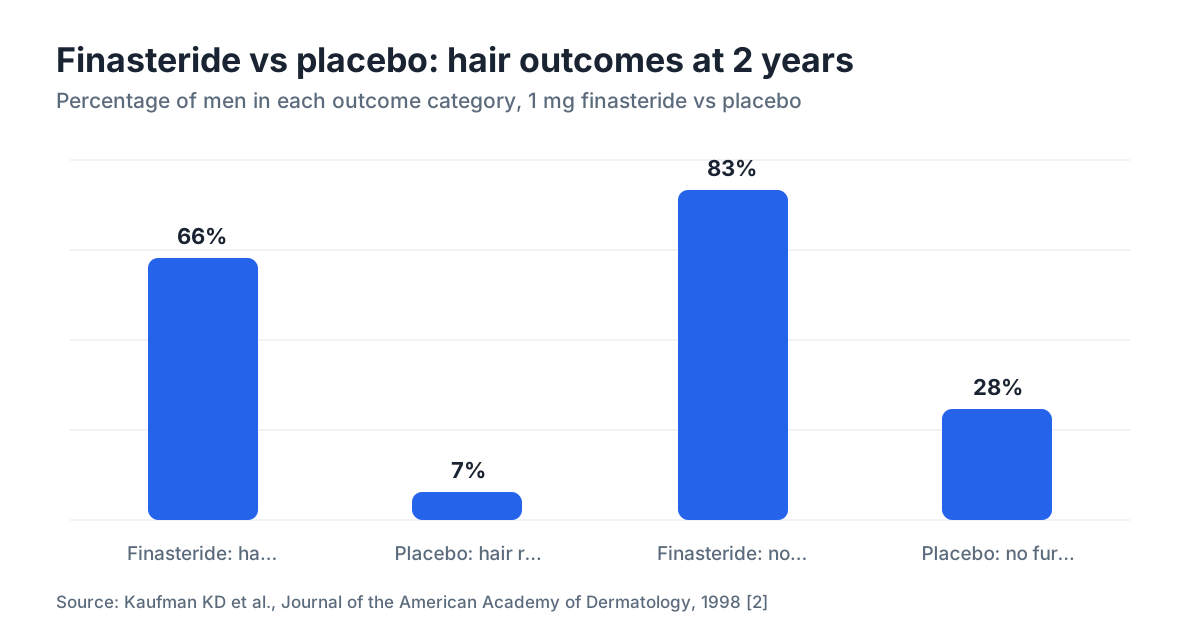
The two-year placebo-controlled trials submitted to the FDA enrolled about 1,800 men aged 18-41 with mild-to-moderate male-pattern hair loss. At two years, 66% of men taking 1 mg finasteride daily had measurable hair regrowth compared with baseline, versus 7% in the placebo group [1][2]. Hair counts (measured in a 1 cm² target zone at the vertex) rose by an average of 107 hairs per cm² in treated men versus a loss of 75 hairs in the placebo group, a net difference of about 182 hairs [2].
Stopping loss is even more consistent. In those same trials, 83% of finasteride users had no further hair loss over two years, compared with 28% of men on placebo [2]. So even among the third who don't see much new growth, most are at least holding the line.
The area that responds best is the vertex (crown). The hairline and temples are harder. The FDA-approved prescribing information notes that finasteride was studied in men with mild to moderate vertex hair loss, and effectiveness at the anterior scalp (the hairline) is less well documented in the same trials [1]. That doesn't mean the hairline won't respond at all. The evidence there is just weaker, so set your expectations accordingly.
If you're also thinking about minoxidil for men, that drug has stronger data for anterior scalp response, which is one reason many dermatologists recommend combining the two. We cover the combination in detail at finasteride and minoxidil.
How long does finasteride take to regrow hair?
Patience is genuinely required here, more than most people expect when they fill their first prescription.
Hair grows in cycles: anagen (active growth), catagen (transition), and telogen (resting and shedding). Finasteride has to push miniaturized follicles back into a productive anagen phase, and that takes time to show up as visible hair. Most clinicians and the prescribing literature say the earliest visible improvement shows up around 3-6 months, with meaningful regrowth typically assessed at 12 months [1][3].
The two-year trial data shows that results at 12 months were only about half of the improvement seen at 24 months [2]. So if you check yourself at month six and see modest change, that isn't your final answer. Some men keep improving into year three on continuous treatment.
One wrinkle: a subset of men notice increased shedding in the first one to three months. This is not failure. It reflects follicles moving out of a prolonged telogen phase and starting a new anagen cycle. It looks alarming but usually settles down. If you want the background on why shedding can be a paradoxical sign of recovery, the telogen effluvium explainer covers the underlying biology.
| Timepoint | What typically happens |
|---|---|
| Weeks 1-12 | Some men notice early shedding; no visible regrowth yet |
| Months 3-6 | First signs of regrowth or slowing loss for most responders |
| Month 12 | Meaningful hair count improvement measurable; about half of final benefit |
| Month 24 | Peak measured benefit in clinical trials |
| After stopping | Regrowth reverses within ~12 months; loss resumes |
What percentage of men see real regrowth from finasteride?
The 66% regrowth figure gets cited a lot, but it pays to unpack what it means in practice.
The trials defined regrowth as an increase in hair count from baseline in a standardized target zone, confirmed by macrophotography. That's a real, objective measure. But it doesn't mean every man in that 66% grew a full head of hair. The distribution matters. A minority grew back a lot. The majority had modest to moderate improvement. Some had very little counted growth but clear stabilization.
Longer-term data exists too. A five-year open-label extension study found that 90% of men maintained or increased hair count compared with baseline after five years of continuous treatment [3]. That number is high because it counts men who stabilized (didn't lose more) as a success, more than men who actively regrew.
The men least likely to respond are those with very advanced loss (Norwood stage 5 and above) and older men whose follicles have been shrinking for decades. Follicles dormant long enough may have scarred over, and finasteride cannot revive a follicle that no longer exists in functional form. For those cases, a hair transplant is the primary option worth evaluating.
Race and genetics also influence response, though the FDA-approved trials were conducted mostly in white men aged 18-41, so the data on other populations is thinner [1].
Can finasteride regrow hair at the hairline and temples?
This is the question most men actually care about, and the honest answer is: probably less reliably than at the crown.
The original FDA approval trials focused on vertex (crown) hair loss. The anterior scalp, meaning the hairline and frontal zone, was a secondary endpoint and not the main area studied with careful hair counts [1]. Clinically, dermatologists see the vertex respond most strongly, followed by the mid-scalp, with the hairline being the most resistant area.
That said, smaller studies and real-world clinical reports show meaningful hairline improvement in men who start treatment early, particularly those at Norwood stages 2-3 where the hairline has only recently begun to recede. The earlier the intervention, the better the odds. A follicle that has been shrinking for 18 months is more recoverable than one that has struggled for a decade.
If a receding hairline is your main concern, read our overview of receding hairline treatment options, which covers the full picture including topical treatments and procedures.
Does finasteride work for women?
Finasteride is not FDA-approved for hair loss in women. That's the factual baseline.
The drug is FDA-approved for benign prostatic hyperplasia (at 5 mg) and for male-pattern hair loss (at 1 mg) in men only [1]. It is absolutely contraindicated in women who are or may become pregnant because it can cause serious genital birth defects in a male fetus. The FDA label carries that warning explicitly [1].
Off-label prescribing in postmenopausal women does happen, and there is published trial data. A 2020 randomized controlled trial in JAMA Dermatology found that oral finasteride 5 mg/day improved hair density scores in postmenopausal women with female-pattern hair loss, though the response was more modest than what men typically see [4]. Some dermatologists prescribe 1 mg to 2.5 mg doses off-label in women who cannot bear children.
If you're a woman researching hair loss causes, our explainer on what causes hair loss breaks down the different pathways involved, many of which are DHT-independent and wouldn't respond to finasteride at all.
What are the real side effect risks of finasteride?
The side effects that get discussed most are sexual: lower libido, erectile dysfunction, and reduced ejaculate volume. The FDA label reports these in roughly 1.8-3.8% of men in clinical trials versus 1.3-2.1% in placebo groups [1]. The rates are real but not dramatic, and in most men who get them, they resolve after stopping the drug.
Post-finasteride syndrome is a more contested category. Some men report lasting sexual, neurological, or psychological symptoms after stopping finasteride. The FDA updated its label in 2012 to include persistent sexual dysfunction after discontinuation as a possible adverse effect [9]. The American Urological Association and academic dermatologists acknowledge the reports but note that solid epidemiological data on incidence rates remains limited. The FDA's 2012 label change is documented and real [1][9].
Depression and suicidal ideation have also been added to some international labels. The U.S. FDA label mentions depression. The data here is observational and causation is genuinely uncertain, but if you are prone to depression, it's a conversation worth having with your prescribing physician before you start.
Breast tenderness or gynecomastia occurs in less than 1% of men in trials. Liver enzyme elevations are rarely reported.
For how finasteride's risk profile stacks up against other treatments, the finasteride hub page covers the full pharmacology and prescribing picture.
What happens if you stop taking finasteride?
The gains don't last.
Finasteride only works while you're taking it. When you stop, DHT levels return to baseline within one to two weeks. Follicles that had recovered start to shrink again. The prescribing literature and multiple follow-up studies agree: the hair gained (or preserved) during treatment is largely lost within 9-12 months of stopping [1][3].
This is not a side effect. It's the nature of the drug. Finasteride controls a hormonal process rather than curing the underlying genetic susceptibility. Think of it like blood pressure medication: it works while you take it, and it doesn't when you don't.
Some men who have been on finasteride for years decide to stop and find their final hair state after reversal is roughly what it would have been had they never treated. That's true in a narrow technical sense but misses the point, since treatment preserves hair during the years you're on it, which for many men is the whole goal.
If you're weighing finasteride against permanent options, the hair transplant article is the right next read, since transplanted hairs taken from the donor zone are DHT-resistant and not subject to the same reversal.
How does finasteride compare to minoxidil for hair regrowth?
Different mechanisms, different strengths, and a real case for combining them.
Minoxidil works as a vasodilator that lengthens the anagen phase and increases follicle size. It doesn't touch DHT. Finasteride addresses the root hormonal cause. Minoxidil has stronger evidence for anterior scalp response; finasteride has stronger evidence for vertex response. Head-to-head trials are rare.
| Feature | Finasteride 1 mg oral | Minoxidil 5% topical |
|---|---|---|
| Mechanism | Blocks DHT synthesis | Prolongs anagen phase |
| Best evidence for | Vertex (crown) | Vertex + anterior scalp |
| Regrowth rate (2-yr) | ~66% [2] | ~40-60% (varies by study) |
| FDA approval for MPB | Yes (men) | Yes (men and women) |
| Works after stopping | No, reverses | No, reverses |
| Main side effect concerns | Sexual, depression | Scalp irritation, unwanted body hair |
A 2017 review in the Journal of the American Academy of Dermatology found that combination therapy produced higher hair counts than either agent alone [5]. The American Academy of Dermatology guidelines list finasteride and minoxidil as the two first-line drug treatments for androgenetic alopecia in men [6].
For a full breakdown of minoxidil risks, including the less-discussed systemic effects from oral forms, see minoxidil side effects. If you're considering the oral version specifically, oral minoxidil covers the dosing and evidence in detail.
Who is most likely to respond well to finasteride?
Here's an honest profile of the ideal finasteride candidate: a man in his 20s or early 30s, Norwood stage 2-4, who has been noticing loss for less than five years, with no contraindications.
The data from the original trials came from men aged 18-41 with mild to moderate vertex or frontal scalp hair loss [2]. Men outside that window weren't well represented. Older men with long-standing loss generally see less response, not because finasteride stops working, but because their follicles have had longer to atrophy.
Norwood staging matters a lot. At stages 2-3, a large share of miniaturized follicles are still viable. At stages 5-7, big areas of the scalp have likely lost their follicles for good, and finasteride has nothing to work with there. This doesn't mean a Norwood 5 man shouldn't use finasteride for the areas he still has. It means scaling expectations to the biology.
Genetics matter in ways we can't fully predict yet. Some men lose hair aggressively despite low DHT sensitivity as measured by circulating DHT levels, which points to receptor-level variation. There are commercial genetic tests marketed for this, but none have enough prospective validation to guide prescribing decisions. If you're curious about what drives your hair loss specifically, tools like the free AI hair analysis at MyHairline can help you read your pattern before you visit a dermatologist.
Does finasteride have any interactions with other supplements or medications?
Finasteride has a fairly clean interaction profile compared to many chronic medications, but a few things matter.
The drug is metabolized mostly by CYP3A4 in the liver. Strong CYP3A4 inhibitors (certain antifungals like ketoconazole, some HIV medications) can raise finasteride plasma levels, and strong inducers (rifampin, some anticonvulsants) can lower them. The clinical significance at the 1 mg dose is generally considered modest, but it's worth flagging to your prescriber.
Some hair loss supplements, particularly saw palmetto, also have weak 5-alpha-reductase inhibiting activity. Taking them alongside finasteride is probably redundant rather than dangerous, but the evidence on saw palmetto alone is weak enough that it's no substitute for the prescription drug.
Creatine is worth flagging separately. Some research suggests creatine supplementation may raise DHT levels, at least in one published study. If you're asking does creatine cause hair loss, the evidence is suggestive but not conclusive. If you're on finasteride, the DHT-raising effect of creatine would be partly blunted, but it's a nuance worth knowing.
Is generic finasteride just as effective as Propecia?
Yes, from everything the evidence shows.
Propecia (brand-name 1 mg finasteride from Merck) went off-patent, and generic versions have been available in the U.S. since around 2006. The FDA requires generic manufacturers to prove bioequivalence: same active ingredient, same dose, same absorption profile within accepted limits. For a small-molecule oral drug like finasteride, there's no credible pharmacological reason to expect a meaningful efficacy difference between brand and generic.
The cost difference is large. Brand-name Propecia runs roughly $70-90 per month in the U.S. without insurance. Generic finasteride from retail pharmacies typically costs $10-30 per month, and some telehealth and subscription services offer it for less [7]. Over the five or more years most men take it, that gap adds up.
One practical note: some men split 5 mg finasteride tablets (prescribed for BPH under the brand Proscar) into quarters as a further cost reduction. The 5 mg tablet usually costs less than five times the 1 mg tablet. This is off-label tablet splitting and should be discussed with a prescriber, but it's widely done and the pharmacology supports it.
Sources
- FDA, Propecia (finasteride 1 mg) prescribing information
- Kaufman KD et al., Journal of the American Academy of Dermatology, 1998. Finasteride 1 mg in men with androgenetic alopecia: two-year efficacy trials
- Kaufman KD et al., European Journal of Dermatology, 2002. Long-term (5-year) multinational experience with finasteride 1 mg in the treatment of men with androgenetic alopecia
- Yeon JI et al., JAMA Dermatology, 2020. Finasteride 5 mg/day in postmenopausal women with female-pattern hair loss: randomized controlled trial
- Adil A, Godwin M. Journal of the American Academy of Dermatology, 2017. The effectiveness of treatments for androgenetic alopecia: a systematic review and meta-analysis
- American Academy of Dermatology Association, Hair loss: diagnosis and treatment guideline
- GoodRx, finasteride 1 mg pricing data
- FDA, Drug Approval Package: Propecia (finasteride) NDA 020788
- Traish AM et al., Reviews in Urology, 2011. Post-finasteride syndrome: a surmountable challenge for clinicians
- van Zuuren EJ et al., Cochrane Database of Systematic Reviews, 2016. Interventions for female pattern hair loss