
TL;DR: Finasteride does not cause the penis to shrink in size. No peer-reviewed trial has measured a reduction in penile length or girth as an outcome. However, finasteride does carry real sexual side effects, including reduced libido, erectile dysfunction, and decreased ejaculate volume, in roughly 1 to 3.8 percent of users. These effects are usually reversible when the drug is stopped.
What does the FDA label actually say about penis size?
The FDA-approved prescribing information for finasteride 1 mg (Propecia) does not list penile size reduction anywhere under adverse reactions or warnings. Full stop. [1]
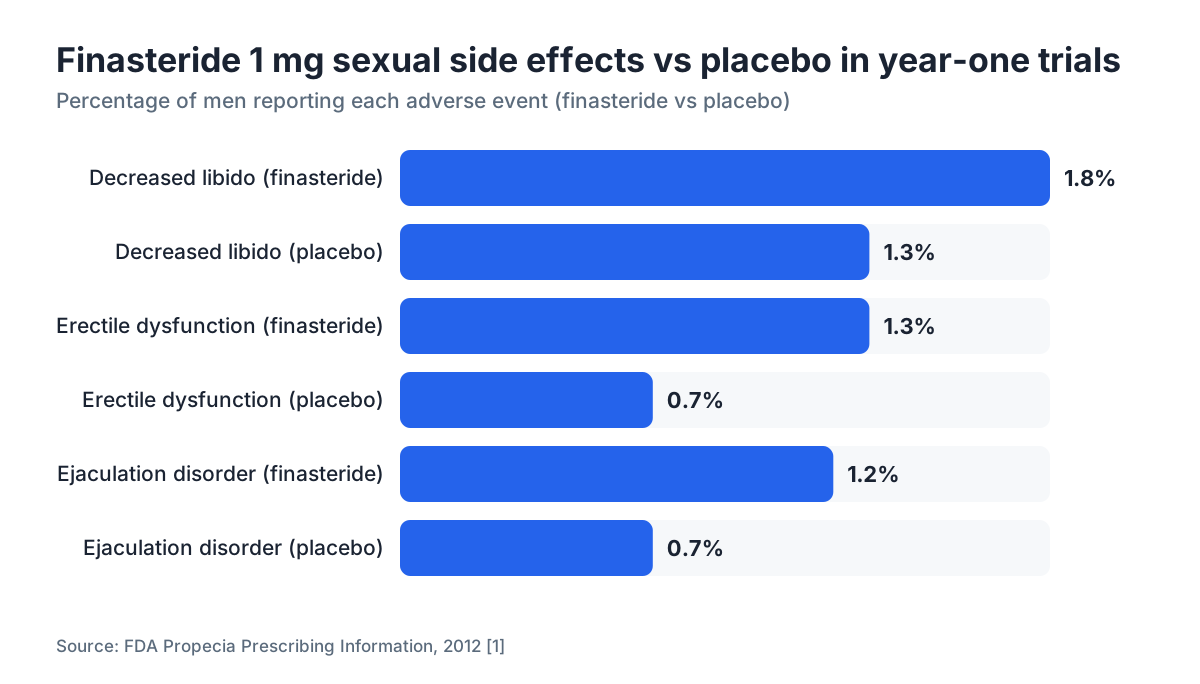
What the label does list, under the sexual adverse events section, are: decreased libido (1.8% vs 1.3% placebo), erectile dysfunction (1.3% vs 0.7% placebo), and ejaculation disorder (1.2% vs 0.7% placebo) in one-year controlled trials. [1] Those are real numbers from real trials. Penis shrinkage is not among them.
That does not mean every concern men have about this drug is imaginary. It means one specific concern, that the pill physically makes your penis smaller, has no clinical trial evidence behind it. The sexual side effects that are documented deserve a serious look, and we cover those in full below.
One thing to be clear about: the FDA label reflects data from randomized controlled trials, which are the best tool we have to separate drug effects from nocebo effects (side effects that happen because you expect them). When the rates of a side effect are nearly identical between the drug group and the placebo group, that is evidence the drug is not the cause.
How does finasteride work, and could it theoretically affect penile tissue?
Finasteride blocks the enzyme 5-alpha reductase type II, which converts testosterone into dihydrotestosterone (DHT). [2] DHT is the androgen responsible for male pattern hair loss because it miniaturizes hair follicles on the scalp. Blocking it preserves those follicles.
DHT also has roles in genital tissue development, but that is almost entirely a prenatal and pubertal story. By adulthood, the penis is fully formed and its size is not regulated on an ongoing basis by DHT levels. Penile tissue in adults does not have the same androgen-driven growth response it had during fetal development and puberty.
For context on what DHT actually does in adults: it maintains libido to some degree, contributes to sebum production, and drives terminal hair growth on the face and body. Reducing DHT can affect these. Penile length and girth in a fully developed adult are not among the things it regulates dynamically. [3]
There is a separate condition called acquired penile fibrosis (Peyronie's disease) where scar tissue builds up and can shorten the penis. Finasteride is not associated with causing this. Some researchers have explored anti-fibrotic effects of 5-alpha reductase inhibitors in prostate tissue, but that research does not translate to a claim that finasteride shrinks penile tissue.
If you want to understand the broader mechanism of DHT in hair loss, the DHT blocker article covers that in more detail.
What sexual side effects does finasteride actually cause?
Here the honest answer gets more complicated. The sexual side effects of finasteride are real, documented, and for a small percentage of men, can be persistent. Dismissing them would be wrong.
The two-year PLESS trial (Proscar Long-Term Efficacy and Safety Study), which used the 5 mg dose for BPH rather than the 1 mg hair loss dose, found the following sexual adverse events in the drug group versus placebo [4]:
| Side Effect | Finasteride 5 mg | Placebo |
|---|---|---|
| Decreased libido | 6.4% | 3.4% |
| Ejaculation disorder | 3.7% | 1.1% |
| Erectile dysfunction | 8.1% | 3.7% |
The 1 mg dose used for hair loss produces lower DHT suppression (around 60-70% reduction in scalp DHT) compared to the 5 mg dose (around 70-75%), so rates at 1 mg are lower but not zero. [1]
The more serious concern is post-finasteride syndrome (PFS), a debated condition where some men report persistent sexual dysfunction, depression, and cognitive symptoms after stopping finasteride. The Post-Finasteride Syndrome Foundation has pushed for research into this, and a 2012 study in the Journal of Clinical Endocrinology and Metabolism found persistent sexual dysfunction in a subset of men even after discontinuation. [5] The mechanism is not fully understood, and the syndrome is not officially recognized in the FDA label as a distinct condition, though the label was updated in 2012 to note that sexual side effects "continued after discontinuation of treatment" in some patients. [1]
None of this is the same as the penis getting physically smaller. But it matters enormously to quality of life, and any man considering finasteride deserves to know these risks clearly before starting.
Where did the 'finasteride shrinks your penis' claim come from?
A few sources have fed this belief, and each is worth tracing.
First, there is the legitimate medical context of 5-alpha reductase deficiency, a genetic condition where males are born with very low DHT and often have ambiguous genitalia or smaller-than-average phallus development. [6] This is a prenatal and developmental phenomenon. Extrapolating from a genetic condition affecting fetal development to a drug taken by adults is not valid reasoning, but the connection gets made in online forums regularly.
Second, finasteride was originally approved at 5 mg (Proscar) for benign prostatic hyperplasia, and it does reduce prostate size, which is the intended therapeutic effect. The prostate is a DHT-dependent gland. Someone reading about prostate shrinkage and applying that logic to other androgen-sensitive tissue is making a superficially plausible but biologically incorrect leap. The penis is not a DHT-regulated organ in the same continuous way the prostate is in adults.
Third, nocebo effects are genuinely powerful in men taking finasteride. A 2007 study in the Journal of Sexual Medicine found that men who were warned about sexual side effects reported them at nearly double the rate of men who were not warned. [7] When someone reads online that finasteride shrinks your penis, perceives something different about their body, and then attributes it to the drug, that experience is real to them but may not reflect a pharmacological mechanism.
Fourth, some men on finasteride do experience reduced blood flow to the penis due to reduced libido and less frequent erections. Less frequent erections over time can, in some studies of penile physiology, correlate with minor temporary changes in erectile length (not structural length). This is reversible and is not the same as the drug chemically shrinking penile tissue.
Does finasteride reduce testosterone levels?
This comes up because lower testosterone could theoretically affect sexual function and erection quality. The actual data show finasteride modestly increases total testosterone.
When you block the conversion of testosterone to DHT, testosterone has fewer metabolic pathways to exit and serum testosterone levels rise slightly. Studies have found roughly a 10-15% increase in total testosterone with finasteride 1 mg. [2] That is not a clinically meaningful change for most men, but it does mean finasteride is not reducing your testosterone. If anything, the opposite.
Free testosterone, the biologically active fraction, may shift slightly depending on sex hormone-binding globulin levels, but the changes are small and inconsistent across studies. If you are worried about testosterone levels while on finasteride, that is a conversation worth having with a prescribing physician, not something to self-interpret from online forums.
For more context on finasteride and how it is used for hair loss, that article covers dosing, timelines, and what to realistically expect.
What does the research say about reversibility of sexual side effects?
For most men who experience sexual side effects on finasteride, they resolve after stopping the drug. The FDA label states that 58% of men in one study who reported decreased libido said it resolved while still on treatment, and the same was true for 79% of men with erectile dysfunction. [1]
For a smaller subset, as mentioned above, effects can persist. The 2012 label update specifically added language about post-discontinuation persistence. The exact prevalence of persistent side effects is hard to quantify because most data comes from case series and self-selected populations rather than blinded trials following men post-discontinuation.
A 2017 review in the Journal of the American Academy of Dermatology looked at the existing evidence and found that persistent sexual dysfunction after stopping finasteride is likely real but rare, affecting a small fraction of the already small fraction who experience side effects during treatment. [8] The authors noted methodological limitations in most studies.
If you are currently experiencing sexual side effects on finasteride, the standard clinical advice is to discuss stopping the medication with your doctor. Do not make that decision unilaterally if you are also using it in combination with other treatments, because stopping abruptly will resume DHT-driven hair follicle miniaturization fairly quickly, typically within months. For information on combination therapy, see finasteride and minoxidil.
Are there any studies that specifically measured penile dimensions on finasteride?
No randomized controlled trial has used penile length or girth as a primary or secondary outcome measure for finasteride. That context matters. The absence of evidence is not the same as evidence of absence, but it also means no researcher running a rigorous trial has measured this and found a reduction.
The clinical trials that established finasteride's safety profile for hair loss involved thousands of men and measured many adverse events. Penile size was not a reported finding in any direction. [1][4]
What has been studied in adjacent territory is the effect of androgen deprivation therapy (ADT), used in prostate cancer treatment, on penile dimensions. ADT is far more aggressive hormonal suppression than finasteride and does appear associated with penile atrophy in some studies, likely from reduced spontaneous erections rather than direct tissue effects. [9] Extrapolating from ADT to finasteride is like comparing a complete testosterone shutdown to turning the volume down slightly on one androgen. The comparison does not hold.
Nobody has good data specifically on this question for finasteride. The closest evidence is the absence of any signal in large-scale trials that were actively looking for sexual and urological adverse events.
Should you be worried about finasteride side effects before starting?
The honest answer: be informed, not scared.
Finasteride is one of the two FDA-approved medications for male pattern hair loss (the other is minoxidil). [11] It works. In two-year trials, 83-90% of men maintained their hair count and 48% showed visible regrowth. Those are real numbers from real trials. For many men with a receding hairline or early-to-mid Norwood scale loss, it can stop or reverse progression meaningfully.
The sexual side effect rate in controlled trials is 1-3.8% above placebo rates, depending on which specific effect you are looking at. The majority of men take it without any sexual side effects. Most who do experience them find they resolve.
That said, have a real conversation with a doctor before starting. Not a quick chat. A real one where you describe your current sexual health baseline, ask about monitoring, and discuss what to do if symptoms appear. Starting and stopping finasteride without medical guidance is a bad approach.
If you have existing sexual dysfunction, depression, or anxiety, those may raise your risk of experiencing side effects or make it harder to attribute changes to the correct cause. Those are factors to discuss.
For a broader picture of what causes hair loss and which treatments fit which stages, what causes hair loss is a useful starting read. And if you want to see where your own hairline sits before committing to a treatment, MyHairline's free AI scan (/scan) can give you a Norwood stage estimate based on your photos, which helps frame the treatment conversation with a doctor.
What are the alternatives if you want to avoid finasteride's sexual side effects?
There are a few legitimate alternatives, each with its own tradeoffs.
Topical finasteride is a newer formulation applied directly to the scalp. Early data suggest it produces lower systemic DHT suppression than oral finasteride, which may mean lower rates of systemic side effects, including sexual ones. A study in the pharmacokinetic literature found topical finasteride 0.25% once daily reduced scalp DHT significantly while producing lower serum DHT reduction than oral finasteride. [10] It is not yet FDA-approved specifically for hair loss as a standalone topical (it is available through compounding pharmacies and some prescribers), so the evidence base is smaller.
Minoxidil, the other FDA-approved option, works through a completely different mechanism (vasodilation, prolonging the anagen growth phase) and has no sexual side effects. minoxidil for men covers dosing and realistic expectations. Its tradeoff is that it does not block DHT, so it may be less effective for some patterns of loss and requires ongoing use. You can check the minoxidil side effects article for what to watch for there instead.
Dutasteride is a 5-alpha reductase inhibitor that blocks both type I and type II enzymes (finasteride only blocks type II). It reduces DHT more aggressively. It is FDA-approved for BPH but used off-label for hair loss. Given it produces deeper DHT suppression, the sexual side effect profile is at least as concerning as finasteride's, possibly more so. It is not a lower-risk alternative.
Low-level laser therapy (LLLT) devices are FDA-cleared for hair loss and have no sexual side effects. The evidence for their efficacy is more modest than for finasteride, but they are a real option for men who want to avoid any systemic medication.
For men who have already lost significant hair, a hair transplant addresses existing baldness rather than preventing future loss, and has no sexual side effects. It does not replace medication if you want to slow ongoing loss.
If you are curious about supplement-based approaches and their actual evidence base, hair loss supplements is worth reading before spending money on anything.
The bottom line: what should you actually take away from this?
Finasteride does not shrink the penis. No clinical trial has ever measured this as an outcome, and the biological mechanism for it does not hold up. The claim circulates online because of real but conflated concerns, including legitimate sexual side effects, the biology of DHT in fetal development, and the well-documented nocebo phenomenon.
What is real: a small percentage of men (roughly 2-4% above placebo rates) experience decreased libido, erectile dysfunction, or ejaculation changes on finasteride. Most of these resolve. A smaller subset reports persistent symptoms after stopping, and that outcome is taken seriously enough that the FDA updated the label in 2012.
Make the decision about finasteride with a doctor, not a Reddit thread. Understand your baseline. Know what to watch for. Do not let a myth about penis size stop you from having an honest conversation about a drug that genuinely works for hair loss. And do not let enthusiasm for hair results cause you to dismiss real sexual side effects if they appear.
If you want to map where your hairline currently stands before talking to a doctor, MyHairline's free AI scan (/scan) takes about two minutes and gives you a Norwood stage assessment to bring to that appointment.
Sources
- Overstreet JW et al., Urology 1999, finasteride 1 mg and reproductive hormones
- National Library of Medicine, MedlinePlus, Dihydrotestosterone (DHT)
- McConnell JD et al., New England Journal of Medicine 1998, PLESS trial (finasteride 5 mg for BPH)
- Irwig MS, Journal of Clinical Endocrinology and Metabolism 2012, persistent sexual dysfunction in former finasteride users
- Imperato-McGinley J et al., New England Journal of Medicine 1974, 5-alpha reductase deficiency and genital development
- Mondaini N et al., Journal of Sexual Medicine 2007, nocebo effect with finasteride and sexual dysfunction
- Fertig RM et al., Journal of the American Academy of Dermatology 2017, post-finasteride syndrome review
- Kohler TS et al., BJU International 2012, androgen deprivation therapy and penile length
- Caserini M et al., JAMA Dermatology 2014, topical finasteride pharmacokinetic studies
- American Academy of Dermatology Association, Hair loss diagnosis and treatment guidelines