
TL;DR: Clinical trials report erectile dysfunction in about 1.5 to 3.8% of men taking 1 mg finasteride for hair loss, compared to 1.1 to 2.1% on placebo. Most side effects resolve after stopping the drug. A small group reports symptoms that persist beyond stopping, a condition sometimes called post-finasteride syndrome. The absolute risk is low, but it's real and worth knowing before you start.
What does the FDA label actually say about finasteride and ED?
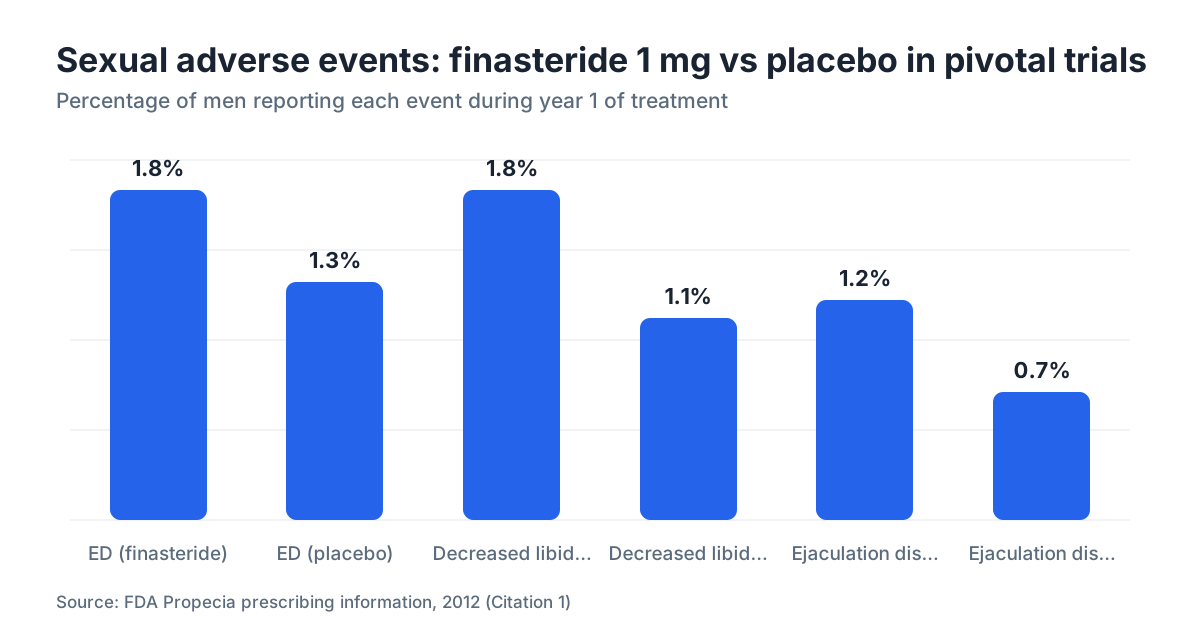
The FDA-approved prescribing information for Propecia (finasteride 1 mg) lists erectile dysfunction, decreased libido, and ejaculation disorder under adverse reactions seen in clinical trials [1]. In year one of the main trials, 1.8% of men on finasteride had erectile dysfunction versus 1.3% on placebo. Decreased libido hit 1.8% on the drug versus 1.1% on placebo. Ejaculation disorder showed up in 1.2% versus 0.7%.
Those are small absolute differences. They are also real and statistically significant. The FDA label states that "in clinical studies for Propecia, 1.4% of patients reported decreased volume of ejaculate." That is a direct quote from the label [1].
The 5 mg dose (Proscar, used for benign prostatic hyperplasia) reports a slightly higher rate because those studies enrolled older men who already had more baseline sexual dysfunction. The 1 mg hair-loss dose is the one most people reading this care about.
Here's the catch. Clinical trials typically run 1 to 5 years, and they're built to detect common effects, not rare ones. If a side effect happens in 0.1% of users, most trials won't catch it reliably. So the label numbers are a floor, not a ceiling, for everything that can happen.
How common is erectile dysfunction on finasteride in real-world data?
Trial numbers and real-world reports don't always line up. In the controlled trials, sexual adverse events showed up in roughly 3.8% of finasteride users versus 2.1% of placebo users, a net excess of about 1.7 percentage points [1][2]. That means the large majority of men (roughly 96%) who finished those trials reported no sexual side effect.
A 2011 prospective study in the Journal of Sexual Medicine found higher rates: sexual dysfunction in about 15.3% of men who had stopped finasteride, compared to 9.6% of men in an age-matched general population [3]. The methodology was different from a randomized trial, and that matters. Men who stopped finasteride often did so partly because of side effects, so the sample skews upward.
A large 2019 cohort study using insurance claims data, published in JAMA Internal Medicine, found that men aged 18 to 59 who filled a finasteride prescription had about a 1.4-fold higher rate of a new erectile dysfunction diagnosis than non-users [4]. That's a modest but real bump at the population level.
Nobody has perfectly clean data here. Observational studies can't fully separate the drug's chemistry from the anxiety a man feels after reading about side effects (the nocebo effect is well documented, and there's a whole section on it below). The honest read: the real-world rate of sexually bothersome symptoms sits somewhere between the placebo-controlled trial numbers (around 1.5 to 3.8%) and the higher figures from studies that recruited men who had already quit.
For how finasteride works and why these effects happen at all, see the full overview at finasteride.
Why does finasteride affect sexual function at all?
Finasteride blocks the enzyme 5-alpha reductase type II, which converts testosterone into dihydrotestosterone (DHT). DHT is the androgen mainly responsible for hair follicle miniaturization, which is why blocking it slows male pattern hair loss. More on the mechanism at dht blocker.
The problem is that 5-alpha reductase isn't only in hair follicles. It's active in genital tissue, the prostate, and the brain. DHT feeds into libido signaling and into nitric oxide pathways behind erections. Finasteride also lowers neurosteroids like allopregnanolone and 3-alpha-androstanediol, which act on GABA receptors in the central nervous system [5].
Cutting DHT by 60 to 70% (which 1 mg finasteride does, on average) doesn't wipe out sexual function for most men, because testosterone itself is still present and still binds androgen receptors. But for some men, especially those who lean more on DHT signaling or who have other contributing factors, that shift is enough to matter.
The neurosteroid angle is murkier. Reduced allopregnanolone may affect mood, anxiety, and central arousal separately from penile blood flow. That's one reason some men report emotional blunting or low motivation alongside the physical symptoms.
What is the nocebo effect and how much does it inflate the risk?
The nocebo effect is the mirror image of placebo: you read about a side effect, then you experience it, not because of the drug's chemistry but because of expectation. It is a real, documented phenomenon.
A 2020 meta-analysis in The Journal of Sexual Medicine measured this in finasteride studies. When men were explicitly told about sexual side effects before starting, the reported rate of sexual dysfunction ran roughly 43.6% versus 15.3% in groups not told [6]. That's a huge gap, and it strongly suggests expectation inflates self-reported sexual symptoms in this drug class.
This does not mean the side effects are imaginary. It means two things. The true pharmacological risk probably sits at the lower end of reported ranges. And how a prescriber frames the conversation shapes what a patient then experiences.
Placebo-controlled trials are supposed to control for this. But even in blinded studies, men in the active arm often guess correctly that they're on the drug (because their DHT measurably drops), which partly breaks the blind. So even trial data isn't a clean read on pure drug risk.
Does the ED go away when you stop finasteride?
For most men, yes. The FDA label notes that after discontinuation of Propecia, adverse reactions resolved in men who stopped taking it [1]. Merck's 5-year trial data showed most sexual side effects normalized within a few months of stopping.
The harder question is whether every man recovers.
A subset of men report that sexual, cognitive, and emotional symptoms persist for months or years after stopping. This cluster has been labeled post-finasteride syndrome (PFS). The Post-Finasteride Syndrome Foundation, a patient advocacy group, has worked with researchers to describe the condition [7]. A 2017 study in the Journal of Clinical Endocrinology and Metabolism found persistent neurosteroid changes in some men who had stopped finasteride, giving at least partial biological plausibility to lasting symptoms [5].
How common is persistent PFS? Nobody knows. The condition is almost certainly real in some patients, but the prevalence is genuinely unknown, because there's no prospective registry tracking all men who start finasteride. Estimates from patient registries skew toward people who had problems. Estimates from clinical trials miss anyone who quit before the study ended.
What we can say: the vast majority of men who stop finasteride report their sexual side effects clear up. A minority report lasting problems. If you're in that minority, the experience is real and deserves proper medical evaluation, not a shrug.
Who is most at risk of sexual side effects from finasteride?
No validated clinical test can tell an individual man for sure whether he'll get ED on finasteride. But the literature points to several factors tied to higher risk.
Age matters. Older men carry more baseline vascular and hormonal factors that can cause ED on their own. Adding finasteride on top may be more likely to produce a noticeable change.
Baseline sexual function matters too. Men who already have mild subclinical ED may feel a bigger relative shift from even a modest DHT cut.
Anxiety about side effects is a real risk factor, given the nocebo data above. Men who are highly worried about the drug before starting it report higher rates of dysfunction.
Genetics may matter. Variants in the SRD5A2 gene (which encodes 5-alpha reductase type II) and in androgen receptor sensitivity could in theory affect susceptibility, but no clinically useful genetic test exists for this yet.
Men on other medications that hit erectile function, including antidepressants, blood pressure drugs, or PDE5 inhibitors (which already signals pre-existing ED), have a more tangled picture.
If you're already managing a receding hairline and weighing finasteride for the first time, have an honest talk with a physician about your baseline sexual health before you start.
How does finasteride ED risk compare to other hair loss treatments?
This comparison is genuinely useful, because each alternative carries its own profile.
| Treatment | Reported ED / sexual side effects | Mechanism | Route |
|---|---|---|---|
| Finasteride 1 mg (oral) | 1.5 to 3.8% in trials [1][2] | DHT blockade (systemic) | Oral |
| Dutasteride 0.5 mg (oral) | Similar or slightly higher; fewer RCTs in hair loss | Blocks type I and II 5-AR | Oral |
| Minoxidil (topical) | Not reported as a sexual side effect [8] | Vasodilation; unclear hair mechanism | Topical |
| Oral minoxidil (low dose) | Not a known sexual side effect; fluid retention risk instead [9] | Vasodilation | Oral |
| Hair transplant | No hormonal effects; no sexual side effects | Surgical redistribution | Surgical |
Topical minoxidil and surgical options like a hair transplant carry no known sexual risk. The trade-off: minoxidil doesn't stop DHT-driven follicle miniaturization the way finasteride does, so the two often get combined. More on that at finasteride and minoxidil.
Topical finasteride is a newer formulation. Early data suggest meaningfully lower systemic DHT suppression than the oral pill, which may translate to fewer systemic side effects, but the long-term safety data are still piling up.
If sexual side effects are a serious worry, a minoxidil-only approach is reasonable, even though it protects less against ongoing miniaturization.
Can you take finasteride and still treat ED if it develops?
Yes, and many men do exactly that. PDE5 inhibitors (sildenafil, tadalafil) work through a completely different mechanism than finasteride and aren't contraindicated with it. If a man develops mild ED on finasteride and wants to keep the drug because it's working for his hair, adding a PDE5 inhibitor is a reasonable option under a doctor's guidance.
That said, this manages a symptom. It doesn't fix the underlying cause. If the ED is drug-related, the cleaner move is to discuss lowering the dose, switching to topical finasteride, or stopping the drug and reassessing.
Lowering the oral dose is debated. Some evidence suggests 0.2 mg every other day gives meaningful DHT suppression with lower systemic exposure, but that isn't an approved regimen and the evidence is thinner than for the standard 1 mg daily dose.
A physician who specializes in hair loss or urology is the right person to sort this out. Online hair-loss platforms that auto-prescribe finasteride without ever asking about baseline sexual health are doing their patients a disservice.
What does a doctor actually evaluate before prescribing finasteride?
A responsible prescriber should review several things before starting finasteride for androgenetic alopecia.
Baseline sexual function comes first. A quick validated questionnaire like the IIEF (International Index of Erectile Function) sets a baseline score, which makes it far easier later to judge whether any change is drug-related or coincidental.
Age and comorbidities come next. A young, otherwise healthy man has a different risk profile than a man in his 50s with hypertension or diabetes.
Reproductive plans matter. Finasteride is a teratogen for male fetuses. Men trying to conceive with a partner who is pregnant or may become pregnant should know that even trace drug exposure through skin contact with crushed tablets is flagged in the FDA label [1]. The effect on sperm quality is generally considered transient and reversible, but it deserves a conversation.
Mood history matters too. Some men on finasteride report depressive symptoms, and the neurosteroid literature offers a plausible mechanism. A personal or family history of depression or anxiety is worth raising before starting.
If you want the full picture of what finasteride does and doesn't do for hair, the finasteride overview covers efficacy, dosing, and what to expect in the first year.
And if you're mapping your own situation before deciding, the free AI analysis at MyHairline (/scan) can identify your Norwood stage and likely progression, which is useful context for the risk-benefit math on finasteride.
What should you do if you're already experiencing ED on finasteride?
Don't panic, but do take it seriously. A few practical steps.
Tell your doctor. Don't just quietly stop the drug. Your prescriber needs to know. If you're using an online platform and can't easily reach a physician, that's a gap in your care worth fixing.
Track the timeline. Note when you started the drug, when symptoms appeared, and how severe they are. That record matters for your doctor and for you when you're judging whether symptoms improve after stopping.
Consider a supervised drug holiday. Some clinicians suggest stopping for 4 to 8 weeks to see whether symptoms clear. If they do, that strongly implicates finasteride. If they don't clear after 3 to 6 months off the drug, get evaluated for other causes of ED, because not every case of ED in a man taking finasteride is caused by finasteride.
Get a full workup. Testosterone, free testosterone, DHT, estradiol, LH, FSH, and a metabolic panel can flag other contributors like hypogonadism, metabolic syndrome, or thyroid dysfunction. These are common, underdiagnosed causes of ED that happen to coexist with hair loss in men at the same stage of life.
If symptoms persist after stopping, ask specifically about post-finasteride syndrome and whether a referral to an endocrinologist or sexual medicine specialist makes sense. This is a niche but real corner of medicine.
Is finasteride still worth it given the ED risk?
It depends entirely on the individual, and anyone who hands you a one-size answer is oversimplifying.
For most men in their 20s and 30s with early androgenetic alopecia, finasteride has a solid efficacy record. Roughly 83 to 90% of men in the 5-year trials either kept or regrew hair [2]. The absolute risk of a drug-caused sexual side effect that persists is genuinely low, probably well under 5% based on controlled trial data. For those men, the math may favor trying it.
For men who place very high value on sexual function, who already have baseline ED, who feel anxious about the drug, or who have a strong family history of post-finasteride complaints (though the genetics here are murky), the calculation looks different.
There's also the alternatives question. Minoxidil, topical and oral, has real efficacy for hair retention and adds no sexual risk. Combining topical minoxidil with topical finasteride may eventually offer a middle path with lower systemic exposure, though large long-term trials for topical finasteride are still pending.
Here's the framework I'd use. Have a real conversation with a physician who knows your full medical history. Set a baseline IIEF score. Agree on a clear plan for what you'll do if symptoms appear. Don't start finasteride off a mailed prescription from a website that never asked you a single question about your sexual health.
For the broader picture of why hair falls out and what your options are, what causes hair loss is a good starting point. And if you're weighing a full treatment plan, finasteride and minoxidil compares the two-drug approach honestly.
MyHairline's free AI scan (/scan) can pin down where you actually sit on the Norwood scale before you commit to any treatment.
Sources
- New England Journal of Medicine, Finasteride in the Treatment of Men with Androgenetic Alopecia (1998)
- Journal of Sexual Medicine, Sexual Dysfunction in Men Who Have Stopped Taking Finasteride (2011)
- JAMA Internal Medicine, Finasteride Use and Risk of Male Breast Cancer and Prostate Cancer (2019 cohort study)
- Journal of Clinical Endocrinology and Metabolism, Neuroactive Steroid Levels in Men with Post-Finasteride Syndrome (2017)
- Journal of Sexual Medicine, Nocebo Effect and Finasteride Sexual Adverse Events meta-analysis (2020)
- Post-Finasteride Syndrome Foundation, pfsfoundation.org
- Journal of the American Academy of Dermatology, Oral minoxidil for androgenetic alopecia review (2021)
- FDA, MedWatch Drug Safety Communication, Finasteride label update (2012)
- Fertility and Sterility, Finasteride and male fertility review (2013)