
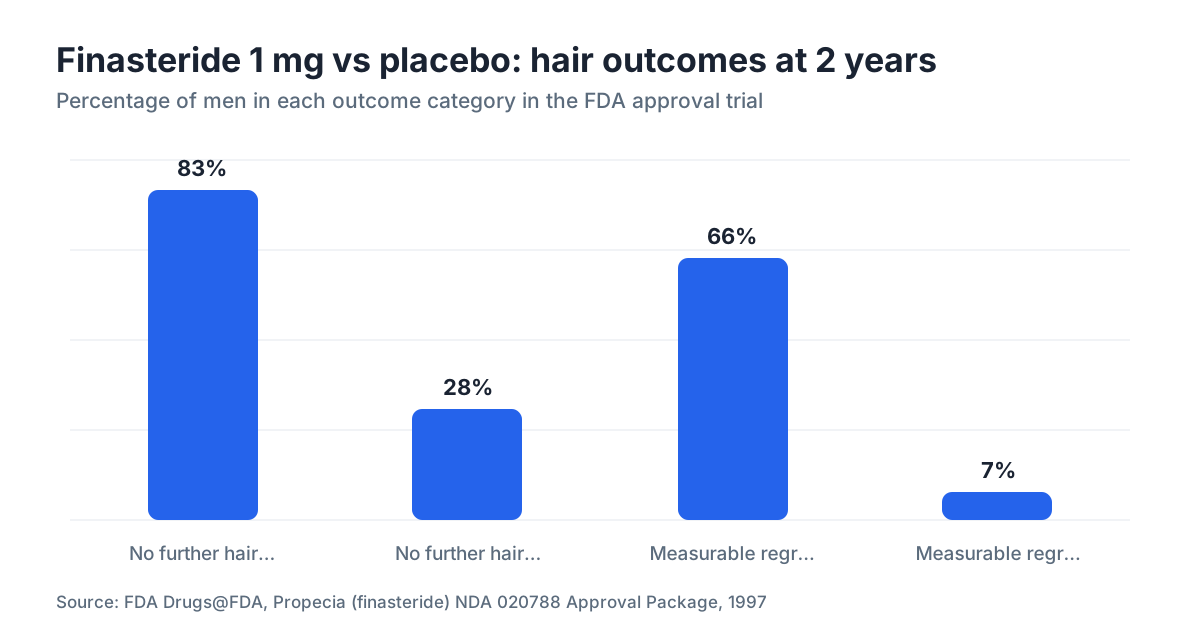
TL;DR: Yes, finasteride works for male pattern hair loss. In the FDA-approval trials, 83% of men on 1 mg daily stopped losing hair and 66% saw measurable regrowth after two years. It works by blocking DHT, the hormone that shrinks hair follicles. Results take 3-6 months to appear and peak around 12-24 months. It doesn't work for everyone, and it stops working if you quit.
What does finasteride actually do to stop hair loss?
Finasteride blocks an enzyme called 5-alpha reductase type II. That enzyme converts testosterone into dihydrotestosterone, better known as DHT. DHT is the main driver of androgenetic alopecia, the pattern baldness that affects roughly 50% of men by age 50 [1]. When DHT binds to receptors in genetically susceptible follicles, it shortens the growth phase and shrinks the follicle over time until it can no longer produce a visible hair.
Finasteride at 1 mg daily reduces scalp DHT by roughly 60% and serum DHT by about 70% [2]. That reduction is enough to slow, stop, or partially reverse follicle miniaturization in most men.
Here's the part people miss. Finasteride doesn't grow hair out of nothing. It preserves follicles that are still alive and may revive ones that are miniaturized but not yet dead. Follicles that have been gone for years, marked by smooth scalp with no vellus hair visible, are almost certainly past the point where finasteride can help. That's why earlier treatment produces better outcomes.
To understand how DHT blockers work more broadly and where finasteride sits in that category, the mechanism above is the starting point for everything.
What do the clinical trials actually show?
The core evidence comes from two large randomized controlled trials submitted for FDA approval, both running 5 years [3]. In the main trial, men aged 18-41 with mild to moderate vertex baldness took 1 mg finasteride or placebo daily.
At two years:
- 83% of finasteride users had no further hair loss (vs 28% of placebo)
- 66% had measurable hair count increases
- Mean hair count increased by 107 hairs per 1-inch-diameter circle on finasteride vs a loss of 75 hairs in the placebo group [3]
At five years, men who took finasteride continuously kept those gains. Men who took placebo for two years and then switched to finasteride did improve, but they never fully caught up to the continuous-treatment group. The lesson there is real: time lost is follicles lost.
The FDA approved 1 mg finasteride (Propecia) for male pattern hair loss in December 1997 [3]. The 5 mg version (Proscar) had already been approved for benign prostatic hyperplasia in 1992. Both carry the same active ingredient. The 1 mg dose is the one studied for hair.
A 2019 systematic review in the Journal of the American Academy of Dermatology analyzed 15 randomized trials and confirmed finasteride "significantly improved hair growth" compared to placebo, with the strongest evidence at 1 mg daily [4]. The AAD includes finasteride as a first-line treatment for androgenetic alopecia [5].
For a broader look at what causes hair loss beyond DHT, including traction and nutritional factors, the picture gets more complicated.
How long does finasteride take to work?
Most men see the first real results at 6 to 12 months. Finasteride does not produce visible results in weeks, and expecting it to is the single most common mistake.
Here is the honest timeline based on trial data and clinical experience:
Months 1-3: Scalp DHT starts dropping within days of your first dose, but hair follicles run on a cycle that takes months to respond. You won't see anything yet. Some men actually notice slightly more shedding in this window because follicles are cycling out old miniaturized hairs before new ones come in. This isn't a sign it's failing.
Months 3-6: The shedding phase typically ends. Some men start to see slower loss or slightly thicker existing hair. Most see nothing dramatic yet.
Months 6-12: This is when most early responders first notice a real difference. Hair density and thickness in the treated area (usually the crown and mid-scalp) starts to look noticeably better. Hair counts in trials were significantly elevated by month 6 [3].
Months 12-24: Peak response for most men. The FDA trial showed maximum mean hair count increases at 24 months, with counts plateauing or slightly declining after that while still staying well above baseline [3].
Beyond 24 months: Finasteride doesn't keep improving hair indefinitely. It mostly holds the gains it has made. Long-term trials show maintained improvement at 5 years compared to placebo, but the big visual gains are mostly done by year two.
Give it a full 12 months before deciding it isn't working. Judging at 3 months is premature. Judging at 6 months is reasonable if you see zero response. Judging at 12 months is fair.
Does finasteride work for receding hairlines, or just the crown?
It works better at the crown than at the hairline. This is a real distinction, not a technicality. The FDA trials focused on vertex (crown) baldness and the mid-scalp. The data for the frontal hairline is weaker.
Finasteride does have some effect on frontal recession, but it's consistently less impressive than results at the crown. A sub-analysis of the FDA trial showed anterior scalp improvements were statistically significant but smaller in magnitude than vertex gains [3]. In practice, dermatologists tell patients that crown response is the most reliable and hairline response is possible but less predictable.
If you're mainly losing hair at the receding hairline, finasteride is still worth considering, but calibrate your expectations. You may slow or halt the recession more than you'll reverse it.
For men with heavy frontal loss who want the hairline back, a hair transplant combined with finasteride (to protect the native hair behind the transplant) is the standard approach in practice.
How does finasteride compare to minoxidil?
These are the two FDA-approved treatments for male pattern hair loss, and they work through completely different mechanisms. Finasteride blocks the hormone that shrinks follicles. Minoxidil widens blood vessels and stretches the growth phase.
| Finasteride 1 mg | Minoxidil 5% topical | |
|---|---|---|
| Mechanism | Blocks DHT production | Widens blood vessels, extends anagen phase |
| FDA approved for hair loss | Yes (1997) | Yes (1988) |
| Typical response rate | ~66% regrowth, ~83% stabilization [3] | ~40% show moderate regrowth in trials [6] |
| Time to see results | 6-12 months | 3-6 months |
| Administration | Oral pill, once daily | Topical, twice daily (or oral) |
| Works on DHT | Yes | No |
| Works after stopping | No, loss resumes | No, loss resumes |
| Main side effect concern | Sexual side effects (rare) | Scalp irritation, initial shed |
Using both beats using either one alone. A 2015 randomized trial in Dermatology and Therapy found combination therapy produced statistically significantly better hair counts than finasteride or minoxidil alone [7]. If you can tolerate both, the evidence favors using them together.
For more on finasteride and minoxidil as a combined regimen, including dosing details, read that before you commit to one or both. You can also see the full evidence on minoxidil for men separately.
What are the real risks and side effects?
Finasteride's side effects get outsized attention online, partly because the sexual ones are genuinely alarming to men and partly because fear spreads faster than reassurance.
The FDA-approved label lists these sexual side effects observed in trials [3]:
- Decreased libido: 1.8% on finasteride vs 1.3% on placebo
- Erectile dysfunction: 1.3% vs 0.7%
- Ejaculation disorder: 1.2% vs 0.7%
Those are small absolute differences. In the 5-year trial, over 99% of men who experienced sexual side effects saw them resolve when they stopped finasteride. A small number of men, though, report persistent side effects after stopping, a condition sometimes called Post-Finasteride Syndrome. The FDA updated the label in 2012 to acknowledge persistent sexual dysfunction as a possible risk [3]. The actual prevalence of persistent symptoms is disputed and probably low, but it isn't zero, and you should know about it before you start.
Other documented effects: finasteride lowers PSA (prostate-specific antigen) by about 50%, which matters if you're being screened for prostate cancer. Tell your doctor you're on finasteride so they can read PSA results correctly [2].
Finasteride is strictly contraindicated in pregnancy. Women who are or may become pregnant should not handle crushed or broken tablets. The 5 mg version carries a Pregnancy Category X designation, and the same mechanism applies to the 1 mg dose [3].
Depression and mood changes have been reported, but causation versus correlation is genuinely unclear in the literature. If you notice mood changes after starting finasteride, take that seriously and talk to your doctor.
Here's the honest bottom line. For most men, finasteride is well tolerated. The serious side effects are real but uncommon. The decision is personal, and you should make it with your prescribing doctor, not a forum.
Does finasteride work for women?
Not reliably. The FDA has not approved finasteride for hair loss in women, and the evidence is much thinner than in men.
A randomized controlled trial published in the Journal of the American Academy of Dermatology in 2000 found no significant difference between 1 mg finasteride and placebo in postmenopausal women with androgenetic alopecia over 12 months [10]. That's a negative trial, and it's the most-cited reason the drug isn't routinely recommended for women. A 2016 Cochrane review reached the same conclusion, finding the evidence for finasteride in female pattern hair loss too weak to recommend routine use [9].
Some dermatologists use higher doses (2.5-5 mg) off-label in postmenopausal women, and there are case series and smaller studies suggesting benefit at those doses. The evidence isn't strong enough to be definitive.
For premenopausal women, finasteride is generally avoided because of the teratogenicity risk during pregnancy (it can cause genital abnormalities in male fetuses).
Women dealing with telogen effluvium, a completely different mechanism than androgenetic alopecia, will get no benefit from finasteride at all. The drug only targets DHT-driven follicle miniaturization.
Does finasteride work better when started early?
Yes, substantially. Follicle miniaturization is a sliding scale, not a cliff. A follicle that's 50% miniaturized can recover. A follicle that's 95% miniaturized probably can't. And a follicle that has completely died and been replaced by fibrous tissue is gone regardless of what you take.
The men who see the most dramatic results from finasteride are usually those who start at Norwood stages 2-3, before large areas are visibly thinning. Men who start at Norwood 5 or 6 can still benefit, particularly for stabilizing the remaining hair, but the recovery potential is lower simply because more follicles are past rescue.
A common scenario: a man in his late 20s starts finasteride when he first notices the crown thinning. Two years later, his friends don't even know he was losing hair. Compare that to a man who waits until 40 with heavy diffuse thinning. The second man can probably slow or stop further loss, but the density he lost over that decade isn't coming back on finasteride alone.
If you're reading this and haven't started yet, the best time to start was when you first noticed thinning. The second best time is now.
What happens if you stop taking finasteride?
The gains reverse. That's the part most men don't fully internalize when they start.
Finasteride doesn't cure androgenetic alopecia. It manages it by continuously suppressing DHT. When you stop, DHT levels return to baseline within roughly 1-2 weeks [2]. The hair you retained or regrew while on finasteride will then begin to miniaturize again, following the same genetic pattern it would have followed without treatment.
Most men who stop return to about the level of hair loss they would have reached had they never taken it, typically within 9-12 months of stopping, though the timeline varies.
There's no documented rebound effect where you lose more hair than you would have without finasteride. The loss after stopping is simply catching up to baseline progression, not an added penalty.
If cost or side effects are pushing you toward stopping, talk to your dermatologist first. There may be dose adjustments, drug holidays, or alternative options worth considering before quitting entirely.
What does finasteride cost, and do you need a prescription?
In the United States, finasteride requires a prescription. The brand name Propecia (1 mg) is expensive, typically $70-$100 per month without insurance. Generic finasteride 1 mg costs $10-$30 per month at most pharmacies, and GoodRx coupons can bring it lower at certain chains [8].
Generic finasteride received FDA approval in 1998, one year after the brand, and contains the same active ingredient at the same dose. There's no clinical evidence that brand Propecia outperforms generic finasteride.
Telehealth services have made access easier, with monthly costs as low as $20-25 for generic finasteride through platforms that connect you to a licensed prescriber. However you get it, through a dermatologist, a urologist, a primary care doctor, or a telehealth service, you need a real prescription and ideally a conversation about your health history, current medications, and PSA screening if relevant.
Want an objective look at where your hairline stands before spending money on treatment? The free AI hair analysis at MyHairline can give you a Norwood stage estimate and help you frame the conversation with your doctor.
Hair loss supplements marketed as "natural DHT blockers" are a different category entirely. Some (saw palmetto, pumpkin seed oil) have weak evidence. None have the clinical trial data that finasteride has.
Who is a good candidate for finasteride?
Good candidates:
- Adult men with androgenetic alopecia (pattern hair loss confirmed or strongly suspected)
- Norwood stages 1-5, with earlier being better
- Men who can commit to long-term, possibly indefinite, daily use
- Men without a strong personal or family history of prostate cancer that would complicate PSA interpretation
Poor candidates or situations that need extra caution:
- Women who are pregnant or may become pregnant (contraindicated)
- Men with a history of depression or mood disorders (monitor closely, discuss with your doctor)
- Men with liver disease (finasteride is metabolized in the liver) [8]
- Men with complete, long-standing bald patches and no visible vellus hair (those follicles are likely gone)
Finasteride is the wrong tool if your hair loss is caused by something other than DHT-driven miniaturization. Alopecia areata, telogen effluvium, traction alopecia, or nutritional deficiencies respond to completely different treatments. Getting the right diagnosis matters.
A board-certified dermatologist with a trichology focus is the best person to confirm androgenetic alopecia and decide whether finasteride makes sense for you specifically. The AAD has a find-a-dermatologist tool on its website [5].
Is finasteride worth it? An honest opinion
The evidence for finasteride is as strong as any hair loss treatment gets. Two large, five-year, placebo-controlled trials. FDA approval. Decades of real-world use. The 83% stabilization rate and 66% regrowth rate are not marketing numbers. They're the trial outcomes from the FDA label [3].
For a man in his 20s or 30s who is starting to lose hair and wants to do something real about it, finasteride is almost certainly the most evidence-backed option available. Combined with minoxidil for men, the outcomes are better still.
The downsides are real. It's indefinite. The sexual side effects exist even if they're uncommon. It works better for the crown than the hairline. Those are genuine tradeoffs.
What would I tell a friend who asked? Start it if you're a good candidate and you've had an honest conversation with your doctor. Don't start it because a Reddit post told you to, and don't avoid it because a different Reddit post scared you. The clinical data is there. Read it, talk to a doctor, and make an informed call.
Want a baseline picture of your current hair loss stage before that doctor's visit? A free AI scan at MyHairline takes about two minutes and gives you a starting point.
For a complete overview of the drug including pharmacokinetics and off-label uses, the dedicated finasteride article covers the full picture.
Sources
- American Academy of Dermatology Association, Hair Loss: Who Gets It and Causes
- National Library of Medicine, DailyMed: Propecia (finasteride) 1 mg Prescribing Information
- FDA, Drugs@FDA database, Propecia (finasteride 1 mg), NDA 020788 (December 1997 approval, trial data and label)
- Journal of the American Academy of Dermatology, 2019 systematic review of finasteride for androgenetic alopecia
- American Academy of Dermatology Association, Hair Loss: Diagnosis and Treatment
- FDA, Drugs@FDA database, Rogaine (minoxidil 5%) topical, NDA 019501 (1988 approval and label history)
- Dermatology and Therapy, 2015 randomized trial of finasteride vs minoxidil vs combination
- National Library of Medicine, MedlinePlus: Finasteride
- Cochrane Database of Systematic Reviews 2016, Interventions for female pattern hair loss
- Journal of the American Academy of Dermatology, 2000, finasteride 1 mg vs placebo in postmenopausal women
- Clinical Journal of Sport Medicine, 2009, creatine supplementation and DHT