
TL;DR: Finasteride (Propecia/generic) regrows measurable hair in about 66% of men and stops further loss in around 83% after two years of daily use, according to the two large Phase III trials. It works by blocking DHT, the hormone that shrinks follicles. Results take 3-6 months to start and up to 2 years to peak. It does not regrow hair on completely bald scalp.
What does finasteride actually do to your hair?
Finasteride is a 5-alpha reductase inhibitor. It blocks the enzyme that converts testosterone into dihydrotestosterone (DHT), and DHT is the hormone responsible for miniaturizing hair follicles in men genetically predisposed to androgenetic alopecia. Lower DHT means follicles that were slowly shrinking get a chance to recover and produce thicker, longer hairs again.
The FDA approved 1 mg oral finasteride (Propecia) for male pattern hair loss in 1997 [1]. The drug had already been approved at 5 mg (Proscar) for benign prostatic hyperplasia, and researchers noticed hair regrowth as a side effect. That observation led directly to the lower-dose trials for hair loss.
To understand why DHT is the enemy, read our explainer on DHT blockers. The short version: scalp follicles in men with genetic hair loss carry more androgen receptors. DHT binds to those receptors, shortens the growth cycle (anagen phase), and eventually kills the follicle's ability to produce a visible hair. Finasteride doesn't reverse that genetic sensitivity. It just removes the trigger.
One thing worth being clear about: finasteride works on living, miniaturized follicles. If a patch of scalp has been slick-bald for years, the follicles there may be permanently gone, and no amount of finasteride will bring them back. The drug preserves and partially reverses early-to-moderate loss. It's not a restoration tool for advanced baldness.
What do the clinical trials actually show for hair regrowth?
The most cited data come from two large Phase III randomized controlled trials published in the Journal of the American Academy of Dermatology in 1998 [2]. Together they enrolled 1,553 men aged 18-41 with mild to moderate androgenetic alopecia (Norwood II-V vertex, or frontal). Men took either 1 mg finasteride daily or placebo for two years.
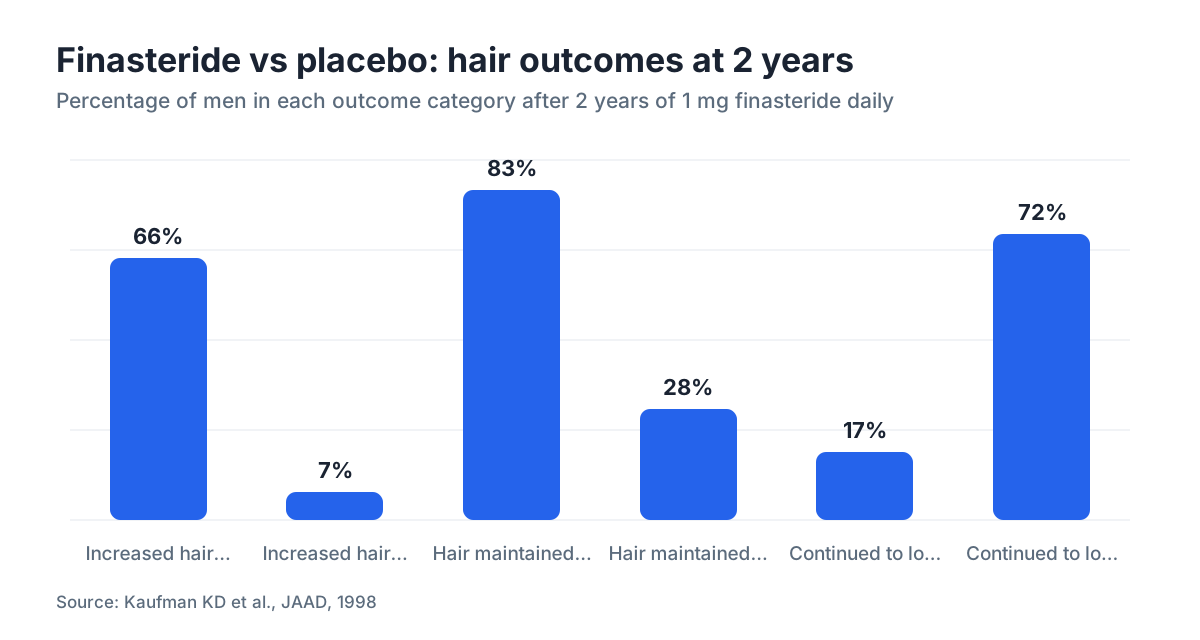
Here's what the two-year results showed:
| Outcome | Finasteride 1 mg | Placebo |
|---|---|---|
| Increased hair count (vertex) | 66% of men | 7% |
| Hair loss stopped or reversed | 83% of men | 28% |
| Continued to lose hair | 17% | 72% |
| Mean increase in hair count | +107 hairs per cm² | -50 hairs per cm² |
That gap is real and clinically meaningful. A net swing of about 150 hairs per square centimeter separates finasteride from placebo at the two-year mark [2].
A five-year open-label extension of those trials tracked outcomes through year five. Hair count gains held across the five-year period, and 90% of men taking finasteride maintained or improved their hair compared to baseline [3]. That's the headline most people miss: the drug's main job is preservation, and it does that better than it does regrowth.
Frontal hairline response is weaker than vertex response. The 1998 trials showed statistically significant but numerically smaller gains at the hairline versus the crown. If your main worry is a receding hairline, finasteride helps more than nothing, but don't expect the same density recovery you'd see at the top of the scalp.
The American Academy of Dermatology's clinical guidelines rate finasteride as a Grade A recommendation for male androgenetic alopecia, its highest evidence level [4].
How long does finasteride take to work?
Most men see no change in the first three months. That's normal and expected. Hair follicles work on a cycle of 2-6 years for growth, followed by a short regression and resting phase before shedding. When finasteride drops DHT levels (which happens within days of starting the drug), follicles that were stuck in a shortened, dying cycle start recovering. But they have to finish their current cycle first before you see a new, healthier hair emerge.
Some men notice increased shedding around weeks 6-12. This is sometimes called a "dread shed" and happens because finasteride can push resting (telogen) hairs out faster as the follicle prepares for a healthier growth cycle. It's similar to what happens with minoxidil. If you want context on that phenomenon, the telogen effluvium explainer walks through exactly why temporary shedding can actually be a positive sign.
The practical timeline looks like this:
- Months 1-3: No visible change. DHT is suppressed. Follicles are stabilizing.
- Months 3-6: Some men notice reduced shedding. The rate of loss slows.
- Months 6-12: First signs of new growth for responders. Hairs become thicker and longer.
- Months 12-24: Peak response. Hair count improvement is greatest at or after the one-year mark.
- Year 2 onward: Most gains hold as long as you keep taking the drug.
The key phrase is "as long as you keep taking it." Finasteride requires indefinite use. When you stop, DHT levels return to baseline within about two weeks, and the hair loss process resumes. Most men who stop finasteride return to where they would have been without it within 9-12 months [3].
Does finasteride work better with minoxidil?
Yes. The combination outperforms either drug alone, and the evidence for this is reasonably solid.
A randomized trial published in Dermatologic Therapy (2015) compared finasteride alone, minoxidil alone, and the combination in men with androgenetic alopecia. The combination group showed significantly greater hair count increases and patient satisfaction scores at 12 months than either monotherapy group [5].
The drugs work through different mechanisms, which is why they stack well. Finasteride removes the hormonal signal that's shrinking follicles. Minoxidil is a vasodilator and potassium channel opener that increases blood flow and appears to prolong the anagen (growth) phase directly. Neither drug cures the underlying condition. Together they attack the problem from two angles.
For a full breakdown of how to use them together, the finasteride and minoxidil guide covers dosing, timing, and what to expect from the combination. And if you want to understand minoxidil's side effect profile before adding it, minoxidil side effects is worth reading first.
Oral minoxidil (low-dose, usually 2.5 mg) is gaining traction as an alternative to topical for men who find the foam or liquid inconvenient. Oral minoxidil carries a different side effect profile, including fluid retention and increased body hair, so it's not a simple swap.
Who responds best to finasteride?
Age and hair loss stage are the two biggest predictors of response. Younger men with earlier-stage loss (Norwood II-III) who still have plenty of miniaturized but living follicles tend to see the most dramatic improvement. The drug has more to work with.
Men at Norwood V-VII with large areas of complete baldness will see less benefit. Finasteride may slow or stop loss at the edges of the bald zone, but it won't repopulate the center of a bald patch where follicles have been gone for years.
The vertex (crown) responds better than the frontal hairline, as noted in the trials. If you're mainly losing ground at the hairline, set realistic expectations.
Ethnicity has some effect, though the data is less clean. A 2014 study in the Journal of Investigative Dermatology found that East Asian men may have lower baseline 5-alpha reductase activity and respond at least as well, possibly better, to finasteride than white men, though the study sizes were modest [6].
Genetics matter in ways we can't fully predict yet. Some men are simply non-responders. The trials showed that about 17% of finasteride users kept losing hair despite treatment [2]. There's no reliable genetic test currently available to predict response before starting, though research into androgen receptor variants is ongoing. If you've been on the drug consistently for 12 months and see no change, a conversation with a dermatologist about alternatives or combination therapy is reasonable.
For the full picture of what's driving your hair loss, what causes hair loss covers both genetic and non-genetic factors that affect who responds to DHT-based treatments.
What are finasteride's real side effect risks?
This is where honest numbers matter more than reassurance.
The 1998 Phase III trials reported sexual side effects (decreased libido, erectile dysfunction, ejaculation disorders) in 3.8% of finasteride users versus 2.1% of placebo users [2]. Those rates resolve in the vast majority of men who stop the drug. In the trials, sexual side effects resolved in men who discontinued finasteride and also in some who kept taking it.
The more contested concern is post-finasteride syndrome, a cluster of persistent sexual, neurological, and psychological symptoms reported by some men that continue after stopping the drug. The syndrome is not listed as a confirmed entity in the FDA label, but the FDA did update finasteride labeling in 2011 to include persistent sexual side effects and, separately in 2012, to include depression [1]. The Post-Finasteride Syndrome Foundation has documented cases, but rigorous epidemiological data on true prevalence is lacking, and the relationship remains controversial in dermatology literature.
A large retrospective cohort study published in JAMA Dermatology in 2017 reviewed over 11,900 men and found no significant association between finasteride use and depression compared to untreated controls [7]. Other studies have found associations. The honest summary: serious persistent effects appear rare, but rare is not zero, and individual risk tolerance matters.
Finasteride lowers PSA (prostate-specific antigen) by about 50%. If you're having a PSA test for prostate cancer screening, your doctor needs to know you're taking finasteride. The FDA label specifically notes this [1].
For more on finasteride's full profile including dosing and who shouldn't take it, the finasteride overview covers the clinical picture in detail.
Does finasteride work for women?
The short answer is: it's complicated, and finasteride is not FDA-approved for hair loss in women [1].
Finasteride is absolutely contraindicated in pregnant women or women who may become pregnant. The drug causes serious birth defects in male fetuses (hypospadias, ambiguous genitalia) because blocking 5-alpha reductase during fetal development disrupts normal male sexual differentiation. Even topical contact with crushed finasteride tablets poses a risk. The FDA label carries a Pregnancy Category X designation for this reason [1].
For postmenopausal women or premenopausal women using reliable contraception, some dermatologists prescribe finasteride off-label. A randomized trial published in the Journal of the American Academy of Dermatology (2000) found that 1 mg finasteride daily was not significantly more effective than placebo in postmenopausal women with androgenetic alopecia [8]. Higher doses (2.5 mg, 5 mg) and combinations with antiandrogens like spironolactone have shown benefit in some women with hyperandrogenism-associated hair loss in smaller studies.
The American Academy of Dermatology's hair loss guidelines do not recommend finasteride as a first-line treatment for women with pattern hair loss [4]. Minoxidil remains the primary FDA-approved option for women. If you're a woman researching options, minoxidil for men explains the mechanism, and your dermatologist can advise on whether off-label use makes sense for your specific situation.
Can finasteride regrow a completely bald spot?
No. This is one of the most important things to understand before starting.
Finasteride only works on follicles that are still alive, even if they're producing very fine, barely visible hairs. Once a follicle is completely gone, the scalp tissue where it lived has often been replaced by fibrous tissue. No medical treatment currently approved can regenerate follicles from scratch in humans.
A patch of scalp that's been smooth and bald for more than roughly 5-7 years is extremely unlikely to respond to finasteride. What you'll often see is that the boundary of a bald area stops advancing, and the hairs just behind the leading edge of loss become thicker and more visible. That's a genuinely good outcome, but it's different from filling in the bald zone itself.
For men with Norwood V or higher who want to actually restore density to bald areas, hair transplant surgery is the only evidence-based option. Transplants move DHT-resistant follicles from the back and sides of the scalp (the donor zone) to bald areas. Finasteride is often continued after a transplant to protect the native, non-transplanted hairs from further miniaturization.
How does finasteride compare to other hair loss treatments?
Here's a practical comparison of the main options men use:
| Treatment | Mechanism | FDA approved | Regrowth evidence | Requires indefinite use |
|---|---|---|---|---|
| Finasteride 1 mg (oral) | Blocks DHT (Type II 5-AR) | Yes, men only | Strong (66% regrowth at 2 yr) | Yes |
| Minoxidil topical | Vasodilator, extends anagen | Yes, men + women | Moderate (40% significant regrowth at 1 yr) | Yes |
| Minoxidil oral (low dose) | Same as topical, systemic | No (off-label) | Similar to topical or better | Yes |
| Dutasteride 0.5 mg | Blocks DHT (Type I + II 5-AR) | Yes for BPH; hair off-label | Slightly stronger than finasteride | Yes |
| Ketoconazole shampoo | Mild antifungal, some anti-DHT | No (off-label) | Weak, adjunct only | Yes |
| Hair transplant | Surgical follicle relocation | Regulated procedure | High, for transplanted follicles | No (surgery is one-time) |
Dutasteride blocks both type I and type II 5-alpha reductase (finasteride only blocks type II), producing a bigger DHT reduction. A meta-analysis in the Journal of the American Academy of Dermatology (2019) found dutasteride 0.5 mg produced significantly greater hair count increases than finasteride 1 mg at 24 weeks, though long-term comparative data past one year is limited [9]. Dutasteride is approved for hair loss in South Korea and Japan but remains off-label in the United States for this indication.
For anyone uncertain where their hair loss currently stands, uploading a few photos to MyHairline's free AI hair analysis can give you a Norwood stage estimate and flag whether your pattern is likely to respond to medical treatment versus surgery, before you spend any money on a dermatologist visit.
What's the right dose and how do you take it?
The approved dose for androgenetic alopecia is 1 mg once daily by mouth [1]. It doesn't matter whether you take it with or without food. Taking it at the same time each day helps with habit formation, but missing by a few hours isn't clinically significant.
The 5 mg Proscar tablets are sometimes split into quarters as a cost-saving strategy, since generic finasteride is far cheaper per milligram at the higher dose. A 5 mg tablet split four ways yields roughly 1.25 mg per piece. This is widely done and dermatologists often mention it, though technically only the 1 mg formulation is approved for hair loss. The FDA has not acted against this practice.
Generic finasteride 1 mg costs roughly $20-50 per month at US pharmacies without insurance, depending on the pharmacy and discount program used. GoodRx and similar services can bring this lower. The brand Propecia is rarely worth the premium since generic bioequivalence is well established.
Topical finasteride (0.25% solution) has emerged as an alternative aiming to reduce systemic DHT exposure and potentially lower the risk of sexual side effects. A 2019 randomized trial in the Journal of the American Academy of Dermatology found topical finasteride 0.25% once daily produced hair count increases comparable to oral 1 mg at 24 weeks, with lower serum DHT reduction (around 20% versus 65-70% for oral) [10]. Topical formulations are available through compounding pharmacies and some telehealth platforms. They're not FDA-approved as a specific product, but the drug itself is FDA-approved, and compounding is legal.
What happens if you stop taking finasteride?
The gains are not permanent. When you stop, DHT returns to pretreatment levels within about two weeks. The hair follicles that had recovered begin miniaturizing again.
Most men who stop finasteride return to approximately the hair density they would have had if they'd never treated within 9-12 months [3]. Some report that the loss after stopping feels faster than the original loss, possibly because the follicles had never fully recovered before being re-exposed to DHT, though this isn't well documented in controlled data.
If you're stopping because of side effects, that's a reasonable call. If you're stopping because you're not sure it's working, consider getting a scalp photograph taken and compared against your baseline. It's easy to underestimate how much hair you've kept, because the alternative (what you'd look like without treatment) is invisible.
For anyone worried about other substances that might be speeding up hair loss alongside genetic factors, the article on does creatine cause hair loss addresses a common question and is a useful data check before cutting supplements that may not be the culprit.
How do you know if finasteride is working?
Monitoring is genuinely difficult without baseline photography. Hair loss is slow, and you're the worst judge of gradual change in your own appearance.
The most practical approach is taking standardized photographs (same lighting, same position, ideally with a reference ruler) before starting, at 6 months, and at 12 months. Dermatologists use a tool called TrichoScan or phototrichogram for precise counts, but for most men, comparing good photographs tells enough of the story.
Global photographic assessment by blinded investigators was the primary endpoint in the 1998 trials [2]. In those studies, 65% of men on finasteride were rated as improved versus 37% in the placebo group. The subjective component matters because "improved" includes both actual regrowth and the absence of further loss.
Hair pull test results (pulling 50-60 hairs and counting how many come out in the telogen phase) can help assess whether shedding has normalized. More than 3 telogen hairs per 100 pulled suggests active loss. A dermatologist can do this and give you a baseline.
If you want to track your Norwood stage over time, MyHairline's AI scan gives you a standardized assessment from photos you can repeat every few months. That kind of structured before-and-after is genuinely the most useful way to see whether the drug is doing its job.
Sources
- FDA, Propecia (finasteride) prescribing information / drug label
- Kaufman KD et al., Journal of the American Academy of Dermatology, 1998; 39(4):578-589
- Kaufman KD et al., European Journal of Dermatology, 2002; 12(1):38-49
- American Academy of Dermatology, Hair Loss Clinical Guidelines
- Hu R et al., Dermatologic Therapy, 2015; 28(5):342-346
- Sato A et al., Journal of Investigative Dermatology, 2014; 134(12):3051-3053
- Fertig RM et al., JAMA Dermatology, 2017; 153(11):1168-1169
- Price VH et al., Journal of the American Academy of Dermatology, 2000; 43(5):768-776
- Gupta AK et al., Journal of the American Academy of Dermatology, 2019; 81(5):1101-1110
- Caserini M et al., Journal of the American Academy of Dermatology, 2019; 81(2):525-527
- National Institutes of Health, MedlinePlus, Finasteride