

TL;DR: Topical minoxidil is extremely unlikely to cause weight gain. Oral minoxidil can cause fluid retention in a meaningful minority of users, which shows up as a few pounds of water weight, not fat gain. The FDA label for oral minoxidil lists edema as a known side effect. Finasteride has no established link to weight gain at all.
What is minoxidil actually doing in your body?
Minoxidil started life as a blood pressure drug, not a hair loss drug. It works by opening ATP-sensitive potassium channels in smooth muscle cells, which relaxes blood vessel walls and lowers blood pressure [1]. The hair growth effect was discovered as a side effect in the 1970s. That origin story matters here, because blood pressure drugs and weight changes connect through one mechanism: fluid retention.
When blood vessels relax, the kidneys can respond by holding onto more sodium and water. That is the same mechanism that causes some people on oral minoxidil to notice puffiness around their ankles, a slightly swollen face in the morning, or a few extra pounds on the scale within the first few weeks of use [2].
Topical minoxidil (the 2% and 5% solutions or foam you rub on your scalp) is a completely different story. Systemic absorption from topical application is low, typically less than 2% of the applied dose reaching the bloodstream under normal use conditions [1]. That level is not enough to meaningfully affect blood pressure or trigger the fluid-retention cascade. Weight gain from topical minoxidil is not a documented effect in clinical trial data.
Does topical minoxidil cause weight gain?
No. There is no credible clinical evidence that topical minoxidil causes weight gain. The FDA-registered trials for Rogaine (the original brand) did not list weight gain as an adverse event [1]. Systemic exposure from scalp application is simply too low to produce the cardiovascular effects that drive fluid retention.
That said, a small number of people do absorb more minoxidil through the skin than average, particularly if they have a damaged skin barrier, use very large quantities, or apply it to broken skin. Even in those cases, documented systemic effects are rare in the literature and usually involve blood pressure changes or unwanted hair growth elsewhere, not weight change [3].
If you are using topical minoxidil and gaining weight, the honest answer is that minoxidil is almost certainly not the reason. Look at other medications you have started, changes in diet or activity, or ask a doctor to check your thyroid, which is a common and under-diagnosed cause of unexplained weight gain in both men and women losing hair.
Does oral minoxidil cause weight gain?
Here the answer gets more nuanced. Oral minoxidil is prescribed off-label at low doses (0.625 mg to 5 mg daily) for hair loss [2]. At these doses, far below the 10 to 40 mg per day used for hypertension, the cardiovascular effects are milder but they are real.
Fluid retention is listed explicitly in the prescribing information for oral minoxidil tablets [2]. Clinical data from a 2021 review in the Journal of the American Academy of Dermatology found that at hair-loss doses, fluid retention occurred in roughly 6 to 7 percent of patients [4]. That is not the majority, but it is not trivial either.
The weight involved is almost exclusively water, not fat. Patients typically notice it as puffiness, particularly in the lower legs and around the eyes in the morning. It can add 2 to 5 pounds on the scale. For most people at low doses this is manageable or resolves after a few weeks. For people with underlying heart disease or kidney disease, fluid retention from minoxidil can be genuinely dangerous and is listed as a contraindication [2].
Doctors prescribing oral minoxidil for hair loss will sometimes add a low-dose diuretic (most commonly spironolactone in women, or a low-dose thiazide) specifically to offset this fluid retention. If you are on oral minoxidil and gaining weight or noticing swelling, that is a conversation to have with your prescribing doctor, not something to ignore. Learn more about what distinguishes oral from topical at oral minoxidil and the full side effect picture at minoxidil side effects.
How common is fluid retention on oral minoxidil for hair loss?
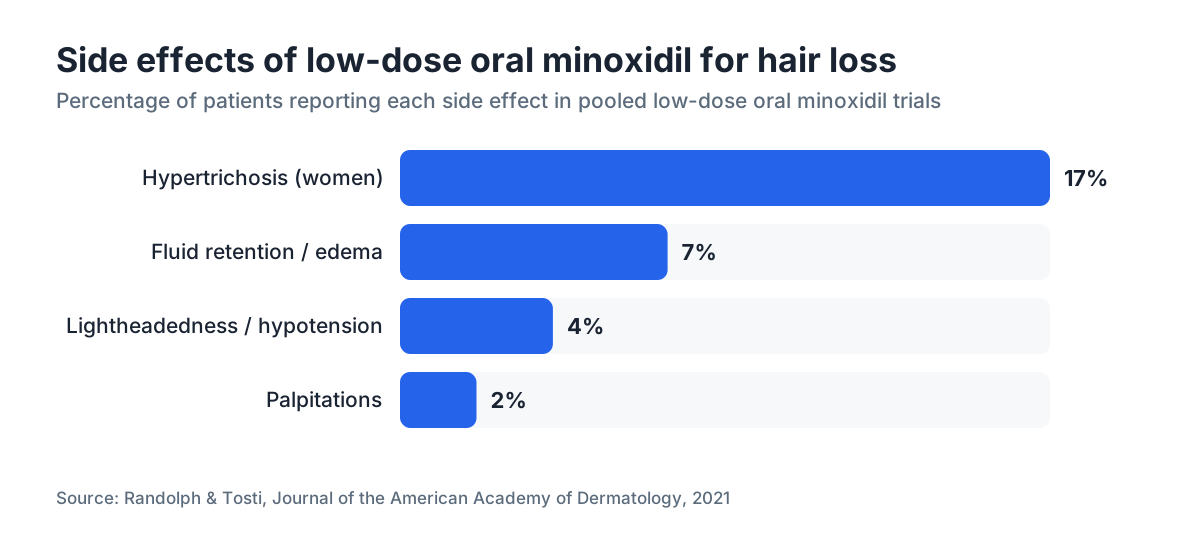
The best available data comes from a 2021 systematic review by Randolph and Tosti in the Journal of the American Academy of Dermatology, which pooled results from multiple trials of low-dose oral minoxidil for hair loss [4]. Fluid retention was reported in about 6 to 7 percent of patients across the studies reviewed. Hypertrichosis (unwanted hair growth on the face or body) was far more common, reported in 15 to 20 percent of women in several trials.
For context: these are low doses. At the doses used for high blood pressure, fluid retention was common enough that the original FDA labeling required concurrent use of a diuretic for almost all patients [2]. At hair-loss doses, most prescribers do not require this, but they should be monitoring for it.
The chart below shows the most commonly reported side effects from low-dose oral minoxidil across this evidence base, so you can see where fluid retention actually sits relative to other effects.
Does finasteride cause weight gain?
No clear evidence links finasteride to weight gain. The FDA-approved prescribing information for finasteride 1 mg (Propecia) does not list weight gain as an adverse effect [5]. The drug works by blocking the enzyme 5-alpha reductase, which converts testosterone to dihydrotestosterone (DHT). Changing DHT levels does not have a well-documented direct effect on fat distribution or fluid regulation.
That said, some men do report feeling different on finasteride. A subset report sexual side effects, mood changes, and occasionally describe feeling physically different, but controlled clinical trials have not identified weight gain as a consistent finding. The nocebo effect, where expecting a side effect makes you more likely to notice and attribute it, is genuinely powerful and probably explains some of these reports.
If you are worried whether a DHT blocker might change your body composition, the current clinical evidence does not support that fear. The more detailed breakdown of finasteride as a treatment is at finasteride, and a comparison of both drugs together is at finasteride and minoxidil.
One caveat worth naming honestly: long-term hormonal changes are hard to study, and DHT does have some role in body composition. The studies that exist do not show a problem, but nobody has great 20-year data. That uncertainty should not be inflated into a warning, and it should not be dismissed either.
What does the FDA label actually say about minoxidil and weight?
The FDA prescribing information for oral minoxidil tablets states directly: "Minoxidil can cause retention of salt and water" and lists edema (swelling from fluid) as a known adverse reaction [2]. It goes further, advising that the drug should be given with a diuretic for patients with normal kidney function, because of this fluid retention risk at therapeutic (hypertension) doses.
The FDA label for topical minoxidil solution (Rogaine) does not list weight gain or fluid retention as adverse reactions, because systemic absorption from topical use is not enough to produce these effects at typical doses [1].
The American Academy of Dermatology guidance on androgenetic alopecia recommends topical minoxidil as a first-line treatment and does not flag weight gain as a concern for topical use [3]. For oral use, the AAD notes that prescribers should be aware of the cardiovascular effects given the drug's original indication.
So the regulatory picture is clean. Topical: no documented weight concern. Oral: a real but manageable fluid retention risk that affects a minority of users.
How would you know if minoxidil is causing weight gain vs. something else?
This is one of the more practical questions to work through. A few markers point toward minoxidil-related fluid retention specifically.
The timing is quick. Fluid retention from oral minoxidil usually shows up within the first 2 to 4 weeks of starting. If you have been on oral minoxidil for six months and only now started gaining weight, minoxidil is probably not the culprit.
The weight is distributed differently than fat gain. Fluid retention causes puffiness in the face, around the eyes in the morning, and swelling in the ankles and lower legs. True fat gain distributes more gradually and more centrally (waist, abdomen). Press your thumb into your ankle for a few seconds. If it leaves a pit that slowly fills back in, that is pitting edema and a genuine sign of fluid retention [6].
The scale jumps faster than fat gain allows. Gaining more than 2 pounds in a day is almost never fat. A rapid increase of 3 to 5 pounds shortly after starting oral minoxidil is a red flag for fluid retention.
If none of those patterns fit, the more likely explanations include thyroid dysfunction, changes in calorie intake or activity, other medications (corticosteroids, some antidepressants, and insulin all cause fluid retention and weight changes), or normal weight variation. Hair loss and weight changes sometimes track together because they share underlying causes: metabolic syndrome, polycystic ovary syndrome (PCOS), and nutritional deficiencies can drive both at once. If you want to understand what else might be behind your hair loss, what causes hair loss covers that ground.
Should you stop minoxidil if you notice weight gain?
Do more than stop. That is the main practical point here. If you are on oral minoxidil and you notice swelling or rapid weight gain, call your prescribing doctor before stopping. Stopping a blood pressure medication abruptly can cause rebound hypertension in some cases, and your doctor may want to taper or add a diuretic rather than discontinue entirely.
If you are on topical minoxidil, gaining weight, and wondering whether to stop: stopping topical minoxidil because of weight gain is almost certainly stopping the wrong thing. The weight gain has another cause.
For oral minoxidil users who are gaining fluid weight, the standard approach is a low-dose diuretic added to the regimen. Some prescribers start with this preemptively. If your prescriber did not discuss this possibility before you started oral minoxidil, that is a gap worth raising.
A few pounds of water weight has to be weighed against real benefits. Low-dose oral minoxidil has genuinely strong hair regrowth data, better in some trials than topical minoxidil for women with diffuse thinning [4]. For many people the trade-off makes sense. For people with heart failure, kidney disease, or uncontrolled hypertension, it probably does not.
Does minoxidil affect metabolism or hormones in ways that could cause fat gain?
No evidence suggests minoxidil causes fat gain through metabolic or hormonal pathways. Minoxidil is not a steroid, does not affect testosterone or estrogen directly, and does not appear to alter thyroid function, insulin sensitivity, or cortisol levels in the clinical literature [2][3].
This is worth being explicit about, because the internet blurs several different mechanisms: fluid retention (water weight, reversible), fat gain (caloric surplus, slow), and muscle changes (androgenic effects, not relevant here). Minoxidil only touches the first one, and only for oral use, and only in a minority of users.
The drugs that do change body composition through hormonal pathways are steroids, corticosteroids, some psychiatric medications, and certain diabetes drugs. Minoxidil is none of those. Its mechanism is entirely cardiovascular.
For men specifically: some worry that treating hair loss with any drug will affect their masculinity or body composition. Minoxidil carries no such risk. Finasteride reduces DHT, and DHT does have some anabolic effects at high concentrations, but the 1 mg dose for hair loss produces a modest DHT reduction (about 60 to 70 percent in the scalp, less systemically) that has not translated into documented fat gain in trials [5].
What other minoxidil side effects should you actually watch for?
Fat gain is not meaningfully on the list. Several other effects are worth knowing.
For topical minoxidil, the most common issues are scalp irritation and contact dermatitis, an initial increase in shedding in the first 4 to 8 weeks (this is normal and is called telogen effluvium, not a sign the drug is failing), and, rarely, unwanted facial hair growth from the product running off the scalp [3].
For oral minoxidil at hair-loss doses, hypertrichosis (body and facial hair) is the most common side effect, followed by the fluid retention discussed throughout this article. Lightheadedness or a drop in blood pressure (especially when standing up quickly) affects some users, particularly at higher doses. Palpitations are rare but reported.
Nobody should be on oral minoxidil without at least a baseline blood pressure check. That is the minimum standard of care given what the drug does, even at low doses.
If you want the full picture of side effects and how to manage them, minoxidil side effects covers each one with the relevant evidence. And if you are trying to decide whether minoxidil is the right first step for your specific pattern of loss, minoxidil for men walks through the evidence by Norwood stage and age. A free AI hair analysis at MyHairline can help you see your current stage before you decide anything.
The bottom line on minoxidil, finasteride, and weight
Topical minoxidil does not cause weight gain. Full stop, based on the available evidence.
Oral minoxidil causes fluid retention in roughly 6 to 7 percent of people at hair-loss doses, which can look like weight gain on the scale but is water weight, not fat. It is manageable with a diuretic and usually resolves or stabilizes within a few weeks. People with heart or kidney disease need to be more cautious.
Finasteride has no established connection to weight gain in clinical trial data.
If you are losing hair and gaining weight at the same time, those two things may share a root cause worth investigating: thyroid issues, PCOS, metabolic syndrome, or nutritional deficiency. Understanding what is actually driving your hair loss matters before you spend money on any treatment. What causes hair loss and receding hairline are good starting points. If you want to understand your current pattern before making a decision, MyHairline's free AI scan at myhairline.ai/scan gives you a Norwood or Ludwig stage assessment in minutes.
Sources
- FDA, Minoxidil Topical Solution Prescribing Information (Rogaine label)
- FDA, Minoxidil Tablets Prescribing Information (oral label)
- American Academy of Dermatology, Hair Loss Treatment Guidelines
- Randolph M, Tosti A. Oral minoxidil treatment for hair loss: A review of efficacy and safety. Journal of the American Academy of Dermatology, 2021
- FDA, Finasteride 1 mg (Propecia) Prescribing Information
- NIH MedlinePlus, Edema (fluid retention) clinical description
- National Library of Medicine, StatPearls: Minoxidil
- Olsen EA et al. A randomized clinical trial of 5% topical minoxidil versus 2% topical minoxidil and placebo in the treatment of androgenetic alopecia in men. Journal of the American Academy of Dermatology, 2002
- FDA, Drug Safety Communications on minoxidil
- Sinclair R et al. Treatment of female pattern hair loss with oral minoxidil alone and in combination. International Journal of Dermatology, 2018