

TL;DR: Losartan lists alopecia as a rare adverse effect, affecting fewer than 1% of patients according to FDA prescribing information. The mechanism is likely drug-induced telogen effluvium, where the medication disrupts the hair growth cycle. Switching medications, adding minoxidil, or simply waiting after stopping the drug usually resolves the shedding. Smoking independently accelerates hair loss through a separate vascular pathway.
Does losartan cause hair loss?
Yes, it can. Losartan is an angiotensin II receptor blocker (ARB) used to treat high blood pressure and protect the kidneys. The FDA prescribing label for losartan lists alopecia under "other" adverse reactions with an incidence below 1% [1]. That sounds reassuring. But when millions of people take a drug, even a 1-in-100 chance turns into a lot of real people losing real hair.
The hair loss tied to losartan looks like telogen effluvium: diffuse shedding that usually starts two to four months after beginning the drug, peaks over a few weeks of heavy daily loss, then either stabilizes or slowly reverses once the trigger is gone. It is not androgenetic alopecia, the genetically programmed thinning that produces a receding hairline. The distinction matters because the two conditions call for different responses.
The word "can" is doing real work in that first sentence. Most people who take losartan never notice a change in their hair. The drug is one of the better-tolerated blood pressure medications on the market. So if you started losartan and your hair is falling out, the drug is a plausible suspect. It is not automatically the culprit. More on how to untangle that below.
How common is hair loss with losartan compared to other blood pressure drugs?
The honest answer is that the evidence is thin. The FDA adverse event reporting system (FAERS) holds alopecia reports for losartan, but FAERS is passive surveillance: people report what they notice, not a controlled trial. You cannot calculate a true incidence rate from those reports [10].
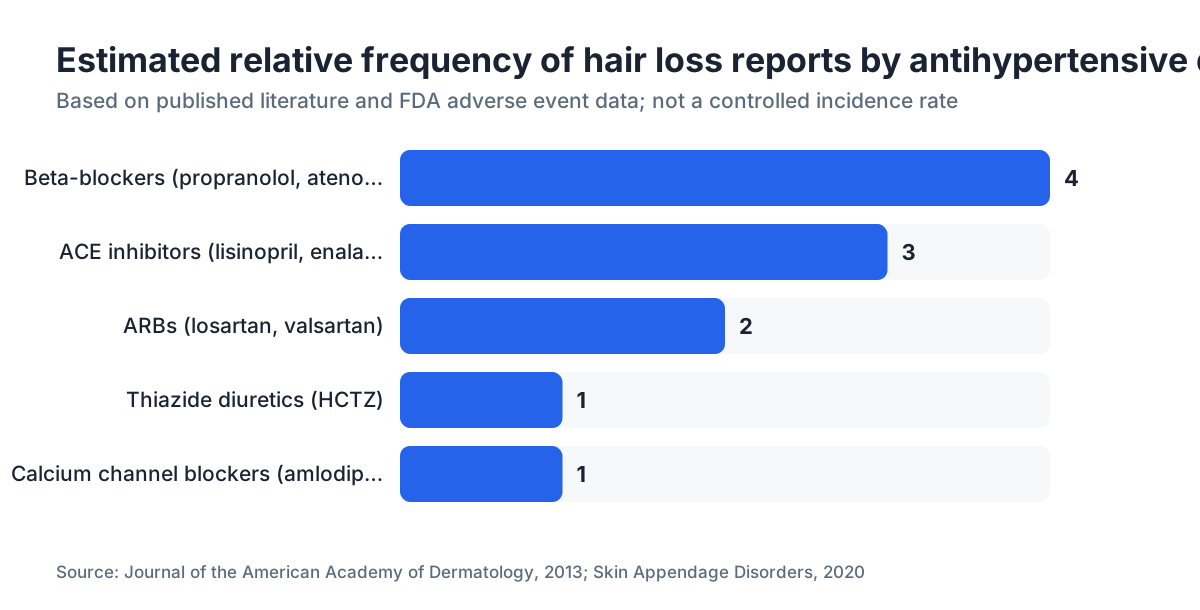
What you can do is compare across drug classes. Beta-blockers, particularly propranolol, atenolol, and metoprolol, are the most well-documented antihypertensives tied to hair loss [2]. ACE inhibitors, the class closest to ARBs mechanistically, have also been reported to cause telogen effluvium. Calcium channel blockers like amlodipine show up less often. Diuretics such as hydrochlorothiazide are occasionally implicated.
Within the ARB class, losartan reports outnumber those for some other ARBs, though nobody has run a clean head-to-head trial with alopecia as the endpoint. A 2013 review in the Journal of the American Academy of Dermatology called antihypertensives an underappreciated cause of drug-induced hair loss, with beta-blockers and ACE inhibitors accounting for the most cases [3].
| Drug class | Example drugs | Hair loss association |
|---|---|---|
| Beta-blockers | Propranolol, atenolol | Well documented, relatively common |
| ACE inhibitors | Lisinopril, enalapril | Documented, moderate reports |
| ARBs | Losartan, valsartan | Listed on label, fewer than 1% |
| Calcium channel blockers | Amlodipine | Rare, infrequent reports |
| Thiazide diuretics | HCTZ | Occasional case reports |
If your doctor needs to keep you on a blood pressure drug and your hair is thinning, the table above is a rough starting point for a conversation about switching classes. Blood pressure control comes first. Do not adjust or stop antihypertensives without talking to your prescribing physician.
What is the mechanism: why would losartan affect hair follicles?
Losartan blocks angiotensin II receptors, which changes blood vessel tone throughout the body. Hair follicles are heavily vascularized: the dermal papilla at the base of each follicle needs good microcirculation to fuel the fast cell division of the anagen (growth) phase [4]. The leading theory is that shifting angiotensin signaling alters blood flow to the scalp microvasculature in susceptible people, pushing too many follicles into the telogen (resting and shedding) phase early.
Here is an odd twist. Minoxidil, the topical and oral hair loss treatment, works partly by widening blood vessels. Researchers have looked at whether ARBs and minoxidil share or compete for the same vascular pathways, though the clinical picture is not fully worked out. The vascular route is real, and losartan's interference with it is a biologically plausible reason for the shedding some patients report.
Genetics matters too. If you already carry the genes for androgenetic alopecia, a drug-induced telogen effluvium will unmask or speed up thinning that was coming anyway. That is one reason the same drug causes obvious shedding in one patient and nothing in another who has taken it for years.
How do you know if losartan is causing your hair loss and not something else?
Ask this question before you do anything else. What causes hair loss covers a long list, and drug-induced shedding is one of the easier causes to miss, because there is a two-to-four-month gap between starting the medication and noticing the problem. That gap means people rarely connect the dots on their own.
A timeline is your first diagnostic tool. Did diffuse shedding start roughly eight to sixteen weeks after you began losartan or bumped up the dose? That fits. Did the shedding come with scalp itching, redness, or patchy loss rather than even thinning? Those features point toward other diagnoses like alopecia areata or a scalp infection.
Blood work your doctor should order includes thyroid function (TSH), ferritin, a complete blood count, and androgen levels if indicated. Hypothyroidism is a common and often missed cause of diffuse shedding. Iron deficiency is another. Either one can start around the same time you happened to begin a new medication, purely by coincidence.
A dermatologist can do a pull test and, if needed, a scalp biopsy. In drug-induced telogen effluvium, the biopsy usually shows a high ratio of telogen to anagen hairs without the miniaturization that marks androgenetic alopecia [3]. That distinction changes the treatment plan completely.
What should you do if you think losartan is causing hair loss?
Tell your prescribing physician. That is step one, every time. Do not stop losartan on your own: sudden discontinuation of a blood pressure drug can trigger a rebound, and the cardiovascular risk of uncontrolled hypertension is far worse than hair thinning.
Your doctor has several reasonable options. Switching to another class, such as a calcium channel blocker, is worth considering if it controls your blood pressure just as well. Some patients find the shedding settles even while they stay on losartan, because drug-induced telogen effluvium can burn itself out once the follicles adapt.
If the shedding keeps going, minoxidil for men (or women, used off-label at the 2% concentration) is a reasonable add-on while you and your doctor sort out the medication question. Topical minoxidil works through a different mechanism from losartan and has no clinically documented harmful interaction with it. The American Academy of Dermatology recommends minoxidil as a first-line treatment for androgenetic alopecia, and it has shown benefit in some forms of telogen effluvium too [5].
Oral minoxidil at low doses (0.625 mg to 2.5 mg daily for women, 2.5 mg to 5 mg for men) is used more and more off-label for diffuse shedding and may be worth asking about, though it carries its own side effects including unwanted body hair. If the real cause is drug-induced effluvium, fixing the drug matters more than piling on treatments.
If you want a clearer view of how your hair density has changed and where the loss sits on your scalp, the free AI hair analysis at MyHairline (/scan) maps your thinning pattern from photos and gives you a baseline to track against. That kind of objective reference helps when you are trying to tell whether a medication change is actually working.
Does the hair grow back after stopping losartan?
Usually yes, though the timeline is slow. Telogen effluvium from a drug typically starts to reverse within three to six months of removing the trigger, with full recovery taking anywhere from six to eighteen months, depending on how heavy the shed was and whether underlying androgenetic alopecia was also in play [6].
Here is the frustrating part. Regrowth is not guaranteed to bring you back to your exact pre-drug baseline. If you have the genetic background for male or female pattern hair loss, a big telogen effluvium can permanently thin the hair, because it speeds up miniaturization in genetically susceptible follicles. That is not losartan doing something unique. Any major shedding event, including illness, surgery, or severe stress, carries the same risk for predisposed people.
So the outcome question splits in two. Will the shedding stop if I stop the drug? Almost certainly yes. Will I get back everything I lost? Probably most of it, but possibly not all.
Does smoking cause hair loss?
Yes, and the evidence here is stronger than for most individual drugs. A 2020 study in Skin Appendage Disorders found a statistically significant link between cigarette smoking and androgenetic alopecia, with smokers showing higher Norwood scores than age-matched non-smokers [7]. A larger Taiwanese study of over 740 men found that smoking was an independent risk factor for moderate-to-severe androgenetic alopecia after controlling for age and family history [8].
The mechanism runs through several channels at once. Nicotine and the other compounds in smoke cause vasoconstriction, cutting blood flow to the scalp microvasculature the way cold does, only constantly instead of briefly. Smoking also produces reactive oxygen species that damage follicle DNA. And smoke contains compounds that interfere with the enzyme converting testosterone to DHT in ways that may amplify DHT activity at the follicle [7].
The vascular damage from smoking overlaps with what happens in scalp blood vessels during antihypertensive-drug-induced effluvium. If someone smokes and takes losartan, both stressors hit the same follicle infrastructure. That combination has not been studied directly, but the biology suggests it stacks rather than cancels out.
Quitting smoking is one of the few lifestyle moves with a plausible direct benefit for keeping hair, on top of the well-documented cardiovascular and cancer benefits. The effect on hair is not fast or dramatic. But the vascular improvements that begin within weeks of quitting slowly improve follicle perfusion.
How does smoking compare to other hair loss risk factors?
Genetics is still the dominant driver of androgenetic alopecia. A father or maternal grandfather with significant hair loss predicts your risk far better than smoking status does. But smoking is a modifiable factor that meaningfully shifts the odds, which sets it apart from genetics.
Here is the context. The Taiwanese study [8] found that men who smoked more than 20 cigarettes a day had about twice the odds of moderate-to-severe hair loss compared to non-smokers, after adjusting for family history. That is a real effect. For comparison, DHT blockers like finasteride cut DHT levels by roughly 70%, and about 66% of men maintained or improved hair count over two years in the Phase III trials [9]. So finasteride is the stronger single intervention, but quitting smoking and taking finasteride hit different parts of the same problem.
If you are worried about hair loss and you smoke, quitting is free, has no side effects beyond nicotine withdrawal, and improves outcomes across a long list of health conditions at the same time. That makes it unusually good advice by the standards of hair loss medicine, where most interventions come with trade-offs.
For a wider look at what is actually driving your shedding, the what causes hair loss guide runs through the full range from genetics to nutrition to medications.
What other medications are known to cause hair loss?
Drug-induced alopecia is more common than most patients and even some clinicians realize. The American Academy of Dermatology recognizes several drug categories as documented causes [5].
Anticoagulants, particularly heparin and warfarin, are among the most reliably documented culprits. Chemotherapy agents cause anagen effluvium (loss of actively growing hairs) rather than telogen effluvium, which is why chemo hair loss is fast and dramatic instead of the slow diffuse shedding of most other drug causes. Retinoids (vitamin A derivatives used for acne and psoriasis) are well-documented triggers of telogen effluvium. Mood stabilizers, particularly lithium and valproate, have good evidence for causing hair loss. Hormonal medications including oral contraceptives, especially those with androgenic progestins, can trigger shedding in predisposed women.
For the full picture of how drug-induced loss compares to other forms, telogen effluvium covers the mechanism and what sets it apart from pattern hair loss. And if you want to know about the minoxidil side effects before starting it as a countermeasure, that guide covers what actually shows up in practice versus what is just listed on the label.
One thing worth knowing: if a drug causes telogen effluvium, adding finasteride on top of it is unlikely to help much. Finasteride targets the androgen pathway that drives pattern baldness [9], not the diffuse follicle-cycle disruption of drug-induced effluvium. A dermatologist who understands the difference will steer you toward the right treatment for the right cause.
When should you see a dermatologist about medication-related hair loss?
See a dermatologist if any of these apply: the shedding has run more than three months and is not clearly improving; you notice visible scalp showing through or a big drop in overall density; the pattern is patchy rather than diffuse (which points to alopecia areata and needs different treatment); or you have been off the suspected drug for six months and the hair has not started coming back.
A dermatologist is also worth seeing before you make any medication changes, because they can confirm whether losartan is really the cause or whether you have coincident androgenetic alopecia that needs its own treatment regardless of what happens with your blood pressure drug.
If you cannot get to a dermatologist quickly, a photo-based tracking method helps a lot. Take consistent photos in the same lighting, angle, and hair parting every four weeks. That gives you objective data to bring to any appointment. MyHairline's AI hair analysis tool (/scan) uses standardized photo inputs to map density changes across the scalp, which helps establish whether thinning is diffuse (a drug-induced pattern) or patterned (an androgenetic one). That distinction changes what you do next.
For people whose shedding turns out to be androgenetic rather than drug-induced, the evidence-based options are finasteride, minoxidil for men, their combination, and for suitable candidates, hair transplant. Each has a different risk-benefit profile, different costs, and a different time to visible results.
Sources
- FDA, Cozaar (losartan potassium) prescribing information
- Springer, Drug-Induced Hair Loss: A Systematic Review, Dermatology and Therapy (2021)
- Journal of the American Academy of Dermatology, Drug-induced alopecia review (2013)
- NIH National Institute of Arthritis and Musculoskeletal and Skin Diseases, Hair loss overview
- American Academy of Dermatology, Hair loss: diagnosis and treatment
- UpToDate (Wolters Kluwer), Telogen effluvium
- Skin Appendage Disorders, Smoking and androgenetic alopecia (2020)
- Archives of Dermatology, Smoking and male androgenetic alopecia in Taiwanese men (2007)
- New England Journal of Medicine, Finasteride in the treatment of men with androgenetic alopecia (1998)
- FDA MedWatch, FDA Adverse Event Reporting System (FAERS)
- NIH National Library of Medicine, DailyMed: Losartan potassium label