

TL;DR: Adderall's FDA label lists alopecia as a rare adverse event, and real-world reports confirm some people do lose hair on it. The likely mechanism is telogen effluvium triggered by stimulant-related stress, appetite suppression, or nutritional gaps, not direct follicle damage. Hair almost always grows back after stopping or adjusting the dose. Ketoconazole, by contrast, does not cause hair loss and is sometimes used to treat it.
Does Adderall cause hair loss?
Yes, it can, but 'rare' is the honest qualifier. Adderall's official prescribing information, published by the FDA, lists alopecia under adverse reactions [1]. That word 'rare' on a drug label usually means fewer than 1 in 1,000 users in clinical trials, so most people taking Adderall never notice thinning. But 'rare' and 'impossible' are different things. The reports are real enough that the FDA kept the warning on the label.
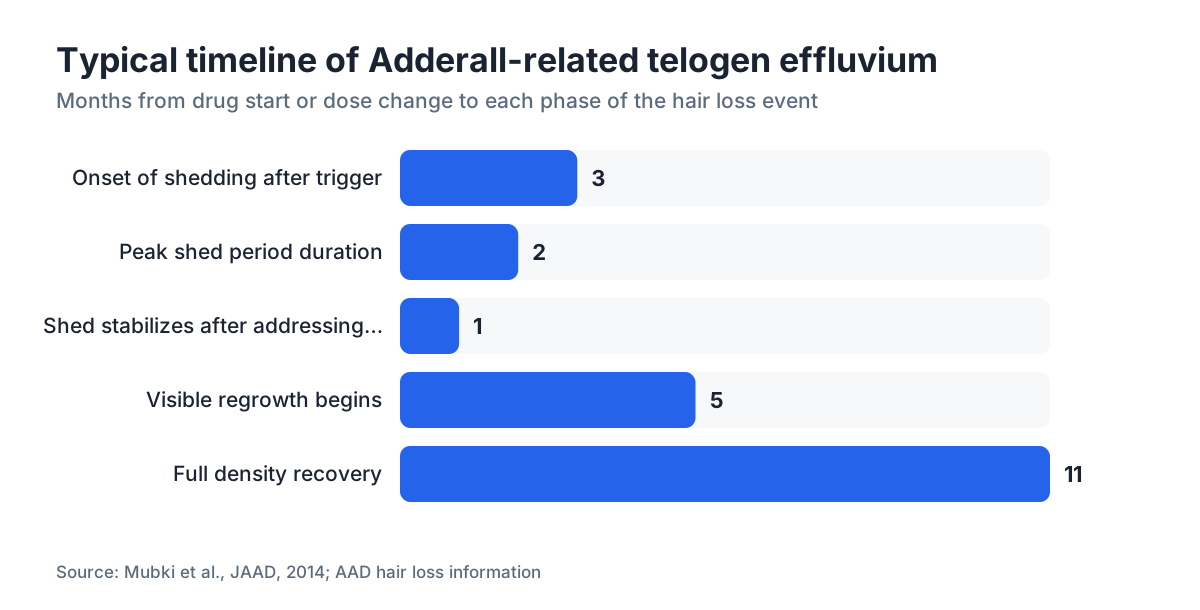
The hair loss linked to Adderall is almost certainly telogen effluvium, not the permanent follicle miniaturization you see in androgenetic alopecia. Telogen effluvium is a diffuse shed that shows up two to four months after a physical or psychological stressor. The stressor pushes a large batch of hairs out of the growth phase and into the resting phase at the same time, and they all fall out at roughly the same moment. It looks alarming because you can shed several hundred hairs a day. The follicles are intact, though, and the hair grows back.
No large controlled trial has directly measured how often Adderall causes shedding. The FDA data comes from spontaneous adverse-event reporting and the original clinical trial population, and both undercount real-world incidence. The true rate sits somewhere between 'low' and 'uncommon'. Nobody has a good number.
Why would a stimulant medication trigger hair shedding?
Amphetamine salts, the active ingredient in Adderall, affect the body in several ways that could plausibly stress the hair cycle.
Appetite suppression is probably the biggest factor. Adderall reliably cuts hunger, and people who eat significantly less often slip into protein or micronutrient deficiency without noticing [2]. Hair follicles are metabolically demanding tissue. When the body runs short on protein, zinc, iron, or B vitamins, it rations those nutrients toward other organs and the hair cycle takes the hit. A 2019 review in Dermatology and Therapy lists nutritional deficiency among the leading triggers of telogen effluvium [3].
Sleep disruption is another likely pathway. Stimulants taken too late in the day frequently wreck sleep quality, and chronic poor sleep raises cortisol. Elevated cortisol can push hair follicles prematurely into the telogen (resting) phase.
Then there's psychological stress. Starting treatment for a new ADHD diagnosis can be emotionally stressful on its own, and stress is an independent trigger for telogen effluvium, separate from any pharmacological effect. Untangling 'the medication did this' from 'the period of my life when I started the medication did this' is genuinely hard. Keep that ambiguity in mind before blaming every shed on the pill.
Amphetamines also cause vasoconstriction, meaning blood vessels narrow. Whether that meaningfully reduces blood flow to scalp follicles in humans at therapeutic doses is unclear. Animal studies exist, but the jump to clinical relevance in people is speculative.
How common is Adderall-related hair loss and how bad does it get?
The honest answer is that we don't have a precise incidence figure. The FDA Adverse Event Reporting System (FAERS) contains hundreds of reports linking amphetamine products to alopecia, but FAERS is a passive system where patients or clinicians submit reports voluntarily [4]. It almost certainly undercounts, and it can't tell you the denominator, meaning how many people took the drug without any problem.
What the clinical trial data does tell us: alopecia was rare enough that it never crossed the threshold to be listed as a 'common' adverse effect, which usually means 1 in 100 or more. Most people taking Adderall at therapeutic doses for ADHD do not lose noticeable hair.
When shedding does happen, it's usually diffuse thinning across the whole scalp rather than a receding hairline or bald patches. The shed typically peaks two to four months after starting the drug or after a big dose increase, the classic telogen effluvium timeline. It tends to stabilize and then reverse once the trigger resolves.
If you're also genetically prone to male or female pattern hair loss, Adderall-triggered telogen effluvium can unmask that tendency earlier than it would have shown up on its own. That's one reason people worry the shedding is permanent. In most cases the telogen effluvium layer resolves, and the underlying pattern loss, if it's there, keeps progressing at whatever rate it was already going to, not faster.
Does ketoconazole cause hair loss?
No. Ketoconazole does not cause hair loss, and framing it that way has the relationship backwards. Ketoconazole shampoo is one of the treatments used to reduce hair shedding, especially when seborrheic dermatitis or scalp inflammation is part of the picture [5].
Ketoconazole is an antifungal. Applied topically, it controls Malassezia yeast on the scalp, which cuts the inflammation that can worsen shedding. A frequently cited 1998 study in Dermatology found that 2% ketoconazole shampoo produced hair shaft diameter increases similar to 2% minoxidil in men with androgenetic alopecia, though that study was small and later work has been mixed [6]. The evidence isn't strong enough to call ketoconazole a standalone hair-loss treatment. It is not causing hair loss in any established sense.
Oral ketoconazole is a different story, but not because of hair. Oral ketoconazole carries serious liver toxicity warnings, and the FDA has restricted its US use to cases where other antifungals have failed [7]. Dermatologists rarely prescribe it for scalp conditions anymore precisely because of that risk. If you're using a ketoconazole shampoo a few times a week, liver risk is not a real concern, because systemic absorption through the scalp is minimal at shampoo concentrations.
So, can ketoconazole cause hair loss? No. There's no credible mechanism and no documented pattern linking ketoconazole shampoo to alopecia.
Can ketoconazole help if Adderall is making you lose hair?
Possibly, as one piece of a bigger plan, but don't expect it to carry the load.
If your scalp shows signs of seborrheic dermatitis (flaking, redness, itch) on top of the shedding, a ketoconazole shampoo used two to three times a week can cut that inflammatory load and may slow the shedding somewhat. It's cheap, low-risk, and worth trying in that scenario. It doesn't replace addressing the root cause, which in the Adderall case is usually a nutritional deficit or physiological stress.
The interventions that actually move the needle for Adderall-related shedding are:
- Making sure you're eating enough protein and calories despite the appetite suppression (tracking intake for a week can be eye-opening)
- Getting bloodwork to check ferritin, zinc, and B12, because deficiencies are common in people who eat less on stimulants
- Talking to your prescriber about timing or dose adjustments if the shedding is severe
- Waiting, because telogen effluvium is self-limiting once the trigger is handled
If the hair doesn't recover after six to twelve months of addressing those factors, that's the point to revisit whether something else is going on, including underlying androgenetic alopecia. A dermatologist can do a pull test and look at the shed hairs under a scope to tell them apart.
How do you tell if your hair loss is from Adderall or something else?
Timing is your biggest clue. Telogen effluvium from a drug or stressor shows up two to four months after the trigger, not immediately. If you started Adderall in January and noticed heavy shedding in March or April, that timing fits. If the shedding started the same week you began the medication, something else is more likely to blame.
Pattern matters too. Adderall-related shedding is diffuse. You lose hair evenly across the scalp. Androgenetic alopecia in men follows the Norwood scale, with recession at the temples and thinning at the crown first. In women, pattern hair loss usually thins at the part line and crown while the hairline holds. If you're seeing a receding hairline specifically, that points more toward genetic hair loss than a drug reaction.
A simple at-home test: gently grip 40 to 60 hairs between your fingers (wash your hair the night before so you're not pulling out naturally loosened strands), and tug firmly along the shaft. Pulling out more than 6 hairs in a single grab counts as a positive pull test and suggests active shedding [8]. This is rough, not diagnostic, but it's a useful starting point.
Bloodwork helps a lot here. If your ferritin is below 30 ng/mL, your thyroid panel is off, or your B12 is low, those deficiencies are probably contributing to or driving the shed independently of Adderall. Treating them can produce real regrowth even if you stay on the medication.
Want a quick read on your hairline before booking a dermatologist? A free AI scan at MyHairline can show you where on the Norwood or Ludwig scale your pattern falls, which helps you frame the conversation with your doctor.
What can you do about hair loss while taking Adderall?
Start with the basics before reaching for any treatment, because the basics work and they cost almost nothing.
Eat enough. This sounds obvious, but stimulant-induced appetite suppression is strong, and people on Adderall routinely eat far below their caloric and protein needs without feeling hungry. A rough target for hair health is 1.2 grams of protein per kilogram of body weight per day. If you're not hitting that, your follicles are running in a deficit.
Get your levels checked. A full iron panel (ferritin, more than hemoglobin), zinc, B12, vitamin D, and a TSH is a reasonable starting point. These tests are cheap and often covered by insurance. Low ferritin in particular is one of the most consistently identified correlates of telogen effluvium in women [3].
Time your dose. If your prescriber agrees, taking Adderall earlier in the day can improve sleep quality, which matters for cortisol and hair cycle regulation.
If you want to add a topical treatment, minoxidil for men is the most evidence-backed over-the-counter option. The FDA approved 2% and 5% topical minoxidil specifically for hair loss [9]. It extends the growth phase and can help the follicles that telogen effluvium pushed early into rest. Read about minoxidil side effects before starting, because it has its own tradeoffs.
If bloodwork and nutrition are fine and the hair still isn't recovering after six to nine months, a dermatologist visit to rule out concurrent androgenetic alopecia is the next step. For men with a confirmed genetic pattern, finasteride is the most effective systemic option available. Combining it with minoxidil is common practice and well supported by evidence see finasteride and minoxidil.
Does hair grow back after stopping Adderall?
In most cases, yes. Telogen effluvium reverses when the underlying cause is removed or corrected. Once the trigger resolves (the drug is stopped, the dose is adjusted, or the nutritional deficit is fixed), the follicles that were pushed into telogen cycle back into anagen (growth) on their own timeline.
Regrowth is not instant. Scalp hair grows roughly 1.2 centimeters per month, about half an inch [10]. From the time the shed stops, it can take three to six months before you notice density returning, because you're waiting for new hairs to grow long enough to see. Full recovery from a significant telogen effluvium episode usually takes six to twelve months.
If hair doesn't recover meaningfully within twelve months of addressing the likely causes, see a dermatologist. At that point it's worth investigating whether there's a concurrent process (like androgenetic alopecia or scarring alopecia) that telogen effluvium was hiding or speeding up. These cases are treatable, but the treatments are different.
Should you stop taking Adderall to save your hair?
That's a decision between you and the prescriber who knows your full medical history. It's not a call to make off the back of a hair loss article.
For most people, untreated ADHD has real functional consequences, and the hair loss tied to Adderall, when it happens, is almost always reversible. Stopping a medication that's working, to protect against a symptom that usually resolves on its own, is a trade-off worth discussing carefully. Don't make it unilaterally.
Before stopping, try the nutritional and lifestyle interventions above for three months. If the shedding clearly continues at the same rate and you and your prescriber agree the drug is the most likely cause, a dose adjustment or a switch to a different ADHD medication is a reasonable middle path. Non-amphetamine options like atomoxetine exist, though their hair loss evidence base is similarly thin.
Never stop a scheduled medication without talking to your prescriber. Abrupt discontinuation of Adderall can cause withdrawal symptoms and disrupt the treatment plan your prescriber built.
Comparison: Adderall vs. ketoconazole and their relationship to hair
These two come up together in searches because people are hunting for either a cause or a treatment. Here's the direct comparison.
| Adderall | Ketoconazole shampoo | |
|---|---|---|
| Causes hair loss? | Rarely, yes (FDA label lists alopecia) [1] | No documented mechanism or pattern |
| Treats hair loss? | No | May reduce shedding from scalp inflammation [5] |
| Mechanism | Telogen effluvium via appetite suppression, stress, sleep disruption | Reduces Malassezia yeast and scalp inflammation |
| Hair loss reversible? | Yes, typically within 6-12 months | N/A |
| Evidence quality | FDA label data + FAERS reports; no controlled trial | Small RCT (1998); replicated inconsistently |
| Key risk to know | Nutritional deficit from appetite suppression | Oral form has liver toxicity risk; shampoo form is low-risk [7] |
The takeaway is simple. Adderall is a possible hair loss trigger. Ketoconazole is a possible hair loss helper. They are not equivalent risks pointing the same direction.
If you're on Adderall and losing hair, a ketoconazole shampoo a few times a week is a reasonable, low-risk add-on. It won't hurt and may help a little. It's not the main lever to pull.
When should you see a dermatologist about hair loss on Adderall?
See a dermatologist (ideally one who specializes in hair disorders) if any of the following is true.
The shedding is severe, meaning more than 300 to 400 hairs per day for more than two months, enough to visibly cut density in photos.
The pattern isn't diffuse. A receding hairline, temple recession, or bald patches don't fit the telogen effluvium profile and warrant an exam. A receding hairline in a young person can progress fast if androgenetic alopecia is driving it.
The shed hasn't improved six months after you addressed the likely causes (nutrition, sleep, stress).
You're seeing other symptoms alongside the hair loss: severe fatigue, weight changes, changes in your menstrual cycle. Those can point to thyroid dysfunction or another systemic issue that needs its own workup.
A dermatologist can perform trichoscopy (dermoscopy of the scalp), a standardized pull test, and order targeted bloodwork. If they find concurrent androgenetic alopecia, early treatment with finasteride or DHT blockers can slow that process meaningfully. Earlier is better for pattern hair loss, because the treatments preserve existing follicles better than they rescue ones that have already miniaturized.
If the cause is genuinely unclear after the workup, a scalp biopsy can tell telogen effluvium, androgenetic alopecia, and rarer conditions like alopecia areata apart. It's a minor in-office procedure, not surgery.
Sources
- FDA, Adderall (amphetamine salts) prescribing information
- FDA, Drugs section (amphetamine appetite suppression labeling)
- Almohanna HM et al., 'The Role of Vitamins and Minerals in Hair Loss: A Review', Dermatology and Therapy, 2019
- FDA, FDA Adverse Event Reporting System (FAERS)
- American Academy of Dermatology, hair loss information
- Pierard-Franchimont C et al., 'Ketoconazole shampoo: effect of long-term use in androgenic alopecia', Dermatology, 1998
- FDA, Drug Safety and Availability (Nizoral/ketoconazole oral tablets liver injury communication)
- Mubki T et al., 'Evaluation and diagnosis of the hair loss patient', Journal of the American Academy of Dermatology, 2014
- FDA, Drugs section (minoxidil topical approval)
- American Academy of Dermatology, hair loss information