TL;DR: Dry shampoo does not cause hair loss the way genetics and hormones do. Used a couple times between washes, it's safe. Used daily for weeks without washing, it can clog follicles, irritate the scalp, and make existing shedding worse. No controlled trial proves it triggers permanent loss, but the dermatology evidence is strong enough to respect.
What does dry shampoo actually do to your scalp?
Dry shampoo is an absorbent powder (usually talc, starch, or silica) sprayed onto the scalp by an aerosol. It soaks up sebum and sweat so hair looks cleaner without water. That's the entire mechanism. It does not clean your scalp. It coats it.
The trouble starts when the coating builds up. Residue collects at the follicle opening. Sebum, dead skin cells, and sometimes bacteria pile on top of and around that plug. Dermatologists call this follicular occlusion, and a blocked follicle is an unhappy follicle. It can't work the way it should, and in susceptible people it turns inflamed.
The American Academy of Dermatology (AAD) notes that scalp buildup and inflammation are recognized contributors to hair shedding [1]. That's the link between dry shampoo overuse and hair loss worry. Indirect, but real.
Here's the part people miss: aerosol versions deliver more product per spray than they realize, and a lot of it lands on the scalp instead of the hair shaft. Part your hair, spray close to the root, and you're powdering your scalp every single day.
Is there actual evidence that dry shampoo causes hair loss?
Honest answer: no randomized controlled trial has ever taken one group, made them use dry shampoo daily, and measured their hair loss against a control group. That study does not exist as of mid-2025.
What exists is clinical observation and indirect evidence.
A 2021 case series in the Journal of the American Academy of Dermatology described patients with traction alopecia and frontal fibrosing alopecia who shared a pattern of heavy dry shampoo use and infrequent washing [2]. The authors did not claim causation. They flagged the pattern as worth a closer look.
The FDA's adverse event reporting system (FAERS) has logged consumer reports linking aerosol dry shampoos to scalp irritation and hair loss complaints, though FAERS reports are self-reported and prove nothing about cause [3]. Separately, in 2022 and 2023 the FDA saw recalls of certain aerosol dry shampoos over detectable benzene, a known human carcinogen. That's a more serious safety issue entirely apart from the hair loss question [4].
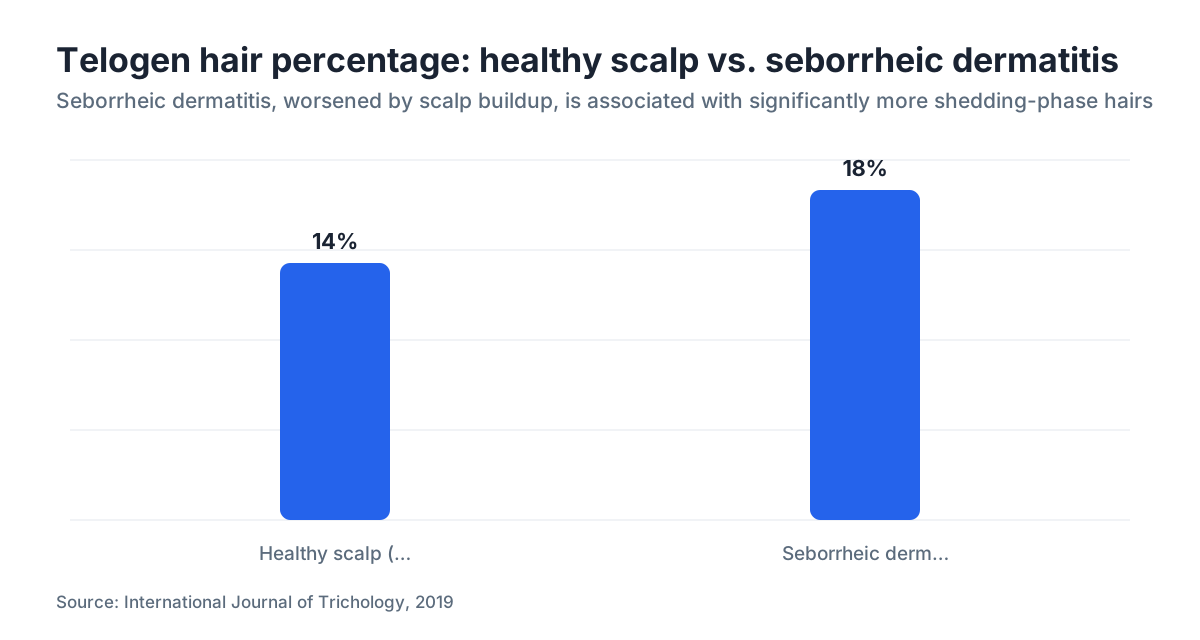
A 2019 study in the International Journal of Trichology found that scalp seborrheic dermatitis, which product buildup can worsen, was associated with roughly 28% more telogen (shedding-phase) hairs in affected patients than in controls [5]. That's one route by which heavy dry shampoo use could push hair toward shedding, even if the shampoo isn't the root cause.
The evidence is indirect but points the same direction. Nobody has good controlled data yet. Case reports and a plausible mechanism are the best we have.
Can dry shampoo clog hair follicles permanently?
Temporary follicular occlusion from product buildup is almost always reversible. Wash your hair properly, add a clarifying shampoo if needed, and the blockage clears. Follicles that were miniaturizing under a clogged opening can recover once the irritant is gone, as long as the follicle itself isn't scarred.
Scarring is the line you don't want to cross. Frontal fibrosing alopecia (FFA) destroys follicles permanently through inflammatory scarring. FFA incidence has climbed sharply over recent decades, a trend that still puzzles researchers. Some dermatologists suspect cosmetic product exposure (leave-on hair products, sunscreens, dry shampoos) plays some part, but that remains unproven [6].
For most people using dry shampoo normally, permanent follicular damage isn't a realistic outcome. The risk sits with a narrower group: people who use it daily, never properly wash, already have seborrheic dermatitis, or have early androgenetic alopecia (the genetic kind) where follicles are already miniaturized and more vulnerable to any added insult.
Scalp tenderness, flaking that looks different from your normal dandruff, or redness around follicles are signs to take seriously before they escalate.
How often is too often to use dry shampoo?
Most dermatologists suggest using dry shampoo no more than two or three times between proper washes, never as a permanent stand-in for washing. The AAD recommends washing often enough to keep the scalp clean, with frequency set by your hair type and how much sebum you produce [1].
The risk pattern looks like this. Someone with oily hair starts using dry shampoo daily to skip washing. Weeks pass. The scalp gets more congested. The hair looks thinner because it's weighed down and lying flat. If that person also carries the genetic setup for androgenetic alopecia, the scalp inflammation can speed up what was already underway.
A rough guideline that holds up in clinic: if your scalp itches, your roots smell, or you see more hair coming out when you finally wash, you've gone too long. Not precise, but scalp comfort is a decent real-time signal.
For anyone already dealing with hair loss, including telogen effluvium or a receding hairline, lean toward washing more often and treat dry shampoo as an occasional convenience rather than a daily habit.
Does the type of dry shampoo matter for hair and scalp health?
Yes, and the difference is real.
Aerosol sprays throw a fine mist that reaches the scalp easily. Powder dry shampoos applied by hand give you control over placement and tend to stay on the hair shaft. If scalp buildup is your concern, a powder brushed onto the mid-shaft beats spraying straight at your roots.
Formulation matters too. Some dry shampoos contain alcohols that dry the scalp, which triggers extra sebum production (your scalp overcompensates), which then calls for more dry shampoo. That cycle helps nobody. Talc-based formulas have carried their own safety questions over the years, though the evidence linking talc in hair products to specific health outcomes is much thinner than the benzene concern.
The benzene issue is separate and cleaner cut. In 2022 and 2023, the FDA identified benzene contamination in a number of aerosol dry shampoos and conditioners from Unilever brands including Dove, Nexxus, Suave, TIGI, and TRESemmé [4]. The FDA treats benzene as a carcinogen with no safe exposure level [10]. If your aerosol product dates to a recall period, checking the FDA's recall database is worth a few minutes [4].
| Dry shampoo type | Scalp exposure | Buildup risk | Notes |
|---|---|---|---|
| Aerosol spray | High | Higher | Benzene recall risk in some brands |
| Powder (brush-on) | Lower | Lower | More control over placement |
| Foam/mousse | Medium | Medium | Less common, similar to aerosol in practice |
| Tinted formulas | Varies | Varies | Pigment can worsen scalp buildup |
Who is most at risk for dry shampoo-related hair shedding?
Not everyone who uses dry shampoo daily will lose hair. Most won't. A few profiles carry more risk.
People with androgenetic alopecia already have follicles miniaturizing under DHT. Those follicles react more to any added scalp inflammation. If you're noticing thinning at the crown or a shifting hairline, this is the group where dry shampoo overuse is most likely to tip things the wrong way. Sorting out what causes hair loss for you first makes every product decision cleaner.
People with seborrheic dermatitis start with an inflamed scalp by default. Adding buildup on top is fuel on a fire. The Malassezia yeast that drives seborrheic dermatitis thrives in a sebum-rich, occluded environment.
People going through a hormonal shift (postpartum, perimenopausal, post-illness, or high stress) may already sit in a phase of telogen effluvium with a disrupted hair cycle. Scalp irritation there can drag out the shedding phase.
People with fine or low-density hair notice buildup more sharply, and they also tend to notice shedding generally, which makes it harder to separate the dry shampoo signal from background noise.
If you fall into any of these groups, the move is simple. Wash more, use dry shampoo less, and treat the underlying condition instead of masking it.
What does dermatologist advice actually look like on this topic?
Dermatologists lean cautious rather than alarmist. The position reflected in AAD guidance and published clinical opinion runs about like this: dry shampoo is fine occasionally, daily use is a problem, and it should never replace proper scalp hygiene [1].
Hair-focused dermatologists and trichologists have grown more vocal in recent years, partly because they're seeing more patients whose scalp buildup shows up as part of a hair loss complaint. The picture they describe is familiar. Someone starts using dry shampoo for convenience, stretches wash intervals longer and longer, and lands in the clinic with a congested, inflamed scalp and more shedding than their age would predict.
The fix in those cases is almost always the same. Build a proper washing routine, add a gentle or medicated shampoo if there's dermatitis, and watch whether shedding improves over two to three months. It usually does, which supports the idea that the loss was at least partly reversible and at least partly driven by the scalp itself.
If shedding keeps going after the routine is cleaned up, that's when the genetic question needs examining. Androgenetic alopecia doesn't retreat with better hygiene. Treatments like finasteride or minoxidil for men exist because the driver is hormonal, not topical.
How do you tell if your hair loss is from dry shampoo or something else?
This is the real question behind most searches on this topic.
Dry shampoo shedding has a few tells. It tends to be diffuse rather than patterned, so you're losing hair all over instead of specifically at the temples or crown. The scalp often shows visible flaking, redness, or tenderness. And when you stop the daily habit and wash properly for four to eight weeks, the shedding should drop noticeably.
If it doesn't drop, or if you see a clear pattern (hairline recession, crown thinning, a widening part), the cause is almost certainly genetic androgenetic alopecia or a systemic issue like thyroid disease, iron deficiency, or telogen effluvium from a stressful event months back.
The pull test is a rough clinical check. Gather 40 to 60 hairs between your fingers and pull with firm, gentle traction. More than 6 hairs coming free counts as a positive test and points to active shedding beyond the normal daily loss of 50 to 100 hairs [7]. Not diagnostic on its own, but a useful signal.
Blood tests for thyroid function, ferritin (stored iron), and complete blood count can rule out systemic causes. A dermatologist can run a dermoscopy exam to check for follicle miniaturization, which points to androgenetic alopecia rather than product-related shedding [11].
For a starting point before you book an appointment, the free AI hair analysis at MyHairline can help you gauge whether your thinning looks more like genetic loss or something diffuse and potentially reversible.
What happens to hair loss if you stop using dry shampoo?
For most people whose loss was driven mainly by scalp buildup and inflammation, dropping the daily habit and building a proper wash routine brings improvement within two to three months. Hair cycles run on that clock, so overnight results aren't coming.
The telogen (shedding) phase lasts roughly 100 days, and the anagen (growth) phase that follows takes months to become visible. Cutting scalp inflammation shifts follicles back toward normal cycling, but new growth won't show for weeks after you change course [8].
Don't panic if shedding briefly rises in the first few weeks after you switch to regular washing. That's the shock shed of clearing out accumulated buildup and disturbing resting hairs. It passes.
If you're still seeing significant thinning or pattern loss after three to four months of proper scalp care, the cause is something other than dry shampoo, and it needs a different plan. That might mean looking at finasteride and minoxidil together for genetic androgenetic alopecia, or working up systemic causes with a doctor.
The point worth keeping: dry shampoo scalp issues are among the more reversible causes of shedding. That's genuinely good news.
What should you use instead to manage oily hair without daily washing?
The goal for most heavy dry shampoo users is managing oiliness without stripping or over-washing. Better routes exist.
Your scalp can adapt to a less frequent wash schedule, but it takes a few weeks where things feel greasier than usual before sebum production settles down. Most dermatologists suggest washing every two to three days as a realistic target for oily scalps, rather than daily or almost never.
A clarifying shampoo once a week clears product buildup without wrecking the scalp barrier the way harsh daily washing can. Zinc pyrithione shampoos (the active ingredient in Head and Shoulders) have evidence for cutting Malassezia and scalp inflammation, which helps oiliness too [9].
If you still want dry shampoo, apply it the night before and brush it through in the morning. That shortens scalp contact time and lets it absorb without sitting on your follicles all day. Applying to the hair shaft rather than spraying at the root also cuts scalp exposure.
Hair loss supplements marketed for scalp health mostly lack strong evidence, so I wouldn't spend there before covering the basics. A clean scalp and a steady wash routine cost nothing and have evidence behind them.
If your loss turns out to be genetic, the MyHairline free scan can assess your pattern and point you toward treatments that actually have clinical data behind them.
The bottom line on dry shampoo and hair loss
Dry shampoo does not cause hair loss the way DHT does. It won't give you androgenetic alopecia if you weren't already predisposed. It can, though, worsen shedding in people with vulnerable follicles, and it can build a scalp environment that speeds up or drags out loss that might otherwise stay mild or temporary.
The reasonable read on the evidence: use dry shampoo occasionally, not daily, always as a bridge to your next proper wash rather than a replacement for it. If you're already dealing with any thinning, from a receding hairline to early pattern loss to unexplained diffuse shedding, keeping your scalp clean is one of the few free moves with clear logic behind it.
And if the shedding is real and persistent, go after the actual cause. Products like finasteride and minoxidil for men carry decades of clinical trial data. Skipping dry shampoo alone won't regrow hair that genetics already took.
Sources
- American Academy of Dermatology, Hair Loss Overview and Scalp Care Guidance
- Journal of the American Academy of Dermatology, case series on frontal fibrosing alopecia and cosmetic product use patterns, 2021
- FDA, MedWatch and FAERS Adverse Event Reporting System
- FDA, Recalls, Market Withdrawals and Safety Alerts, aerosol dry shampoo benzene contamination 2022-2023
- International Journal of Trichology, seborrheic dermatitis and telogen hair ratios, 2019
- NIH National Institute of Arthritis and Musculoskeletal and Skin Diseases, Hair Loss and Scalp Conditions
- American Academy of Dermatology, Hair Pull Test clinical guidance
- NIH National Library of Medicine, StatPearls: Hair Follicle Anatomy and the Hair Growth Cycle
- Journal of the American Academy of Dermatology, zinc pyrithione and seborrheic dermatitis evidence review
- FDA, Cosmetic Product Safety and Ingredient Guidance
- NIH National Institute of Arthritis and Musculoskeletal and Skin Diseases, Alopecia Areata and Scalp Conditions