

TL;DR: Hair loss in teenage females is common and usually treatable. The most frequent causes are iron deficiency, telogen effluvium from stress or illness, hormonal conditions like PCOS, and scalp disorders such as alopecia areata. A blood panel catches most of them. Many teens recover fully once the root cause is addressed. No treatment works without a diagnosis first.
How common is hair loss in teenage girls?
More common than most parents or pediatricians expect. A 2015 cross-sectional study published in the International Journal of Trichology found that hair and scalp disorders affected roughly 10 to 13 percent of adolescent girls seen in dermatology clinics, with shedding being the most reported complaint [1]. Alopecia areata alone has a lifetime incidence of about 2 percent, and half of those cases begin before age 20 [2].
The problem is underreported. Teenage girls often hide shedding with ponytails, dry shampoo, or extensions for months before anyone notices. By the time a dermatologist sees them, the underlying trigger may have been active for six months or more. That delay matters because some causes, like severe iron deficiency, cause cumulative harm if ignored.
Separate normal from abnormal first. Shedding 50 to 100 hairs per day is physiologically normal [3]. A teen who finds a few hairs on her pillow after sleeping on it is not losing her hair. The red flags are different: visible thinning at the part, a noticeably smaller ponytail circumference over months, bald patches, or hairline recession.
What causes hair loss in teenage girls?
There is no single answer. Teenage girls face a layered mix of hormonal, nutritional, physical, and autoimmune triggers that adults rarely encounter all at once. The most useful thing a clinician (or a worried parent) can do is resist assuming a cause before doing bloodwork.
Here are the eight most common causes, in rough order of frequency:
1. Telogen effluvium (TE) This is diffuse shedding that follows a physical or emotional shock by 6 to 16 weeks. Common triggers in teens include rapid weight loss, major illness, surgery, extreme academic stress, or starting a new medication. The follicles don't die. They prematurely enter the resting phase and then shed all at once. Most TE resolves within 6 months without treatment once the trigger is gone. For a deeper look at how this works, see our article on telogen effluvium. [4]
2. Iron deficiency (with or without anemia) Heavy menstrual periods are extremely common in teenagers, and iron loss from menstruation is the leading nutritional cause of hair loss in adolescent females. Ferritin below 30 ng/mL is considered suboptimal for hair cycling even when hemoglobin is technically normal [5]. That's why a full iron panel (more than a CBC) is standard of care for a female hair loss workup.
3. Polycystic ovary syndrome (PCOS) PCOS affects an estimated 6 to 12 percent of reproductive-age females in the U.S. [6]. Elevated androgens (testosterone and its metabolites) drive female-pattern thinning at the crown and part, and often appear alongside irregular periods, acne, and excess facial or body hair. PCOS-related hair loss can begin in mid-adolescence, sometimes before a formal PCOS diagnosis is made.
4. Thyroid dysfunction Both hypothyroidism and hyperthyroidism disrupt the hair growth cycle. Hashimoto's thyroiditis, the autoimmune form of hypothyroidism, has its peak onset in teenage girls and young women. The shedding is usually diffuse rather than patterned, and it typically reverses with thyroid hormone replacement.
5. Alopecia areata An autoimmune condition where the immune system attacks hair follicles, producing smooth, round bald patches. About 50 percent of cases begin before age 20 [2]. It can progress to total scalp loss (alopecia totalis) or body-wide loss (alopecia universalis), though most cases stay patchy and many resolve on their own. The American Academy of Dermatology publishes detailed guidance on diagnosis and treatment [2].
6. Traction alopecia Tight hairstyles, including braids, weaves, high ponytails, and extensions, pull chronically at the follicles. Over time the follicles scar. Early traction alopecia is reversible. Late-stage, scarred traction alopecia is not. The hairline, temples, and nape go first.
7. Trichotillomania A body-focused repetitive behavior where a person pulls out her own hair, often without fully realizing she's doing it. The patches are irregular, with broken hairs of different lengths. It is classified as an obsessive-compulsive related disorder and needs behavioral therapy, not dermatological treatment.
8. Nutritional deficiencies beyond iron Crash dieting, eating disorders, and highly restrictive diets (vegan without supplementation, extremely low-calorie plans) can deplete zinc, biotin, and protein to levels that disrupt hair growth. Biotin deficiency is genuinely rare in people eating a normal diet, but zinc deficiency is underdiagnosed in teens following plant-heavy diets [7].
What tests should a teenage girl get for hair loss?
A diagnosis from bloodwork beats guessing every time. The standard workup the American Academy of Dermatology recommends for female diffuse hair loss includes: complete blood count (CBC), serum ferritin, total iron-binding capacity (TIBC), thyroid-stimulating hormone (TSH), free T4, total testosterone, free testosterone, DHEA-S, prolactin, and a metabolic panel [3].
For teenage girls specifically, add anti-TPO antibodies (for Hashimoto's), and consider a 25-hydroxy vitamin D level, which is frequently low in adolescents and has been linked with alopecia areata in several observational studies.
A dermatologist may also examine the scalp with a dermatoscope. This handheld magnifier can distinguish alopecia areata (yellow dots, exclamation-mark hairs) from traction alopecia (peripilar casts, follicular dropout at margins) from pattern hair loss without a biopsy in most cases. A scalp biopsy is reserved for ambiguous cases where scarring alopecia is suspected.
The pull test is simple and informative. The clinician grasps about 60 hairs near the scalp and pulls firmly. More than 6 hairs extracted counts as a positive result indicating active shedding. Parents should not try this at home because technique matters.
One thing to know about PCOS evaluation: the Endocrine Society's 2023 guidelines recommend using the Rotterdam criteria, which require two of three features: irregular ovulation, elevated androgens on labs or clinically, and polycystic ovaries on ultrasound [6]. A single elevated testosterone does not confirm PCOS on its own.
Is female-pattern hair loss (androgenetic alopecia) possible in a teenager?
Yes, and it happens more often than most people assume. Female-pattern hair loss (FPHL), also called androgenetic alopecia, can begin in the mid-teens, particularly in girls with a strong family history on either parent's side or those with elevated androgens from PCOS or congenital adrenal hyperplasia.
FPHL in women follows the Ludwig scale rather than the Norwood scale. Thinning is diffuse at the crown and widens the part line, while the frontal hairline is usually preserved. That's what sets it apart from the receding hairline pattern more common in men.
For teenage girls with FPHL, the options are more limited than for adults because finasteride and dutasteride are contraindicated in premenopausal females who could become pregnant, given the risk of feminizing a male fetus. Topical minoxidil is the only FDA-approved topical treatment for female hair loss, but the FDA labeling approves it for women 18 and older, which leaves off-label use under 18 to clinical judgment [8]. Families need to have that frank conversation with a dermatologist.
Understanding the role of DHT in driving FPHL adds useful context. Our article on DHT blockers explains how these hormones interact with scalp follicles across sexes.
Can crash dieting or eating disorders cause teenage hair loss?
Yes, and this is one of the most common presentations a dermatologist sees in teenage girls aged 14 to 17. Severe caloric restriction causes telogen effluvium by depriving follicles of protein and micronutrients. The American Academy of Dermatology notes that protein malnutrition can shift follicles into the resting phase within weeks of a drastic diet [3].
The shedding typically appears 6 to 16 weeks after the dietary restriction began. So a teen who started a crash diet in September may notice heavy shedding in November. That delay confuses families who don't connect the hair loss to the diet.
Eating disorders deserve special mention. In anorexia nervosa, diffuse hair thinning is one of the most reliable physical signs, because hair follicles are among the first non-essential tissues the body sacrifices when it's calorie-deprived. A 2017 review in the Journal of the American Academy of Dermatology found that hair loss affects more than 50 percent of patients with anorexia [9]. Treatment here is nutritional rehabilitation first, hair restoration second. No topical product reverses follicle starvation while the caloric deficit continues.
Zinc gets its own line. Zinc is heavily involved in DNA replication within follicle cells, and vegan or vegetarian teens who aren't supplementing carefully are at real risk. Serum zinc below 70 mcg/dL is considered deficient [7]. Supplementing 25 to 40 mg elemental zinc per day has shown benefit in small trials for deficiency-related hair loss, but high-dose zinc also blocks copper absorption, so a physician should supervise.
For a broader look at what causes hair loss beyond nutrition, see our guide on what causes hair loss.
What treatments are safe for hair loss in teenage girls?
Treatment follows diagnosis. Using minoxidil on a teenager losing hair from iron deficiency doesn't fix the iron deficiency and delays the real solution. Here's what the evidence actually supports:
Treating the root cause first Iron supplementation, thyroid medication, PCOS management (often with oral contraceptives or spironolactone in older teens), and stress reduction are all evidence-backed first steps with low risk and high potential payoff. These come before any hair-specific medication.
Topical minoxidil The 2% and 5% topical formulations (solution and foam) are FDA-approved for female hair loss, with the labeling indicating use for women over 18 [8]. In practice, many dermatologists use it off-label in 16 to 17-year-olds with progressive FPHL after a full discussion of risks and benefits. The evidence base for minoxidil in women comes mostly from adult trials. A 2004 multicenter controlled trial found that 5% minoxidil was significantly more effective than 2% in women with FPHL [10]. Side effects can include scalp irritation and unwanted facial hair growth. See our minoxidil side effects article for detail.
Spironolactone An off-label anti-androgen used frequently in adolescent dermatology for acne and PCOS-related hair loss. It works by blocking androgen receptors in the scalp. Contraception is typically required given the teratogenic risk. A 2015 retrospective study in JAAD showed improvement in hair density in over 74 percent of women who took at least 100 mg/day for 12 months [11]. This is a clinical decision for a dermatologist or endocrinologist, not a self-care option.
Corticosteroids for alopecia areata Intralesional corticosteroid injections remain the first-line treatment for patchy alopecia areata in adolescents, according to AAD guidance [2]. Topical high-potency steroids are used in younger or more needle-averse patients. The FDA-approved JAK inhibitor baricitinib (Olumiant) is now indicated for severe alopecia areata in adults 18 and older [12]. Ritlecitinib (Litfulo) was approved in 2023 for adults and adolescents 12 and older with severe AA, which stands out as one of the few AA-specific approvals that explicitly includes teenagers [12].
What to skip Over-the-counter biotin supplements are marketed hard to teenagers but have no proven benefit in people without a biotin deficiency, which is rare. The FDA has warned that high-dose biotin can interfere with troponin lab tests, producing falsely low readings that could affect cardiac diagnosis [13]. Hair gummies fall into the same bucket: high markup, weak evidence.
For supplements with actual data behind them, our article on hair loss supplements separates real evidence from marketing.
Should a teenage girl see a dermatologist or her pediatrician first?
Either can order the initial blood panel, but a board-certified dermatologist with trichology experience gives a more definitive answer. The reality is that most general pediatricians have limited training in hair loss and may wave off early thinning as normal, especially if the teen is otherwise healthy.
If the initial bloodwork is normal and the shedding continues past 3 months, ask for a dermatology referral. If there are also signs of irregular periods, acne, and excess hair growth, add an endocrinology or gynecology referral given the PCOS overlap.
If budget or access is a barrier, a telehealth dermatology service that reviews scalp photos and orders bloodwork remotely is a reasonable first step. MyHairline's free AI hair analysis at /scan can help you see whether your pattern matches a recognized cause and give you a baseline to bring to your appointment, though it does not replace a clinical diagnosis.
Documentation matters. Take photos of the part, the hairline, and the ponytail cross-section every 4 to 6 weeks. Quantitative change over time convinces a clinician far more than a description of what you remember from last year.
Can stress or anxiety cause hair loss in teens?
Yes, and it is one of the most direct mind-to-body links in dermatology. Psychological stress activates the hypothalamic-pituitary-adrenal (HPA) axis, raises cortisol, and can push a larger-than-normal share of follicles into the telogen (resting) phase early. A 2021 Nature paper from researchers at Harvard confirmed in mouse models that chronic stress elevates corticosterone and suppresses hair follicle stem cell activation, giving a biological mechanism for what clinicians have observed for decades [4].
For teenagers, high-stakes exam periods, social trauma, family disruption, or a breakup all show up as triggers before TE. The shedding appears 2 to 4 months after the stressor, which often makes the connection hard to draw without asking specifically.
The good news is that stress-induced TE almost always reverses once the stressor resolves and nutritional status is adequate. The frustrating part is the timeline. Even after the stressor is gone, shedding may continue for another 3 to 6 months before hair starts visibly regrowing, because the telogen phase itself lasts that long.
Trichotillomania deserves a separate note here because it's often mistaken for stress-induced TE but needs completely different management. Cognitive behavioral therapy and habit reversal training are the treatments with the best evidence [3]. No dermatological intervention addresses the behavioral root.
Does birth control affect hair loss in teenage girls?
It can cut both ways. This is one of the genuinely nuanced areas where the answer depends entirely on which pill and which person.
Some combined oral contraceptives (COCs) contain progestins with higher androgenic activity (like levonorgestrel and norgestrel). In women with a genetic sensitivity to androgens, these can accelerate female-pattern thinning. Other COCs contain anti-androgenic progestins (drospirenone, cyproterone acetate, desogestrel) and are actually used to reduce androgen-driven hair loss in PCOS.
The FDA labeling for progestins with higher androgen indexes lists hair loss as a possible side effect [8]. If a teenage girl notices faster thinning after starting a new pill, the timing is the clue: contraceptive-related TE typically begins 2 to 4 months after starting.
On the other side, COCs that lower free testosterone are sometimes prescribed specifically to treat hormonal hair loss in teens with PCOS or elevated androgens. The net androgenic activity of a given pill matters more than whether it's a COC at all. A prescribing gynecologist or endocrinologist can work this out based on the specific progestin.
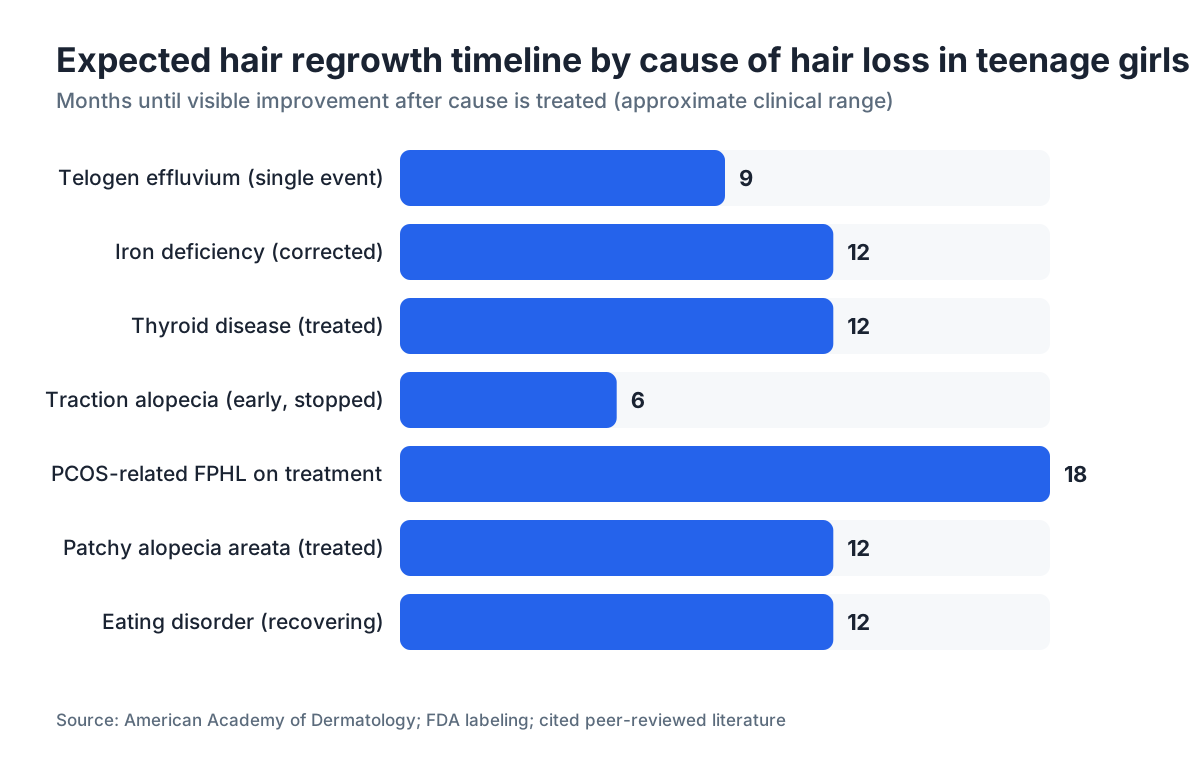
How long does it take for hair to grow back in a teenage girl?
The timeline depends entirely on what caused the hair loss and whether the cause has been corrected.
| Cause | Typical recovery timeline once treated |
|---|---|
| Telogen effluvium (single event) | 3 to 6 months for shedding to stop; 6 to 12 months for visible regrowth |
| Iron deficiency corrected | 4 to 6 months for shedding to slow; up to 12 months for density improvement |
| Thyroid disease treated | 6 to 12 months |
| Patchy alopecia areata | Variable; 30 to 50% regrow within 1 year without treatment [2] |
| Traction alopecia (early-stage) | 3 to 6 months after stopping the hairstyle |
| PCOS-related FPHL on treatment | 6 to 18 months; may require ongoing medication |
| Eating disorder (recovering) | 6 to 12 months after nutritional rehabilitation |
Hair grows about 6 inches per year (roughly 1.25 cm per month), so even after a follicle successfully restarts, visible length takes time. The scalp may feel less thin before the hair looks noticeably longer, because new shorter hairs raise density before they reach full length.
If there's been real scarring (late traction alopecia, severe tinea capitis, or scarring alopecias like lichen planopilaris), regrowth in those zones is unlikely regardless of treatment. That's why early intervention matters disproportionately in teenage hair loss.
Are hair transplants an option for teenage girls?
Almost never at this age, and most reputable surgeons won't perform them on patients under 18. The reasons are both practical and ethical.
Hair transplants work by moving follicles from a permanent donor zone (usually the back of the scalp) to thinning areas. In a teenager whose loss pattern is still evolving, the areas needing coverage will keep changing, so transplanted grafts may eventually look isolated or patchy as native hair around them keeps thinning. You cannot transplant your way ahead of progressive loss.
For conditions like traction alopecia scarring, where the loss is stable and scarred, some surgeons consider transplant procedures in young adults (typically 20 or older), but this is highly individualized. For FPHL or alopecia areata, transplant is rarely appropriate at any stage because the underlying autoimmune or hormonal disease stays active.
A full overview of who is and isn't a candidate for surgery is in our hair transplant article. For teenage girls, the answer is almost always the same: exhaust medical options first, and revisit surgical options at 25 or older once the pattern has stabilized.
What should parents do if their teenage daughter is losing hair?
Take it seriously without catastrophizing. Hair loss is distressing at any age but especially at 14 to 17, when appearance sits at the center of social identity. Waving it off as "just stress" without investigating delays real treatment.
Here's a practical step-by-step:
- Start a photo log. Part, hairline, ponytail cross-section, every 4 weeks.
- Book a blood panel through the pediatrician: CBC, ferritin, TIBC, TSH, free T4, testosterone (total and free), DHEA-S, prolactin, metabolic panel. Ask for results in numbers, more than "normal."
- Ask about recent changes: new medications (especially hormonal contraceptives, isotretinoin, or antidepressants), significant weight loss, illness, high-stress periods, or diet changes.
- Look at the hairstyle history. Daily tight ponytails or braids on a teen with thinning temples point to traction alopecia.
- If the blood panel is normal, get a dermatology referral for a scalp examination.
- Check in about mental health gently. Trichotillomania often rides alongside anxiety and gets missed for years.
For an independent starting point, MyHairline's AI scan at /scan gives a free pattern analysis that can help frame the conversation with a dermatologist.
Don't buy products before a diagnosis. The supplement aisle is full of items marketed straight at teenage girls worried about their hair, and very few carry credible clinical evidence. Spending money on biotin gummies while an iron deficiency goes undetected is a genuinely harmful delay.
Sources
- International Journal of Trichology, 2015, Adolescent scalp disorder prevalence study
- American Academy of Dermatology, Alopecia Areata overview
- American Academy of Dermatology, Hair Loss Diagnosis and Treatment
- Nature, 2021, Choi et al., Stress and hair follicle stem cell inhibition
- Journal of the American Academy of Dermatology, Trost et al., Iron and hair loss in women
- Endocrine Society, PCOS Clinical Practice Guideline 2023
- National Institutes of Health Office of Dietary Supplements, Zinc Fact Sheet for Health Professionals
- Journal of the American Academy of Dermatology, 2017, review of dermatological manifestations of eating disorders
- Journal of the American Academy of Dermatology, 2004, multicenter trial of 5% vs 2% minoxidil in women with FPHL
- Journal of the American Academy of Dermatology, 2015, retrospective study of spironolactone in female hair loss