

TL;DR: Telogen effluvium is a temporary but alarming form of diffuse hair shedding triggered when a physical or emotional shock pushes large numbers of hairs into the resting phase at once. Most cases clear on their own within 3 to 6 months once the trigger is gone. Chronic cases lasting beyond 6 months need investigation for an ongoing cause. No single cure exists, but several treatments meaningfully speed recovery.
What is telogen effluvium, exactly?
Telogen effluvium (TE) is a disruption of the normal hair growth cycle. An unusually large share of scalp hairs get abruptly shifted out of the active growing phase (anagen) into the resting phase (telogen), then shed roughly two to three months later [1]. The name comes straight from the biology: telogen is the resting stage, and effluvium is Latin for outflow.
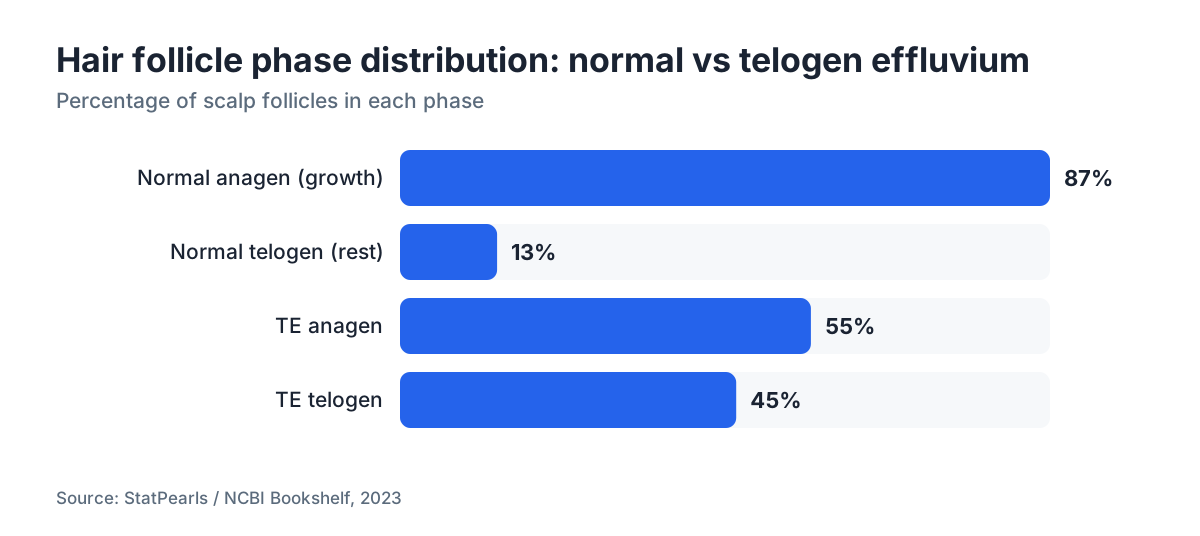
Normal scalp hair cycles continuously. At any given moment, about 85 to 90 percent of your roughly 100,000 scalp hairs are in the anagen (growth) phase, which lasts two to six years. Around 10 to 15 percent sit in telogen, a resting phase lasting about three months, before they fall out and a new hair starts below. You normally shed 50 to 100 hairs a day, and you don't notice because the shedding is staggered [1].
In TE, something stresses the system and a large cohort of hairs synchronise their exit from anagen all at once. Two to three months later they fall out together. The result is diffuse thinning across the whole scalp, handfuls of hair in the shower, clumps on the pillow, and a genuinely frightening amount of hair on the bathroom floor. The scalp itself looks normal. There's no scarring and no inflammation visible to the naked eye [2].
TE is one of the most common causes of hair loss in otherwise healthy adults. It affects women more often than men, partly because pregnancy, postpartum hormonal shifts, and restrictive dieting are among the leading triggers. Men get it too [2].
What causes telogen effluvium?
The trigger is almost always something that happened two to four months before the shedding starts, which is why people struggle to connect cause and effect. By the time the hair is falling out, the original stress feels like old news.
The best-documented triggers include [1][2][3]:
- Postpartum hormonal shift. Pregnancy keeps many hairs locked in anagen because of elevated estrogen. After delivery, estrogen drops sharply and those hairs exit anagen at the same time. Postpartum TE is the single most common form and usually peaks around three to four months after birth.
- High fever or serious systemic illness. Hospitalisation, COVID-19, influenza, and other acute illnesses are strongly linked to TE. Studies published after the COVID-19 pandemic documented TE as one of the most frequent post-acute effects [3].
- Major surgery or physical trauma. The physiological stress of general anaesthesia and tissue damage is enough to trigger the shift.
- Rapid or extreme weight loss. Crash dieting, bariatric surgery, or any significant caloric deficit can cause TE because the body deprioritises hair growth when energy is scarce.
- Iron deficiency and nutritional deficits. Serum ferritin below roughly 30 ng/mL turns up often in women with TE, though sorting causation from correlation is genuinely difficult [4]. Zinc and protein deficiency are also implicated.
- Thyroid dysfunction. Both hypothyroidism and hyperthyroidism can produce diffuse shedding. A thyroid panel is standard workup for persistent TE.
- Psychological stress. Severe chronic stress or acute psychological trauma can trigger TE, though the evidence here is more observational than mechanistic.
- Stopping certain medications. Oral contraceptives, retinoids, beta-blockers, anticoagulants, and some antidepressants are known culprits. Hormonal contraceptive withdrawal can mimic the postpartum estrogen-drop pattern [2].
Your own trigger matters because the best treatment is almost always removing or correcting it. Applying minoxidil to a scalp that's depleted in iron, for instance, does less than correcting the iron deficit first.
For a broader look at the many causes of hair thinning, what causes hair loss walks through the full landscape.
How is telogen effluvium different from androgenetic alopecia?
This is the question most people should ask and often don't. The two conditions can coexist, and that overlap is genuinely confusing.
| Feature | Telogen effluvium | Androgenetic alopecia |
|---|---|---|
| Pattern | Diffuse, all over scalp | Patterned (temples, crown in men; central part in women) |
| Onset | Sudden, 2-4 months post-trigger | Gradual, over years |
| Shed hairs | Club-shaped white root bulb | Miniaturised, thin shaft |
| Scalp appearance | Normal | Follicular miniaturisation visible under dermoscopy |
| Typical duration | 3-6 months (acute) | Progressive and permanent without treatment |
| Reversibility | Usually fully reversible | Requires ongoing treatment to maintain |
The shed hairs tell a useful story. In TE the fallen hairs usually have a small white bulb at the root (telogen club hairs). In androgenetic alopecia the hairs that fall are often thin and short because the follicles have been miniaturising. A dermatologist can confirm this with a trichoscope or a simple hair pull test.
Why does it matter? Androgenetic alopecia does not resolve on its own, and treating a TE episode with, say, finasteride makes little sense unless there's an underlying androgenetic component driving the pattern. Misidentifying the condition is the single biggest reason people spend money on the wrong treatment.
How long does telogen effluvium last?
Acute TE, the kind triggered by a single identifiable event, typically runs its course in three to six months after the shedding begins. Since the shedding itself starts two to three months after the trigger, the whole episode from trigger to resolution often spans six to nine months [1][2].
Most people recover full density. The follicles aren't destroyed. They're dormant. Once they re-enter anagen, new hairs grow back at roughly half an inch per month, so visible regrowth often takes another three to six months after the shedding stops.
Chronic telogen effluvium is a different animal. By convention, shedding is considered chronic if it lasts beyond six months [2]. It's less common but genuinely distressing, and it almost always points to a persistent trigger that hasn't been found or fixed. Common culprits for chronic TE include subclinical thyroid disease, ongoing iron deficiency, low-grade chronic illness, persistently restrictive eating, or an undiagnosed androgen-related trigger.
There's also a poorly understood condition sometimes called idiopathic chronic telogen effluvium. It tends to affect women in their 30s to 60s, fluctuates, and can last years without a clear cause. The honest position is that the research on this variant is limited and management is difficult.
Shedding that doesn't slow down after nine to twelve months warrants a full dermatology workup including ferritin, a thyroid panel, complete blood count, and in some cases a scalp biopsy.
How is telogen effluvium diagnosed?
There is no single definitive test. Diagnosis is largely clinical, meaning your doctor takes a history, examines the hair and scalp, and rules out other causes [2].
The hair pull test is a simple clinical tool. The examiner grasps about 60 hairs between thumb and forefinger and pulls with steady gentle traction. Pulling out more than 6 hairs counts as a positive result, suggestive of active shedding [8]. Useful, but imperfect.
Dermoscopy (trichoscopy) can show whether shed hairs have the telogen club shape versus the miniaturised thin hairs of androgenetic alopecia. That distinction alone changes the treatment conversation entirely.
Blood work matters. A reasonable baseline panel includes ferritin (more than haemoglobin), TSH with free T4, complete blood count, a metabolic panel, and vitamin D. Some clinicians add zinc and total protein, especially in anyone with a history of restrictive eating.
Scalp biopsy is reserved for cases where the diagnosis stays uncertain after everything else. Histology in TE shows an increased proportion of telogen follicles (above 25 percent) without scarring or significant inflammation [2].
If you want a quick first look at your pattern before booking a dermatology appointment, the free AI scan at MyHairline can help you characterise what you're seeing. It isn't a substitute for bloodwork or a clinical exam.
What are the actual treatments for telogen effluvium?
Here's the honest answer: for acute TE triggered by a one-time event, the most effective treatment is waiting while you correct whatever caused it. No topical or oral agent has been shown in rigorous trials to dramatically shorten the natural course of acute TE. That doesn't mean you're helpless.
Correct the trigger first. If your ferritin is low, supplementing iron under medical supervision is the most evidence-backed step you can take. A 2013 study in the Journal of the American Academy of Dermatology found iron deficiency was significantly associated with diffuse telogen hair loss in premenopausal women [4]. If your thyroid is off, treating that comes before anything else.
Minoxidil. Minoxidil is the only topical agent with FDA approval for hair loss. Its trials focused on androgenetic alopecia, but clinicians use it off-label in TE to help follicles re-enter anagen [5]. The 2% and 5% topical formulations and oral low-dose minoxidil (typically 0.25 to 1.25 mg/day in women, 2.5 to 5 mg/day in men) are all used. The evidence for TE specifically is mostly case series rather than randomised controlled trials, so temper your expectations. Even so, minoxidil is probably the most reasonable pharmaceutical option while you wait for natural recovery. Read more about how it works in does minoxidil work and the oral minoxidil overview if you're considering the pill.
One caution: minoxidil can cause its own initial shedding phase as it moves dormant hairs out of latent telogen, which is alarming in someone already dealing with TE. For a full breakdown of what to expect, minoxidil side effects covers this well.
Nutritional correction. Beyond iron, protein intake matters. Hair is mostly keratin, a protein, and severe protein restriction measurably slows hair growth. Zinc deficiency produces a distinct type of hair loss but can overlap with TE in cases of severe dietary restriction. Hair loss supplements covers the evidence on what's worth taking and what isn't.
Finasteride. For men who have TE on top of an underlying androgenetic alopecia pattern, finasteride addresses the androgen-driven part but does nothing specific for the TE mechanism. Using it in a man with pure TE and no androgenetic pattern is unlikely to help. Women of childbearing age cannot take finasteride due to teratogenicity risk.
Platelet-rich plasma (PRP). Small trials suggest PRP may speed follicular recovery, but the evidence base is thin and methods vary widely between studies. It's expensive and not covered by insurance. Reasonable to consider after six months of no improvement, not as a first step.
Things that don't work or waste money. Ketoconazole shampoo does nothing for TE specifically (it targets sebum and Malassezia, relevant to androgenetic alopecia, not TE). Biotin supplements are almost universally useless unless you have a documented biotin deficiency, which is rare. High-dose biotin can also interfere with thyroid blood tests, which is exactly what you don't want if you're working up TE.
Is there a cure for telogen effluvium, including the chronic form?
The word 'cure' is a problem here. Acute TE essentially cures itself when the trigger resolves. That's not a treatment, that's the natural history of the condition. What treatments do is support the process or address contributors you can change.
Chronic telogen effluvium treatment is harder and the evidence thinner. The first step is exhaustive trigger-hunting. A dermatologist who takes a detailed diet, medication, illness, hormonal, and stress history can often find something correctable. Persistent low-grade iron deficiency is probably the most commonly missed culprit, particularly in women who have heavy periods.
If no trigger turns up, management of chronic TE lands on minoxidil (topical or oral) as the most consistently used intervention, with the understanding that it manages rather than cures. Some clinicians add spironolactone in women with any androgenetic component, since it has anti-androgen effects that may reduce the hair's susceptibility to shedding triggers.
The honest position on a chronic telogen effluvium cure: nobody has one. The closest the literature gets is documenting spontaneous remission over one to seven years in idiopathic chronic TE, with a 2019 review in the International Journal of Dermatology noting that most cases eventually stabilise even without definitive treatment [6]. Cold comfort, but honest.
For anyone whose chronic TE coexists with a patterned androgenetic component, the combination of finasteride and minoxidil targets both mechanisms at once and is worth discussing with a dermatologist.
Does telogen effluvium grow back, and what does recovery look like?
Yes. In the vast majority of acute cases the hair grows back. The follicles are intact. Once they re-enter anagen, growth restarts at roughly 1 to 1.5 cm per month.
The catch is timing. Most people don't notice regrowth until three to six months after the shedding stops, because the new hairs have to grow long enough to be visible and to change the overall density of the scalp. Short, fine regrowth at the hairline or temples is often the first visible sign things are improving.
Full visible recovery in density can take a year or more from the original trigger. This timeline frustrates people enormously, and it's a major reason patients abandon treatment or lose faith that recovery is happening. Patience, genuinely, is part of the protocol.
Photographs under the same lighting at monthly intervals are the best low-cost monitoring tool. Clinical impressions are unreliable over short periods because shedding can slow while density looks flat for weeks before new growth catches up.
If hair hasn't visibly started returning twelve months after the shedding stopped, that warrants re-evaluation. Either the trigger is ongoing, a second condition (like androgenetic alopecia) is progressing underneath, or the diagnosis should be revisited.
Can telogen effluvium happen after COVID-19 or other illnesses?
Yes, and this got far more attention after 2020. Post-COVID TE was documented in multiple peer-reviewed studies, with one analysis in The Lancet finding hair loss in about 22 percent of COVID-19 survivors at six months follow-up [3]. The pattern fits the classic TE timeline: acute infection, then shedding two to three months later.
The mechanism is the same as any systemic illness trigger. The physiological stress of high fever, inflammation, and immune activation pushes hair follicles prematurely into telogen. COVID-19 doesn't cause a special or more severe form of TE. It just happened to hit enormous numbers of people at once, which made post-illness TE suddenly very visible in the data.
Post-viral TE generally behaves like any other acute TE. Most people recover within six months. The main practical concern is ruling out ongoing nutritional deficits (COVID illness is associated with reduced appetite and sometimes zinc deficiency) that might sustain the shedding past the acute phase.
The same logic applies to post-flu TE, post-surgical TE, and TE following any serious systemic illness. The underlying biology is identical. Only the trigger differs.
Telogen effluvium in women: is it different?
TE is diagnosed more often in women, and some triggers are sex-specific. Postpartum TE, post-oral-contraceptive TE, and TE from heavy menstruation causing iron deficiency are all female-predominant presentations [2].
The postpartum form deserves special mention because it's so common and so distressing. Estrogen is elevated during pregnancy, which extends the anagen phase and reduces normal daily shedding. Women often have noticeably fuller hair while pregnant. After delivery, estrogen drops sharply and the extended anagen cohort of hairs all move to telogen together. Shedding peaks around three to four months postpartum and can feel catastrophic, but it's almost universally self-limiting. It resolves by nine to twelve months in the overwhelming majority of cases [7].
Hormonal contraceptives create a subtler version of the same pattern. Starting or stopping high-androgen-index pills can trigger TE. That's why a detailed contraceptive history is part of any workup for female hair loss.
Women are also at higher risk of iron deficiency as a TE trigger because of menstrual blood loss. Ferritin testing is close to non-negotiable in a woman with diffuse shedding. Haemoglobin alone is insufficient, since ferritin drops before anaemia shows up clinically [10].
For women who also have a patterned (androgenetic) component to their loss, the treatment conversation gets more complex. Minoxidil stays the main topical option. Finasteride is not appropriate for women who may become pregnant. DHT blockers such as spironolactone are sometimes used off-label in postmenopausal women or women using reliable contraception.
When should you see a doctor, and what should you expect?
If you're losing more than roughly 150 to 200 hairs a day and it's been going for more than two months, see a dermatologist. Sooner if the shedding comes with other symptoms: fatigue, cold intolerance, irregular periods, weight change, or if the loss is clearly patterned rather than diffuse.
A good dermatologist takes a detailed history going back four to six months, examines the scalp with or without a dermatoscope, and orders bloodwork. Expect the appointment to run at least 20 to 30 minutes if it's being done properly. If a provider looks at your scalp for 30 seconds and prescribes minoxidil without bloodwork, push back or get a second opinion.
The bloodwork you should expect includes serum ferritin (more than iron saturation), TSH, free T4, CBC, and a basic metabolic panel. Some dermatologists add DHEA-S and free testosterone in women with any androgen-excess symptoms.
If you want a structured way to document your hair pattern before the appointment, standardised photos (same lighting, same camera distance, same parting) give your doctor something to compare against. The free AI analysis at MyHairline can help you characterise your pattern and generate consistent photos to bring.
For shedding that's clearly post-COVID, postpartum, or follows an obvious trigger in an otherwise healthy person, an aggressive early workup is less urgent. Watchful waiting for three months is reasonable before starting treatment. If there's no improvement by six months, that's when the workup becomes non-negotiable.
Sources
- StatPearls, NCBI Bookshelf - Telogen Effluvium
- American Academy of Dermatology - Hair loss types: Alopecia areata overview and telogen effluvium guidance
- The Lancet - 6-month consequences of COVID-19 in patients discharged from hospital
- Journal of the American Academy of Dermatology - Iron deficiency and hair loss
- MedlinePlus, U.S. National Library of Medicine - Minoxidil Topical
- International Journal of Dermatology - Chronic telogen effluvium review
- DermNet NZ - Telogen effluvium
- NCBI PubMed - Evaluation and Diagnosis of Hair Loss (Dermatologic Clinics)
- National Institutes of Health, Office of Dietary Supplements - Iron Fact Sheet for Health Professionals
- NCBI PubMed - Oral minoxidil in female pattern hair loss and telogen effluvium (Journal of the European Academy of Dermatology and Venereology)