

TL;DR: Topical minoxidil's most common side effects are scalp irritation and temporary shedding in the first few weeks. Oral minoxidil carries more systemic risks, especially fluid retention, low blood pressure, and unwanted facial hair. Serious reactions are rare but real. Most people tolerate the topical form well; oral needs closer monitoring, particularly at doses above 2.5 mg.
What are the most common side effects of minoxidil?
The side effects you're most likely to run into depend heavily on whether you're using minoxidil topically or taking it by mouth. Same molecule, two different risk profiles.
For topical minoxidil, the most frequently reported problems are local: scalp dryness, flaking, itching, and redness at the application site. A 2002 review published in the Journal of the American Academy of Dermatology found contact dermatitis occurred in roughly 7% of users, often traced to propylene glycol in the solution formulation rather than the minoxidil itself. Switching to the foam version (which typically lacks propylene glycol) resolves this for many people. [1]
For oral minoxidil, the concerns shift to your cardiovascular and fluid systems. Fluid retention, low blood pressure on standing (orthostatic hypotension), and a faster resting heart rate are the side effects that matter most clinically. These are dose-related, meaning they get more likely as the dose climbs. At the low doses used for hair loss (0.625 mg to 5 mg daily), serious events are uncommon. They do happen.
There's also the shedding issue, which confuses almost everyone who starts minoxidil. Read the next section before you stop the drug because of it.
Why does minoxidil cause hair shedding at first?
Early shedding is probably the single most common reason people quit minoxidil too soon, and it's largely a misread of what's happening.
Minoxidil pushes resting (telogen) hairs out of their follicles earlier than they would have left on their own. Those hairs were already headed for the drain. What minoxidil does is speed up their exit so the follicle can start a new growth cycle sooner. The result is a temporary jump in shedding that typically starts within two to eight weeks of beginning treatment and lasts one to three months. [2]
It looks like the drug is making things worse. It isn't. If you check out what telogen effluvium actually means, you'll see this pattern is well documented and temporary.
Still shedding heavily after three months? Or the shedding started well into treatment rather than at the beginning? That's worth discussing with a dermatologist. That's a different problem.
What are the specific side effects of topical minoxidil?
Topical minoxidil side effects are mostly local and manageable. Here's what actually shows up in the clinical data.
Scalp irritation and dermatitis affect somewhere between 3% and 7% of users in most studies, with the propylene glycol carrier in the 2% and 5% solutions being a more common culprit than minoxidil itself. [1] If you've switched to the foam and still have significant scalp issues, talk to a dermatologist before pushing through.
Unwanted facial hair growth (hypertrichosis) is reported by a meaningful minority of women using topical minoxidil, typically appearing on the forehead and cheeks. It usually goes away when the drug is stopped. The mechanism is thought to be accidental transfer from hands or pillowcases rather than systemic absorption, so applying at night and washing hands thoroughly cuts it down a lot. [3]
Systemic absorption from topical application is low but not zero. The FDA's prescribing information notes that less than 2% of a topically applied dose reaches the systemic circulation in studies with the 5% solution. [4] For most healthy people, that's inconsequential. For someone with significant cardiovascular disease, it's worth flagging to their cardiologist.
Allergic contact dermatitis to minoxidil itself (not the carrier) is rare but documented. Patch testing can confirm it if you're unsure whether you're reacting to the drug or the vehicle.
For a broader look at how the topical form works, the topical minoxidil explainer covers application, concentration choices, and what the evidence actually says about regrowth.
What are the side effects of oral minoxidil?
Oral minoxidil side effects are a different conversation entirely, and anyone considering the pill form deserves the full picture.
Minoxidil was originally approved by the FDA in 1979 as a treatment for severe hypertension, at doses of 10 mg to 40 mg per day. [4] The hair loss doses used today (typically 0.625 mg to 5 mg) are a fraction of that, which is why serious cardiovascular events are uncommon at hair-loss doses. But the drug is still a potent vasodilator and deserves respect.
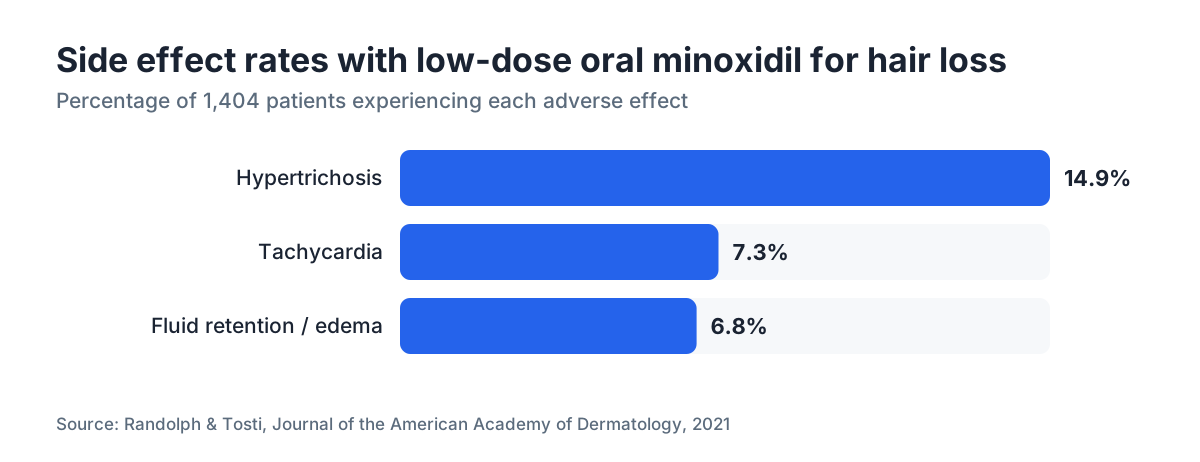
Fluid retention and edema. This is the most clinically significant risk. Minoxidil makes the kidneys hold onto sodium and water. At antihypertensive doses, doctors routinely combine it with a diuretic (usually furosemide) and a beta-blocker to counteract this. At hair-loss doses, most people don't need those additions, but some develop noticeable ankle swelling, puffiness around the eyes, or rapid weight gain from retained fluid. A 2021 retrospective study of 1,404 patients taking low-dose oral minoxidil for hair loss found fluid retention in about 6.8% of participants. [5]
Hypertrichosis (body hair growth). This is the most common side effect people actually notice at low doses. The same 2021 study found hypertrichosis in roughly 14.9% of patients. [5] It's not dangerous, but it's bothersome, particularly for women growing more visible hair on the face, arms, or chest.
Orthostatic hypotension. Standing up quickly and feeling dizzy or lightheaded is a real risk with any vasodilator. It's more likely at higher doses and in people who are already taking blood pressure medication, who are dehydrated, or who are older.
Tachycardia. A faster resting heart rate is a reflex response to the drop in vascular resistance minoxidil causes. In the 2021 study, tachycardia occurred in about 7.3% of patients. [5] For most healthy people this is a nuisance rather than a danger, but anyone with an arrhythmia, heart failure, or coronary artery disease needs to think very carefully about this drug.
Pericardial effusion. Fluid around the heart is listed in the original FDA labeling as a rare but serious adverse event, associated with longer-term use at higher doses. It's rarely reported at hair-loss doses, but it's the reason oral minoxidil isn't a drug to take casually without medical oversight. [4]
Rare but documented: hypertrichosis affecting eyelashes. A number of case reports describe significant eyelash elongation (trichomegaly) with oral minoxidil. Not dangerous, but unexpected if you don't know it can happen.
The oral minoxidil deep-explainer covers dosing and who's actually a good candidate.
Oral minoxidil vs topical minoxidil: which has worse side effects?
This is the comparison most people actually want, and the honest answer is: oral minoxidil has a broader and more clinically significant side effect profile, but topical minoxidil causes more local skin problems.
The table below summarizes the main differences based on clinical data.
| Side effect | Topical minoxidil | Oral minoxidil |
|---|---|---|
| Scalp/skin irritation | 3-7% [1] | Rare |
| Initial shedding | Common (temporary) | Common (temporary) |
| Hypertrichosis (body/face) | Uncommon, mainly transfer-related | ~15% [5] |
| Fluid retention/edema | Very rare | ~7% [5] |
| Tachycardia | Very rare | ~7% [5] |
| Orthostatic hypotension | Very rare | Less common at low dose, present |
| Pericardial effusion | Not reported at therapeutic doses | Rare, dose-related [4] |
| Systemic absorption | <2% [4] | 100% by definition |
For most people who are otherwise healthy and want a lower-risk starting point, topical is the sensible first step. Oral minoxidil is gaining ground because it skips the mess of daily application and may work better for some people with scalp conditions that impair topical absorption. It needs medical supervision in a way the over-the-counter topical form doesn't legally require.
See the full oral minoxidil vs topical comparison for efficacy data alongside the side effect differences.
Who should not take minoxidil at all?
Both forms have real contraindications, and the oral form's list is longer.
The FDA's labeling for oral minoxidil lists pheochromocytoma (a type of adrenal tumor that causes episodic high blood pressure) as a contraindication, because the reflex stimulation minoxidil triggers could provoke dangerous blood pressure spikes. [4]
For topical minoxidil, the main groups who'd want a conversation with a doctor first: people with known scalp conditions that significantly damage the skin barrier (which could increase absorption), anyone with cardiovascular disease (even with topical, some absorption occurs), and pregnant or breastfeeding women. The FDA has not approved minoxidil in any form for use during pregnancy. [4]
Anyone already taking antihypertensive medications needs to tell their prescribing doctor before adding oral minoxidil, because the blood pressure effects stack.
Children under 18 are another category where the data is thin. Topical minoxidil is sometimes used off-label in pediatric alopecia areata, but this should happen under dermatologist supervision, not based on an OTC product's instructions.
Does minoxidil cause sexual side effects?
This question comes up often, and the honest answer is: the evidence is weak for minoxidil specifically causing sexual dysfunction, which sets it apart from finasteride.
Finasteride is well-documented to cause decreased libido, erectile dysfunction, and ejaculatory problems in a subset of men, with rates in clinical trials of roughly 3% to 5% for sexual side effects combined. [6] Minoxidil does not work through hormonal pathways. It's a potassium channel opener and vasodilator. There's no biological mechanism analogous to finasteride's effect on dihydrotestosterone (DHT).
That said, there are case reports of erectile dysfunction in men taking oral minoxidil, likely related to the blood pressure-lowering effect rather than any hormonal action. If you're already using a phosphodiesterase-5 inhibitor (like sildenafil) and you add oral minoxidil, the combined blood pressure reduction could be meaningful.
If you're trying to decide between minoxidil and finasteride, or thinking about using them together, the finasteride and minoxidil page walks through the combined side effect picture.
Can minoxidil cause heart problems?
Minoxidil is a vasodilator that started life as a cardiovascular drug, so the question is legitimate.
At topical doses with less than 2% systemic absorption, cardiovascular effects aren't generally clinically relevant for healthy people. [4] The concern is mostly theoretical for topical users, though anyone with heart failure, coronary artery disease, or a recent heart attack should discuss even topical use with their cardiologist.
For oral minoxidil, the FDA's original labeling includes a boxed warning stating: "Minoxidil can cause serious adverse effects. It can cause pericardial effusion, occasionally progressing to tamponade, and angina pectoris may be exacerbated." [4] This warning was written for antihypertensive doses (10-40 mg), and the hair-loss doses used today are dramatically lower, but the underlying pharmacology is the same drug.
The practical answer for oral hair-loss doses: cardiovascular complications are uncommon but not zero. Anyone with pre-existing heart disease, heart failure, or significant arrhythmia should not take oral minoxidil without explicit cardiologist input. For healthy adults with normal blood pressure and no cardiac history, low-dose oral minoxidil appears to carry acceptable cardiovascular risk based on the published observational data, but it still warrants baseline blood pressure monitoring. [5]
What happens if you stop taking minoxidil?
Stopping minoxidil means the hair you gained (or maintained) will likely shed again. This is not a side effect so much as a basic feature of how the drug works.
Minoxidil doesn't address the underlying cause of androgenetic alopecia (the hormonal sensitivity of certain follicles). It just extends the growth phase of hair. When you stop, follicles that were responding to the drug return to their previous trajectory, and you typically end up roughly where you would have been without treatment within three to six months. [2]
Worth knowing before you start, not after. Minoxidil is a long-term commitment. If you use it for a year, see good results, and then stop because you feel like the problem is solved, you'll lose those gains.
The only exception is if you've used it for a limited period (for example, to manage a temporary shedding episode from a different cause), after which stopping is fine. If you want to understand the various causes of hair loss that might interact with minoxidil treatment, the what causes hair loss explainer is a solid starting point.
How do you manage or reduce minoxidil side effects?
Most side effects of topical minoxidil can be reduced with practical adjustments that don't require stopping the drug.
For scalp irritation, switching from the solution to the foam usually helps because foam formulations generally don't contain propylene glycol. If irritation persists on the foam, a brief course of mild topical corticosteroid on the affected area (under dermatologist guidance) can reduce inflammation while you continue treatment.
For hypertrichosis from topical application, apply at night, let the product dry fully before your head touches a pillow, use a clean pillowcase frequently, and wash your hands right after application. These steps cut accidental transfer to facial skin down a lot.
For oral minoxidil, the strategies depend on which side effect you're managing. Fluid retention is sometimes managed with low-dose spironolactone (which has its own side effect profile but also has independent evidence for hair loss in women) or with dietary sodium reduction. Tachycardia at low doses typically doesn't require treatment, but a beta-blocker is sometimes added when it's symptomatic.
For anyone juggling multiple hair loss treatments at once, knowing exactly what each drug does and what side effect to attribute to what is genuinely hard. If you want a clearer picture of your overall hair situation before deciding on a treatment path, MyHairline's free AI hair scan can help you assess your pattern and understand what you're actually dealing with, which makes the conversation with a dermatologist more productive.
And for people weighing whether hair transplantation is a more permanent alternative to ongoing medication, the hair transplant explainer and hair transplant expenses page lay out what that actually involves.
Are there any long-term side effects of minoxidil to worry about?
Topical minoxidil has been in use since FDA approval in 1988, giving it over 35 years of real-world data. [4] The long-term safety profile for topical use in otherwise healthy people is generally reassuring. There's no established evidence of cumulative organ toxicity, carcinogenicity, or worsening cardiovascular risk with long-term topical use at 2% or 5% concentrations.
For oral minoxidil at antihypertensive doses, long-term data exists because the drug has treated hypertension since 1979. Hypertrichosis is essentially universal with long-term use at higher doses and persists as long as the drug is taken. Fluid retention also tends to be an ongoing management issue rather than something that resolves.
For oral minoxidil at low hair-loss doses, the long-term data is thinner because widespread use at these doses is relatively recent. The 2021 retrospective study by Randolph and Tosti is one of the larger datasets, but it covered a median follow-up of 1.3 years, which isn't "long term" in any meaningful sense. [5] Honest answer: nobody has solid 10-year data on low-dose oral minoxidil for hair loss. The closest extrapolation comes from the antihypertensive literature, which is a different dose and a different population.
This is one reason dermatologists who prescribe low-dose oral minoxidil generally recommend annual blood pressure checks and check-ins for any new symptoms rather than treating it as entirely consequence-free.
Does minoxidil actually work well enough to accept these side effects?
That's the real question, and it deserves a real answer.
For topical minoxidil, the efficacy data is solid for androgenetic alopecia. The registration trials for 5% topical minoxidil in men showed 45% of participants had moderate to dense regrowth at one year, compared to 7% in the placebo group. [4] For women, the 2% formulation was the original approved dose, with the 5% foam approved for women in 2014, showing superiority to the 2% solution in vertex coverage. [4] These aren't dramatic regrowth numbers for everyone, but stabilization of loss is real and meaningful.
For oral minoxidil, early data suggests efficacy at least comparable to topical for many users, with some evidence of better results at higher doses, but the head-to-head trial data is still limited. The does minoxidil work article goes through the full efficacy evidence if you want numbers before deciding.
The honest calculus: if you're otherwise healthy, topical minoxidil's side effect profile is mild enough that most people consider it worth the try. Oral minoxidil is more effective for some people and more convenient, but the side effect profile is real and it needs medical oversight. For people with significant cardiovascular history, the risk-benefit equation tilts differently and deserves individualized assessment.
For men specifically, the minoxidil for men page covers what to expect in terms of response and what the realistic ceiling of results looks like. If you're also considering hair loss supplements as a lower-risk complement, there's a reasonable conversation to have there, though the evidence base is much thinner than for minoxidil.
Sources
- Journal of the American Academy of Dermatology, Olsen EA et al. 2002 review
- American Academy of Dermatology Association, Hair loss: Diagnosis and treatment
- American Academy of Dermatology Association, Minoxidil for hair loss
- FDA, Rogaine (minoxidil) Prescribing Information / Original Approval Labeling
- Randolph M, Tosti A. Oral minoxidil treatment for hair loss: A review of efficacy and safety. Journal of the American Academy of Dermatology, 2021
- FDA, Propecia (finasteride) Prescribing Information
- National Library of Medicine / MedlinePlus, Minoxidil topical
- National Library of Medicine / MedlinePlus, Minoxidil oral
- DailyMed, FDA, Minoxidil tablet label
- Gupta AK et al., Minoxidil: A comprehensive review, Journal of Dermatological Treatment 2022