TL;DR: DHT (dihydrotestosterone) shrinks hair follicles in people genetically prone to pattern hair loss. Blocking it slows and sometimes partly reverses that shrinkage. Finasteride is the most effective oral DHT blocker, FDA-approved for men. Minoxidil is not a DHT blocker. Supplements sold as DHT blockers have weak evidence. Women need different drugs and more caution.
What is a DHT blocker and how does it work?
DHT stands for dihydrotestosterone. It's an androgen hormone made when an enzyme called 5-alpha reductase converts testosterone into a more potent form. That conversion happens in your skin, liver, prostate, and, the part that matters here, your scalp follicles.
Hair follicles on the top and front of the scalp carry androgen receptors. In people with androgenetic alopecia (the clinical name for pattern hair loss), those receptors are unusually sensitive to DHT. When DHT binds, it tells the follicle to shrink, produce thinner hair, and eventually stop producing hair at all. The growth phase (anagen) gets shorter with each cycle until the follicle miniaturizes completely. [1]
A DHT blocker, strictly speaking, is any compound that either stops 5-alpha reductase from making DHT or blocks the androgen receptor so DHT can't bind and signal. The first group includes finasteride and dutasteride. The second includes spironolactone and bicalutamide, which are androgen-receptor blockers rather than pure DHT blockers, though people use the terms loosely.
The distinction matters. Side-effect profiles and approved uses differ a lot between those two categories.
Minoxidil, probably the most widely used hair loss treatment, isn't a DHT blocker at all. It widens blood vessels around the follicle and stretches out the growth phase. If you've been treating those two things as interchangeable, they aren't. [2]
What causes DHT-related hair loss in men and women?
Androgenetic alopecia is the most common form of hair loss on the planet. It affects roughly 50% of men by age 50 and about 40% of women by age 70, though it looks different by sex. [1]
In men, the pattern is a receding hairline at the temples plus thinning at the crown, tracked on the Norwood scale. In women, the hairline usually holds while the part widens and the crown thins, tracked on the Ludwig scale. Women with polycystic ovary syndrome (PCOS) tend to have higher circulating androgens and are more prone to DHT-driven loss. [3]
Genetics sets most of the risk. The androgen-receptor gene on the X chromosome is one locus researchers have pinned down, and dozens of other genes contribute. [1] That's why the same DHT level produces hair loss in one person and leaves another untouched.
DHT isn't the only reason hair falls out. Telogen effluvium (stress-triggered shedding), thyroid disease, iron deficiency, and nutritional gaps each cause their own patterns. Get the diagnosis right before you spend money on DHT blockers, because a 5-alpha reductase inhibitor does nothing for shedding caused by low ferritin.
Not sure what's driving your loss? A dermatologist can read the pattern and order a few blood panels. What causes hair loss walks through the full differential.
Which DHT blockers are FDA-approved and actually proven to work?
Two oral 5-alpha reductase inhibitors have real clinical data behind them, plus two androgen-receptor blockers used mainly in women.
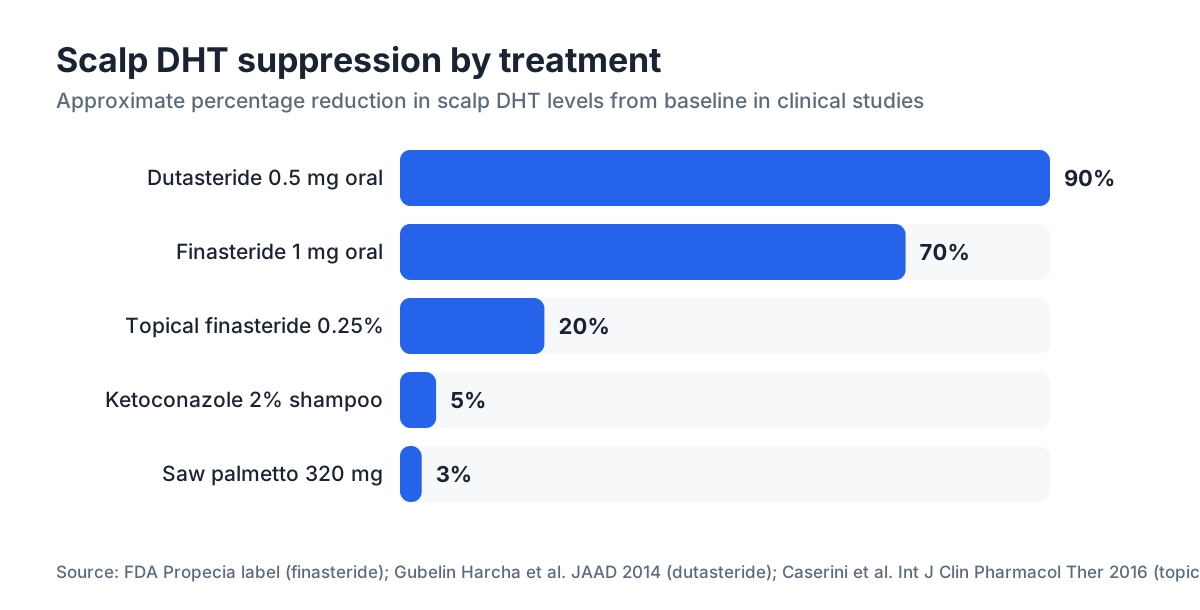
Finasteride (Propecia, generic) Finasteride blocks the type II isoform of 5-alpha reductase and cuts scalp DHT by roughly 60 to 70%. [4] The FDA approved it for male pattern hair loss in 1997 at 1 mg/day, based on a five-year randomized trial where 48% of men on the drug had visible hair-count improvement versus 7% on placebo. The FDA label states: "In men treated with PROPECIA, the 5-year data showed that hair count was maintained above baseline in 66% of men." [4]
Finasteride has no FDA approval for hair loss in women and is contraindicated in pregnancy because it can cause genital malformation in a male fetus. Some dermatologists prescribe it off-label to postmenopausal women. [3]
For dosing, cost, and the sexual side-effect debate, the finasteride article covers it in detail.
Dutasteride (Avodart) Dutasteride blocks both type I and type II 5-alpha reductase and suppresses DHT harder, around 90% in the scalp. [5] It's FDA-approved for benign prostatic hyperplasia and used off-label for hair loss in the US. South Korea's regulator approved it specifically for androgenetic alopecia in men in 2009. A 2014 randomized controlled trial in the Journal of the American Academy of Dermatology found dutasteride 0.5 mg beat finasteride 1 mg on hair count at six months. [5]
Deeper suppression sounds better, but it comes with a much longer half-life (roughly five weeks versus six to eight hours for finasteride) and a slower washout if side effects show up.
Spironolactone Spironolactone is a potassium-sparing diuretic that also blocks androgen receptors. At 100 to 200 mg/day it's widely used off-label for female pattern hair loss and has the most real-world evidence of any DHT-pathway treatment for women. [3] A 2018 observational study in JAMA Dermatology reported self-reported improvement in 74.3% of women with pattern hair loss on spironolactone. [6] The FDA hasn't approved it for hair loss, but it is approved for other uses, so off-label prescribing is legally simple.
Bicalutamide Bicalutamide is an androgen-receptor antagonist used in some prostate cancer regimens. Dermatologists increasingly prescribe it off-label for female pattern hair loss and hirsutism, especially in women who can't handle spironolactone. Retrospective data in JAMA Dermatology has shown improved hair density scores in women with pattern hair loss. [6] The evidence base is smaller than for spironolactone.
How do prescription DHT blockers compare? A side-by-side look
The table sums up the key numbers for the main options. "Approved" means FDA-approved specifically for hair loss. "Off-label" means the drug is approved for something else and used for hair loss by prescription.
| Treatment | Mechanism | DHT reduction | FDA-approved for hair loss | Who it's for |
|---|---|---|---|---|
| Finasteride 1 mg | 5-AR type II inhibitor | ~60-70% [4] | Yes (men only) | Men, post-menopausal women (off-label) |
| Dutasteride 0.5 mg | 5-AR type I + II inhibitor | ~90% [5] | No (off-label in US) | Men (off-label), not recommended in women |
| Spironolactone 100-200 mg | Androgen receptor blocker | Indirect | No (off-label) | Women |
| Bicalutamide 25-50 mg | Androgen receptor antagonist | Indirect | No (off-label) | Women |
For men, finasteride is the obvious first move. Dutasteride is stronger but harder to reverse if side effects appear. For women, spironolactone is usually the first prescription choice when androgens are in play. Pairing any of these with minoxidil for men or topical minoxidil for women is standard, since they work through different pathways and the combination tends to beat either drug alone. [7]
What are the side effects of DHT blockers?
Side effects split sharply by drug category.
Finasteride and dutasteride The FDA label for finasteride lists sexual side effects, including lower libido, erectile dysfunction, and reduced ejaculate volume, in about 3.8% of men versus 2.1% on placebo in clinical trials. [4] Those figures probably run low compared to what patients report, partly because the trials were short and used selected populations.
More contested is post-finasteride syndrome, a cluster of lasting sexual and neurological symptoms some men report after stopping. The FDA added a label warning about persistent effects in 2012. [11] How common it actually is remains genuinely uncertain; the closest data comes from the FDA adverse event reporting system, which carries heavy reporting bias. If this worries you, that worry is legitimate, and worth raising openly with a prescriber before you start.
Dutasteride carries the same risks with one added wrinkle: its long half-life. Develop a side effect and it takes far longer to clear the drug.
Spironolactone In women, the most common side effects are menstrual irregularity, breast tenderness, and elevated potassium (hyperkalemia). Blood pressure checks and periodic potassium tests are standard. It's absolutely contraindicated in pregnancy and requires reliable contraception in women of childbearing age. [3]
Bicalutamide In women, bicalutamide can raise liver enzymes, so baseline liver function tests are usually ordered. It's teratogenic too.
None of these drugs are for casual self-medication. Each one needs a diagnosis, a prescriber, and follow-up.
Do DHT blockers work for women's hair loss?
Yes, with real caveats about which drug, which women, and what to expect.
Female pattern hair loss (FPHL) runs on androgens in many women, but not all. Some women with FPHL have normal circulating androgens and simply have follicles that are extra sensitive, which is why bloodwork doesn't always flag high DHT or testosterone. Even so, anti-androgen treatment helps a meaningful share of women.
Spironolactone is the most commonly prescribed DHT-pathway drug for women in the US. The 2018 JAMA Dermatology observational study of about 1,000 women found 74.3% reported improvement, though that was self-reported, not blinded. [6] For women with PCOS and high androgens, the effect tends to be stronger.
Finasteride gets used off-label in postmenopausal women, where the pregnancy risk is gone. A small randomized trial found 1 mg/day finasteride didn't significantly beat placebo in postmenopausal women, while 5 mg/day showed some benefit. [3] The evidence is thinner than in men.
Dutasteride is generally off the table for women because of severe teratogenicity and the lack of good female-specific trial data.
For a deeper look at DHT and hair loss in women, including PCOS and how spironolactone is usually dosed, what causes hair loss covers the female-specific biology.
MyHairline's free AI scan (/scan) can map your hair loss pattern before your first dermatology visit, so you walk in knowing roughly what you're dealing with and what to ask.
What about topical DHT blockers like ketoconazole or saw palmetto shampoo?
Some topicals have decent evidence. Plenty of products get sold on almost none.
Topical finasteride A finasteride 0.25% topical solution has been studied against oral 1 mg finasteride, with comparable hair-count improvement but much lower serum DHT suppression (about 20% versus 70%). [8] For men who want to keep systemic exposure down, topical finasteride is a reasonable option, though it's compounded (not an FDA-approved finished product) and access depends on your pharmacy.
Ketoconazole shampoo Ketoconazole is an antifungal with some anti-androgenic activity at the follicle. A small Belgian trial from 1998 found 2% ketoconazole shampoo improved hair density about as well as 2% minoxidil solution over six months. [9] That study had only 39 subjects and weak blinding. The honest read: ketoconazole 2% shampoo (Nizoral) probably has a mild DHT-modulating effect at the scalp, it's cheap, and the downside is low. It is not a substitute for finasteride.
Saw palmetto Saw palmetto (Serenoa repens) inhibits 5-alpha reductase in lab studies. Human hair loss trials are small and underpowered. A 2020 systematic review in Dermatology and Therapy found the existing evidence too limited to draw firm conclusions. [10] A 2002 pilot study (26 men, not placebo-controlled) showed some improvement. If someone isn't a candidate for prescription drugs and wants to try something, 320 mg/day of a liposterolic extract is the studied dose. Don't expect finasteride-level results.
Other supplement ingredients (pumpkin seed oil, pygeum, beta-sitosterol) These show up in nearly every "best DHT blocker" supplement. Pumpkin seed oil has one small 2014 randomized trial in men (76 subjects) showing 40% self-reported improvement versus 10% on placebo. [10] The rest have even less human data. Hair loss supplements covers the full supplement landscape with the same honesty.
Is there a best DHT blocker for women's hair loss specifically?
For women with confirmed or suspected androgen-driven hair loss, spironolactone at 100 to 200 mg/day is probably the best-supported prescription option in the US right now. It's been in use for decades, its side-effect profile is well understood, and the generic is cheap.
For postmenopausal women who don't respond to spironolactone or can't tolerate it, finasteride 5 mg off-label or bicalutamide 25 mg off-label are reasonable next steps with a dermatologist.
For women of childbearing age who want to steer clear of systemic hormonal drugs, the honest answer is blunt: no supplement comes close to prescription options on evidence. Topical minoxidil is still the only FDA-approved treatment for female pattern hair loss and should probably be the first thing tried. It isn't a DHT blocker, but it works on a different pathway and the evidence is solid.
Women with PCOS who treat the underlying hormonal imbalance through an endocrinologist often see parallel improvement in hair, though it comes slowly.
Minoxidil plus spironolactone is what many dermatologists reach for when female pattern hair loss is moderate to severe. No large randomized trial has tested that exact combination, but the mechanism makes sense and real-world prescribing reflects it.
How long do DHT blockers take to show results?
This takes patience. Hair follicles cycle slowly.
With finasteride, most guidelines say to judge it at 12 months before deciding it worked or didn't. Some men see stabilization (loss stops) within six months. Regrowth, when it happens, tends to peak around two years. [4] The five-year trial data shows the benefit continues as long as you keep taking it, and most of the gain reverses within 12 months of stopping.
Spironolactone for women runs a similar clock. The 2018 JAMA Dermatology study found most responders noticed a change between six months and one year. [6]
Dutasteride may show results a touch faster thanks to deeper DHT suppression, though head-to-head timelines look similar at the 12-month mark.
Supplements are slower and less predictable. Trying saw palmetto or pumpkin seed oil? Give it six months before you judge, and set the bar at stabilization, not dramatic regrowth.
One useful way to think about it: DHT blockers slow the decline and sometimes reverse miniaturization, but they can't rebuild follicles that are already dead. If you're at Norwood 6 or Ludwig III and the follicles are gone, no DHT blocker brings them back. That's when hair transplant or finasteride and minoxidil combination therapy is worth serious thought for the follicles that remain.
Can you combine DHT blockers with minoxidil?
Yes, and it's one of the better-evidenced combinations in hair loss treatment.
Finasteride and minoxidil work through completely separate pathways. Finasteride cuts DHT and slows miniaturization. Minoxidil stretches the growth phase and improves blood flow to the follicle. A 2015 randomized trial in Dermatology and Therapy found 5% topical minoxidil plus 1 mg finasteride produced significantly greater hair-count improvement than either drug alone over 12 months. [7]
The finasteride and minoxidil article gets into the specific trial data and how dermatologists usually structure combination regimens.
For women, topical minoxidil plus spironolactone is a common real-world approach. No large randomized trial has tested that exact pairing in women, but the logic is the same: two pathways, additive effect.
Oral minoxidil is an option when topical irritates the scalp or is a hassle. Oral minoxidil covers the dosing and side-effect differences between the two forms.
What should you actually do if you think DHT is causing your hair loss?
Start with a diagnosis. See a dermatologist, ideally one who specializes in hair. They'll read your pattern, maybe run a pull test or trichoscopy, and order bloodwork if it's warranted (androgens, thyroid, ferritin). Self-diagnosing and self-dosing finasteride or spironolactone skips steps that actually matter.
If you're a man with confirmed androgenetic alopecia and no contraindications, finasteride 1 mg/day is the most evidence-backed starting point. Add topical minoxidil to hit both pathways.
If you're a woman, the path depends on your age, whether pregnancy is possible, and your bloodwork. Topical minoxidil is usually first. Spironolactone is the most common add-on when androgens are involved.
Want a no-risk starting point before your appointment? MyHairline's free AI scan at myhairline.ai/scan maps your hair loss pattern and gives you a clearer sense of severity, which makes the conversation with a dermatologist more focused.
Saw palmetto and similar supplements are not a substitute for prescription treatment, but they're low-risk additions while you wait for an appointment or if you can't get a prescription. Set expectations accordingly.
If medications haven't worked or the loss is already advanced, a hair transplant evaluation makes sense. Transplants work best when DHT is also being controlled, otherwise the transplanted area can stay stable while your native hair keeps thinning around it.
Sources
- American Academy of Dermatology Association: Hair Loss in Men and Women
- MedlinePlus (US National Library of Medicine): Minoxidil Topical
- Kanti V et al. Evidence-based (S3) guideline for the treatment of androgenetic alopecia in women and in men. J Dtsch Dermatol Ges. 2018
- FDA Propecia (finasteride) prescribing information / drug label
- Gubelin Harcha W et al. A randomized, active- and placebo-controlled study of the efficacy and safety of different doses of dutasteride versus placebo and finasteride in the treatment of male subjects with androgenetic alopecia. J Am Acad Dermatol. 2014
- Sinclair R et al. Spironolactone for treatment of female pattern hair loss. JAMA Dermatol. 2018
- Hu R et al. Combined treatment with oral finasteride and topical minoxidil in male androgenetic alopecia: a randomized and comparative study in Chinese patients. Dermatol Ther. 2015
- Caserini M et al. Effects of a novel finasteride 0.25% topical solution on scalp and serum dihydrotestosterone in healthy men with androgenetic alopecia. Int J Clin Pharmacol Ther. 2016
- Piérard-Franchimont C et al. Ketoconazole shampoo: effect of long-term use in androgenic alopecia. Dermatology. 1998
- Evron E et al. Natural hair supplement: Friend or foe? Saw palmetto, a systematic review in alopecia. Dermatol Ther. 2020
- FDA: Drug Safety and Availability (finasteride/Propecia 2012 label update on persistent sexual side effects)
- Rathnayake D, Sinclair R. Male androgenetic alopecia. Expert Opin Pharmacother. 2010