TL;DR: No permanent cure exists for female hair loss, but the condition is treatable. FDA-approved 2% and 5% topical minoxidil is the first-line option. Oral minoxidil, finasteride (off-label), spironolactone, PRP, and low-level laser therapy all have real evidence behind them. The right treatment depends on the cause, which blood labs and a dermatologist can identify.
Is there actually a cure for hair loss in women?
No. Not in the way people mean when they say cure. Female hair loss is almost never one fixable event. It's an ongoing biological process driven by genetics, hormones, nutritional gaps, or autoimmune activity, and treating it means managing those drivers, not erasing them once and moving on.
"No cure" does not mean "nothing works," though. Several treatments have strong evidence behind them. Women who find the right match and stick with it for 6 to 12 months often see real regrowth or at least a stop to the shedding. Some hold onto every hair they have while they stay on treatment. The catch is that most effective treatments need continuous use. Stop, and you usually lose the ground you gained.
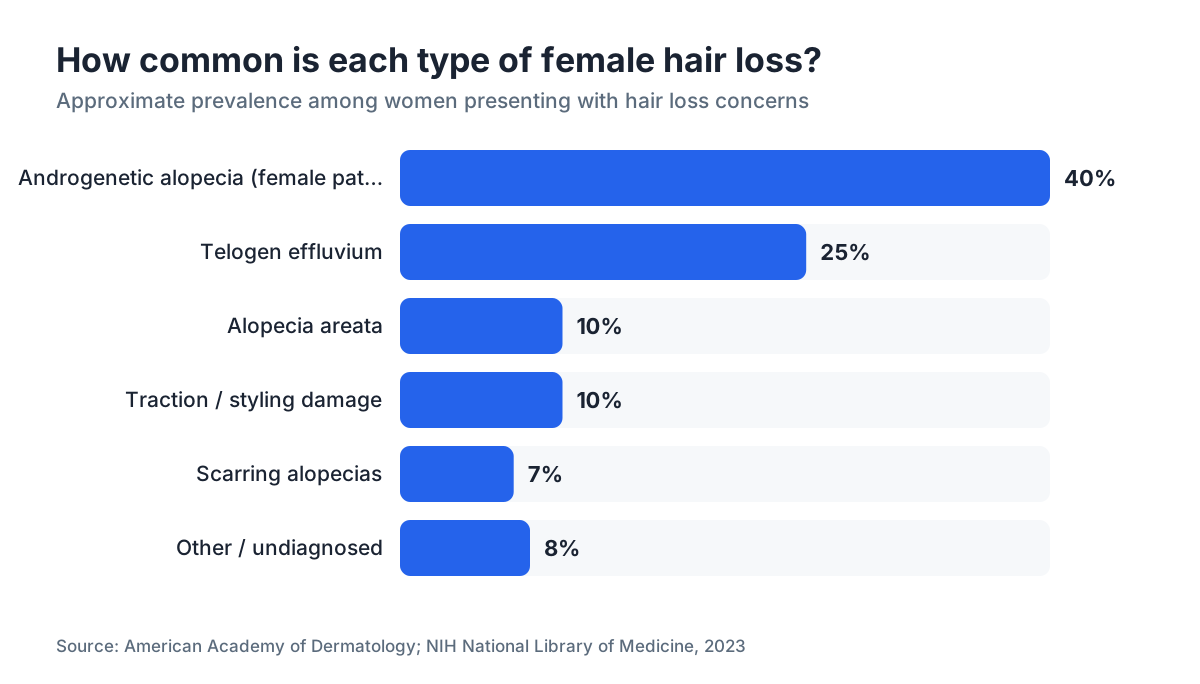
The first step matters more than the drug you eventually pick: figure out what type of hair loss you actually have. Androgenetic alopecia (female pattern hair loss), telogen effluvium, alopecia areata, traction alopecia, and scarring alopecias are distinct conditions. Some respond to the same drugs. Others need completely different approaches. Treating the wrong type with the wrong drug is the single most common reason women burn through years and thousands of dollars with nothing to show for it.
What causes hair loss in women, and why does the cause matter so much?
Female hair loss is not one disease. The American Academy of Dermatology names female pattern hair loss (androgenetic alopecia) as the most common type, affecting roughly 40% of women by age 50 [1]. Dozens of other causes exist, and each one has its own treatment path.
Androgen sensitivity drives female pattern hair loss. Even in women with normal circulating testosterone, scalp follicles can be genetically sensitive to dihydrotestosterone (DHT), which shortens the growth phase and slowly shrinks each follicle [2]. Drugs that block DHT or counter its effect at the follicle, like minoxidil and finasteride, work here.
Telogen effluvium is a different animal entirely. A physical or emotional shock (childbirth, major surgery, crash dieting, illness) pushes a large share of hairs into the shedding phase all at once. The fix is removing the trigger and giving the body time. DHT blockers do essentially nothing for it.
Alopecia areata is autoimmune. The immune system attacks the follicle. The FDA approved baricitinib (Olumiant) in 2022 and ritlecitinib (Litfulo) in 2023 for severe alopecia areata [4]. Those same drugs are useless for androgenetic alopecia.
Iron-deficiency anemia, thyroid disease, polycystic ovary syndrome (PCOS), and severe caloric restriction all produce diffuse shedding. Treat the underlying condition and the hair often recovers on its own. That's why understanding what causes hair loss before spending money on treatments matters so much.
Scarring alopecias (lichen planopilaris, central centrifugal cicatricial alopecia) destroy follicles for good over time. Catch them early and anti-inflammatory treatment can slow the damage, but nothing regrows hair where the follicle is already gone.
What blood tests and labs should women get for hair loss?
Get labs before you get a prescription. Several common, correctable conditions mimic genetic hair loss almost perfectly, and a dermatologist or trichologist will order a blood panel to sort them out. Skipping labs is how people spend years treating the wrong thing.
The standard hair loss labs for women usually include:
| Test | What it checks | Why it matters |
|---|---|---|
| Complete blood count (CBC) | Iron, hemoglobin | Anemia is a leading cause of diffuse shedding |
| Ferritin | Iron storage | Ferritin below 30 ng/mL is associated with hair loss even without anemia [5] |
| TSH (thyroid-stimulating hormone) | Thyroid function | Both hypo and hyperthyroidism cause shedding |
| Free T3 / Free T4 | Active thyroid hormones | Catches subclinical dysfunction TSH misses |
| Total testosterone / free testosterone | Androgen levels | Elevated levels suggest PCOS or other androgen excess |
| DHEA-S | Adrenal androgen output | Elevated in some causes of hormonal hair loss |
| Prolactin | Pituitary function | High prolactin disrupts estrogen and can trigger shedding |
| Zinc | Micronutrient deficiency | Low zinc is associated with hair loss |
| Vitamin D | Deficiency linked to alopecia areata | Some evidence supports this connection |
| ANA (antinuclear antibody) | Autoimmune disease screen | Relevant when alopecia areata or lupus is suspected |
Ferritin is the one that gets missed most. Many providers check only hemoglobin for iron status, but a woman can have perfectly normal hemoglobin and depleted ferritin stores, and her follicles pay for it [5]. Ask for ferritin by name, more than an iron panel.
These tests run $150 to $400 out of pocket at most commercial labs if insurance doesn't cover them, though many plans do cover them when a physician orders them. Quest Diagnostics and LabCorp both run full women's hair loss panels. Knowing your numbers before your first dermatology visit makes that appointment far more useful.
Does minoxidil work for female hair loss, and what's the right dose?
Minoxidil is the only topical drug the FDA has approved for female pattern hair loss. The 2% solution got approval for women in 1991 [6]. The 5% foam followed in 2014 [6]. Both work by stretching out the anagen (growth) phase and widening the blood vessels near the follicle, which brings more nutrients in.
The evidence is real. A 48-week trial in the Journal of the American Academy of Dermatology found 5% minoxidil foam produced significantly more regrowth than placebo in women with androgenetic alopecia [7]. Most women see results between week 16 and week 24. Before that, many go through an initial shedding phase as dormant follicles get pushed into active growth. That's normal and it passes.
The two doses differ in practical ways. The 2% solution goes on twice daily and contains propylene glycol, which irritates some scalps. The 5% foam is once daily and propylene glycol-free, which makes it easier to tolerate and easier to keep using. Most dermatologists now start women on 5% foam unless there's a specific reason not to.
The full side effect profile, including the unwanted facial hair that worries a lot of women, is covered in this breakdown of minoxidil side effects. That worry is real but usually manageable with technique: apply to the scalp only, not the hairline, and let it dry before you lie down.
Low-dose oral minoxidil (0.25 mg to 2.5 mg per day) is increasingly prescribed off-label for women. A 2021 retrospective study in the Journal of the American Academy of Dermatology found it effective and generally well-tolerated at doses up to 2.5 mg/day [8]. It's not FDA-approved for this use, but the off-label evidence keeps growing. The full picture is at oral minoxidil.
Can women take finasteride for hair loss?
Finasteride is FDA-approved for male pattern hair loss at 1 mg/day, not for women [9]. Many dermatologists still prescribe it off-label to postmenopausal women, and there is genuine evidence it works in that group.
How it works: finasteride blocks type II 5-alpha reductase, the enzyme that turns testosterone into DHT. Lower DHT means less follicular miniaturization in people genetically sensitive to it.
Here's the hard restriction. Finasteride is absolutely contraindicated in women who are pregnant or who could become pregnant. It causes serious birth defects in male fetuses, specifically abnormal genital development [9]. The FDA label warns against this in plain terms. For premenopausal women, most dermatologists either avoid it or require reliable contraception and a frank talk about risk.
For postmenopausal women the math changes. A 2012 study in the Journal of the American Academy of Dermatology found 1 mg/day finasteride improved hair density in postmenopausal women over 12 months [10]. Some providers go higher (2.5 mg or 5 mg off-label) when 1 mg does nothing, though the evidence at those doses in women is thin.
Dutasteride blocks both type I and type II 5-alpha reductase and is more potent than finasteride. It's used off-label in women in some countries, but with even less safety data in this group. If you're researching these drugs, the finasteride article covers the evidence in detail, and the finasteride and minoxidil piece is worth reading if your dermatologist suggests combining them.
What about PRP, low-level laser, and other non-drug treatments?
Platelet-rich plasma (PRP) therapy means drawing a small amount of your own blood, spinning it in a centrifuge to concentrate the platelets, and injecting the platelet-rich fraction into the scalp. Platelets carry growth factors (PDGF, VEGF, IGF-1) that appear to wake up follicle activity.
The evidence is promising but not settled. A 2019 systematic review in Dermatologic Surgery analyzed 19 controlled studies and found PRP consistently beat placebo for androgenetic alopecia in both men and women [11]. Hair count, thickness, and patient satisfaction all improved. The studies used different PRP concentrations, injection protocols, and session counts, so an exact dose is hard to pin down. Most dermatologists offering PRP run 3 initial sessions spaced 4 to 6 weeks apart, then maintenance every 3 to 6 months.
Cost is the wall most people hit. PRP is not covered by insurance and typically runs $600 to $1,500 per session out of pocket, varying by location and provider. Over a year, that can top $3,000 to $5,000.
Low-level laser therapy (LLLT) comes from FDA-cleared devices like the HairMax LaserComb or laser caps, using red light (typically 650 nm) to stimulate follicle metabolism. FDA clearance covers safety and device performance, not drug efficacy, but several randomized trials show modest hair count gains over sham devices. A 2014 trial in the American Journal of Clinical Dermatology reported a 51% increase in hair count with LLLT versus 18% with sham over 26 weeks. The gains are modest. At-home laser caps typically cost $300 to $900.
Microneedling alongside topical minoxidil appears to boost absorption and may stimulate follicles on its own. A 2013 randomized trial in the International Journal of Trichology found microneedling plus minoxidil beat minoxidil alone at 12 weeks, with better patient-reported results. In-office sessions run $200 to $400. At-home dermarollers cost $20 to $50.
On supplements, the full breakdown is at hair loss supplements. Short version: biotin is oversold unless you have a real biotin deficiency. Iron, zinc, and vitamin D make sense only if labs confirm you're low.
Are hair transplants an option for women?
Yes, with real limits. Follicular unit extraction (FUE) and follicular unit transplantation (FUT) both work in women, but the candidacy bar is higher than it is for men.
The core problem: transplantation moves healthy follicles from a donor area (usually the back and sides of the scalp) to thinning areas. For it to last, those donor follicles need to be free of the miniaturization causing the thinning. In many women with diffuse androgenetic alopecia, even the donor areas are affected by DHT sensitivity, so transplanted hairs may thin too over time. Surgeons use the SAFE (Surgically Advanced Follicular Extraction) system and other methods to assess donor stability before recommending surgery.
Better candidates tend to be women with traction alopecia (a mechanical cause, not hormonal), frontal fibrosing alopecia that's been stabilized, or localized pattern loss where the donor area is clearly healthy.
Costs run roughly $4,000 to $15,000 depending on graft count and location. The hair transplant article walks through the procedure, recovery, and how to check a surgeon's credentials.
What treatments are approved specifically for alopecia areata in women?
Alopecia areata gets its own answer because the treatment landscape shifted hard in 2022 and 2023. The FDA approved two JAK (Janus kinase) inhibitors for severe alopecia areata: baricitinib (Olumiant) in June 2022 and ritlecitinib (Litfulo) in June 2023 [4]. These are the first systemic drugs the FDA has approved specifically for the condition.
Baricitinib is approved for adults. Ritlecitinib is approved for patients 12 and older. Both block the inflammatory signaling the immune system uses to attack follicles. Trial data for baricitinib showed 35% to 40% of patients hitting at least 80% scalp coverage after 36 weeks at the 4 mg dose, against roughly 5% on placebo. Those numbers beat anything the field had for severe disease.
The drugs carry warnings, including an FDA boxed warning for baricitinib: raised infection risk, thrombosis, and potential serious cardiovascular events, in line with the class. They're meant for moderate-to-severe cases, not mild patchy alopecia areata.
For mild alopecia areata, intralesional corticosteroid injections (usually triamcinolone acetonide) are still first-line. They restart regrowth in affected patches but need repeated clinic visits and can't handle widespread scalp involvement.
How long does it take to see results from female hair loss treatment?
This is where most women get frustrated and quit too early. Hair grows about half an inch a month, and follicles cycling back into production take time to show visible density. Most treatments need 6 to 12 months of steady use before you can judge them fairly.
With topical minoxidil, the timeline usually runs: extra shedding at weeks 2 to 8 (normal), early regrowth often visible at months 3 to 4, real density change at months 6 to 9. Photographs in the same lighting, from the same scalp position, every 3 months are the only reliable way to track it. Your day-to-day read in the mirror is too unreliable.
With PRP, most protocols run 3 sessions over 12 weeks and assess results at month 6. Some patients respond strongly. Others see little or nothing. There's no reliable way to predict who responds best.
With JAK inhibitors for alopecia areata, response sometimes shows as early as 8 to 12 weeks, with peak results at 36 weeks in the trials.
Patience is the hardest part of treating female hair loss. Quitting at month 3 because "nothing is happening" is the most common mistake there is.
What's a realistic treatment approach for most women with hair loss?
Here's how an experienced dermatologist typically sequences treatment for female pattern hair loss, the most common type.
First: get labs. Rule out iron deficiency, thyroid disease, and other correctable causes before reaching for a prescription. If ferritin is below 30 ng/mL, correct it. If TSH is off, address that first. Some women recover real density from nutritional correction alone.
Second: start 5% topical minoxidil foam once daily. It's cheap ($20 to $30 a month for generics), FDA-approved, and has the most evidence behind it for female pattern hair loss. Give it 9 to 12 months. Photograph your scalp at baseline and every 3 months.
Third: if minoxidil alone isn't enough at 6 months, discuss adding low-dose oral minoxidil (off-label), adding a DHT blocker like spironolactone (100 to 200 mg/day, widely used off-label in premenopausal women with good safety data), or PRP sessions. For postmenopausal women, finasteride is a reasonable add at this stage.
At any point, a dht blocker is worth discussing with your doctor if your labs show androgen excess or pattern loss keeps progressing despite minoxidil.
As you research, tools like the free AI scan at MyHairline can help you track what your hairline actually looks like over time and flag patterns worth raising with your provider. They don't replace a dermatologist's assessment.
If your hair loss is severe, moving fast, or not responding to any of the above, find a board-certified dermatologist who subspecializes in hair disorders. They can run a scalp biopsy, which is still the gold standard for telling hair loss types apart when the diagnosis is unclear.
What should women know about DHT and hormonal hair loss?
DHT is the androgen most directly tied to pattern hair loss in both men and women. It binds androgen receptors in genetically sensitive follicles and shortens the anagen (growth) phase step by step, eventually shrinking the follicle until it makes only vellus (fine, colorless) hairs instead of terminal ones.
Women carry lower circulating testosterone and DHT than men, which is why female pattern hair loss usually shows as diffuse thinning across the crown (the Ludwig pattern) rather than the receding hairline more common in men. The mechanism at the follicle is the same, though. Women can also recede at the temples. If that's your pattern, the receding hairline article covers what it looks like and what to do about it.
Spironolactone, an aldosterone antagonist and androgen receptor blocker, is the most commonly prescribed off-label DHT blocker for premenopausal women with androgenetic alopecia in the US. Typical dosing is 100 to 200 mg/day, and it needs potassium monitoring. It is not safe during pregnancy.
One question comes up constantly: does creatine worsen hair loss through DHT? The worry traces to a single small study that found raised DHT-to-testosterone ratios in rugby players on creatine. The evidence is genuinely thin. If you're losing hair and using creatine, the article on does creatine cause hair loss lays out what's actually known.
Can female hair loss be permanent, and when is regrowth still possible?
Whether regrowth is possible comes down almost entirely to one thing: is the follicle still alive?
In androgenetic alopecia, follicles miniaturize gradually but aren't destroyed. Even follicles making only vellus hairs can often be pushed back to terminal hair production with treatment. That's why a woman with 10 years of diffuse thinning can still respond to minoxidil. Those follicles are dormant and shrunken, not dead.
In scarring alopecias (lichen planopilaris, frontal fibrosing alopecia, CCCA), inflammation destroys the follicle and replaces it with scar tissue. Once that process finishes in an area, no drug or procedure regrows hair there. Treatment is about stopping the spread, not reversing what's lost.
In alopecia areata, even fully bald patches can regrow if the immune attack is suppressed. The follicle is usually intact but under siege. That's why the JAK inhibitors produce such dramatic results in some patients.
Telogen effluvium almost always reverses once the trigger clears, usually over 3 to 6 months. A single episode rarely causes permanent loss.
If you've watched a gradual thinning progress for more than a year without treatment, see a dermatologist sooner rather than later. The window for waking miniaturized follicles is real but it isn't unlimited.
How much do female hair loss treatments cost?
Cost swings enormously by treatment path. Here's a realistic breakdown to plan around before your first consultation.
| Treatment | Monthly cost (approx.) | Covered by insurance? |
|---|---|---|
| Generic topical minoxidil 5% foam | $20-$35/month | Usually not |
| Oral minoxidil (off-label) | $15-$40/month | Sometimes |
| Finasteride 1 mg (off-label for women) | $15-$30/month | Rarely |
| Spironolactone 100-200 mg | $10-$30/month | Often yes (prescribed for hypertension) |
| PRP therapy | $600-$1,500/session | No |
| Low-level laser cap (one-time) | $300-$900 device cost | No |
| Baricitinib (Olumiant) | $1,800-$2,500/month brand | Sometimes (prior auth required) |
| Hair transplant (one-time) | $4,000-$15,000 total | No |
The most cost-effective start for most women with pattern hair loss is generic 5% minoxidil foam, under $400 a year with 30 years of evidence behind it. Adding spironolactone through a primary care physician stays low-cost when it's prescribed for its FDA-approved cardiovascular use.
Before spending on PRP or laser devices, run the lower-cost FDA-approved approaches for a full 9 to 12 months with photographs to document what happens. That's the honest sequence most dermatologists would put you on.
Sources
- American Academy of Dermatology, Hair Loss in Women
- NIH National Library of Medicine, Androgenetic Alopecia (StatPearls)
- FDA, news release on first systemic treatment for alopecia areata
- Journal of the American Academy of Dermatology, Rushton 2002, Iron and Hair Loss
- FDA, Drugs@FDA approval history for minoxidil
- Journal of the American Academy of Dermatology, Blume-Peytavi et al., 5% Minoxidil Foam in Women
- Journal of the American Academy of Dermatology, Randolph and Tosti, Oral Minoxidil in Women 2021
- FDA, Drugs@FDA finasteride (Propecia) prescribing information
- Journal of the American Academy of Dermatology, finasteride in postmenopausal women