TL;DR: Female hair loss is common, affecting roughly 40% of women by age 50 and up to 50% by menopause. The most frequent cause is female pattern hair loss (androgenetic alopecia), but thyroid disease, iron deficiency, and telogen effluvium are also common. Minoxidil is the only FDA-approved topical treatment for women. Most causes are treatable once properly diagnosed.
How common is hair loss in women, really?
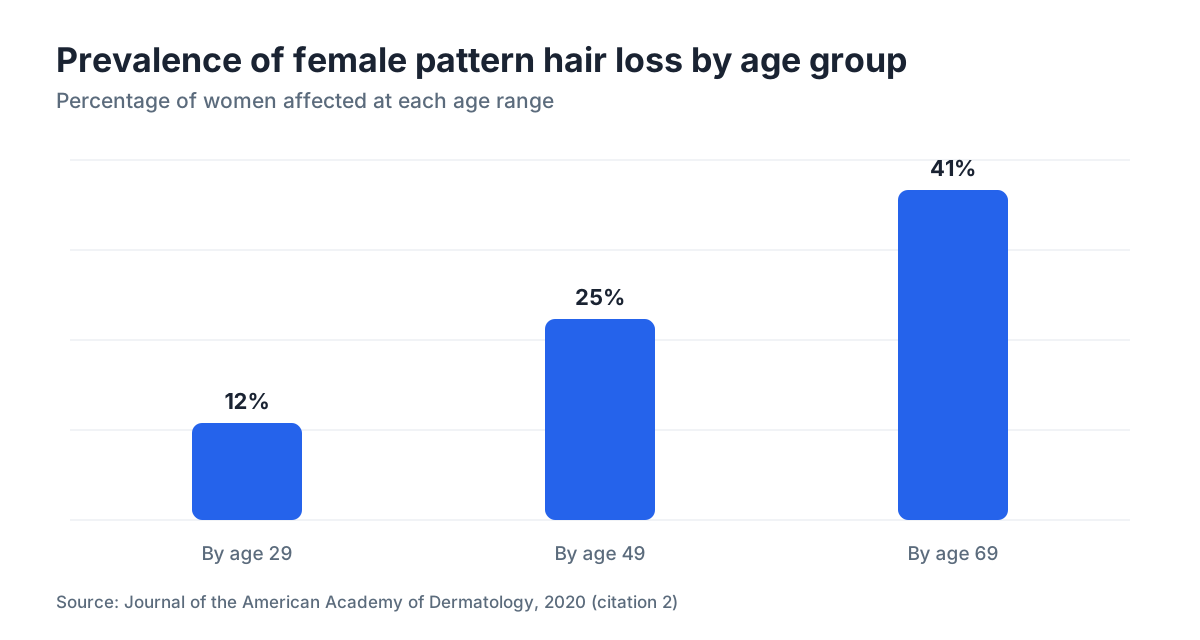
More common than most women realize. A widely cited figure from the American Academy of Dermatology puts female hair loss at roughly 40% of women by age 50, with prevalence climbing further after menopause [1]. A 2020 review in the Journal of the American Academy of Dermatology found that female pattern hair loss affects approximately 12% of women by age 29, rising to 25% by age 49 and over 40% by age 69 [2].
Those numbers matter because a lot of women assume they must be doing something wrong. They're not. Hair loss is a normal part of aging for many people, and it's not a sign of poor health on its own. That said, understanding which type you have is the only way to get to an effective treatment.
Societal awareness of the problem lags badly behind the data. Hair loss research has historically focused on men, which means women often get misdiagnosed or told their shedding is "normal" when it isn't. If you're losing hair and a doctor hasn't investigated the underlying cause, push for lab work.
What are the most common causes of hair loss in women?
Female pattern hair loss (FPHL, also called androgenetic alopecia) is the single most common cause. Unlike male pattern loss, which usually starts at the hairline and temples, FPHL typically causes diffuse thinning across the crown and widens the central part. The frontal hairline is usually preserved. FPHL has a genetic component and is influenced by androgen hormones, though many women with FPHL have normal androgen levels on lab tests [2].
Telogen effluvium is the second most frequent culprit. This is a sudden, diffuse shedding that happens two to four months after a major physical or emotional stressor: childbirth, major surgery, crash dieting, a severe illness, or significant weight loss. The good news is that telogen effluvium is almost always reversible once the trigger resolves. You can read more in our article on hair loss telogen.
Iron deficiency is probably the most underdiagnosed cause of hair loss in women, particularly premenopausal women who menstruate heavily. A serum ferritin below 30 ng/mL is associated with increased shedding, though optimal ferritin for hair growth may be closer to 70 ng/mL according to some dermatologists [9]. Thyroid dysfunction, both hypothyroidism and hyperthyroidism, also causes diffuse shedding and should be ruled out with a TSH test [3].
Other less common but real causes include alopecia areata (autoimmune), traction alopecia from tight hairstyles, central centrifugal cicatricial alopecia (CCCA, most common in Black women), hormonal shifts from stopping oral contraceptives, and polycystic ovarian syndrome (PCOS). Each of these has a different treatment path, which is why a correct diagnosis matters more than grabbing any hair loss product off a shelf.
For a broader breakdown of causes across sexes, see our article on what causes hair loss.
How is female hair loss diagnosed?
Start with a dermatologist, not a general practitioner if you can manage it. Dermatologists who specialize in hair (trichologists or hair loss specialists) will do a pull test, examine the pattern and part width, and often use dermoscopy to look at follicle miniaturization under magnification.
Blood work is standard. At minimum, this should include TSH (thyroid), serum ferritin, complete blood count, and free/total testosterone. Some clinicians also check DHEA-S, prolactin, and zinc depending on symptoms. The goal is not to find a single "cause" but to rule out treatable contributors.
A scalp biopsy is done when the pattern is ambiguous or when scarring alopecia is suspected. Scarring alopecias like CCCA or lichen planopilaris are irreversible if untreated, so early biopsy matters there.
Nobody has a perfect diagnostic algorithm for FPHL because there's no single biomarker. The diagnosis is largely clinical and partly based on excluding other causes. That's frustrating, but it's the honest reality.
Does female pattern hair loss look different from male pattern hair loss?
Yes, visually and in pattern. The Ludwig scale is the standard classification for FPHL, running from Type I (slight widening of the part, early thinning) to Type III (marked thinning over the crown, visible scalp) [2]. The Sinclair scale is a more recent alternative that many dermatologists prefer for its better photographic reliability.
The key visual difference is that women typically maintain their frontal hairline while losing density over the crown and top of the scalp. Men follow the Norwood scale, which starts at the temples and frontal hairline. When a woman starts receding at the temples and hairline, it can suggest elevated androgens (as in PCOS) and warrants an endocrine workup.
For context on how the male pattern differs and why that matters for treatment choices, our article on the receding hairline covers the Norwood stages in detail.
What treatments are FDA-approved for hair loss in women?
Minoxidil topical solution 2% is the only FDA-approved treatment for female pattern hair loss [4]. The FDA approved 2% minoxidil for women in 1991. The 5% foam formulation received FDA approval for women in 2014 with instructions to apply once daily (compared to twice daily for men) [4].
A 2004 randomized controlled trial published in the Journal of the American Academy of Dermatology found that women using 2% minoxidil had "significantly greater increases in target area hair count" compared to placebo, with the effect maintained over 48 weeks [5]. Real-world results vary: roughly 60% of women see reduced shedding and some regrowth, while about 40% see minimal benefit.
How minoxidil works in women is not fully understood. It appears to prolong the anagen (growth) phase of the hair cycle and may have a direct mitogenic effect on follicle cells. It does not block androgens, which is why it works even in women with normal androgen levels.
Oral minoxidil, taken at low doses (0.25 mg to 1 mg daily for women), has gained significant off-label use and multiple clinical trials support its efficacy. A 2021 study in the Journal of the American Academy of Dermatology found meaningful hair regrowth in women at doses as low as 0.25 mg daily with fewer side effects than the topical formulation for some patients [6]. It is not FDA-approved for hair loss, so it requires a prescription used off-label. Our article on oral minoxidil covers the evidence in depth.
Finasteride is FDA-approved for male pattern hair loss only. It is not approved for women, and it is absolutely contraindicated in women who are pregnant or may become pregnant due to the risk of feminization of male fetuses [4]. Some dermatologists prescribe finasteride off-label for postmenopausal women with FPHL; the evidence is modest and mixed. Our piece on finasteride and minoxidil covers combination data.
Spironolactone is a different anti-androgen option commonly used off-label for women with FPHL, particularly those with elevated androgens. It's also used for PCOS-related hair loss. Evidence is largely observational but generally positive. It requires monitoring for potassium levels and blood pressure. It is not safe in pregnancy.
Does ketoconazole shampoo help with hair loss in women?
Ketoconazole shampoo for hair loss is one of the more evidence-backed "cosmetic" options, though it's not FDA-approved as a hair loss treatment. Ketoconazole is an antifungal that reduces scalp inflammation and has demonstrated weak anti-androgenic properties at the scalp level. A 1998 randomized trial published in Dermatology found that 2% ketoconazole shampoo used every two to four days produced hair shaft diameter and density improvements comparable to 2% minoxidil solution in men with androgenetic alopecia [7].
No large-scale RCT has specifically tested ketoconazole shampoo in women with FPHL, which is an honest gap in the literature. But the mechanism, reducing DHT-related scalp inflammation and seborrheic dermatitis, applies to women too. Seborrheic dermatitis itself can worsen inflammatory hair shedding, and treating it with a ketoconazole shampoo makes sense as an adjunct.
Over-the-counter ketoconazole shampoo is available at 1% concentration (Nizoral A-D is one common brand). Prescription 2% formulations exist but require a doctor's visit. A reasonable approach is to use it two to three times per week and leave it on the scalp for three to five minutes before rinsing.
Don't expect ketoconazole shampoo to regrow hair on its own. Think of it as a supporting measure that reduces scalp inflammation and possibly adds a modest density benefit over time. Combined with minoxidil, it may do more than either alone, though that combination hasn't been tested in a well-powered trial in women specifically.
Hair loss shampoos for women broadly are a mixed category. Most volumizing or "thickening" shampoos do not treat hair loss; they coat the hair shaft to make existing hairs look fuller. Ketoconazole shampoo is the exception with at least some mechanistic and clinical basis for its use.
What about hair loss supplements for women?
Biotin is the most heavily marketed supplement for hair loss, and the evidence for it in women without a diagnosed biotin deficiency is thin. Biotin deficiency is actually rare in otherwise healthy adults. The FDA has noted that high-dose biotin supplements can interfere with lab tests including thyroid and cardiac troponin assays, which is a real clinical problem [3]. If you're taking biotin and getting a blood draw, tell your doctor.
Nutrafol is one of the more studied branded supplements for women. A 2018 randomized controlled trial funded by the manufacturer found statistically significant improvements in hair growth in women taking their Women's formula versus placebo at six months. The study had limitations including industry funding, but the result is at least a real trial with real data. Iron, zinc, vitamin D, and selenium supplementation can genuinely help women who are deficient in those nutrients, but supplementing above normal levels doesn't add further benefit.
Our article on hair loss supplements breaks down the evidence on each ingredient.
Should women consider a hair transplant for hair loss?
Hair transplantation works for women in specific situations. It's a good option for women with stable, well-defined FPHL who have sufficient donor hair at the back and sides of the scalp, for women with traction alopecia, and for hairline refinement. It's generally not appropriate for women with diffuse, active shedding, because the "donor" areas may also be thinning.
Costs in the US range from roughly $4,000 to $15,000 depending on the number of grafts, technique (FUT vs FUE), and the surgeon's experience [8]. Results take 9 to 18 months to fully show. Not every woman is a good candidate, and the consultation with a hair transplant surgeon is the only way to know.
Our full breakdown of hair transplant expenses and the hair transplant process covers what to expect in detail.
How do hormonal changes affect hair loss in women?
Hormones are central to hair cycling in women. Estrogen is generally hair-protective. When estrogen drops, as it does sharply in the perimenopause and after menopause, DHT's relative influence on susceptible follicles increases, which accelerates FPHL in women who are genetically predisposed.
Postpartum hair loss is almost universal and is a classic telogen effluvium triggered by the sudden drop in estrogen after delivery. Most women shed heavily from about 3 months postpartum through 6 months, with full recovery typically by 12 months. No treatment is required in most cases, though iron support helps if ferritin is low.
Oral contraceptives can cause hair loss in women who are sensitive to the progestins in certain pills, particularly those with higher androgenic activity (like levonorgestrel or norgestrel). Switching to a pill with anti-androgenic progestins (drospirenone, cyproterone acetate where available) or a lower-androgen profile can help. Conversely, stopping the pill can trigger a temporary shedding episode as hormone levels reset.
PCOS-related hair loss is driven by elevated androgens and often responds well to spironolactone or metformin alongside lifestyle changes. An endocrinologist or gynecologist should be involved if PCOS is the suspected driver.
What does a practical treatment plan look like for women with FPHL?
Step one is blood work to rule out treatable causes: TSH, ferritin, CBC, and androgens. Correct any deficiencies first, because nothing else will work well on a body that's starved of iron or fighting a thyroid problem.
Step two is topical minoxidil. Use 5% foam once daily or 2% solution twice daily. Give it at least six months before judging results; the first three months often look worse due to an initial shedding phase as follicles cycle. If you stop using minoxidil, the hair you gained will shed within 3 to 6 months. It's a long-term commitment.
Step three, if minoxidil alone isn't enough, is a conversation with a dermatologist about adding oral minoxidil (low-dose, off-label), spironolactone if androgens are elevated, or both. Adding ketoconazole shampoo as an adjunct is low-risk and reasonable.
If you want an objective starting point before booking a dermatologist, MyHairline's free AI hair analysis can help you identify your pattern and severity based on photos, which is useful context before that first appointment.
Step four, for stable FPHL with adequate donor density, is to consider a consultation with a hair transplant surgeon. This is not a first step; it's a last step after medical management has been optimized.
Be skeptical of anything marketed as a "regrowth guarantee." Laser caps (LLLT) have FDA clearance but not FDA approval, and the evidence for women is limited. PRP (platelet-rich plasma) injections have small positive trials but no large RCTs in women. Both are options to discuss with a specialist, not things to spend thousands on before trying minoxidil.
What ingredients should women look for (and avoid) in hair loss shampoos?
Ketoconazole (1% OTC, 2% prescription) has the best evidence as a functional ingredient in shampoo for hair loss. Zinc pyrithione and selenium sulfide are also antifungals with some anti-inflammatory benefit for scalp conditions that contribute to shedding.
Caffeine is present in a lot of European hair loss shampoos. In vitro studies suggest it may stimulate follicle growth, but in vitro findings don't reliably translate to clinical outcomes. The shampoo contact time is also short, which limits penetration. Consider it unproven rather than useless.
Avoiding sulfates and harsh cleansers makes sense for women with fine, fragile hair, not because sulfates cause hair loss but because they can worsen breakage in already-thinning hair. Fragrance and certain preservatives can trigger contact dermatitis on a sensitive scalp, which can worsen shedding indirectly. Patch testing a new shampoo before full application is sensible.
Silicones (dimethicone and related) coat the hair shaft and reduce breakage. They're cosmetically useful for thinning hair but they don't treat hair loss. Nothing that stays in contact with your scalp for 60 seconds and gets rinsed out is going to match the effect of a topical treatment you leave on for hours.
When should a woman see a doctor about hair loss, and which specialist?
See a dermatologist (ideally one who specializes in hair) if you're losing more than about 100 to 150 hairs per day for longer than two months, if you can see visible thinning or a widened part, if your scalp itches or burns, or if hair loss is patchy rather than diffuse. Patchy loss can mean alopecia areata, an autoimmune condition that responds to different treatments than FPHL.
See an endocrinologist or OB-GYN if hair loss comes with irregular periods, acne, unwanted facial hair, or weight changes. These suggest a hormonal driver that needs workup.
Don't wait. Follicle miniaturization from FPHL is progressive, and later-stage loss is harder to reverse. Earlier treatment gives better outcomes. The American Academy of Dermatology recommends treatment be started as soon as the diagnosis is confirmed [1].
As a practical step, taking clear photographs of your part width and hairline under consistent lighting every three months lets you track objectively rather than relying on how your hair feels on a given day.
Sources
- American Academy of Dermatology, Hair Loss in Women
- Vary E, et al. Journal of the American Academy of Dermatology, 2020, Female Pattern Hair Loss review
- FDA, Biotin (Vitamin B7): Safety Communication, 2019
- FDA, Drug Approvals and Databases, Minoxidil labeling
- Lucky AW et al. Journal of the American Academy of Dermatology, 2004, Minoxidil 2% RCT in women
- Randolph M, Tosti A. Journal of the American Academy of Dermatology, 2021, Oral minoxidil in women
- Pierard-Franchimont C et al. Dermatology, 1998, Ketoconazole shampoo RCT
- International Society of Hair Restoration Surgery, Practice Census 2022
- Almohanna HM et al. Dermatology and Therapy, 2019, Role of vitamins and minerals in hair loss
- Blumeyer A et al. Journal of the German Dermatological Society, 2011, Evidence-based guidelines for female pattern hair loss