

TL;DR: Postpartum hair loss, medically called telogen effluvium, happens because the hormonal surge of pregnancy temporarily pauses normal hair shedding. After delivery, estrogen drops sharply and all those paused hairs shed at once, usually peaking around 3 to 4 months postpartum. It almost always resolves on its own by 12 months. No treatment is proven to speed recovery, but a few things help.
What is postpartum hair loss and why does it happen?
During pregnancy, elevated estrogen extends the growth phase of each hair follicle and keeps far more hairs in the anagen (active growth) phase than usual. The result: your hair looks fuller and stops shedding at its normal rate of roughly 50 to 100 hairs per day [1]. It's one of the genuinely pleasant side effects of pregnancy for most people.
Then the baby arrives. Estrogen and progesterone levels crash within days of delivery. Every follicle that had been artificially held in the growth phase gets the signal to move into telogen, the resting phase, all at roughly the same time. Two to four months later, those hairs shed together in one wave [2]. Dermatologists call this telogen effluvium. When it follows childbirth specifically, many clinicians call it postpartum telogen effluvium.
This is not the same process as androgenetic alopecia (pattern hair loss). The follicles are not damaged. The hair loss is diffuse, meaning it comes from all over the scalp rather than concentrated at the temples or crown, and the follicles are perfectly capable of regrowing hair once the hormonal environment stabilizes [3].
To understand the full biology of telogen effluvium and how it compares to other types of shedding, that deep-explainer is worth reading before you spend money on anything.
How common is postpartum hair loss?
Very common. Estimates in the dermatology literature put the prevalence between 40% and 50% of postpartum women, though some smaller surveys run higher [3]. The variation partly comes from how "significant shedding" is defined: if you count any noticeable increase in shed hairs, the number climbs. If you require a documented reduction in hair density by clinical measurement, it's closer to 40%.
Breastfeeding does not protect against it, despite a persistent myth. Prolactin (the hormone that drives milk production) stays elevated during nursing, but estrogen still falls sharply after delivery regardless of feeding method. Studies have not found a meaningful difference in the rate or severity of postpartum hair loss between women who breastfeed and those who don't [4].
Some people get postpartum hair loss after every pregnancy. Others never notice it at all. There's no reliable predictor for who will be hit hardest.
When does postpartum hair loss start and how long does it last?
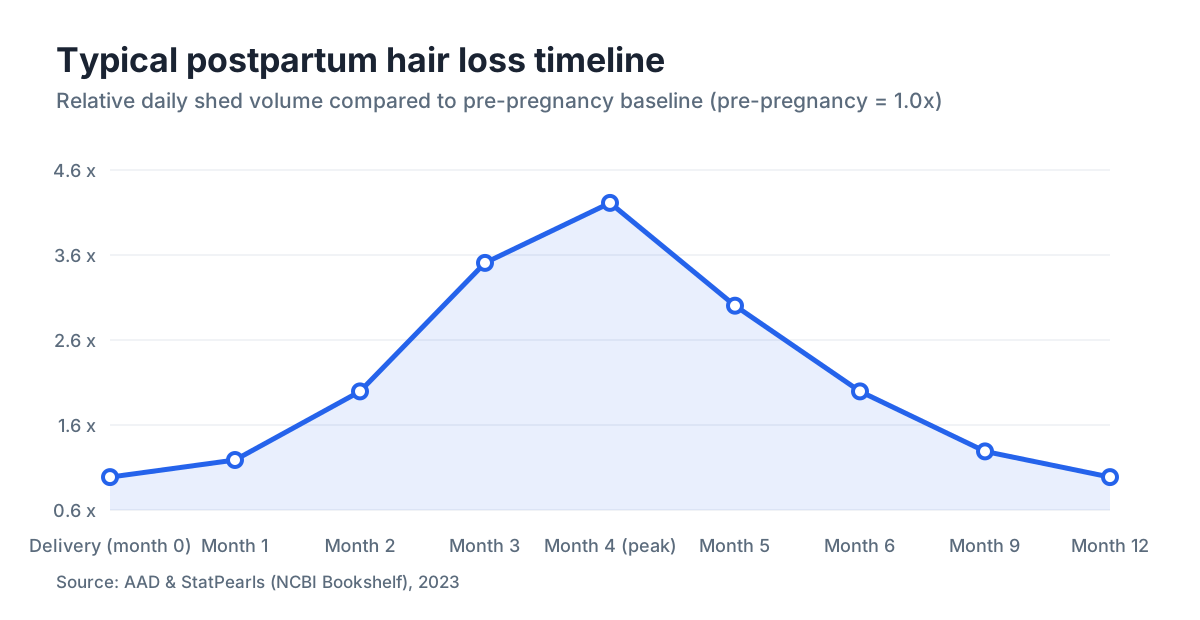
The shed typically begins 2 to 4 months after delivery and peaks around months 3 to 4 [2]. Some women notice it as early as 6 weeks postpartum; a small number don't see heavy shedding until month 5 or 6. The delay exists because of the biology: hairs spend about 2 to 3 months in the telogen resting phase before they actually fall out, so there's a lag between the hormonal trigger and the visible shed.
For most people, shedding returns to the pre-pregnancy baseline by 6 to 9 months postpartum. Full density is usually restored by 12 months [3]. A minority of women find that regrowth feels incomplete even after a year. In those cases, it's worth seeing a dermatologist to check for a separate, overlapping cause, including iron deficiency, thyroid dysfunction, or the early onset of androgenetic alopecia, which can be triggered or unmasked by the postpartum hormonal shift.
The timeline below shows the typical arc of the condition across the first year postpartum.
What does postpartum hair loss actually look like?
The classic presentation is diffuse thinning across the whole scalp, most noticeable at the temples and along the part line. You'll find hair on the pillow, in the shower drain, covering the bathroom floor, and coating your baby's clothes. Handfuls in the shower is a phrase most affected mothers use.
Because the shedding is diffuse rather than patterned, it rarely produces visible bald patches. What it does produce is a noticeable reduction in ponytail circumference and a widening of the part. Some women also notice a fringe of short new hairs, often called "baby hairs," growing in at the hairline around months 6 to 9 as follicles re-enter the anagen phase.
If you're seeing shedding predominantly at the crown or temples in a pattern that looks like it's progressing systematically, that's worth distinguishing from typical telogen effluvium. Pattern thinning that persists past 12 months, or that seems to be advancing rather than stabilizing, may signal androgenetic alopecia. That's a separate condition with a different treatment path, and the section on what causes hair loss covers the distinction in detail.
Does nutrition or a vitamin deficiency make postpartum hair loss worse?
Yes, and this is one of the few places where something actionable exists. Iron deficiency is the most documented nutritional driver of telogen effluvium [5]. Pregnancy and postpartum bleeding both deplete iron stores significantly, and many new mothers are already borderline low. A serum ferritin below roughly 30 ng/mL has been associated with increased hair shedding in some studies, though the precise threshold is debated [5].
Thyroid function matters too. Postpartum thyroiditis, an autoimmune thyroid condition, affects around 5% to 10% of women in the year after delivery and produces hair shedding as a symptom [6]. A TSH test rules it in or out quickly.
Zinc deficiency, vitamin D deficiency, and inadequate protein intake each have weaker but plausible associations with hair shedding. Nobody has a clean randomized trial showing that correcting any of these in postpartum women shortens the shed duration, but the evidence base for iron is strong enough that most dermatologists check a ferritin level before doing anything else.
If you're considering supplements, the evidence for biotin is much weaker than the marketing suggests. Biotin deficiency is rare in people eating a normal diet, and supplementing above your daily requirement doesn't appear to accelerate regrowth in people who are not deficient [7]. A general prenatal vitamin that keeps iron and other nutrients topped up is a more sensible approach than a standalone biotin pill. See hair loss supplements for a breakdown of what the evidence actually shows.
What treatments actually work for postpartum hair loss?
Honest answer: none that are proven to shorten the natural recovery timeline in postpartum telogen effluvium specifically.
Minoxidil is the only topical medication with solid evidence for hair regrowth, and the FDA has cleared it for androgenetic alopecia in both men and women [8]. It is not approved for telogen effluvium. That said, some dermatologists do prescribe low-dose minoxidil off-label postpartum, particularly when there's concern that androgenetic alopecia is co-occurring, or when shedding is severe enough to cause significant distress and it's past the 12-month mark. The standard FDA-approved concentration for women is 2% topical solution or 5% foam applied once daily [8].
If you're breastfeeding, minoxidil is a more complicated call. Topical minoxidil is detectable in breast milk in small amounts, and there are no large safety studies in nursing women. Most dermatologists advise waiting until you've stopped breastfeeding before starting it. The minoxidil side effects article covers what to expect if you do go that route.
Finasteride is used in men for androgenetic alopecia, but it's contraindicated in women who are pregnant or may become pregnant due to teratogenicity risk, and it's not typically used in premenopausal women at all [9]. Finasteride and minoxidil are sometimes combined in men with pattern loss, but that's a different clinical scenario than postpartum telogen effluvium.
Platelet-rich plasma (PRP), low-level laser therapy, and various scalp serums are marketed heavily but lack strong evidence for postpartum shedding specifically. The data that does exist is mostly for androgenetic alopecia, and the study quality is generally low.
The real answer, which is unsatisfying but accurate: correct any nutritional deficiencies, treat thyroid issues if present, and wait. Almost everyone recovers fully within a year.
Can I use minoxidil while breastfeeding?
This is the question dermatologists get most often from postpartum patients who want to do something. The formal answer is: there is not enough safety data to recommend it while breastfeeding, and most clinical guidelines advise caution [8].
Topical minoxidil is absorbed through the skin and reaches systemic circulation. It has been detected in breast milk in small studies. No large controlled trial has looked at outcomes in nursing infants exposed through breast milk. Given that postpartum telogen effluvium almost always resolves on its own, the risk-benefit math usually doesn't favor starting minoxidil during the breastfeeding period.
If the hair loss is severe and causing genuine distress, and if you have a reason to think it's not simple telogen effluvium, having an honest conversation with a board-certified dermatologist about your specific situation is the right move. This is not a decision to make based on a forum post.
For people who want to understand how minoxidil works more broadly, the does minoxidil work explainer covers the mechanism and realistic expectations.
How is postpartum hair loss diagnosed?
Diagnosis is mostly clinical. A dermatologist will take a history (delivery date, onset of shedding, breastfeeding status, any significant blood loss, diet), examine the scalp, and likely run bloodwork. Standard labs include a complete blood count, ferritin, thyroid-stimulating hormone, and sometimes vitamin D and zinc.
A hair pull test is sometimes done in the office: the clinician grasps 40 to 60 hairs and pulls gently. Extracting more than 6 hairs in a single pull is considered positive for active telogen effluvium [3].
Trichoscopy (dermoscopy of the scalp) can help differentiate telogen effluvium from androgenetic alopecia if the pattern of loss is ambiguous. In telogen effluvium, you see diffuse reduction in hair density without significant miniaturization of follicles. In androgenetic alopecia, you see follicle miniaturization and variation in hair shaft diameter, particularly at the crown.
You don't necessarily need a specialist visit if the presentation is classic (diffuse shedding starting 2 to 4 months postpartum, no other symptoms, normal bloodwork). But if shedding is severe, prolonged past 12 months, patchy, or associated with other symptoms like fatigue or weight changes, a dermatologist or your OB should be involved.
How is postpartum hair loss different from pattern hair loss?
The distinction matters because the treatments are completely different.
Postpartum telogen effluvium is a temporary, diffuse event caused by hormonal change. The follicles are intact. Hair grows back without treatment. It does not progress.
Androgenetic alopecia (female pattern hair loss) is a chronic, progressive condition driven by genetic sensitivity of follicles to dihydrotestosterone (DHT). It produces a characteristic widening of the part, thinning at the crown, and it does not spontaneously reverse. Left untreated, it advances. A receding hairline in women tends to look different than it does in men, but the underlying mechanism of follicle miniaturization is the same.
The two conditions can coexist. Some women have subclinical androgenetic alopecia that goes unnoticed until the postpartum hormonal disruption accelerates it. If your hair loss is still progressing at the 12-month mark or if regrowth seems incomplete, that's the scenario to investigate.
A dermatologist with a dermoscope can usually distinguish them in a single visit. The what causes hair loss article maps out the full taxonomy of hair loss types if you want to understand the landscape before your appointment.
Practical things you can do right now
None of these will stop the shed. They will make the period more manageable.
Get bloodwork first. Ferritin, TSH, and CBC are the three most useful tests. If your ferritin is below 30 ng/mL, talk to your doctor about iron supplementation. Treating a real deficiency helps; supplementing nutrients you're not deficient in probably doesn't.
Be gentle with your hair. Tight ponytails, heavy braids, and excessive heat styling can contribute to traction-related shedding on top of the telogen effluvium. This isn't the time to experiment with bleach.
A good volumizing shampoo and conditioner won't regrow hair but can make what you have look fuller. Products that coat the shaft and add body help with the psychological impact of lower density.
Short haircuts make lower density less visible. A lot of women find going shorter during this period reduces the visual impact significantly, partly because shorter hair doesn't weigh down and clump the way longer hair does.
If you're at the stage of worrying and want an objective picture of what's happening on your scalp, a baseline assessment can be useful. MyHairline's free AI hair scan (/scan) gives you a visual analysis of your current density and part width, which at least lets you track change over time with something more reliable than your own stressed perception in the bathroom mirror.
And if the anxiety around hair loss is significant, that's worth naming too. The postpartum period involves enormous physical and psychological stress, and watching your hair fall out in handfuls adds to it. Talking to someone about the emotional component is not a sign you're overreacting.
When should you see a doctor about postpartum hair loss?
See a dermatologist or your OB if any of these apply:
Shedding continues past 12 months postpartum without signs of slowing. Regrowth is visible but patchy rather than diffuse. You notice a progressive widening part or recession at the temples that looks patterned rather than diffuse. You have other symptoms like fatigue, cold intolerance, unexplained weight change, or heavy periods that suggest thyroid dysfunction or anemia. Your bloodwork shows iron deficiency or thyroid abnormality. You want to start a treatment like minoxidil and need guidance on timing and dose.
For most people, this does not require a specialist. Your OB or primary care doctor can order the relevant bloodwork and refer you if something comes up. But the dermatologist is the right specialist if things are complicated or if you want dermoscopy to rule out androgenetic alopecia.
There's a scenario that's worth flagging: significant hair loss that was present before pregnancy, or that shows up very early postpartum (within the first month), may not be postpartum telogen effluvium at all. That timeline doesn't fit the biology. Something else is going on and it needs investigation.
Sources
- StatPearls (NCBI Bookshelf), Telogen Effluvium
- American Academy of Dermatology (AAD), Hair loss in new moms
- Journal of the American Academy of Dermatology, Telogen effluvium: a review (Sinclair, 2017)
- Journal of the American Academy of Dermatology, The role of iron in diffuse, non-scarring scalp alopecia (Trost et al., 2006)
- American Thyroid Association, Postpartum Thyroiditis
- NIH Office of Dietary Supplements, Biotin Fact Sheet for Health Professionals
- FDA, Minoxidil Drug Approvals and Labeling
- FDA, Finasteride Label and Contraindications