

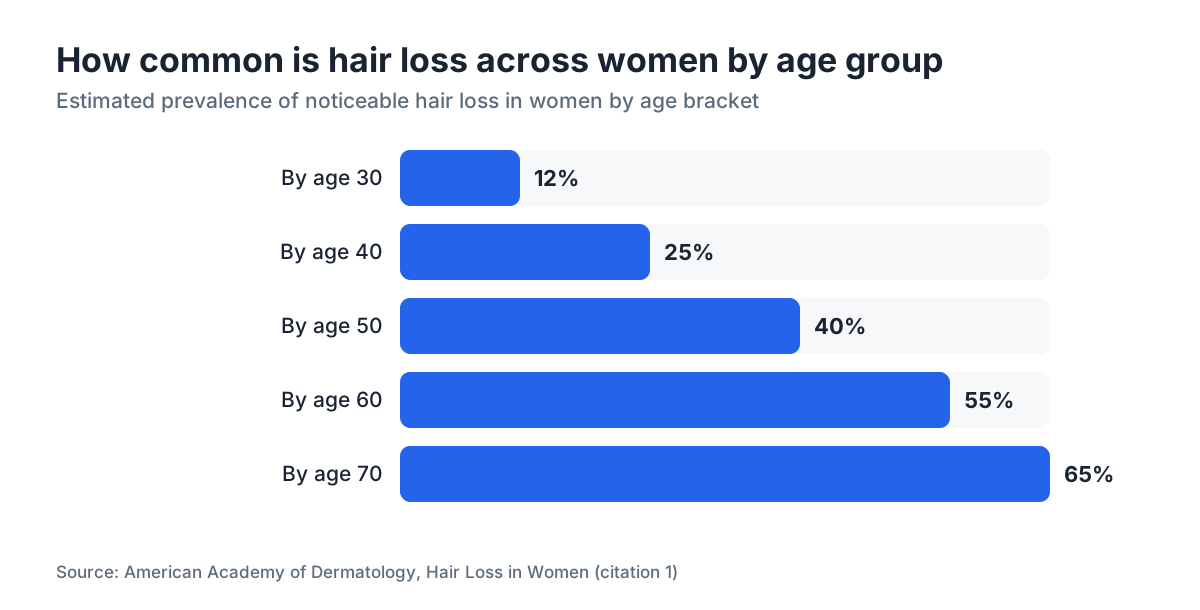
TL;DR: Female hair loss is common, affecting roughly 40% of women by age 50, with androgenetic alopecia and telogen effluvium the top two causes. Minoxidil 2% is the only FDA-approved topical for women. Fixing root causes like iron deficiency, thyroid problems, or hormonal shifts often matters more than any product you can buy.
How common is hair loss in women, and why does it get so little attention?
About 40% of women have noticeable hair loss by age 50, according to the American Academy of Dermatology [1]. That number surprises most people, because female hair loss gets talked about far less than it should, in clinics and in the culture. Men get Rogaine ads and finasteride prescriptions. Women get told their shedding is "stress" and sent home.
Women lose hair for a wider range of reasons than men do, and those reasons need different diagnostic work. Androgenetic alopecia (the same genetic pattern baldness that affects men, just distributed differently in women) is the most common cause. But thyroid disease, iron deficiency, polycystic ovary syndrome, postpartum hormonal shifts, and crash dieting all produce heavy shedding that can look identical at a glance.
That diagnostic complexity is exactly why "just use minoxidil" is incomplete advice. The right intervention depends entirely on what is driving the loss. A woman with iron-deficient telogen effluvium will get no meaningful regrowth from minoxidil until her ferritin comes up. Figuring out what causes hair loss is always step one.
What are the main types of hair loss that affect women?
Female-pattern hair loss (FPHL), also called androgenetic alopecia, is the most common type. Men lose hair from the front and temples in a recognizable Norwood pattern. Women tend to thin across the crown while keeping the frontal hairline mostly intact. The Ludwig classification describes three stages, from mild diffuse thinning (I) to near-complete loss across the top of the scalp (III).
Telogen effluvium is second. It is a diffuse shed triggered when a physiological stressor, such as childbirth, surgery, a major illness, rapid weight loss, or severe emotional trauma, pushes a large share of hairs into the resting (telogen) phase at once. Shedding peaks two to four months after the trigger and usually resolves within six to nine months once the cause is corrected [2]. The catch: chronic low-grade triggers like ongoing caloric restriction or untreated thyroid disease can keep it running indefinitely.
Alopecia areata is an autoimmune condition causing patchy, often sudden loss. It affects roughly 2% of the population and can hit women at any age [3]. Traction alopecia comes from constant tension on the follicle from tight braids, extensions, or high ponytails, and it can turn permanent if you miss it early. Frontal fibrosing alopecia is a scarring form that is showing up more in postmenopausal women, causing a band of loss at the hairline.
| Type | Pattern | Reversible? | First-line approach |
|---|---|---|---|
| Female-pattern (FPHL) | Diffuse crown thinning | Partially | Minoxidil, hormonal therapy |
| Telogen effluvium | Diffuse shedding everywhere | Usually yes | Fix the trigger |
| Alopecia areata | Patchy, unpredictable | Variable | Dermatologist-supervised |
| Traction alopecia | Hairline and temples | Early stages yes | Stop tension styling |
| Frontal fibrosing | Receding frontal band | No (scarring) | Dermatologist urgently |
Which treatments are FDA-approved for female hair loss?
Minoxidil 2% topical solution is the only treatment the FDA has specifically approved for women with androgenetic alopecia [4]. That approval covers the 2% concentration applied twice daily to the scalp. The 5% concentration is approved for men, but many dermatologists use it off-label in women because several randomized trials show it beats 2% with similar tolerability. The main downside of the higher strength in women is unwanted facial hair in some users.
Minoxidil foam (5%) is also FDA-approved for men and used off-label in women, since it is alcohol-free and tends to irritate the scalp less. If you want the full picture of minoxidil side effects before you start, read that first.
Oral minoxidil at low doses (0.25 mg to 1.25 mg daily) is gaining ground fast as an off-label option. A 2021 review in the Journal of the American Academy of Dermatology found meaningful improvement in hair density in women using doses in this range, with a favorable side effect profile at low doses [5]. It is not FDA-approved for hair loss in any form, but the evidence keeps growing. See oral minoxidil for the full breakdown.
Past minoxidil, the FDA has approved no other topical or oral drug specifically for female hair loss. That leaves a gap dermatologists fill with off-label options. That is not automatically a problem, but it does mean the strength of evidence swings a lot depending on which drug you are talking about.
Does finasteride work for women, and is it safe?
Finasteride is a DHT blocker approved for men with androgenetic alopecia. It is not FDA-approved for women, and the picture is complicated. Finasteride blocks 5-alpha reductase, the enzyme that converts testosterone to dihydrotestosterone (DHT), the androgen most directly tied to follicle miniaturization.
For postmenopausal women, several observational studies and small trials suggest finasteride at 1 mg to 2.5 mg daily improves hair density. The risk profile in postmenopausal women is considered relatively favorable because they are not exposed to the drug's teratogenic effects. Premenopausal women are a different story. Finasteride carries a Category X pregnancy warning, meaning it is known to cause birth defects in male fetuses if taken during pregnancy [6]. Prescribing it to a premenopausal woman requires reliable contraception and a frank conversation about risk.
Spironolactone is a different anti-androgen used more often in premenopausal women with FPHL, especially when there are other signs of androgen excess like acne or irregular periods. It works through a different mechanism than finasteride and has a longer track record in women. It is not FDA-approved for hair loss either, but the evidence for FPHL is solid enough that the AAD includes it in clinical guidance [1]. You can read more about DHT blocker options as a category.
Combining minoxidil with an anti-androgen, covered in detail at finasteride and minoxidil, tends to beat either one alone in women who are good candidates.
What lab tests should women get before treating hair loss?
Jumping to treatments before checking bloodwork is one of the most common and expensive mistakes women make. A dermatologist will usually order a panel that catches the most treatable systemic causes.
Ferritin is the single most important number for most women. Ferritin below 30 ng/mL is linked to significant telogen effluvium, even when hemoglobin looks technically normal. Some researchers argue the threshold for regrowth may be as high as 70 ng/mL, though the evidence for that upper number is shakier [2]. Either way, low ferritin is extremely common in women of reproductive age and extremely easy to miss without a specific test.
Thyroid function, meaning TSH and free T4, catches both hypothyroidism and hyperthyroidism, both of which cause diffuse shedding. A complete blood count rules out other forms of anemia. Vitamin D is increasingly added, though its causal link to hair loss is weaker than iron's. Depending on what a dermatologist sees, they may also check DHEAS, testosterone, and prolactin to look at androgen status.
This bloodwork does more than guide treatment. Often it shows the hair loss will resolve on its own once the underlying deficiency is fixed, which saves you money on products that were never going to work.
Can diet and nutrition really prevent or reverse female hair loss?
For some causes, yes. For genetic androgenetic alopecia, no supplement or diet change replaces an FDA-recognized treatment. But nutritional deficiencies can worsen any type of hair loss, and heading them off matters.
Protein is the structural building block of hair. Severe caloric restriction and very low-protein diets reliably cause telogen effluvium. Crash dieting is one of the most common triggers dermatologists see. There is no magic number, but most clinical guidance lands around 0.8 to 1.0 grams of protein per kilogram of body weight as a floor for maintaining hair health.
Iron, as covered above, has the strongest evidence. Zinc deficiency also causes diffuse shedding. A 2013 study in Annals of Dermatology found significantly lower serum zinc in patients with alopecia areata, telogen effluvium, and FPHL compared to controls [7]. Biotin deficiency causes hair and nail changes but is genuinely rare in people eating a normal diet. The biotin supplement market is huge relative to how few people actually need it. If you want the evidence base on specific supplements, hair loss supplements walks through the data honestly.
Anti-inflammatory eating, Mediterranean-style diets, and cutting ultra-processed food are all reasonable ideas with plausible mechanisms. None has been tested in a solid randomized hair loss trial. The honest answer is the evidence is not there yet.
What hair care and styling habits help prevent further loss?
Mechanical damage to the follicle is the easiest category to address without a prescription. Traction alopecia is entirely preventable.
Avoid styles that pull tight at the hairline for long stretches. Braids, cornrows, and extensions, especially microlinks attached close to the root, put enough tension over months and years to scar the follicle permanently. A 2019 AAD position statement estimated that up to one-third of Black women in the United States have some degree of traction alopecia [8]. The frontal and temporal hairlines take the most damage. If you are seeing receding hairline changes in those zones and you wear tight styles, easing the tension is the intervention with the clearest evidence.
Heat damage matters less than traction but still adds up. High-temperature flat irons and blow dryers used daily on wet hair increase breakage. This is not the same as follicle damage and will not cause permanent loss, but it can make existing thinning look much worse by thinning the shaft and causing more shedding during detangling.
Sulfate-free shampoos, gentle detangling on wet hair, and wide-tooth combs cut mechanical breakage. Scalp massage, two to four minutes daily, has preliminary evidence from a small Japanese trial showing increased hair thickness after 24 weeks, though the study was tiny [9]. Low risk, low cost, worth a try.
Chemical processing, relaxers, bleach, and some color treatments do not damage follicles, but they do damage the shaft. Breakage in a woman who is already thinning can look like real loss. A skilled stylist can often spot the difference fast.
How does stress cause hair loss in women, and can managing it help?
The stress-hair loss link is real, and the mechanism is more specific than most people think. Psychological and physical stressors trigger telogen effluvium by disrupting the hair cycle, pushing follicles from the active growth phase (anagen) into the resting phase (telogen) all at once. The shedding shows up two to four months later, which is why women often cannot connect the loss to the event that caused it.
Chronic stress is sneakier than acute stress. A single stressful event usually causes one wave of shedding that resolves. Ongoing chronic stress, with cortisol staying elevated, can keep the cycle disrupted the whole time. Animal studies show that cortisol lowers levels of a key hair growth molecule in the follicle, though the human data is thinner [10].
Managing stress probably helps. No controlled trial shows that mindfulness reduces shedding rates, but there is good mechanistic reason to think it should, and the downside is zero. Sleep deprivation makes it worse. Growth hormone, which matters for follicle activity, is mostly secreted during deep sleep.
Here is the practical takeaway. If you are shedding heavily and your bloodwork is normal, an honest audit of sleep quality, chronic stress, and caloric intake is the right next move before adding products.
Do celebrity female hair loss stories reflect what most women experience?
Celebrity hair loss has become more visible lately, which helps reduce stigma. Jada Pinkett Smith's public discussion of her alopecia areata diagnosis brought the autoimmune variant real mainstream attention. Selma Blair, Kristin Davis, and others have been open about postpartum shedding and stress-related loss. That transparency genuinely helps women see this as a medical condition rather than a personal failure.
The complication is that celebrity treatment access does not map to what most women can actually use. High-end clinics, PRP (platelet-rich plasma) treatments costing $1,500 to $3,500 per session, and fast access to specialist dermatologists are not the average experience. Celebrities also work in an industry where appearance gets managed carefully, so dramatic-looking recoveries may involve hair pieces, extensions, or other cosmetic tools on top of medical treatment.
The more useful signal from the celebrity space is simple. Visible, public hair loss in women is common across ages, ethnicities, and levels of access to care. If someone with unlimited resources still loses significant hair, that tells you this is a real medical challenge without a simple fix.
Is a hair transplant a realistic option for women with hair loss?
Hair transplants work for some women with specific patterns of loss, but they are wrong for most cases of female hair loss, and the distinction matters a lot.
For a transplant to work, the surgeon needs a stable donor zone, usually the back and sides of the scalp, where DHT-resistant follicles can be harvested and moved to the thinning area. In classic male-pattern baldness, that donor zone is reliably stable. In many women with diffuse FPHL, the thinning covers the whole scalp including the donor area, so transplanted hairs can miniaturize over time. A good surgeon turns these candidates away.
Women with a clearly defined zone of loss and a genuinely stable donor area, like those with traction alopecia at the hairline, localized scarring, or a male-pattern distribution of FPHL rather than diffuse thinning, can get excellent results. The average cost in the United States runs $4,000 to $15,000 depending on the number of grafts and the technique, and insurance almost never covers it. See hair transplant for a full breakdown of candidacy, techniques, and realistic timelines.
A transplant should always come after you maximize medical management first. Stabilizing loss with minoxidil and hormonal therapy, then transplanting into a stable scalp, produces better long-term results than transplanting into tissue that is still miniaturizing.
What does a realistic prevention routine look like for women worried about hair loss?
Prevention is more workable than reversal. The earlier you act, the more follicle activity you keep. Here is what the evidence actually supports, in order of priority.
Get your bloodwork done first. Ferritin, TSH, CBC, and vitamin D at minimum. This costs very little next to months of products that may not touch your real problem. If something is low, fix it before deciding whether you need anything else.
If a dermatologist confirms FPHL, start minoxidil. Consistency beats concentration. Minoxidil only works while you use it. Stop, and you lose any gains within three to six months. Plan for long-term use, not a course of treatment.
Eat enough protein and iron-rich food. A woman of reproductive age on a plant-heavy diet or restricting calories is at real risk of low ferritin even with a technically normal diet.
Stop high-tension styles if you see any hairline recession in the usual traction zones.
Get a dermatology referral if you have been shedding heavily for more than six months, notice rapid change, or see scalp changes like scaling, redness, or burning. Scarring alopecias need early treatment to prevent permanent damage.
If you want an objective baseline before any of this, the free AI hair analysis at MyHairline can help you see your pattern and track changes over time, which makes conversations with a dermatologist more useful.
The unsexy truth: the routine that works is consistent, boring, and takes months to show results. Anyone promising dramatic regrowth in thirty days is selling something the evidence does not back.
How long does it take for hair loss treatments to work in women?
This is the question that makes most women quit too early. Hair follicles cycle slowly. The anagen (growth) phase lasts two to six years. The telogen phase lasts about three months. Any treatment that nudges follicles from telogen back into anagen needs at least one full cycle to show measurable results.
For minoxidil, the AAD says most women will not see meaningful regrowth before four to six months of consistent use, with maximum benefit usually around twelve months [1]. The first two months can look alarming: a temporary jump in shedding as resting hairs get pushed out to make room for new growth. That is expected, not a sign it is failing.
For iron, ferritin takes three to six months to normalize on oral supplements, and hair density improvement lags ferritin by several more months. A woman who quits iron at month two because she "doesn't see a difference" has stopped before the fix had any biological chance to work.
For hormonal treatment like spironolactone, the timeline is just as long. Most dermatologists do not judge response before six months and prefer twelve months for a real verdict. Patience here is not optional. The biology requires it.
If you want to track change objectively instead of going by how your hair feels on a given day, MyHairline's free AI scan lets you compare photos over time, so you are measuring actual density rather than perception.
Sources
- American Academy of Dermatology, Hair Loss in Women
- Rushton DH, Journal of Clinical Dermatology 2002; and clinical guidance on ferritin thresholds in telogen effluvium
- National Alopecia Areata Foundation, About Alopecia Areata
- FDA Drug Label, Minoxidil Topical Solution 2% for Women
- Randolph M, Tosti A. Journal of the American Academy of Dermatology 2021; oral minoxidil for hair loss in women
- Park H et al., Annals of Dermatology 2013; Serum zinc levels in patients with hair loss
- Koyama T et al., ePlasty 2016; Standardized scalp massage results in increased hair thickness
- Arck PC et al., American Journal of Pathology 2003; Neuroendocrine link between psychological stress and hair follicle biology
- Gupta AK et al., Dermatologic Surgery 2019; PRP meta-analysis for androgenetic alopecia