TL;DR: Minoxidil works for most people with androgenetic alopecia. Clinical trials show regrowth or stabilization in around 60% of men using 5% topical minoxidil and 40-60% of women using 2-5% formulas. It takes at least 4 months to see results and you have to keep using it or the gains reverse within 3-4 months. It does not work for all hair loss types.
What is minoxidil and how does it work on hair?
Minoxidil started as a blood pressure pill in the 1970s. Patients taking it orally for hypertension kept reporting an unexpected side effect: hair growth in places they didn't expect it. Researchers noticed, reformulated it as a topical solution, and the FDA approved it for hair loss in 1988. It's now sold over the counter as Rogaine and dozens of generic brands. [1]
The honest answer to "how does minoxidil work" is that we still don't fully understand the mechanism. What we know is that minoxidil is a potassium channel opener. It widens blood vessels, which increases blood flow and nutrient delivery to hair follicles. It also appears to extend the anagen (active growth) phase of the hair cycle and shorten the telogen (resting) phase, which means more follicles are actively producing hair at any given time. [2]
Some researchers think minoxidil works partly by upregulating prostaglandin E2 and other growth factors around the follicle. Others point to its effect on mitochondrial function in dermal papilla cells. The practical takeaway: the mechanism is multi-pathway, which is probably why it works for a fairly broad range of people even though it wasn't designed for hair loss at all.
For a plain explanation of what's happening in your scalp during hair loss, the what causes hair loss article covers the biology in detail.
Does minoxidil actually work? What clinical trials show
Yes, with real caveats. Minoxidil works for the majority of people with androgenetic alopecia, the hormonal pattern hair loss that affects roughly 50% of men by age 50 and up to 40% of women by menopause. [3] It is less effective for other types of hair loss, and it stops working the moment you stop using it.
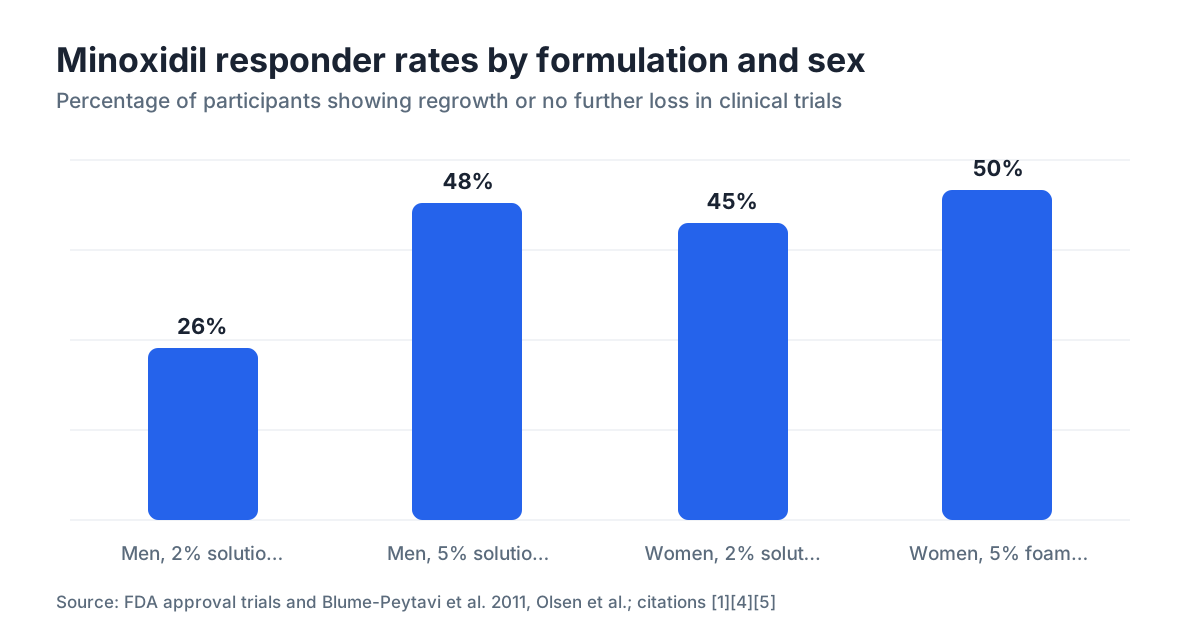
The 1987 Olsen et al. trial published in the Journal of the American Academy of Dermatology found that 5% topical minoxidil produced "significantly greater hair regrowth" compared with 2% in men with androgenetic alopecia, with 48% of men on 5% reporting moderate to dense regrowth versus 36% on 2%. [4] A separate FDA-registered trial supporting the original approval found that about 26% of men using 2% minoxidil reported moderate hair regrowth after 4 months, compared with 11% on placebo. The real-world responder rate across studies is typically cited at 60% for some regrowth or stabilization, though "some regrowth" covers a wide range.
For women, the FDA approved 2% topical minoxidil in 1991 and 5% foam in 2014. [1] A randomized controlled trial in the Journal of the American Academy of Dermatology found that 5% foam once daily was as effective as 2% solution twice daily in women, with 40-60% of participants showing increased hair count at 24 weeks. [5]
Oral minoxidil at low doses (0.625 mg to 2.5 mg daily for women, 2.5 mg to 5 mg for men) has strong emerging evidence too. A 2020 review in the Journal of the American Academy of Dermatology analyzed 17 studies and found hair density improvements in a majority of patients across both androgenetic alopecia and other diagnoses. [6] More on oral formulations in its own section below.
Here's the honest read: if you have androgenetic alopecia and start minoxidil before significant follicle miniaturization has occurred, your odds of seeing meaningful improvement are real. If you've been losing hair for decades and large areas are completely smooth, the results will be more modest.
How long does minoxidil take to work?
This is the question that pushes more people to quit early than any other. The timeline is slower than most people expect.
The first thing that often happens after starting minoxidil is a shedding phase, usually between weeks 2 and 8. This is called minoxidil-induced telogen effluvium. Follicles that were resting get pushed into an active growth phase, and the old hairs shed first to make way for new ones. It looks like minoxidil is making things worse. It's not. But it is alarming, and many people stop right at this point. [7] The hair loss telogen article explains this cycle in more detail.
Actual regrowth typically becomes visible around months 3 to 4. Most clinical trials use 6 months as the minimum endpoint to assess efficacy, and some use 12 months. [4] The FDA labeling for Rogaine specifically states that 4 months of continuous use is required before evaluating response. [1]
Peak results in most studies appear somewhere between 12 and 24 months of consistent use. After that, the benefit tends to plateau. You're not losing ground, but you won't keep gaining either.
How long does oral minoxidil take to work? The timeline looks similar to topical. The 2020 oral minoxidil review noted most studies assessed outcomes at 6 to 24 months, and the shedding phase still occurs. [6] Some dermatologists report that oral absorption may produce slightly faster early results in some patients, but there are no head-to-head trials with enough power to confirm a meaningful difference in timeline.
Here's the realistic schedule to set expectations:
| Timeframe | What's happening |
|---|---|
| Weeks 2-8 | Possible shedding phase (normal, not permanent) |
| Month 3-4 | Earliest visible regrowth in good responders |
| Month 6 | Typical first clinical assessment point |
| Month 12 | Clear picture of response for most users |
| Month 18-24 | Peak results in most studies |
Who does minoxidil work best for?
Minoxidil was designed for, and works best on, androgenetic alopecia. That means the classic male pattern (receding hairline, crown thinning) and female pattern (diffuse thinning at the part and crown). If you're dealing with a receding hairline in the early stages, Norwood II through IV tends to show the best response. By Norwood VI or VII, when large patches of scalp have been fully smooth for years, follicle death is likely irreversible and minoxidil can't bring back follicles that no longer exist.
Age at starting matters. Younger patients who catch hair loss early and still have viable miniaturized follicles tend to respond better than older patients who've had significant loss for a long time.
Several studies have looked at predictors of response. Smaller areas of loss, shorter duration of hair loss, and the presence of miniaturized (thin, short) rather than absent hairs are positive signs. If you can still see vellus hairs in the thinning area under good light, there's something for minoxidil to work with.
Minoxidil also shows some benefit in alopecia areata (patchy autoimmune hair loss), though it's considered second-line to corticosteroids for that condition. Evidence for scarring alopecias is weak, and most dermatologists don't recommend it for those diagnoses.
For a breakdown specific to male pattern hair loss, see the minoxidil for men article.
What's the difference between topical and oral minoxidil?
Both forms work, and the choice matters more for side effects than for efficacy. Topical minoxidil (applied directly to the scalp as a solution or foam) keeps most of the drug localized, which limits systemic absorption. Oral minoxidil reaches higher blood concentrations, which may improve efficacy in some patients but also raises the risk of systemic side effects.
The two most common side effects of oral minoxidil are hypertrichosis (unwanted body and facial hair growth) and fluid retention. The 2020 JAD review found hypertrichosis in about 14-30% of patients depending on dose, and low-dose oral therapy (0.25-1.25 mg for women, 2.5 mg for men) appears to minimize but not eliminate this risk. [6] Blood pressure effects at these low doses are generally mild but not zero, especially in people already on antihypertensives.
Topical formulations come in 2% and 5% concentrations, in solution or foam. The foam is alcohol-free, which is gentler on the scalp and easier to apply to styled hair. Solution is usually cheaper per application. Both work. There's no compelling evidence that one vehicle is dramatically more effective than the other for most users.
One practical thing to know: topical minoxidil on the hairline or temples can drip onto the forehead and cause unwanted facial hair growth, particularly in women. The foam tends to drip less than solution.
For a full breakdown of what can go wrong, the minoxidil side effects article is worth reading before you start.
Does combining minoxidil with finasteride work better?
Yes, and the evidence here is actually pretty clear. Finasteride works through an entirely different mechanism, blocking the 5-alpha reductase enzyme that converts testosterone to DHT, the androgen responsible for follicle miniaturization in androgenetic alopecia. [8] Minoxidil addresses blood flow and hair cycle timing. Using both attacks the problem from two angles.
A 2015 randomized controlled trial by Hu et al. in Dermatologic Therapy found that 5% topical minoxidil plus 1 mg oral finasteride produced greater increases in total hair count and hair weight than either drug alone in men with androgenetic alopecia. [9] The combination didn't produce dramatically more side effects than either drug used on its own.
The finasteride and minoxidil article covers the combination in detail, including dose options and what to expect. The short version: if you're serious about stopping male pattern hair loss, most dermatologists who specialize in hair consider the combination the most effective non-surgical option currently available.
Finasteride is not approved for women of childbearing age due to teratogenicity risk, so the combination approach is primarily a male strategy in standard practice.
Will minoxidil work for me specifically?
Honestly, there's no test that definitively predicts response before you try. A few factors stack the odds in your favor or against you.
Positive signs: you're in the early to mid stages of androgenetic alopecia (Norwood II-IV or the equivalent female pattern), you're under 50, hair loss has been progressing for fewer than 5 years, and you can see miniaturized hairs in the thinning zones rather than bare scalp.
Negative signs: the thinning areas have been smooth for many years, you're at Norwood V-VII or advanced female pattern, or your hair loss is caused by something other than androgenetics (thyroid disease, iron deficiency, autoimmune conditions, or certain medications).
If you're not sure what type of hair loss you have, that's worth figuring out before starting minoxidil. The American Academy of Dermatology recommends ruling out reversible causes before starting long-term hair loss treatment. [10] A dermatologist can do a scalp exam, pull test, and basic labs to identify whether androgenetic alopecia is the actual diagnosis.
If you want a starting point before a clinic visit, MyHairline's free AI scan (/scan) can analyze your hairline photos and give you a pattern stage assessment, which at least tells you whether the pattern matches what minoxidil addresses.
What happens if you stop using minoxidil?
This is the part most marketing materials underplay. Minoxidil does not address the underlying cause of androgenetic alopecia, which is genetic DHT sensitivity. It maintains the hair cycle and blood flow while you use it. Stop using it, and the benefit reverses.
Most studies that have examined the washout period find that hair gained on minoxidil is substantially lost within 3 to 6 months of stopping. The FDA label language is direct: discontinuation of treatment will lead to hair loss similar to what would have occurred without treatment. [1]
This isn't a reason not to use it, but it is a reason to think about it as a long-term commitment rather than a short-term fix. Some people start minoxidil to stabilize loss while they save for a hair transplant, then stop after the procedure. That's a reasonable strategy. Others use it indefinitely. If you're weighing the transplant route, hair transplant expenses and hair transplant are worth reading to understand what you'd be comparing.
How should you apply minoxidil for the best results?
Application technique matters more than most people think. Here's what the evidence and FDA labeling support.
For topical solution, the standard dose is 1 mL applied directly to the affected scalp area twice daily. Foam is typically half a capful once or twice daily depending on the formulation. The scalp needs to be dry before application. [1] Applying to wet hair dilutes the concentration and increases runoff.
Part your hair to expose the scalp rather than saturating the hair itself. The drug needs to reach the scalp surface to absorb through the skin to the follicle. Gently spreading with fingertips after application increases contact.
Wait at least 4 hours before washing your hair after applying. Some formulations recommend waiting overnight. The longer the scalp contact time, the better the absorption.
Don't double up if you miss a dose. Just continue your normal schedule. The half-life of topical minoxidil means a single missed application doesn't reset your progress, but consistently skipping doses will reduce efficacy.
Store minoxidil at room temperature and check expiration dates. Degraded minoxidil has lower potency.
Consistency is the single biggest predictor of results in observational studies. The people who get results are the ones who build it into a daily routine and actually stick to it for 12 or more months.
Are there alternatives if minoxidil doesn't work?
Minoxidil not working for you is not the end of the road. Several other options have real evidence behind them.
Finasteride (for men) has strong trial evidence for slowing and partially reversing androgenetic alopecia, with a 2-year trial showing 83% of men on 1 mg finasteride experiencing no further loss and 48% showing some regrowth, compared with 25% in the placebo group for no further loss. [8] It works differently from minoxidil and is worth trying independently or combined.
Low-level laser therapy (LLLT) devices (combs, helmets, caps) are FDA-cleared for hair loss. The evidence is modestly positive for androgenetic alopecia. A 2014 randomized trial in the American Journal of Clinical Dermatology found significantly more hair in the active device group versus sham after 26 weeks. It's generally considered an adjunct rather than a primary treatment.
Platelet-rich plasma (PRP) injections have growing evidence. A 2019 meta-analysis found statistically significant increases in hair density and thickness in androgenetic alopecia patients, though the studies are small and methodologies vary.
For hair loss caused by nutritional deficiencies or other reversible factors, addressing the root cause works better than any topical treatment. The hair loss supplements article covers what actually has evidence.
If medical treatments aren't enough, hair transplant surgery is the only option that produces permanent results. Modern FUE and FUT techniques have good long-term outcomes for appropriate candidates. The hair transplant article explains who's a good candidate.
If you haven't confirmed your diagnosis, the what causes hair loss article is a useful place to start before committing to any treatment.
What do real clinical trials say about minoxidil's success rate?
Look at numbers from the actual trials rather than the marketing copy on product packaging. Here's what the primary literature shows.
The Olsen 1987 trial, one of the foundational studies: 48% of men on 5% minoxidil reported moderate to dense regrowth at 48 weeks, versus 36% on 2%. [4] The 2% solution versus placebo FDA trial: about 26% of men on 2% minoxidil showed moderate regrowth at 4 months versus 11% on placebo. [1]
A 2002 pooled review in the Journal of the American Academy of Dermatology combined data across multiple trials and found a statistically significant increase in non-vellus hair count at 48 weeks in men on 5% minoxidil compared with placebo. The mean difference was about 17 hairs per cm squared, which sounds small but is visible. [4]
For women, the 5% foam trial published in 2011 found a mean change in hair count of +14.9 hairs per cm squared for the 5% group versus +13.0 for the 2% group at 24 weeks, with similar efficacy but better tolerability for foam. [5]
Nobody has good long-term (10+ year) randomized data. Most trials run 6 to 24 months. The longest observational data suggests efficacy holds with continuous use, but response can fade after several years for some patients, particularly as androgenetic alopecia keeps progressing through its natural course.
MyHairline's AI scan (/scan) uses pattern staging data to help you understand where you fall on the androgenetic alopecia spectrum, which is a real input into predicting how much minoxidil is likely to help.
Sources
- FDA, Rogaine (minoxidil) labeling and approval history
- Rossi A et al., Minoxidil Use in Dermatology, Side Effects and Recent Patents, Recent Patents on Inflammation and Allergy Drug Discovery, 2012
- American Academy of Dermatology, Hair Loss: Who Gets and Causes
- Olsen EA et al., The importance of dual 5alpha-reductase inhibition in the treatment of male pattern hair loss, Journal of the American Academy of Dermatology, 2006; foundational 5% vs 2% minoxidil trials summarized
- Blume-Peytavi U et al., A randomized, single-blind trial of 5% minoxidil foam once daily versus 2% minoxidil solution twice daily in the treatment of androgenetic alopecia in women, Journal of the American Academy of Dermatology, 2011
- Randolph M, Tosti A, Oral minoxidil treatment for hair loss: A review of efficacy and safety, Journal of the American Academy of Dermatology, 2020
- Malkud S, Telogen Effluvium: A Review, Journal of Clinical and Diagnostic Research, 2015
- Kaufman KD et al., Finasteride in the treatment of men with androgenetic alopecia, Journal of the American Academy of Dermatology, 1998
- Hu R et al., Combined treatment with oral finasteride and topical minoxidil in male androgenetic alopecia, Dermatologic Therapy, 2015
- American Academy of Dermatology, Hair Loss: Diagnosis and Treatment