TL;DR: Most shampoos sold for hair loss just clean your scalp. Two ingredients have real evidence: ketoconazole (an antifungal with modest DHT-blocking activity) and piroctone olamine (less studied, promising). No shampoo alone regrows meaningful hair. Paired with minoxidil or finasteride, the right shampoo calms scalp conditions that make shedding worse. Treat it as support, not the treatment.
Can a shampoo actually stop hair loss?
Short answer: no, not on its own. Some shampoos can improve the scalp environment and cut a specific kind of shedding, which is useful even though it isn't regrowth.
Male hair loss runs mostly on dihydrotestosterone (DHT), a hormone that shrinks follicles over years in men with a genetic predisposition. That process, androgenetic alopecia, responds to drugs that suppress DHT throughout the body, like finasteride, or push follicles back into their growth phase, like minoxidil for men. Shampoo sits on your scalp for maybe two minutes, then goes down the drain. Any ingredient with true follicle-level DHT-blocking power would need to sink in deep and stay put, and rinse-off products mostly don't do that at concentrations that matter.
What shampoo can do is treat seborrheic dermatitis and scalp inflammation. Chronic dandruff, the scratching it triggers, and the inflammation that follows can all make shedding worse, especially the type called telogen effluvium. Clearing that removes a real aggravating factor.
So the honest framing: hair loss shampoo is damage control for your scalp. It's not a stand-in for the treatments that actually move the needle.
Which ingredients in hair loss shampoos have real evidence?
Two ingredients rise above the marketing. The rest are noise or padding.
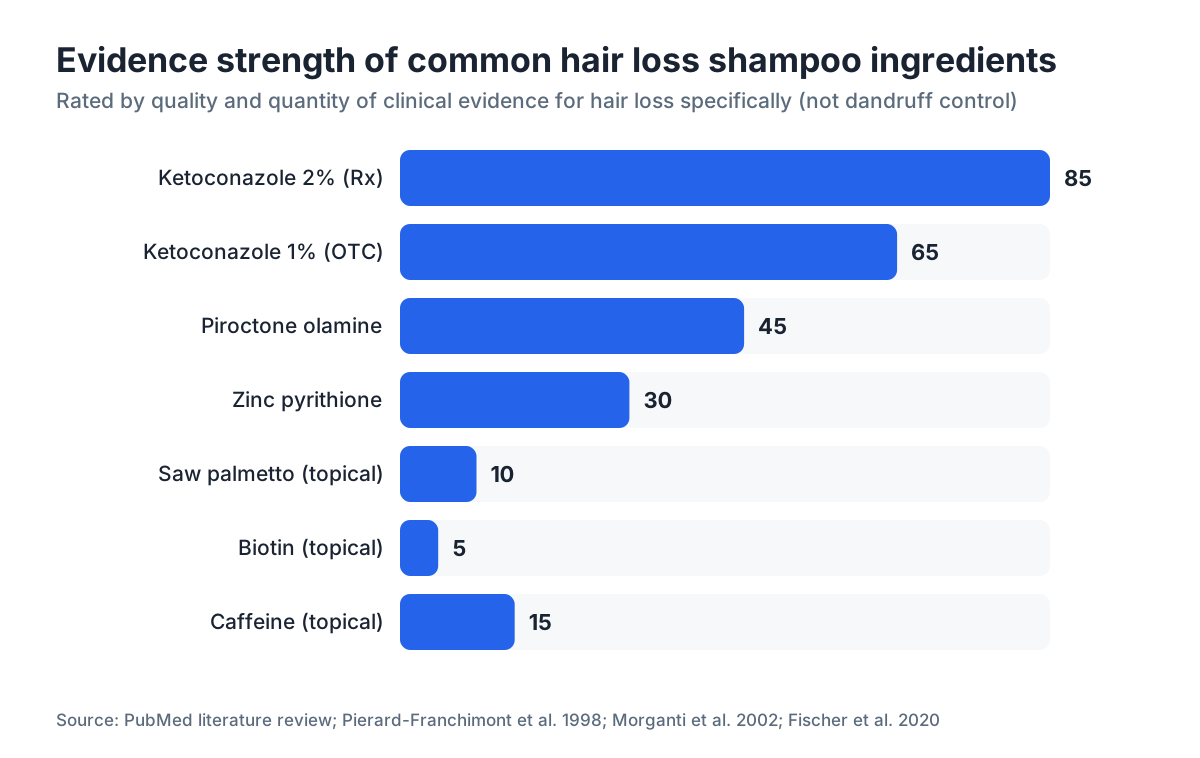
Ketoconazole has the most clinical data. It's an antifungal the FDA recognizes for dandruff and seborrheic dermatitis at the 1% and 2% strengths. A frequently cited 1998 study in the Journal of Dermatology (Pierard-Franchimont et al.) found that 2% ketoconazole shampoo used every 2 to 3 days produced hair density gains comparable to a 2% minoxidil solution in men with androgenetic alopecia [1]. That's a striking result, and it's been partly replicated, though the study was small and the methods have limits. The proposed reason: ketoconazole has some in-vitro anti-androgenic activity at the follicle, separate from its antifungal work [2]. Over-the-counter versions in the U.S. cap at 1% (Nizoral is the name most people know). Prescription 2% formulas exist but need a doctor.
Piroctone olamine is an antifungal used widely across Europe and Asia, found in some premium dandruff shampoos. A 2002 comparative study in Dermatology (Morganti et al.) reported it reduced hair lost during washing more than zinc pyrithione did [3]. The evidence base is thinner than ketoconazole's, but it's a reasonable ingredient to look for.
Zinc pyrithione sits in nearly every drugstore anti-dandruff bottle, and it does control Malassezia yeast, the fungus behind dandruff. Whether it touches follicle health beyond scalp cleanup is unclear. Weak evidence for regrowth, solid evidence for dandruff, which is what it claims.
Saw palmetto gets stirred into dozens of "DHT-blocking" shampoos because it inhibits 5-alpha reductase (the enzyme that turns testosterone into DHT) in a petri dish. The catch: even in oral supplement form, saw palmetto's evidence is modest. As a rinse-off shampoo ingredient, it's almost certainly below any useful threshold by the time the water hits it. It isn't dangerous. Paying extra for it in shampoo is money down the drain. If you want to understand DHT blockers properly, read up on how they work before you buy anything.
Biotin shampoos are popular and mostly pointless topically. Biotin deficiency is linked to hair loss, sure, but deficiency is rare in healthy men who eat a varied diet, and smearing biotin on your scalp doesn't fix a nutritional gap. Put that money toward a blood test if you actually suspect a deficiency.
How do hair loss shampoos compare to each other?
Here's what you're actually getting from each category, side by side.
| Category | Key ingredient | Evidence for hair loss | Best use case | Rough price |
|---|---|---|---|---|
| Ketoconazole 2% (Rx) | Ketoconazole | Strongest (small RCTs) | Scalp inflammation + possible follicle benefit | $15-30 with Rx |
| Ketoconazole 1% (OTC) | Ketoconazole | Moderate | Dandruff driving shedding | $10-20 |
| Zinc pyrithione | Zinc pyrithione | Weak for regrowth, good for dandruff | Scalp maintenance | $5-15 |
| Piroctone olamine | Piroctone olamine | Limited, promising | Dandruff + hair shedding reduction | $15-30 |
| Saw palmetto shampoo | Saw palmetto extract | Very weak (rinse-off) | Marketing; skip it | $15-40 |
| Biotin shampoo | Biotin | No credible topical evidence | Skip for hair loss | $10-25 |
| Caffeine shampoo | Caffeine | Preliminary in vitro only | Unproven; not worth premium | $15-35 |
My honest take: start with a 1% ketoconazole shampoo, two to three times a week. If you've got real dandruff or seborrheic dermatitis, ask a dermatologist about the 2% prescription version. Skip the exotic-ingredient shampoos unless you just like how they smell.
What's the best shampoo and conditioner for hair loss used together?
Conditioner matters more than most men with thinning hair expect, and the reason is indirect. When hair is thin, breakage makes the whole picture look worse fast. A good conditioner cuts mechanical damage during brushing and styling, which protects the look of density while you work on the actual cause.
The pairing that makes sense: a ketoconazole or zinc pyrithione shampoo on wash days, then a lightweight, sulfate-free conditioner on the mid-lengths and ends, never the scalp. Skip heavy silicone conditioners on the scalp because they can build up around follicles over time.
Worth looking for in a conditioner for thinning hair: hydrolyzed proteins (wheat, keratin, or silk), panthenol (provitamin B5), and niacinamide. They strengthen the shaft and cut breakage. None regrow hair. They make what you have look and feel thicker.
One thing to avoid: 2-in-1 shampoo-conditioners while you're using a medicated shampoo. Ketoconazole typically needs about five minutes of contact time. A 2-in-1 rushes it. Use them separately.
On topical minoxidil, apply it to a dry or towel-dried scalp after washing, not over a conditioner coating. Residue can mess with absorption. There's more on minoxidil side effects and timing if you're running both.
What's the best shampoo for hormonal hair loss in women?
Women searching this deserve a straight answer, not the "ask your doctor" brush-off. Ketoconazole shampoo is the most evidence-backed topical option for women too, same as for men.
Female hormonal hair loss (usually female pattern hair loss, or FPHL) runs on the same DHT sensitivity as the male version, though the pattern differs. Women tend to thin diffusely across the crown rather than lose a hairline. Hormonal shifts from pregnancy, postpartum recovery, menopause, polycystic ovary syndrome (PCOS), and thyroid disease all trigger or worsen shedding.
A 2020 review in Skin Appendage Disorders (Fischer et al.) noted ketoconazole's anti-androgenic properties and possible benefit in androgenetic alopecia regardless of sex [2]. The same 1% to 2% concentration guidance applies.
Postpartum hair loss is usually telogen effluvium, a temporary shed from the hormonal crash after delivery, not true pattern baldness. The American Academy of Dermatology notes it typically resolves within 6 to 12 months [8]. Shampoo won't speed that recovery, but a gentle sulfate-free formula reduces extra mechanical damage during a fragile stretch. More on the mechanism sits in the telogen effluvium piece.
With PCOS-related loss, the hormonal root dominates and shampoo is a small piece. Spironolactone or another anti-androgen from a dermatologist or endocrinologist addresses the real mechanism.
A practical note: women with fine, hormone-thinned hair often do better with volumizing, sulfate-free shampoos than with heavy moisturizing ones. Look for formulas that pair ketoconazole or piroctone olamine with a lightweight protein. Go easy on dry shampoos as a daily wash substitute, since buildup can feed scalp inflammation over time.
If you're not sure whether your shedding is hormonal, stress-related, or something else, sorting out what causes hair loss first will help you pick treatments that fit your situation.
How often should you use a hair loss shampoo?
It depends on the active ingredient, and the difference is bigger than the labels suggest.
Ketoconazole shampoo goes two to three times a week, with five minutes of contact time before you rinse, matching the protocol used in the trials [1]. Daily use isn't needed and can dry some people out.
Zinc pyrithione shampoos are gentler and can generally go daily. Most dermatologists suggest starting at three to four times a week and adjusting from there.
On your non-medicated wash days, a gentle sulfate-free shampoo is fine. You don't need to skip washing. Clean scalp, clean follicles.
One myth worth killing: washing your hair doesn't cause hair loss. You'll see shed hairs in the drain after a wash, but those hairs were already in the shed phase (telogen). Skipping washes for days just lets them pile up and fall out together next time, which looks alarming and isn't.
What do hair loss shampoos not do, so you don't waste money?
Hair loss shampoo cannot do these things, no matter what the bottle says.
It can't reverse genetic hair loss on its own. Androgenetic alopecia needs DHT suppression (finasteride, dutasteride), follicle stimulation (minoxidil), or eventually a hair transplant once enough follicles have miniaturized. Two minutes of lather substitutes for none of that.
It can't restore a miniaturized follicle. Once a follicle has shrunk from years of DHT exposure, a rinse-off product isn't reversing it.
It can't block systemic DHT. Saw palmetto, pumpkin seed oil, and similar plant extracts get hyped in shampoo copy, but blocking DHT through the body needs a drug that gets absorbed and stays. Pills do that. Shampoo doesn't.
Watch the marketing language. "Clinically proven" on a shampoo label usually means it was proven to clean hair or reduce flaking, not to regrow it. Read the actual claim, not the headline. "DHT-blocking shampoo" is almost always a claim with no pharmacokinetic data behind it.
If you've spent three months and real money on a shampoo with no change, move that budget to something with actual FDA recognition. The gap between a $5 zinc pyrithione shampoo and a $40 "hair growth formula" is mostly the bottle.
Should you combine a hair loss shampoo with minoxidil or finasteride?
Yes. This is where shampoo earns its spot in a routine.
Minoxidil and finasteride have the strongest evidence for male pattern hair loss. The FDA approved 2% and 5% topical minoxidil for men [4], and finasteride at 1mg for male pattern hair loss [5]. Neither is perfect alone. The combination of finasteride and minoxidil is what most dermatologists call the most effective non-surgical approach, and the JAAD treatment guidance lists both as primary therapy with ketoconazole shampoo among the adjuncts [9].
A ketoconazole shampoo layered on top keeps scalp inflammation down, which some researchers think helps both drugs work by keeping the follicular environment healthier. The 1998 head-to-head found 2% ketoconazole comparable to 2% minoxidil on its own [1], which suggests it's a real adjunct once you're already on 5% minoxidil.
Timing matters if you're on topical minoxidil. Apply it to a clean, dry scalp. Don't put it over conditioner residue. Wash, dry, apply minoxidil, then wait at least four hours before washing again.
Early in the process, know where you sit on the Norwood scale. A receding hairline at Norwood 2 responds very differently than diffuse loss at Norwood 5. Shampoo's contribution shifts with how much follicular miniaturization has already happened.
Are there any risks or side effects from hair loss shampoos?
Medicated shampoos are low-risk, but not risk-free.
Ketoconazole can cause contact dermatitis (scalp irritation, redness, or itching) in some people, more often with the 2% formula. A small share of users report texture changes or dryness. MedlinePlus lists contact dermatitis and scalp irritation as possible side effects of topical ketoconazole [10]. Systemic absorption from a rinse-off shampoo is very low and rarely causes the hormonal effects seen with oral antifungals at far higher doses [2]. If irritation shows up, drop to the 1% version or wash less often.
Zinc pyrithione is considered very safe at OTC strengths. Skin irritation happens but is uncommon.
Saw palmetto and other botanicals in shampoo are low-risk on the skin. The property that makes them appealing in theory (5-alpha reductase inhibition) is the same one tied to sexual side effects at higher oral doses in some men. At shampoo concentrations, rinsed off, that isn't a real concern.
None of these carry the systemic side effect profile of finasteride or the cardiovascular contraindications tied to oral minoxidil. They're low-stakes tools. The real risk is $20 wasted on a shampoo that does nothing, not harm to your health.
How do you know if a hair loss shampoo is working?
This is genuinely hard, because hair cycles are slow and shedding swings on its own.
The telogen phase (when hairs rest before shedding) runs roughly three months. Anything you start today won't clearly change your shedding for another 90 days. Don't judge a shampoo at two weeks.
Track it properly. Take photos in the same lighting every four weeks. Count shed hairs during washing if you want numbers. The American Academy of Dermatology puts normal daily shedding at 50 to 100 hairs [6], so 60 to 100 in a wash is within range. A drop in shedding plus the appearance of short, thin "baby hairs" (miniaturized hairs starting to recover) around the three-to-six-month mark is a good sign.
This is where a tool like the free AI scan at MyHairline helps. Instead of squinting at your hairline in a bad-lit bathroom mirror, an AI analysis gives you a baseline Norwood stage and pattern you can compare against later. It won't tell you whether a shampoo is working. It gives you an honest starting point so the comparisons mean something.
If shedding is speeding up or your hairline is receding fast despite consistent treatment, see a dermatologist. Some causes, like alopecia areata or thyroid disease, look like androgenetic alopecia at first glance but need completely different treatment. You can also look at hair loss supplements alongside shampoo, though supplements fix deficiencies and aren't proven growth agents in people who already eat well.
What's the difference between a hair loss shampoo and a hair growth shampoo?
Mostly marketing. The FDA doesn't recognize "hair growth shampoo" as a drug category. A product that claims to grow hair without an FDA-recognized active drug ingredient is a cosmetic making a cosmetic claim, not a drug making a medical one.
A shampoo with ketoconazole 1% marketed for dandruff is sold as an OTC drug with an approved Drug Facts label. That's regulated differently from a shampoo that says "promotes thicker, fuller-looking hair" with no active drug ingredient listed [7].
The practical move: look for the "Drug Facts" panel on the label. No panel means you're buying a cosmetic. Cosmetics can make hair look thicker through coating, volumizers, or protein deposits, but they don't act on follicles in any therapeutic way.
That distinction matters when money's involved. A $40 "hair growth shampoo" with no Drug Facts panel sits in the same regulatory bucket as bar soap. A $12 bottle of 1% ketoconazole is an OTC drug with a defined active ingredient at a regulated dose. The cheaper one is often the more serious product.
Sources
- Journal of Dermatology, Pierard-Franchimont et al. 1998 - Ketoconazole vs minoxidil study
- Skin Appendage Disorders, Fischer et al. 2020 - Ketoconazole review
- Dermatology, Morganti et al. 2002 - Piroctone olamine vs zinc pyrithione
- FDA - Minoxidil OTC approval information
- FDA - Finasteride (Propecia) drug label
- American Academy of Dermatology - Hair loss overview
- FDA - OTC drug monograph: dandruff, seborrheic dermatitis, psoriasis
- American Academy of Dermatology - Female pattern hair loss
- Journal of the American Academy of Dermatology - Androgenetic alopecia treatment guidelines
- National Institutes of Health, MedlinePlus - Ketoconazole topical