

TL;DR: High blood pressure does not directly cause hair loss in women. But several common blood pressure drugs, especially beta-blockers and ACE inhibitors, are documented triggers of telogen effluvium, a reversible shedding pattern. Chronic stress also raises blood pressure and disrupts the hair cycle at the same time. Shedding usually reverses within three to six months once the trigger is gone.
Does high blood pressure actually cause hair loss in women?
Not directly. Hypertension by itself has not been shown in clinical literature to miniaturize hair follicles or drive excessive shedding in women [1]. The follicle does need a steady blood supply, so severe, longstanding vascular disease could in theory starve scalp circulation. But that is end-organ damage territory, not the elevated readings most women are managing.
What the research shows instead is that the connection runs through two separate channels. Many blood pressure drugs are documented hair-loss triggers [2]. And the same chronic stress that pushes blood pressure up also shoves hair follicles into their resting phase, which shows up as shedding two to four months later [3]. So women often get both problems at once, from the same upstream cause. That makes it easy to blame the blood pressure when the real culprit is the medication or the stress.
If you started a new blood pressure drug and noticed diffuse shedding roughly eight to twelve weeks later, that timing is no accident.
Which blood pressure medications cause hair loss in women?
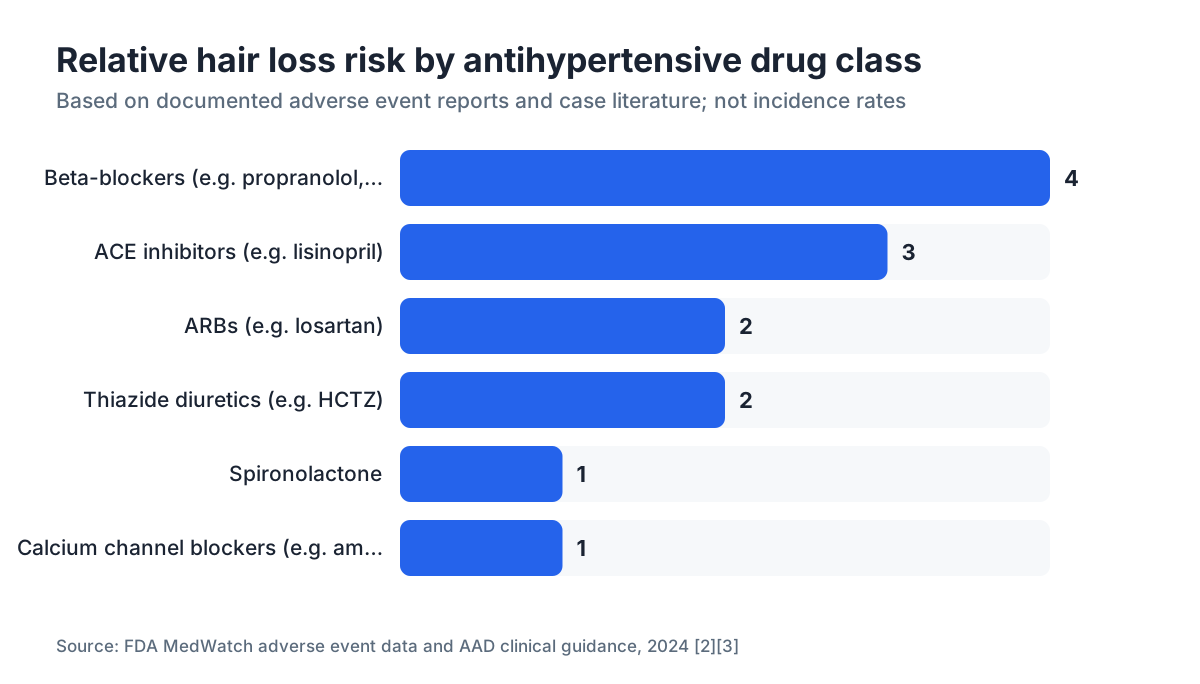
Beta-blockers carry the strongest and most replicated signal. Metoprolol, atenolol, and propranolol all appear on FDA adverse-effect data for telogen effluvium [2]. ACE inhibitors are next, with ARBs, diuretics, and calcium channel blockers trailing behind. This is the question most doctors skip during a medication review, and it matters.
The mechanism behind beta-blockers is not settled. The leading idea is that they shift follicles out of the growth phase (anagen) and into the resting phase (telogen) by interfering with adrenergic receptors in the follicle itself [4]. Propranolol also crosses the blood-brain barrier, which may add a stress-pathway effect on top.
ACE inhibitors come next. Lisinopril and enalapril have both been tied to alopecia in post-marketing surveillance and case series, though the reported incidence stays under 1% in most databases [2].
Angiotensin II receptor blockers (ARBs) like losartan and valsartan carry a smaller but real risk. Spironolactone is the odd one out: at higher doses it actually treats female-pattern hair loss because it blocks androgens, but at the lower doses used for blood pressure, that benefit is less reliable [5].
Calcium channel blockers like amlodipine and diltiazem have the weakest hair-loss signal of the major classes. They are often the recommended switch when a woman is shedding on something else.
| Medication class | Examples | Hair loss risk level | Notes |
|---|---|---|---|
| Beta-blockers | Metoprolol, propranolol, atenolol | High | Most documented signal; telogen effluvium |
| ACE inhibitors | Lisinopril, enalapril | Moderate | Alopecia in post-marketing data; <1% incidence |
| ARBs | Losartan, valsartan | Low-moderate | Case reports; less common than ACE |
| Spironolactone | Spironolactone | Low (may help) | Anti-androgenic; sometimes used to treat female hair loss |
| Calcium channel blockers | Amlodipine, diltiazem | Low | Weakest signal; sometimes preferred switch |
| Thiazide diuretics | Hydrochlorothiazide | Low-moderate | Some case reports; often combined with other agents |
On a beta-blocker and losing hair? Bring it up with your cardiologist or GP. Switching classes is not always possible depending on the cardiac reason you are on it, but it is a fair conversation to have.
What is telogen effluvium and why does it keep coming up here?
Telogen effluvium is the mechanism behind almost every medication-related and stress-related hair loss story in women. Get this one concept and the rest of the article clicks.
Your scalp holds roughly 100,000 hairs. At any moment, about 85 to 90 percent are actively growing (anagen) and 10 to 15 percent are resting and about to shed (telogen) [3]. A shock to the system, a drug, a surgery, a severe illness, a crash diet, or months of emotional stress, can push a large chunk of follicles into telogen all at once. Two to four months later, those hairs let go together. The handfuls in the shower. The clogged brush. That is telogen effluvium.
The American Academy of Dermatology says most cases clear on their own once the trigger is removed, usually within three to six months, though recovery drags on if the trigger sticks around or if androgenetic alopecia is layered underneath [6]. Our guide to telogen effluvium walks through the full pattern.
Here is the practical read for women managing high blood pressure. If your shedding started eight to sixteen weeks after a medication change, a hard life event, or a major illness, telogen effluvium is the most likely explanation. That is actually good news, because it reverses.
Can chronic stress cause both high blood pressure and hair loss at the same time?
Yes, and it is the most underrated piece of this whole picture. The stress does not cause the hair loss through the blood pressure. It causes both, separately, at the same time.
Chronic psychological stress fires up the hypothalamic-pituitary-adrenal (HPA) axis, flooding the body with cortisol and catecholamines. Sustained cortisol raises blood pressure through sodium retention and vasoconstriction, among other routes [7]. Those same stress hormones knock the hair cycle off track. A 2021 Nature study found that corticosterone (the rodent version of cortisol) suppresses hair follicle stem cell activation by depleting a signaling molecule called GAS6, which stalls the return to the growth phase. The authors state plainly that "corticosterone suppresses hair follicle stem cell activation" [8].
So a woman grinding through a brutal stretch at work, a divorce, or a serious illness may notice her blood pressure creeping up at the same physical where she first sees a thinner ponytail. Neither one caused the other.
This distinction changes what you do next. Treat stress-driven shedding as a drug side effect and you chase the wrong fix. Address the stressor, through therapy, lifestyle change, or medical management, and you are pulling the actual lever.
Are there other conditions that cause both high blood pressure and hair loss in women?
A handful of conditions sit right at this overlap, and they are worth ruling out with your doctor before you blame a medication. Thyroid disease, PCOS, autoimmune conditions, and iron deficiency are the ones to check.
Thyroid disease tops the list. Both hypothyroidism and hyperthyroidism cause diffuse hair loss, and thyroid dysfunction is a known secondary cause of hypertension [9]. A TSH and free T4 answer the question fast.
Polycystic ovary syndrome (PCOS) matters too. PCOS raises androgen levels, which drives female-pattern hair loss, and it links to insulin resistance and elevated blood pressure in a meaningful share of affected women [9].
Autoimmune conditions like lupus can produce both alopecia and secondary hypertension through kidney involvement.
Iron deficiency deserves its own line. It is extremely common in premenopausal women, it causes diffuse shedding, and severe anemia strains the cardiovascular system. A ferritin below 30 ng/mL is tied to hair shedding in some studies, though the exact cutoff is still argued [6].
Losing hair with elevated blood pressure? A reasonable basic workup covers TSH, CBC, ferritin, and a metabolic panel. That catches the most common reversible causes off a single routine blood draw.
How do doctors diagnose the cause of hair loss in women with hypertension?
Diagnosis here is mostly clinical. A good history beats any single test.
Dermatologists usually start with a detailed medication timeline. When did you start each blood pressure drug? When did the shedding begin? The lag between starting a drug and losing hair is the biggest clue. A pull test, where the examiner gently tugs about 60 hairs and counts how many release in the resting phase, quantifies active effluvium [6]. Trichoscopy (dermoscopy of the scalp) tells telogen effluvium apart from androgenetic alopecia by reading hair shaft diameter variability and follicular unit patterns.
Bloodwork usually covers thyroid function, iron stores (ferritin specifically, more than hemoglobin), and androgens if PCOS or androgenetic alopecia is on the table [6]. A scalp biopsy stays in reserve for genuinely ambiguous cases, because it is invasive and the histology of early androgenetic alopecia and telogen effluvium can look alike.
Want a sense of where your shedding pattern sits before that first dermatology visit? MyHairline's free AI scan gives a quick visual read on your hairline and density, which makes a useful starting point for the conversation.
One thing above all: bring your complete medication list, including over-the-counter supplements and hormonal contraceptives, to any hair loss appointment. Women are often surprised that their birth control or an herbal supplement is on the radar.
What treatments actually help hair loss caused by blood pressure medication?
The first and most effective move, if it is medically safe, is switching off the drug that is causing it. Shedding typically starts to slow within one to two months of stopping the trigger and reverses visibly over three to six months [3]. If you are on a beta-blocker for plain essential hypertension without a specific cardiac reason like heart failure or arrhythmia, your physician may have room to try an ARB or a calcium channel blocker instead.
When switching is off the table, topical minoxidil has the most evidence for women with diffuse hair loss [6]. The FDA approved 2% minoxidil solution for women in 1991, and the 5% foam gets wide off-label use in women with good tolerability. Minoxidil stretches the growth phase and thickens follicles. It does not fix the underlying trigger, but it can hold the line on shedding while you and your doctor sort out the medication question. Read the minoxidil side effects guide before you start.
Oral minoxidil at very low doses (0.25 to 1.25 mg daily) is catching on for women who find the topical messy or irritating. Cardiac risk at these doses is considered low in otherwise healthy adults, but discuss it carefully if your cardiovascular history is already complicated. The oral minoxidil overview covers how dosing works.
Spironolactone does double duty for some women. It lowers blood pressure (it is an aldosterone antagonist used as a diuretic) and at 100 to 200 mg daily it cuts androgen-driven hair loss [5]. If your dermatologist and cardiologist agree, it can be a smart pick when androgenetic alopecia is also in the mix. It is not a first-line blood pressure drug, so this takes real coordination between providers.
For women with confirmed androgenetic alopecia stacked on top of medication-related shedding, DHT blockers and other targeted treatments may come into play, though the options for women are thinner than for men. Finasteride gets off-label use in some postmenopausal women. Read the evidence in our finasteride article before you raise it with your dermatologist.
How long does it take for hair to grow back after stopping a blood pressure medication?
Set your expectations early, because the timeline is longer than most people hope. Most dermatologists quote three to six months before shedding slows, and six to twelve months before you see meaningful regrowth [3].
Stopping the drug or resolving the stressor does not snap the follicles back into growth. You are waiting for the telogen phase to end, anagen to restart, and new hair to grow long enough to add visible density. That takes time no shortcut fixes.
If the shedding piled onto pre-existing androgenetic alopecia, you may not land back at your old baseline. Medication-triggered effluvium can uncover female-pattern hair loss that was quietly there all along. That is a frustrating thing to learn, but it is better to know, because androgenetic alopecia has its own treatments.
Patience is the honest advice. That three-month mark where shedding finally eases often feels like relief after months of worry, even though visible density takes longer to come back.
Does minoxidil interact with blood pressure medication?
It is a real concern, so let's be direct about it. Topical minoxidil is low-risk for most people; oral minoxidil is a different conversation that needs physician oversight.
Topical minoxidil at standard strength (2% or 5% on the scalp) barely gets into the bloodstream, typically under 2% of the applied dose [10]. At that level, clinically meaningful blood-pressure-lowering interactions with antihypertensives are unlikely in most patients. If you already run low blood pressure or take several antihypertensives, even small extra vasodilation is worth flagging with your prescriber first.
Oral minoxidil started life as an oral blood pressure drug before its hair-regrowth effect turned up as a side effect. At the low doses used for hair loss (0.25 to 2.5 mg), blood-pressure effects are generally modest, but combining it with existing antihypertensives genuinely needs a physician watching [10]. Do not start oral minoxidil without telling your cardiologist or GP what you take for blood pressure.
Tell the full story to both your dermatologist and the provider managing your hypertension. No half pictures.
What lifestyle changes help both high blood pressure and hair health in women?
There is genuine overlap here, and not in a soft wellness way. It works through shared mechanisms.
Aerobic exercise lowers blood pressure through well-documented cardiovascular routes, and it also brings chronic cortisol down, which eases the HPA-driven follicle disruption described earlier [7]. The American Heart Association recommends at least 150 minutes of moderate aerobic activity per week for blood pressure management [11].
Diet changes that cut sodium and add potassium, the DASH approach, lower blood pressure measurably. Enough protein (at least 1.2 grams per kilogram of body weight daily) supports the keratin your follicles need. Severe caloric restriction and crash dieting are established telogen effluvium triggers [3], so any weight-loss plan aggressive enough to read as a starvation response will worsen hair loss even while it nudges your blood pressure numbers down short-term.
Sleep counts too. Skimping on sleep raises cortisol and sympathetic tone, pushing up blood pressure and disrupting the hair cycle at the same time. Seven to nine hours is the target, though the hair-loss research here is thinner than the cardiovascular side [7].
For broader context, our overview of what causes hair loss covers diet, stress, hormones, and genetics in one place.
When should a woman with high blood pressure see a dermatologist about hair loss?
See a dermatologist, more than your GP, if shedding has run longer than three months, if you estimate you are losing more than roughly 150 to 200 hairs a day, if you notice visible thinning at the crown or a widening part rather than even diffuse shedding, or if the loss is patchy [6]. Patchy loss points toward alopecia areata, an autoimmune condition that needs its own treatment track.
Go sooner if you have already stopped or switched a suspected medication and the shedding has not slowed after three months. That suggests a different mechanism is at work, whether androgenetic alopecia, an undiagnosed thyroid problem, or something else.
Bring your blood pressure medication list, a timeline of when you started each drug and when the hair loss began, and any prior bloodwork. The more of that you walk in with, the faster the appointment reaches a useful answer.
For a quick snapshot of your pattern before that visit, run a free AI hair scan at MyHairline to get a visual read on your loss pattern.
Sources
- National Heart, Lung, and Blood Institute - High Blood Pressure
- FDA - MedWatch Adverse Event Reporting Program (beta-blockers, ACE inhibitors listed in prescribing information adverse effects)
- American Academy of Dermatology - Hair loss types and treatment
- Hughes EC, Saleh D. Telogen Effluvium. StatPearls. NCBI Bookshelf.
- Sinclair R et al. Spironolactone for female pattern hair loss. Journal of the American Academy of Dermatology.
- American Academy of Dermatology - Hair loss: diagnosis and treatment
- American Heart Association - High Blood Pressure
- Choi S, et al. Corticosterone inhibits GAS6 to govern hair follicle stem-cell quiescence. Nature. 2021;592(7854):428-432.
- MedlinePlus (National Library of Medicine) - Hair loss and secondary hypertension causes
- FDA - Drugs@FDA prescribing information (minoxidil)
- American Heart Association - The Facts About High Blood Pressure
- Malkud S. Telogen Effluvium: A Review. Journal of Clinical and Diagnostic Research. 2015;9(9):WE01-WE03.