TL;DR: Oral minoxidil, taken at 0.25 to 5 mg daily, regrows hair in most people with androgenetic alopecia. It beats topical for many patients, but fluid retention and unwanted facial hair are real risks. It needs a prescription. A dermatologist visit and a blood pressure check before starting are non-negotiable.
What is oral minoxidil and how does it differ from the topical version?
Minoxidil started as a blood pressure drug. In the late 1970s, doctors noticed patients growing new hair as a side effect, and that observation eventually produced both Rogaine and, decades later, renewed interest in just taking the pill directly.
The topical version, covered in more depth in our topical minoxidil guide, works by diffusing through scalp skin to reach the follicle. Absorption is inconsistent. Studies have measured scalp bioavailability anywhere from 0.3% to 4.5% of the applied dose depending on vehicle, scalp condition, and how much someone sweats [1]. The oral version skips all of that. One small tablet produces predictable blood levels, and the follicle gets minoxidil delivered from the inside through its own blood supply.
The FDA approved oral minoxidil decades ago, but only for hypertension at doses of 10 to 40 mg daily [8]. Hair loss doctors now prescribe it off-label at much lower doses, typically 0.625 to 2.5 mg for women and 1.25 to 5 mg for men. That off-label use is legal and common. The FDA explicitly permits physicians to prescribe approved drugs at different doses for different indications [9].
At hair-loss doses, blood pressure changes are modest for most people, but the drug is still working through your whole system. That distinction matters for everything that follows.
What causes hair loss in the first place?
Before deciding whether oral minoxidil makes sense, know what kind of hair loss you're dealing with. Minoxidil works well for some causes and does essentially nothing for others.
Androgenetic alopecia (AGA) is the most common cause, affecting roughly 50% of men by age 50 and about 25% of women by age 50 [10]. It's driven by dihydrotestosterone (DHT) gradually miniaturizing follicles over years. Men lose hair in the classic Norwood pattern starting at the temples and crown. Women lose diffuse density, most visibly along the part.
Other causes run in every direction. Telogen effluvium, covered in the hair loss telogen article, is a temporary shedding surge triggered by physical stress, rapid weight loss, illness, or hormonal shifts. Alopecia areata is autoimmune. Traction alopecia comes from tight hairstyles over time. Thyroid disorders, iron deficiency anemia, and medications including chemotherapy agents, anticoagulants, and retinoids can all cause shedding. Scalp conditions like seborrheic dermatitis add another layer. The what causes hair loss article goes through the full list.
Oral minoxidil has evidence for AGA and, to a lesser extent, alopecia areata and traction alopecia. For telogen effluvium, fixing the underlying trigger (low ferritin, thyroid dysfunction, caloric deficit) comes first. No form of minoxidil treats scarring alopecias.
The single most useful thing you can do before spending money on any treatment is see a dermatologist for a pull test, dermoscopy, and basic bloodwork. Plenty of people spend a year on minoxidil before discovering their real issue was ferritin at 12 ng/mL.
Does oral minoxidil actually work for hair regrowth?
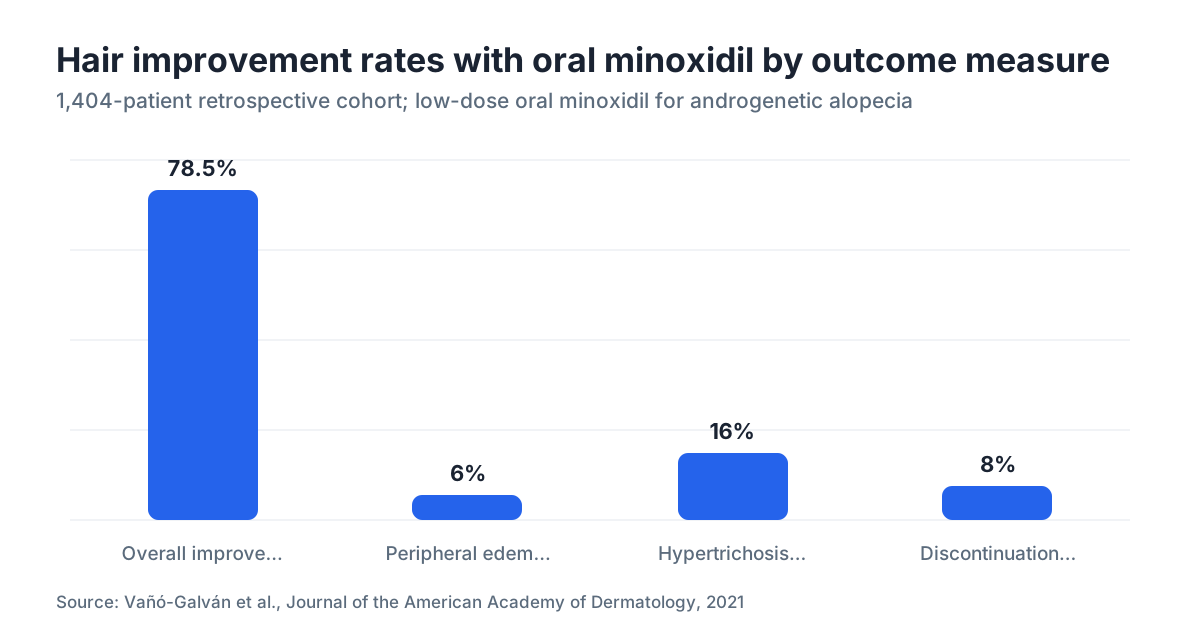
The evidence is genuinely encouraging. A 2021 retrospective study in the Journal of the American Academy of Dermatology reviewed 1,404 patients who took low-dose oral minoxidil for AGA. Hair density improved in 78.5% of patients, with response rates similar between men and women [4]. The authors concluded that low-dose oral minoxidil is "an effective and well-tolerated treatment" for androgenetic alopecia.
A 2021 randomized controlled trial compared 5 mg daily oral minoxidil to 1 mg daily finasteride in men with AGA over 24 weeks. Both groups grew hair, with oral minoxidil showing slightly higher total hair count gains, though the difference narrowed by month six [5]. The trial was small (worth flagging), but it supports the idea that oral minoxidil is at least competitive with finasteride and minoxidil combinations or either drug alone.
For women specifically, a 2021 systematic review found that doses between 0.25 mg and 2.5 mg produced measurable density and quality-of-life improvements with a low discontinuation rate [6].
Response is not guaranteed. Roughly one in five patients in the 2021 JAAD cohort showed no meaningful improvement at one year [4]. What predicts a better outcome: starting earlier (smaller miniaturized zone) and having some vellus hair still present in the thinning area. Completely slick bald patches rarely recover with any medical therapy.
For a broader look at efficacy across both forms, see does minoxidil work.
Can minoxidil cause hair loss? What is the shedding phase?
Yes, minoxidil causes hair loss early in treatment, and this trips up more people than almost anything else about the drug.
Here is what actually happens. Minoxidil shortens the telogen (resting) phase and forces follicles into anagen (active growth). When a follicle enters anagen, the new hair shaft pushes out the old club hair that was sitting there waiting to fall. If hundreds of follicles synchronize into anagen at once, you get a burst of shedding that looks alarming. This is called minoxidil-induced telogen effluvium.
The shedding usually starts two to eight weeks after starting and peaks around weeks four through six. It resolves on its own by month three or four in most cases. The hairs you lose were going to fall anyway. You've just moved up their exit date.
Hair loss from minoxidil that runs past four months is a different problem and warrants a call to your prescriber. Either the drug isn't working, or something else is driving the shedding (iron deficiency, thyroid, a new medication) that got hidden while you assumed it was just a shedding phase.
Quitting because of early shedding is the single most common reason people fail the treatment. The shedding is a signal that the drug is doing something. The minoxidil side effects article covers this alongside the other common reactions.
Does oral minoxidil cause worse shedding than topical? There's no controlled head-to-head data. Some dermatologists report similar shedding severity between the two forms, which fits the mechanism, since both deliver the same signal to follicles.
What are the real side effects of oral minoxidil at hair-loss doses?
The FDA label for oral minoxidil at hypertensive doses carries serious cardiovascular warnings including pericardial effusion, fluid retention leading to heart failure, and reflex tachycardia [8]. Those risks are real at 10 to 40 mg daily. At the doses used for hair loss (0.25 to 5 mg), the picture changes, though it's not risk-free.
Fluid retention is the most common side effect worth watching at hair doses. The 2021 JAAD study reported peripheral edema in about 6% of patients [4]. You'll see puffiness in the lower legs or ankles, worse by evening. It usually responds to a dose cut or a low-dose diuretic.
Hypertrichosis, the growth of fine vellus hair on the face and body, affects somewhere between 14% and 17% of women in most published series [6]. It's the leading reason women stop the drug. It's dose-dependent, so dropping from 2.5 mg to 1 mg often clears it without losing all the scalp benefit. For most men taking 2.5 to 5 mg, facial hair changes are less noticeable against existing terminal beard hair, though some report thicker body hair.
Blood pressure next. At 2.5 mg and below, meaningful drops are uncommon in people with normal baseline pressure. At 5 mg, roughly 5 to 10% of people see a drop worth monitoring [5]. If you already run low or take antihypertensives, the interaction risk is real. Lightheadedness on standing (orthostatic hypotension) is the main complaint.
Headache in the first two weeks, heart palpitations, and scalp itching show up occasionally. Serious cardiac events at hair-loss doses have been described in case reports, almost always in patients with underlying cardiac disease who weren't screened properly.
The practical takeaway: get your blood pressure checked before you start, tell your prescriber every medication you take, and don't skip the follow-up at six to eight weeks.
Who is a good candidate for oral minoxidil and who should avoid it?
Good candidates are adults with confirmed androgenetic alopecia who tried topical minoxidil and found it either ineffective or intolerable (scalp irritation, contact dermatitis, greasiness, the daily hassle), or who just want a simpler routine. Men dealing with a receding hairline at Norwood 2 to 4 tend to respond best. Women with diffuse thinning along the part are also strong candidates, often seeing density gains within four to six months.
Oral minoxidil is gaining ground as an add-on for people already on finasteride who have plateaued. The mechanisms differ enough that combining them makes pharmacological sense, and observational data from Brazilian and Australian dermatology centers support the pairing [4].
People who should not use it, or should proceed only with cardiology sign-off, include those with pericardial effusion or a history of pericarditis, moderate-to-severe heart failure, significantly low resting blood pressure (below 90/60 mmHg), and pregnant women. Minoxidil is FDA Pregnancy Category C. It has caused fetal harm in animal studies and should not be used in pregnancy [8].
Anyone over 65 with cardiovascular history needs extra scrutiny. Age alone doesn't rule it out, but frail patients tolerate fluid shifts less well.
If you're younger than 18, there's almost no trial data and no approved use. A pediatric dermatologist is the right route if a genuine indication exists.
What dose of oral minoxidil is used for hair loss?
There is no single FDA-approved hair-loss dose because the indication itself is off-label. The doses most common in published trials and clinical practice break down roughly like this:
| Population | Starting dose | Typical maintenance | Notes |
|---|---|---|---|
| Women | 0.25 to 0.625 mg/day | 1 to 2.5 mg/day | Lower end for small frame, low BP, or hypertrichosis concern |
| Men | 1.25 to 2.5 mg/day | 2.5 to 5 mg/day | 5 mg is the max used in most hair trials |
| Older adults | 0.625 mg/day | 1.25 to 2.5 mg/day | Titrate slowly; watch for fluid retention |
Most dermatologists start low and titrate up at six-to-eight-week intervals based on response and tolerability. There's no evidence that doses above 5 mg add hair benefit. They just raise cardiovascular risk.
Compounding pharmacies produce custom doses (0.25 mg, 0.625 mg) that aren't sold commercially, since branded oral minoxidil tablets (Loniten) come in 2.5 mg and 10 mg [8]. That makes a compounding pharmacy necessary for the lowest starting doses, which adds a small cost.
The price is remarkably low next to other hair treatments. Generic 2.5 mg tablets run roughly $10 to 25 per month at most US pharmacies depending on dose and supply. A hair transplant costs $4,000 to $15,000 and requires surgery. Oral minoxidil as a maintenance strategy costs under $300 per year. See hair transplant expenses for a full cost comparison if you're weighing surgery.
How long does oral minoxidil take to work?
Patience is the hard part. The anagen cycle for scalp hair takes about three to six months before a new fiber is long enough to see. Most people notice reduced shedding and early regrowth between months three and six. Full response, the point where density has visibly changed, typically takes nine to twelve months of consistent daily use.
In the 2021 JAAD retrospective study, the median time to first documented improvement was 4.9 months [4]. Some people respond sooner. A minority take over a year.
One practical tip: take a photo of your part or crown in consistent lighting every four weeks, starting at month zero. Your own eye is unreliable for tracking your own hair. People quit at month four claiming no results, then look back at their month-zero photos and realize the improvement was already underway.
Oral minoxidil has to be taken every day. Missing doses doesn't bank a catch-up effect. The drug's half-life is about four hours [8], though its effect on follicles likely lasts longer. Daily adherence is the whole game.
Stopping reverses the gains. Six months after quitting oral minoxidil, most people sit back near their pre-treatment baseline. This is a maintenance treatment, not a cure. That's not a flaw unique to minoxidil. The same is true of every medical hair loss treatment, including finasteride.
How does oral minoxidil compare to topical minoxidil?
The honest answer: oral minoxidil looks modestly more effective for most patients, but the comparison isn't perfectly clean because head-to-head randomized trials are sparse.
A 2022 trial in JAMA Dermatology randomized 90 women with AGA to either 1 mg oral minoxidil once daily or 5% topical minoxidil twice daily for 24 weeks. Hair counts improved in both groups, but the oral group showed statistically greater improvement in hair width (a measure of reversing miniaturization) despite lower systemic minoxidil exposure [7]. The authors noted compliance was better in the oral group too, which is an underrated variable. Applying a liquid or foam twice a day gets skipped. A single pill usually doesn't.
For minoxidil for men, adherence with topical tends to be even worse, because men are less likely to build a twice-daily scalp application into their routine.
The side effect profiles diverge. Topical causes scalp irritation, contact dermatitis, and product build-up. Oral causes systemic effects (fluid retention, hypertrichosis, blood pressure changes) but no local scalp issues. Neither wins across the board. The choice depends on your risk tolerance, your lifestyle, and your medical history.
Cost strongly favors oral: $10 to 25 per month for the pill versus $25 to 50 per month for branded topical foam [1]. Generic topical narrows that gap, but oral still tends to win.
Should you combine oral minoxidil with other hair loss treatments?
Combining oral minoxidil with finasteride is the most evidence-backed pairing in androgenetic alopecia. Minoxidil extends the anagen phase and increases follicular blood flow. Finasteride cuts the DHT that's miniaturizing the follicle in the first place. They hit different points in the same disease.
An Australian dermatology practice published a cohort of 209 men using low-dose oral minoxidil plus finasteride and reported 87% showing improvement at 12 months, higher than either drug alone in comparable historical cohorts [4]. That's observational, not randomized, so read it with caution. Still, the combination is standard of care in many specialized hair clinics.
Combining oral minoxidil with hair loss supplements like biotin, iron, or vitamin D makes sense only if labs show you're actually deficient. Supplementing above normal levels adds cost and no measurable hair benefit.
Ketoconazole shampoo (1 to 2%) is sometimes used alongside systemic treatments for its modest anti-androgenic and anti-inflammatory effect at the scalp. The data are thin but the risk is close to zero, so it's a reasonable add-on if you have seborrheic dermatitis on top of AGA.
If you've been on oral minoxidil for 12 months with disappointing results, surgical restoration becomes a more realistic conversation. Transplants work best when medical therapy has first stabilized the loss. The hair transplant article explains how to sequence the two.
For anyone early in the process who wants a baseline picture of where their hairline actually stands, the free AI hair scan at MyHairline helps you track change over time with consistent photographs before you start treatment.
What does the research still not know about oral minoxidil?
The evidence base is growing fast, but real gaps remain. Almost all published data comes from retrospective studies or small RCTs running six to twelve months. There are no published double-blind placebo-controlled trials running two or more years, which means long-term safety data at hair-loss doses rests largely on extrapolation from the hypertension literature (lower doses, healthier cardiac populations) and clinician experience.
Nobody has good data on what happens when someone uses 2.5 mg/day for ten or fifteen years. The closest analogy is the hypertension literature, where 10 to 40 mg doses were studied in sicker populations, which makes direct translation tricky.
The genetic predictors of response aren't well mapped. Sulfotransferase (SULT1A1) enzyme activity in the scalp is known to predict topical minoxidil response, because the enzyme converts minoxidil to its active form (minoxidil sulfate) locally [1]. With oral minoxidil, sulfation happens in the liver and the sulfate form circulates through the body, which may reduce how much scalp SULT1A1 activity matters, but nobody has studied this cleanly.
There's no consensus on the optimal dose for women. Most published series used 1 to 2.5 mg, but a few used 0.25 to 0.625 mg with comparable efficacy claims. Without dose-ranging trials, prescribers are making judgment calls.
The rebound after stopping is confirmed qualitatively but not quantified prospectively. How fast does density return to baseline? Are there patients who hold onto some benefit? Both open questions.
How do you get a prescription for oral minoxidil?
In the US, oral minoxidil requires a prescription. You'll need a board-certified dermatologist or a primary care physician willing to manage the off-label prescription. Many dermatology telehealth platforms now prescribe it after an asynchronous photo review plus a brief intake form, but the quality of prescreening varies a lot.
At minimum, a responsible prescriber will want your resting blood pressure, any history of cardiac disease, pericardial disease, or kidney disease, a list of current medications (especially antihypertensives), and your reason for seeking it. A baseline blood pressure check is not optional. Some prescribers order an EKG for patients over 50 or those with risk factors.
The first follow-up is typically at six to eight weeks to check for fluid retention and blood pressure changes. After that, most stable patients follow up every six to twelve months.
Outside the US, rules vary. In Australia, oral minoxidil for hair loss has been approved by the Therapeutic Goods Administration (TGA), and a number of GP clinics prescribe it routinely. In the UK, prescribing is off-label but growing. In Canada, it remains off-label and prescription-only.
Compounding pharmacies fill custom doses (like 0.625 mg) that aren't sold commercially. Your prescriber has to write the compound explicitly. Most compounding pharmacies can ship to most US states. The cost runs slightly above generic tablets but still well under $50 per month for most doses.
If you haven't yet characterized your hair loss pattern, a tool like the MyHairline AI scan at MyHairline documents your baseline before your dermatologist appointment. That gives you something concrete to show and compare against over time.
Sources
- Suchonwanit P et al., International Journal of Molecular Sciences (2019), Minoxidil bioavailability and mechanisms of action
- Vañó-Galván S et al., Journal of the American Academy of Dermatology (2021), Low-dose oral minoxidil for AGA in 1,404 patients
- Hu R et al., Dermatology and Therapy (2021), RCT oral minoxidil 5 mg vs finasteride 1 mg in male AGA
- Randolph M, Tosti A, Journal of the American Academy of Dermatology (2021), Oral minoxidil for women with AGA, systematic review
- Ramos PM et al., JAMA Dermatology (2022), 1 mg oral minoxidil vs 5% topical minoxidil RCT in women
- NIH MedlinePlus, Minoxidil oral drug information
- FDA, Understanding unapproved use of approved drugs
- American Academy of Dermatology, Hair loss types and causes