
TL;DR: Hims offers finasteride (1 mg/day) as its primary DHT blocker, the same FDA-approved molecule sold generically for under $1/day. Clinical trials show it slows hair loss in roughly 83% of men and regrows hair in about 66% after two years. It is prescription-only, requires a telehealth consult, and carries real sexual side-effect risks worth understanding before you start.
What exactly is a DHT blocker and why does hair loss come down to DHT?
DHT stands for dihydrotestosterone. It is a hormone made when an enzyme called 5-alpha-reductase converts testosterone into a more potent androgen. In men and women who are genetically sensitive, DHT binds to receptors in hair follicles and gradually miniaturizes them, turning thick terminal hairs into the thin, barely-visible vellus hairs that characterize androgenetic alopecia (pattern hair loss). [1]
The follicle does not die immediately. It shrinks across multiple growth cycles, which is why catching it early matters more than most people realize. By the time the bald patch is obvious, many follicles in that area are already severely miniaturized, and some are gone for good. That is the core argument for blocking DHT: slow or stop the miniaturization before the follicle is past saving.
DHT blockers work by either blocking the 5-alpha-reductase enzyme (so less DHT gets made) or, in theory, by competing for the androgen receptor at the follicle level. Finasteride does the former. So does dutasteride, which blocks both type 1 and type 2 of the enzyme versus finasteride's focus on type 2. Saw palmetto is sometimes marketed as a "natural" DHT blocker; the evidence for it is far weaker, which matters when choosing a product. For more background on the hormone mechanism, see our full guide on DHT blockers.
Androgenetic alopecia affects roughly 50 million men and 30 million women in the United States, according to the American Academy of Dermatology. [2] That scale explains why the market for DHT blockers is large and why telehealth companies like Hims entered it aggressively.
What DHT-blocking products does Hims actually sell?
Hims markets several products under the umbrella of "hair loss treatment," and not all of them are DHT blockers. Here is what the lineup actually contains as of 2025:
| Product | Active ingredient | DHT-blocking mechanism | Rx required? |
|---|---|---|---|
| Finasteride 1 mg tablets | Finasteride | 5-AR type 2 inhibitor | Yes |
| Finasteride + Minoxidil topical spray | Finasteride 0.3% + Minoxidil 6% | 5-AR inhibition + vasodilation | Yes |
| Minoxidil foam/solution | Minoxidil 5% | None (not a DHT blocker) | No |
| "Thickening" shampoos/biotin supplements | Saw palmetto, biotin, keratin | Weak/unproven at scalp | No |
The real DHT blocker in the Hims catalog is finasteride, full stop. Minoxidil works through a completely different mechanism: it prolongs the anagen (growth) phase and widens blood vessels around follicles, but it does not reduce DHT. [3] Bundling minoxidil with finasteride is a legitimate clinical strategy because they address different parts of the hair loss process, but if you are looking specifically for a DHT blocker, oral finasteride 1 mg is the active player.
The topical finasteride-plus-minoxidil spray is the Hims product marketing pushes hardest. It delivers a lower dose of finasteride through the skin, which may reduce systemic absorption and lower sexual side-effect risk, though the evidence on that is still thinner than the oral finasteride data. [4] More on the combination approach in our finasteride and minoxidil guide.
The saw palmetto shampoos and biotin supplements Hims sells are not DHT blockers in any meaningful clinical sense. Saw palmetto has some in-vitro 5-AR inhibition data, but no large randomized controlled trial has shown it produces the kind of DHT reduction that finasteride does. If you are spending money expecting DHT-blocker-level results from a shampoo, you will be disappointed.
How well does finasteride (Hims's core DHT blocker) actually work?
Finasteride has more clinical evidence behind it than any other oral hair loss drug. The registration trials submitted to the FDA tested 1 mg finasteride daily in men aged 18 to 41 with mild-to-moderate androgenetic alopecia over two years. These were the studies that won FDA approval.
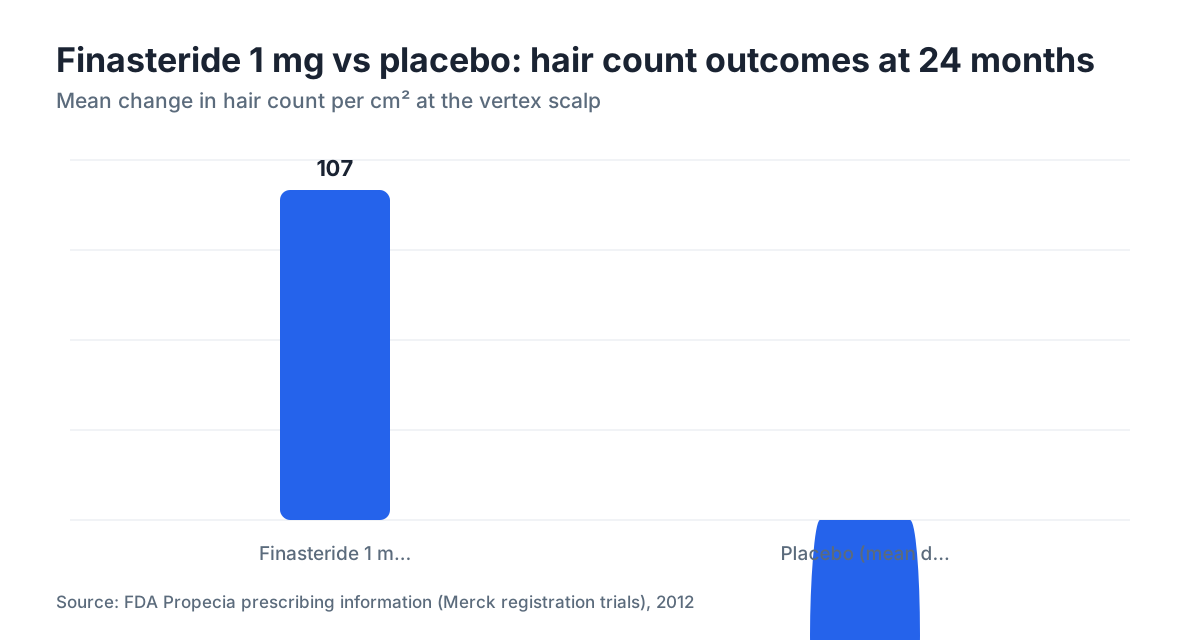
The results: 83% of men on finasteride maintained or increased their hair count compared to baseline, while 28% of placebo patients continued to lose hair. In a subset evaluated at the vertex scalp (crown), men on finasteride had a mean increase of 107 hairs per square centimeter compared to a mean loss of 75 in the placebo group after 24 months. [5] Regrowth beyond just halting loss happened in about 66% of participants at two years.
Those numbers are from the original Merck trials. Real-world results vary. Men who start earlier, in their 20s or early 30s, before significant follicle death, tend to do better. Men who wait until their hairline has been receding for a decade often see modest to no regrowth but may still slow further loss, which is still useful.
Finasteride works less predictably on the frontal hairline than on the crown. Regrowth at the temples and front is harder to achieve and less consistent across studies. If a receding frontal hairline is your main concern, managing expectations matters; see our receding hairline article for what is realistically achievable.
You have to keep taking it. Stop finasteride and the DHT suppression ends. Within 6 to 12 months of stopping, most men lose whatever they had gained, returning roughly to where they would have been without treatment. [5] That is not a knock on the drug. It is just how hormone-mediated hair loss works. Think of it like blood pressure medication: it works while you take it.
What are the real side effects of Hims's finasteride DHT blocker?
This is the section most people skip, and skipping it is a mistake.
Finasteride's FDA-approved label lists sexual side effects including decreased libido, erectile dysfunction, and ejaculatory disorders. In the original trials, these occurred in about 3.8% of finasteride users versus 2.1% on placebo. [5] That difference is real but modest, and most side effects in the trials resolved after stopping the drug.
The more contested issue is Post-Finasteride Syndrome (PFS), where some men report persistent sexual, neurological, and psychological symptoms that continue even after stopping the drug. The FDA added a label update in 2012 noting reports of persistent sexual dysfunction. [6] How common true PFS is remains genuinely disputed in the literature. Some researchers estimate it affects a small minority of users, while PFS advocacy organizations report higher rates. Nobody has good prospective data on this. The honest position is that the risk appears low but is not zero and is not fully characterized.
Finasteride also carries a Pregnancy Category X designation: it is teratogenic to male fetuses and should not be handled by pregnant women. Women of childbearing age need to be careful around broken or crushed tablets. [5]
Other reported but less common effects include breast tenderness (gynecomastia) and, in rare cases, a small increase in high-grade prostate cancer detection (an artifact of PSA suppression rather than a proven causal increase in cancer risk, per most urologists' reading of the PCPT trial data).
If you are worried about sexual side effects, the topical finasteride-plus-minoxidil combo may be worth discussing with a dermatologist. A 2022 study in the Journal of the American Academy of Dermatology found that topical finasteride 0.25% applied daily produced substantially lower serum DHT suppression than oral 1 mg, suggesting lower systemic exposure, though scalp efficacy comparisons with oral dosing are not yet definitive. [4]
For a full breakdown of minoxidil-specific side effects (separate from finasteride), see our minoxidil side effects guide.
How much does Hims's DHT blocker cost compared to alternatives?
Pricing matters because finasteride is a generic drug. The molecule is not proprietary. It went off-patent years ago. Here is how the numbers look:
| Option | Approx. monthly cost | Notes |
|---|---|---|
| Hims finasteride 1 mg (as of 2025) | $20-$30/month | Includes telehealth consult |
| GoodRx generic finasteride 1 mg | $10-$20/month | With coupon at major pharmacies |
| Hims topical combo (fin + min) | $40-$60/month | Two actives in one product |
| Brand-name Propecia 1 mg | $80-$100+/month | Same molecule, much higher cost |
| Dutasteride 0.5 mg (Rx, off-label for hair) | $15-$30/month generic | Stronger DHT suppression, fewer hair-specific trials |
Hims charges a premium over the raw pharmacy price, and what you are paying for is mostly convenience: an asynchronous telehealth consult, ongoing provider access, and prescription management without an in-person dermatologist visit. Whether that is worth it depends on your insurance situation and how much your time costs you.
If you have a dermatologist or a PCP who will write the script, a GoodRx coupon at Costco Pharmacy can get oral generic finasteride down to roughly $10-$15 per month for a 90-day supply. That is hard to beat on price. Hims makes sense if you have no prescriber relationship and want the path of least friction.
One thing to watch: Hims sometimes bundles finasteride into subscription plans that look cheaper per month but lock you in for 3 to 6 months. Read the cancellation policy before subscribing.
Does Hims require a prescription for its DHT blocker?
Yes. Finasteride is a prescription-required medication in the United States. You cannot buy it over the counter. Hims handles this through a telehealth consultation: you fill out a health history form, sometimes upload photos, and a licensed provider in your state reviews the information and either approves or denies a prescription. [7]
The consult is asynchronous for most users, meaning there is no live video call. A provider reviews your intake and responds within hours. Some states require a synchronous visit (live video or phone), so the experience can vary.
This model is legal and regulated by state medical boards and the FDA's prescribing framework. The prescriptions are real, filled at licensed pharmacies (often including compounding pharmacies for the topical combo products). The compounding piece is worth knowing: the topical finasteride-plus-minoxidil spray that Hims sells is made at a compounding pharmacy, not manufactured as an FDA-approved finished drug product. Compounding pharmacies are regulated by state boards and overseen by the FDA under 503A/503B frameworks, but the specific combination product has not gone through FDA's New Drug Application process. [8] That is not unusual in dermatology, but it is something informed consumers should know.
How long does it take for Hims's finasteride to show results?
Expect to wait. Finasteride works on the hair growth cycle, which runs in phases of roughly 2 to 6 years for a single follicle. Meaningful results take time.
The general clinical timeline:
- Months 1 to 3: No visible change. DHT is being suppressed, but follicles have not yet cycled through enough to show it. Some men notice a shedding phase as miniaturized hairs fall out to be replaced, which is alarming but normal.
- Months 3 to 6: Stabilization. The rate of loss slows. This is the most underappreciated result because you cannot see it easily.
- Months 6 to 12: Some men see early regrowth, particularly at the crown.
- Months 12 to 24: The peak response period. Most of the regrowth you will get is visible by month 24. The Merck registration trials used 24 months as their primary endpoint for this reason. [5]
If you are at month 6 and see nothing, do not quit. Many men who eventually respond do not see anything visible until month 9 or 12. Quitting at month 4 because "it's not working" is the most common and most avoidable mistake.
If you have had zero response by 18 to 24 months on consistent daily dosing, that is a reasonable point to reassess with a dermatologist. A small percentage of men are genuinely non-responders, and nobody can tell in advance who those will be.
Is Hims's DHT blocker safe for women?
Finasteride 1 mg (Propecia) is FDA-approved only for men. It is not approved for women's hair loss in the United States. [5]
That said, finasteride 5 mg (Proscar), the higher-dose version originally developed for BPH, has been used off-label by dermatologists in postmenopausal women with androgenetic alopecia, and some evidence supports its effectiveness in that population. A 2012 randomized controlled trial published in the Journal of the American Academy of Dermatology found no significant improvement with 1 mg finasteride in postmenopausal women, though higher doses have shown more promising results in some studies.
Hims does not offer finasteride for women through its standard platform. Women looking for DHT-related treatment options are better served by a direct consultation with a dermatologist who can consider off-label finasteride, spironolactone (an androgen receptor blocker used off-label for female pattern hair loss), or minoxidil, which is FDA-approved for women at 2% and available OTC. [11]
Pregnancy is an absolute contraindication. Finasteride causes genital abnormalities in male fetuses. Women who are pregnant or may become pregnant should not take finasteride and should not handle crushed tablets. [5]
For women researching the cause of their hair loss more broadly, what causes hair loss covers the full spectrum including hormonal, nutritional, and stress-related causes.
How does Hims's DHT blocker compare to dutasteride?
Dutasteride is the other major 5-alpha-reductase inhibitor. Where finasteride blocks only the type 2 isoform of 5-AR, dutasteride blocks both type 1 and type 2, which translates to more complete systemic DHT suppression: roughly 90% reduction in serum DHT with dutasteride 0.5 mg versus roughly 70% with finasteride 1 mg. [9]
In head-to-head trials, dutasteride 0.5 mg outperformed finasteride 1 mg on hair count measurements. A 2014 multicenter randomized trial published in the British Journal of Dermatology found significantly greater hair count increases with dutasteride than finasteride at 6 and 12 months in men with androgenetic alopecia. [9]
So why is finasteride still the first-line choice? Two reasons. First, finasteride has a 30-year safety record for hair loss use; dutasteride does not have FDA approval for hair loss (it is approved for BPH), making it an off-label prescription. Second, dutasteride's stronger DHT suppression means it also stays in the body longer, with a half-life of around 5 weeks versus finasteride's roughly 6 hours. If you get sexual side effects on dutasteride, they may take much longer to resolve after stopping.
Hims does not currently offer dutasteride as a standard hair loss product, though some telehealth competitors do prescribe it off-label. If you want to explore dutasteride, you need a prescriber willing to go off-label and a real conversation about the side-effect profile.
For a full picture of what causes pattern hair loss before deciding on any treatment, see what causes hair loss.
What do real dermatologists think about telehealth DHT blockers like Hims?
The clinical consensus on finasteride itself is not in dispute. The American Academy of Dermatology guidelines list finasteride as a Grade A recommendation for male androgenetic alopecia. [2] The molecule works, the evidence is solid, and most dermatologists prescribe it.
The debate is about the telehealth delivery model, not the drug. Critics raise a few legitimate concerns.
First, asynchronous consultations may miss contraindications. A thorough intake should screen for baseline sexual dysfunction, prostate issues, and medications that interact with finasteride. A form-based consult can miss nuance that a face-to-face visit would catch.
Second, some hair loss is not androgenetic alopecia. Alopecia areata, telogen effluvium, and other conditions can mimic pattern hair loss but will not respond to DHT blockers and may require different treatment. Starting finasteride without ruling out other causes is not ideal. If you are not sure your hair loss is genetic pattern loss, see a dermatologist in person before subscribing to anything. Telogen effluvium is a particularly common misidentified condition.
Third, ongoing monitoring. Good prescribers check in periodically, ask about side effects, and know when to stop. Subscription models can make stopping feel friction-heavy, and that friction is worth being aware of.
None of this means telehealth DHT blockers are bad. For a young man with obvious vertex thinning, a clear family history of male pattern baldness, and no complicating medical history, Hims or a competitor is a reasonable and convenient on-ramp to an evidence-based treatment. The key is being honest on the intake form and actually reading the side-effect information before you start.
If you are already thinking about where DHT blockers fit in the bigger picture, tools like the free AI scan at MyHairline (/scan) can help you understand your pattern and stage before committing to any treatment path.
When is a DHT blocker not enough and a hair transplant worth considering?
DHT blockers are not a cure and cannot regenerate follicles that are already dead. If the miniaturization has gone far enough that a scalp area has no viable follicles left, finasteride will do nothing for that area. It can preserve what remains and may thicken miniaturized hairs that still have some life in them, but it cannot grow hair where the follicle is gone.
This is where hair transplant surgery becomes relevant. A transplant moves DHT-resistant follicles from the back and sides of the scalp (the donor zone, which is genetically resistant to miniaturization in most men) to the areas of loss. Done well, these transplanted hairs are permanent because they carry the DHT-resistant genetics of their origin site.
The standard of care is to use both: start a DHT blocker to stabilize remaining native hair, then consider a transplant for areas that have already lost density. A transplant without a DHT blocker risks the non-transplanted native hairs continuing to miniaturize, which creates a patchwork appearance over time.
Men who are still actively losing hair are generally advised to wait until their loss has stabilized (often with finasteride's help) before transplanting, so the surgeon can better map the final expected pattern. Transplanting too early into an actively receding hairline risks placing grafts in areas that will later have natural hair still falling out around them.
The Norwood scale is the standard way to describe male pattern loss severity: Norwood 1 through 7, where higher numbers indicate more extensive loss. Most transplant candidates are in the Norwood 3 through 6 range. A man at Norwood 2 with a mildly receding hairline is almost always better served by starting finasteride and waiting to see how much stabilization occurs before considering surgery.
What should I actually do if I want to start a DHT blocker?
Here is the honest, practical answer.
If you have clear male pattern hair loss (thinning at the crown or a receding hairline with a family history of the same), no significant complicating medical conditions, and you understand the side-effect profile, starting finasteride is a reasonable decision backed by strong evidence.
Your options for getting it:
-
See a dermatologist in person. This gives you the most thorough evaluation, the ability to rule out other causes of hair loss, and an ongoing clinical relationship. If you have good insurance coverage, this is the gold-standard path.
-
Use Hims or a similar telehealth service. Convenient, often cheaper than an uninsured dermatologist visit, and legitimate. Read the intake form carefully and answer it honestly. Hims prescribes real finasteride through real licensed providers.
-
Ask your PCP. Many primary care doctors will prescribe finasteride for androgenetic alopecia. This is the lowest-friction path if you already have a PCP relationship.
Once you have a prescription, price shop. Generic finasteride is cheap. GoodRx at Costco Pharmacy or Walmart Pharmacy typically beats Hims's pricing if you already have the prescription.
Pair it with minoxidil if you want to maximize your response. The combination of finasteride plus topical minoxidil is more effective than either alone in most studies, and minoxidil is available OTC without a prescription. [10] See our minoxidil for men guide for dosing and application basics.
Set a 12-month marker. Take photos every 3 months in the same light, same position. This is the only reliable way to track a treatment that works slowly. Most people underestimate how bad their loss was at the start because memory is poor at detecting gradual change. Consistent photos fix that.
For a broader look at the supplement-based alternatives people consider alongside or instead of finasteride, see hair loss supplements.
If you want an objective baseline assessment of your hairline before starting anything, the free AI scan at MyHairline (/scan) can map your current pattern and give you a starting reference point to measure against.
Sources
- NCBI/StatPearls: Androgenetic Alopecia
- American Academy of Dermatology: Hair loss overview
- FDA: Minoxidil Drug Label (Rogaine)
- Journal of the American Academy of Dermatology: Topical finasteride 0.25% serum DHT suppression study, 2022
- FDA: Propecia (finasteride 1 mg) prescribing information
- FDA Drug Safety Communication: Finasteride label update for persistent sexual dysfunction, 2012
- FDA: Telehealth and prescription requirements guidance
- FDA: Compounding and the FDA (503A/503B framework)
- British Journal of Dermatology: Dutasteride vs finasteride head-to-head RCT, 2014
- NCBI PubMed: Finasteride plus topical minoxidil combination therapy meta-analysis
- FDA: Rogaine (minoxidil 2%) for women prescribing information
- Evidence-Based Complementary and Alternative Medicine: Pumpkin seed oil RCT for hair loss, 2014