TL;DR: Hims sells FDA-approved hair loss treatments, mainly minoxidil and finasteride, delivered by prescription or OTC through a telehealth platform. Both ingredients have solid clinical evidence behind them. Minoxidil regrows hair in roughly 40-60% of men who stick with it; finasteride slows or stops loss in about 83-90% of men. The platform works if you'd benefit from those drugs anyway.
What is Hims and what does it offer for hair loss?
Hims is a telehealth and direct-to-consumer pharmacy platform launched in 2017. It sells prescription and over-the-counter treatments for several conditions, and hair loss is one of its biggest product categories. The company ships to all 50 US states and operates through licensed telehealth providers who can prescribe finasteride, oral minoxidil, and combination products after an online intake form and, in some states, a brief async consultation.
The core hair loss lineup includes topical minoxidil (2% and 5%), oral minoxidil (low-dose), oral finasteride (1 mg), and a topical finasteride/minoxidil spray. Hims also sells a "thickening" shampoo and biotin-based supplements, but those are marketing products, not treatments with meaningful clinical evidence. Don't confuse the two.
The appeal is convenience. You skip a dermatologist visit, pay less per month than a branded drug, and get the treatment shipped in plain packaging. For men who already know they have androgenetic alopecia and want to start a proven medication fast, that frictionless path has real value. For anyone who hasn't had a diagnosis, a proper scalp exam still matters. Understanding what's driving your hair loss first saves you from treating the wrong condition.
Hims is not a hair loss cure. It sells chronic treatments that require long-term use to maintain results. Stop the medication and most patients see renewed shedding within 6 to 12 months.
Does Hims hair loss treatment actually work?
This depends entirely on which product you're asking about. The platform itself is just a delivery mechanism. The treatments are the thing.
For minoxidil, the evidence is strong. A 48-week randomized controlled trial published in the Journal of the American Academy of Dermatology found that 5% topical minoxidil produced a mean increase of 18.6 non-vellus hairs per cm² vs. placebo in men with androgenetic alopecia. [1] About 40-60% of men who use it consistently see visible regrowth; the majority see at least stabilization of loss. The FDA approved 5% minoxidil foam for men in 2006. [2]
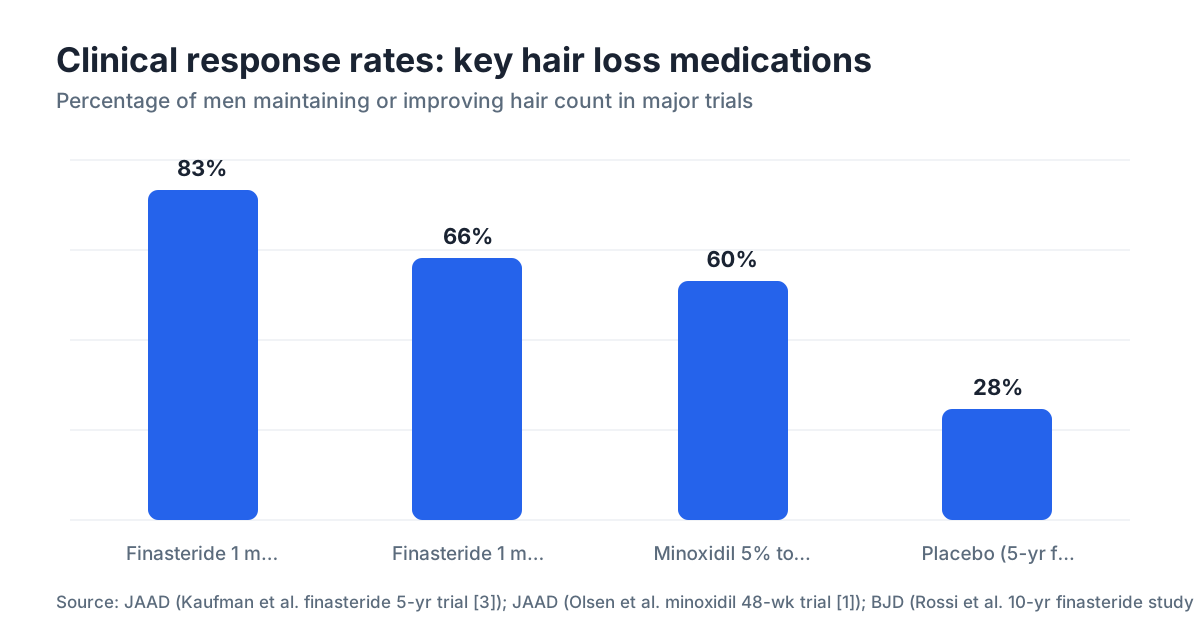
Finasteride's case for stopping loss is even stronger. A five-year trial published in the Journal of the American Academy of Dermatology showed that 83% of men on 1 mg finasteride maintained or increased hair count, compared to 28% on placebo. [3] Hair counts in the treated group rose by 277 hairs in a defined scalp area over five years. That's a meaningful number.
For the combination spray (topical minoxidil plus topical finasteride), a 2021 randomized trial in JAMA Dermatology found topical finasteride with minoxidil was noninferior to oral finasteride for hair growth at 24 weeks, with lower systemic drug absorption. [4] Lower absorption matters if you're worried about sexual side effects.
So yes, the medications Hims sells work. The question is whether they're right for your specific type and severity of hair loss, which a dermatologist can answer better than an intake form. If you have diffuse shedding from telogen effluvium or alopecia areata, finasteride and minoxidil may do very little. Understanding telogen effluvium before ordering is worth the read.
Bottom line: Hims for hair loss works for androgenetic alopecia (male and female pattern hair loss) because the drugs it delivers are clinically proven for that condition. It's not magic, and results take 4 to 12 months.
What does Hims hair loss cost per month?
Pricing changes frequently, so treat these as ballpark figures from mid-2025.
| Product | Monthly Cost (Hims, approx.) | Generic street price comparison |
|---|---|---|
| Minoxidil 5% topical (3-month supply) | ~$15-20/mo | ~$10-15/mo at pharmacy |
| Oral finasteride 1 mg | ~$22-30/mo | ~$10-20/mo at pharmacy (generic) |
| Topical finasteride/minoxidil spray | ~$50-60/mo | Not widely available OTC |
| Oral minoxidil (low-dose) | ~$20-30/mo | ~$15-20/mo at pharmacy |
| "Complete" combo kit | ~$55-80/mo | N/A (bundled) |
Generic finasteride 1 mg sells for under $20 a month at pharmacies like Costco or through GoodRx, with no telehealth fee baked in. [5] If cost is your main concern and you already have a prescription, a local pharmacy is often cheaper.
Where Hims does offer value: the topical finasteride/minoxidil spray is not readily available at most retail pharmacies, and the telehealth consultation bundled with the prescription saves a separate dermatologist copay, which can run $100 to $300 out of pocket for a first visit.
Hims does not accept insurance for hair loss medications. That's a real downside. Some HSA/FSA accounts cover finasteride and minoxidil, but you'll need to verify with your plan administrator.
What are the side effects of Hims hair loss treatments?
Both main medications carry real risks that Hims discloses in its intake process, but they're worth knowing before you start.
Minoxidil's most common side effects are scalp irritation, itching, and temporary increased shedding in the first 2 to 8 weeks (this is normal and means the follicles are cycling). Oral minoxidil carries additional cardiovascular considerations: it was originally developed as a blood pressure drug, and at doses above 5 mg it can cause fluid retention and a faster heart rate. Low-dose oral minoxidil (0.625 to 2.5 mg) is increasingly used off-label for hair loss with a better safety profile, but anyone with a history of heart disease should talk to a cardiologist first. [6] Read the full minoxidil side effects breakdown before starting.
Finasteride's side effect profile is more contested. The FDA label lists sexual side effects (decreased libido, erectile dysfunction, ejaculation disorder) in about 1-4% of men in clinical trials, with most resolving after stopping the drug. [7] Post-finasteride syndrome (persistent sexual, neurological, and psychological symptoms after discontinuation) is reported by some patients and remains an active research question; the FDA added a label update in 2012 acknowledging that some side effects persisted after stopping. [7]
Topical finasteride cuts systemic absorption sharply. The 2021 JAMA Dermatology trial found serum DHT suppression of about 9-15% with topical finasteride vs. about 55-70% with oral finasteride. [4] That's a real difference for people who are concerned about systemic exposure.
Hims offers a prescription after an async intake form. This is convenient, but it's not a substitute for a physician who knows your full health history. If you have any heart, liver, or hormonal conditions, get an in-person consult.
How long does it take to see results with Hims?
Four months minimum before you can honestly judge any hair loss treatment. Most clinical trials run 24 to 52 weeks to show statistical differences from baseline. [1][3]
The typical timeline looks like this. Weeks 1 to 8: possible increased shedding from minoxidil (the telogen phase flush). Months 2 to 4: shedding normalizes, follicles begin transitioning. Months 4 to 6: finer, shorter hairs start appearing. Months 6 to 12: where most patients see the peak visible improvement from minoxidil. Finasteride's main job is to stop further loss, and it does that by blocking DHT production. Regrowth from finasteride is real but often less dramatic than what minoxidil can do in a responsive patient.
If you're at month 12 with no improvement, it's reasonable to question whether the diagnosis was right, whether you've been consistent, and whether a stronger approach is needed. Using both finasteride and minoxidil together often beats either alone. The finasteride and minoxidil comparison covers the combination evidence in detail.
Results are also highly variable by Norwood stage. Men at Norwood 2 or 3 tend to respond better than men at Norwood 5 or 6, where large areas of fully miniaturized follicles may be beyond medication's reach.
Is Hims FDA-approved for hair loss?
This is an important distinction. Hims the company is not FDA-approved. The FDA approves drugs, not platforms.
The drugs Hims sells carry their own FDA approval status:
Minoxidil 2% and 5% topical solution: FDA-approved for androgenetic alopecia. The 5% foam is specifically approved for once-daily use in men. [2]
Finasteride 1 mg (Propecia generic): FDA-approved for androgenetic alopecia in men since 1997. [7] It is not FDA-approved for women, and the FDA label includes a contraindication for pregnant women due to risk of fetal harm.
Oral minoxidil at hair loss doses: prescribed off-label. The FDA approved oral minoxidil tablets only for severe hypertension; the hair loss use is off-label, which is legal and common in medicine, but it means the specific hair loss indication hasn't gone through FDA review. [6]
Topical finasteride: also off-label. There is no FDA-approved topical finasteride product at this writing.
Hims operates within telehealth regulations that vary by state. Prescribers on the platform are licensed in their respective states, and the platform follows state telehealth laws. The FTC and FDA have both increased scrutiny of direct-to-consumer telehealth platforms selling compounded drugs, so verify that any product you receive is commercially manufactured (not a compounded formulation with a different regulatory status).
How does Hims compare to seeing a dermatologist?
A dermatologist offers a physical scalp exam, dermoscopy, possibly a scalp biopsy, and blood work to rule out thyroid disease, iron deficiency, or autoimmune causes. An online intake form at Hims cannot do any of that.
For a straightforward 28-year-old with a classic receding hairline and no other health issues, the dermatologist visit might feel redundant, and Hims provides appropriate treatment faster. For a 35-year-old with sudden diffuse shedding, significant stress, a recent illness, or a family history of autoimmune disease, skipping the in-person exam is a real risk. You could spend a year on finasteride and minoxidil while the actual cause goes untreated.
Cost comparison is real too. A first dermatology visit can run $150 to $400 without insurance. Hims charges a telehealth consultation fee (variable, sometimes waived with a subscription). For patients who know their diagnosis, Hims is both cheaper and faster.
One honest opinion: if your hair loss pattern is textbook, go ahead and start Hims while you wait for a dermatologist appointment. If your hair loss pattern is unusual, diffuse, or came on fast, get the exam first. A receding hairline following a predictable pattern is different from sudden patchy loss or diffuse thinning across the entire crown.
For context on what a receding hairline diagnosis process looks like, and what Norwood stages your symptoms might match, that framing helps before any consultation.
Who is Hims hair loss treatment best suited for?
Hims is best for men with androgenetic alopecia who are Norwood 1 through 4, who want to start a proven medication quickly, and who don't have complicating health factors that require in-person evaluation.
Hims also offers minoxidil for women with female pattern hair loss, though the prescription pathway is slightly different and finasteride is not offered to women on the platform (correctly, given the FDA contraindication).
It's a poor fit for:
Anyone with sudden or patchy hair loss, which may indicate alopecia areata, a condition that requires steroid injections or immunotherapy, not minoxidil.
Men with a history of prostate issues, liver disease, or heart conditions without a physician reviewing their full history.
Men at Norwood 5 or 6 who are hoping medication will restore large areas of bare scalp. At advanced stages, medications can preserve what remains and may recover some miniaturized follicles, but they're unlikely to produce dramatic regrowth. A hair transplant consultation may be the more realistic next step.
Anyone expecting a permanent fix. The day you stop taking finasteride or minoxidil, the loss process resumes. This is a long-term commitment, and that's true whether you buy it through Hims, a pharmacy, or a dermatologist.
Are there any alternatives to Hims for hair loss treatment?
Several direct competitors offer similar products, including Keeps, Roman, and Ro (same parent company as Roman). All three deliver finasteride and minoxidil through telehealth. Pricing is similar. The medications are identical generics. The real difference is the consultation interface and subscription management.
Outside the telehealth world:
Local pharmacy with a dermatologist Rx: likely the cheapest path for basic finasteride and minoxidil. GoodRx pricing for generic finasteride 1 mg can be as low as $10-15 per month. [5]
PRP (platelet-rich plasma) injections: an in-office procedure, typically $1,500-$3,500 per session, with weaker and less consistent evidence than finasteride. Some patients find it useful as an adjunct.
Hair transplants: the surgical option for those who want permanent, medication-independent results. Hair transplant expenses can run $4,000-$15,000 depending on graft count and technique. This is a one-time cost, not a subscription.
Low-level laser therapy (LLLT): FDA-cleared (not approved) devices like laser combs and helmets have modest evidence for halting loss. The effect size is generally smaller than finasteride.
Hair loss supplements with biotin, saw palmetto, or DHT-blocking blends: the evidence here is thin. Hair loss supplements rarely move the needle for pattern hair loss in a clinically meaningful way.
Want a free starting point before committing to a subscription? An AI-powered scalp analysis can at least help you understand your current hairline pattern. The free AI scan at MyHairline gives you a visual baseline before you spend money.
The combination of finasteride and minoxidil remains the most evidence-backed non-surgical regimen available. Whether you get it through Hims or a dermatologist matters less than whether you start, stay consistent, and keep realistic expectations.
What do real clinical trials say about Hims-style treatment combinations?
No published trial has studied "Hims" as a brand specifically. What the trials study are the drug ingredients, dosages, and delivery methods. Here's what the best evidence actually shows.
A 2022 systematic review in Dermatology and Therapy examined 22 randomized controlled trials on androgenetic alopecia interventions and concluded that finasteride plus minoxidil produced superior hair count outcomes compared to either drug alone. [8] The combination is now considered the first-line medical approach by most dermatology societies for men with pattern hair loss.
The American Academy of Dermatology (AAD) guidelines on alopecia state: "Minoxidil topical solution is recommended for men and women with androgenetic alopecia; finasteride is recommended for men." [9] These are Grade A recommendations, meaning the evidence is consistent and high quality.
A 2019 prospective study in the British Journal of Dermatology followed 458 men on finasteride 1 mg for up to 10 years and found that 65.8% maintained or improved hair density at the 10-year mark. [10] That's a real long-term figure, not a short trial.
For oral minoxidil, a 2021 systematic review in the Journal of the American Academy of Dermatology found evidence of efficacy at low doses (0.625 to 2.5 mg) for androgenetic alopecia, with hypertrichosis (unwanted hair growth on the body) being the most common side effect, occurring in roughly 14-17% of patients. [6]
The science behind what Hims sells is sound. The platform is a distribution mechanism for drugs with decades of trial data. That's worth knowing when you're deciding if the subscription fee makes sense for your situation.
If you're also taking creatine or other supplements and wondering about interactions, there is some data suggesting creatine may raise DHT. The does creatine cause hair loss article addresses that question with the actual trial evidence.
Should you use Hims, or is there a better path for your hair loss?
If you have classic male pattern hair loss, no serious health conditions, and want to start treatment without waiting weeks for a dermatologist appointment, Hims is a legitimate option. You're getting real medications with real FDA approvals (for the topical and oral finasteride), a licensed prescriber, and a reasonably priced subscription.
The honest downsides: the intake form is not a medical exam, the pricing on combination products can exceed what a dermatologist's prescription costs at a retail pharmacy, and the company's upselling of shampoos and supplements alongside proven medications can muddy the waters for people who don't know which part of the kit is actually doing the work (it's the finasteride and minoxidil, not the shampoo).
My actual recommendation: use a platform like Hims or its competitors to get started fast if your hair loss is clearly androgenetic. Book a dermatologist appointment anyway, even if it's 6 weeks out. Have an AI scalp analysis done first so you walk into any consultation, telehealth or in-person, with a clearer picture of your Norwood stage and progression. The free AI scan at MyHairline is a reasonable way to do that baseline assessment.
Medications work best when started early. If you're sitting on the fence while your hairline keeps moving, that delay has a cost that no drug can fully recover.
Sources
- Journal of the American Academy of Dermatology: Olsen EA et al., 5% topical minoxidil vs. placebo in men
- FDA Drug Database: Minoxidil topical approval
- Journal of the American Academy of Dermatology: Kaufman KD et al., 5-year finasteride trial
- JAMA Dermatology: Randolph M et al., topical finasteride/minoxidil vs. oral finasteride, 2021
- GoodRx: Generic finasteride 1 mg pricing
- Journal of the American Academy of Dermatology: Vañó-Galván S et al., low-dose oral minoxidil systematic review, 2021
- FDA Drug Label: Finasteride 1 mg (Propecia)
- Dermatology and Therapy: systematic review of RCTs on androgenetic alopecia treatments, 2022
- American Academy of Dermatology: Clinical Guidelines for Alopecia
- British Journal of Dermatology: Rossi A et al., 10-year finasteride prospective study, 2019