TL;DR: Finasteride is an FDA-approved oral pill that cuts scalp DHT by roughly 70%, which slows male pattern hair loss and regrows hair in most men who take it every day. Trials show it stops shedding in about 83% of men and produces visible regrowth in roughly 66%. It works slowly. Give it six to twelve months before you judge results.
What is finasteride and what does it actually do?
Finasteride is a type II 5-alpha-reductase inhibitor. That enzyme converts testosterone into dihydrotestosterone (DHT), the hormone that shrinks hair follicles in men who are genetically prone to androgenetic alopecia. Block the enzyme, lower DHT, and you slow or stop that follicle miniaturization.
The FDA first approved finasteride 1 mg (brand name Propecia) for male pattern hair loss in December 1997 [1]. A 5 mg version (Proscar) had already cleared in 1992 for benign prostatic hyperplasia. The hair loss dose is simply the lower strength of the same molecule.
Finasteride does not block DHT entirely. At the 1 mg daily dose used for hair loss, it drops serum DHT by roughly 70% and scalp DHT by about 60 to 70% [2]. That is enough to halt miniaturization in most men. It is not a cure. Stop taking it and DHT rebounds within about two weeks, so any hair you kept or regrew is usually gone within six to twelve months of stopping.
To understand why DHT matters this much, read the deeper breakdown in what causes hair loss. For how DHT blockers compare as a category, see dht blocker.
How well does finasteride actually work? What do clinical trials show?
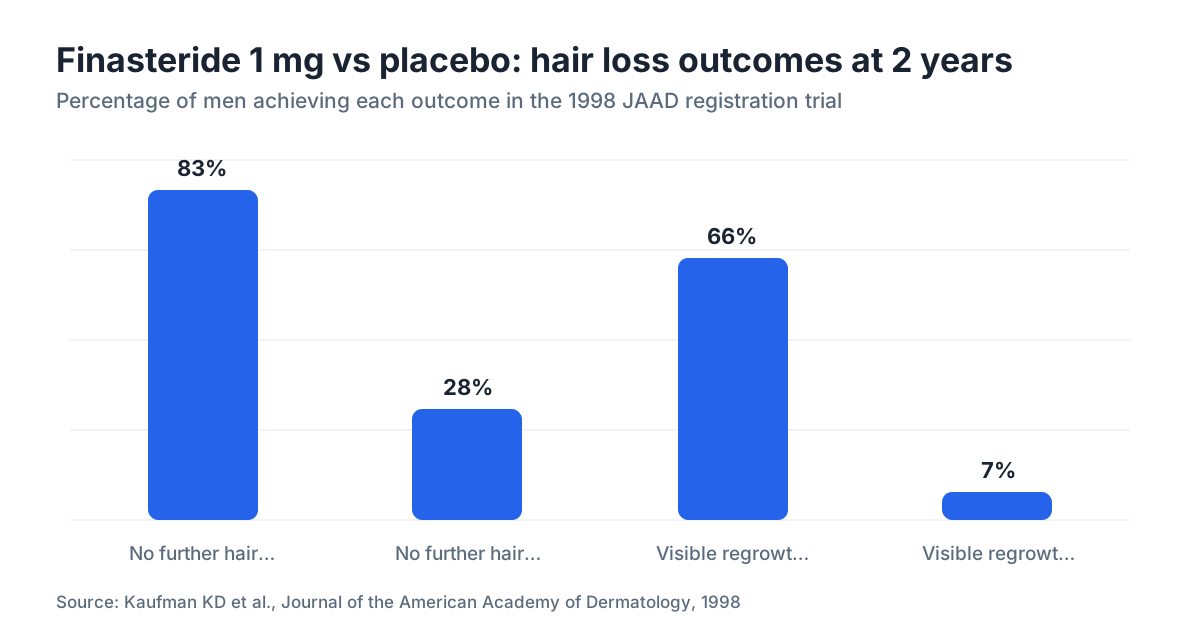
The core evidence comes from two large randomized controlled trials published in the Journal of the American Academy of Dermatology that supported the original FDA approval. At two years, 83% of men taking 1 mg finasteride daily had no further hair loss, compared with 28% on placebo. About 66% of the treated men had measurable regrowth [2].
A five-year open-label extension study found that hair counts kept climbing through year two, then held steady and stayed well above baseline through year five [3]. Men who stayed on the drug kept their results. Men who stopped lost the gains.
Here is a clean summary of the trial numbers:
| Outcome | Finasteride 1 mg | Placebo |
|---|---|---|
| No further hair loss at 2 years | 83% | 28% |
| Visible regrowth at 2 years | 66% | 7% |
| Hair count above baseline at 5 years | ~48% net increase retained | Declined significantly |
Results are stronger at the crown and mid-scalp than at the hairline. If your hairline has receded to Norwood 4 or beyond, finasteride alone rarely brings the temples back to what they were. That is worth knowing before you start. To see where your hairline sits on the Norwood scale, receding hairline covers it in detail.
Women are a separate story. Finasteride is not FDA-approved for hair loss in women, and the evidence in postmenopausal women is thinner and more mixed. It is absolutely off-limits for women who are or may become pregnant because of the risk of feminizing a male fetus [1].
What are the side effects of finasteride men need to know about?
The finasteride side effects that get the most attention are sexual: lower libido, erectile dysfunction, and reduced ejaculate volume. In the original two-year registration trials, these showed up in about 3.8% of men on finasteride versus 2.1% on placebo [1]. That is a real difference, not nothing, but also not the epidemic some corners of the internet describe.
For most men who get sexual side effects, they clear up when the drug is stopped. The FDA label says so directly [1].
A more debated concern is Post-Finasteride Syndrome (PFS), a cluster of sexual, cognitive, and mood symptoms that some men report continuing long after they quit. The science here is genuinely unsettled. The Post-Finasteride Syndrome Foundation has logged cases, and a few small observational studies found neurosteroid changes in affected men, but large controlled population data are thin. Nobody has good data on true incidence. The closest estimate, from the Northwestern University PFS work, suggests clinically meaningful persistent sexual dysfunction may hit somewhere between 1 in 50 and 1 in 100 finasteride users, though the methodology in those studies has real limits [4]. If you are weighing this drug, that uncertainty deserves an honest hearing, not a shrug.
Other side effects on the FDA label include [1]:
- Breast tenderness or enlargement (gynecomastia) in a small percentage of men
- Testicular pain (rare)
- Depression and mood changes (added to labeling in 2012 based on post-marketing reports)
- Hypersensitivity reactions including rash and swelling (rare)
Finasteride also cuts PSA (prostate-specific antigen) levels by roughly 50% over six months. If you get PSA tests for prostate cancer screening, tell your doctor you take finasteride. The lab value needs to be doubled to reflect your true PSA, or you may get a falsely reassuring result [1].
For how finasteride stacks up against the other commonly paired drug, see minoxidil side effects.
How long does finasteride take to work?
Patience is the hardest part. You will not see results in the first month. Most men notice less shedding somewhere between two and four months. Meaningful visible regrowth, if it happens at all, usually shows up at six to twelve months.
The five-year trial data put peak benefit around the two-year mark [3]. Some men keep improving slowly after that. What never happens is the drug working overnight, topping out at month three, and being fair to judge at six weeks. Anyone quitting before six months has not given finasteride a real trial.
One frustrating early effect: some men shed more in the first two to three months. People call it a dread shed. The idea is that follicles cycle through a shed phase before entering a stronger growth phase. It is not universal, it is not proven in controlled trials, but it gets reported often enough to mention. If it happens, it usually settles on its own. To understand the shedding cycle, telogen effluvium is worth reading.
Who is a good candidate for finasteride, and who should avoid it?
Finasteride is FDA-approved specifically for men with androgenetic alopecia (male pattern baldness). The best candidate is a man in his 20s, 30s, or 40s at Norwood stage 1 through 4 who is still losing hair and wants to slow or stop it. Start early and you do better than men who wait until a lot of hair is already gone.
Finasteride is not appropriate for [1]:
- Women who are pregnant or may become pregnant (category X teratogen; even handling crushed tablets is risky)
- Children
- Men with a history of hypersensitivity to finasteride or dutasteride
Men with a family history of high-grade prostate cancer should have a frank talk with a urologist first, because finasteride has a complicated relationship with prostate cancer screening and possibly with cancer grade detection. The large PCPT trial found finasteride cut overall prostate cancer incidence by about 25% but was linked to a higher proportion of high-grade tumors in the men who did develop cancer, though a later reanalysis suggested that was partly a detection artifact [5]. The FDA added a label update on this in 2011.
Men over 50, men on any medication that affects CYP3A4 enzymes, and men with liver disease should sort out dosing with a physician before starting.
What is the right finasteride dose for hair loss?
The FDA-approved dose for androgenetic alopecia is 1 mg by mouth once a day [1]. Timing barely matters. Pick a consistent time and stick with it. Food does not meaningfully change absorption.
Some men and prescribers use finasteride 1.25 mg by cutting 5 mg Proscar tablets into quarters, since the cost per mg is lower. This is off-label but common, and there is no clinical evidence that 1 mg and 1.25 mg produce meaningfully different scalp DHT suppression, because DHT reduction flattens out fast as you raise the dose. Going above 1 mg a day does not buy proportionally more DHT reduction and does raise systemic exposure.
There is also growing interest in topical finasteride, which puts the drug on the scalp and produces lower blood levels. A 0.25% topical solution studied in a 2021 randomized controlled trial matched the hair count gains of 1 mg oral while suppressing systemic DHT far less, which in theory could lower systemic side effect risk [6]. Topical finasteride is not FDA-approved as of mid-2026 but is available through compounding pharmacies with a prescription.
If you are thinking about pairing finasteride with minoxidil, which many dermatologists do recommend because the two drugs work by different mechanisms, see finasteride and minoxidil for the evidence.
How does finasteride compare to minoxidil?
These are the two best-evidenced treatments for male pattern hair loss, and they work differently enough that comparing them head to head is a bit apples-to-oranges.
Minoxidil is a topical (or oral) vasodilator that stretches out the anagen (growth) phase of hair follicles. It does nothing about the hormonal cause of miniaturization. Finasteride goes after the cause by lowering DHT. That difference is why finasteride is generally the stronger tool for stopping progressive loss, while minoxidil is better at pushing active regrowth, especially at the crown.
| Feature | Finasteride 1 mg | Minoxidil 5% topical |
|---|---|---|
| FDA-approved for men | Yes (1997) | Yes (1991) |
| Mechanism | Reduces DHT | Prolongs anagen phase |
| Stops further loss | ~83% at 2 years | ~40-60% (variable by trial) |
| Regrowth rate | ~66% at 2 years | ~40% (modest regrowth) |
| Works for women | No (not approved) | Yes |
| Oral availability | Yes (standard) | Yes (off-label) |
| Major side effect concern | Sexual dysfunction | Scalp irritation, initial shed |
For men facing both progressive loss and a wish for active regrowth, most dermatologists will suggest running both. The side effect profiles differ and mostly do not overlap, so taking them together does not double your risk of sexual side effects. To read up on minoxidil for men on its own terms, that article is a thorough standalone.
If you want to know whether minoxidil's evidence is strong enough to trust before you spend money, does minoxidil work answers that head-on.
Can finasteride be combined with other hair loss treatments?
Yes, and it is common clinical practice. The most studied combination is finasteride plus minoxidil. A 2015 randomized trial in the Journal of the American Academy of Dermatology found the combination produced greater hair density gains than either drug alone after 52 weeks [7]. The American Academy of Dermatology recommends the pairing for men with moderate to severe androgenetic alopecia [8].
Finasteride is also used regularly alongside hair transplant surgery. Transplanted follicles come from the donor area (back and sides of the scalp) and are DHT-resistant, so they survive. Native follicles in the recipient zone stay vulnerable. Without finasteride, those native hairs keep thinning after surgery, which can leave the transplanted hair looking stranded over time. Most restoration surgeons push hard to keep finasteride going before and after a transplant for exactly this reason.
Some men add low-level laser therapy (LLLT) devices, ketoconazole shampoo, or hair loss supplements like saw palmetto. The evidence for these add-ons is far weaker than for finasteride or minoxidil, but they are generally low-risk, so if someone wants them in the mix, there is no strong reason to say no.
If you are unsure where your hair loss stands and want a baseline before deciding on treatment, the free AI hair analysis at MyHairline can map your hairline against Norwood stages and identify the pattern of loss, which helps you pick treatments that match your actual situation.
How much does finasteride cost and do you need a prescription?
Yes, finasteride needs a prescription in the United States. It is not sold over the counter.
Generic finasteride 1 mg is cheap by medication standards. Through major pharmacy chains or discount services like GoodRx, a 30-day supply of generic 1 mg usually runs $15 to $40 depending on pharmacy and coupon as of mid-2026. Brand-name Propecia is rarely used now that the generic exists and costs a fraction of the price.
The 5 mg generic (Proscar), cut into quarters for a 1.25 mg dose, can drop the monthly cost to $10 to $20 for the hair-relevant amount. This needs a cooperative prescriber willing to write Proscar off-label for alopecia.
Telehealth platforms that prescribe and mail finasteride (Keeps, Hims, Roman, and others) usually charge $25 to $50 a month all-in including the consultation. That is higher than pharmacy generic pricing, but it buys an online prescriber and automatic refills. These services have widened access for men who don't want to raise hair loss with their regular doctor.
Topical compounded finasteride costs more if you go that route, typically $50 to $90 a month, because compounding pharmacies carry higher per-unit costs than mass manufacturing.
What happens if you stop taking finasteride?
The effect is reversible. Finasteride does not change your genetics. It manages the condition while you take it and stops managing it the day you stop.
Within about two weeks of stopping, DHT climbs back to baseline [1]. Most men notice more shedding within three to six months, and within six to twelve months the hair loss trajectory usually returns to roughly where it would have been without treatment. You lose both the retained hair and the regrowth.
This is why finasteride is a long-term commitment, not a short course. Quit after two years because you think it did its job and you are in for a rough six months. The drug works only while DHT stays suppressed.
The one exception to full reversal is time itself. If you have been on finasteride for ten years, the hairs you kept may be in somewhat better shape than they would have been after ten years of unchecked DHT, and some men find their loss after stopping runs slower than expected. But that is anecdotal. No controlled trial tracks long-term outcomes after stopping.
Is finasteride safe for long-term use?
The five-year trial data, which is the longest controlled evidence we have, showed no new safety signals over time [3]. Men who have taken finasteride for ten, fifteen, or twenty years in practice exist, and no large-scale safety catastrophe has surfaced in post-marketing surveillance.
The FDA label has been updated twice since 1997: once in 2011 to add language about high-grade prostate cancer (covered above), and once in 2012 to add depression, decreased libido, ejaculation disorder, and orgasm disorder to the sexual side effects, with a note that these may persist after stopping [1].
The honest answer on long-term safety: five years of controlled data, plus roughly 25 years of broad clinical use without major emerging population-level harms, is a reasonably reassuring picture. It is not a lifetime trial run in a controlled setting. Men worried about long-term DHT suppression and bone density, mood, or cognition will find the data incomplete rather than alarming, because those specific questions simply have not been studied at the scale that would settle them.
Regular check-ins with a prescriber, honest reporting of any side effects, and periodic reassessment of whether the benefit still justifies staying on it is the sensible approach.
Where does finasteride fit compared to a hair transplant?
These are not competing options. They are different tools for different stages of hair loss.
Finasteride is a prevention and stabilization strategy. A hair transplant is a restoration procedure that moves follicles from the donor zone to thinning or bald areas. A transplant does nothing to slow the ongoing loss of your native hairs. Finasteride does.
Most restoration surgeons will not operate on a man in his 20s who has not tried finasteride, because working on an unstable loss pattern and then watching native hairs keep falling after surgery produces bad aesthetic outcomes. Finasteride first, then reassess whether a transplant is still needed or wanted.
For men at Norwood 5 through 7 with extensive loss, finasteride can hold the sides and crown while a transplant handles the top. The two together tend to age better than either alone. Hair transplant covers the surgical side of that decision in detail.
Sources
- FDA, Propecia (finasteride) 1 mg full prescribing information
- Kaufman KD et al., Journal of the American Academy of Dermatology, 1998: Finasteride 1 mg two-year trial
- Kaufman KD et al., European Journal of Dermatology, 2002: Five-year finasteride open-label study
- Irwig MS, Journal of Sexual Medicine, 2012: Persistent sexual side effects of finasteride
- Thompson IM et al., New England Journal of Medicine, 2003: Prostate Cancer Prevention Trial (PCPT)
- Hu R et al., Journal of the American Academy of Dermatology, 2015: Combination finasteride and minoxidil trial
- American Academy of Dermatology, Hair Loss: Diagnosis and Treatment guidelines
- FDA, Drug Approval History, Finasteride 5 mg (Proscar)
- Vañó-Galván S et al., Dermatology and Therapy, 2022: Topical finasteride review