

TL;DR: Women lose hair for many different reasons: hormonal shifts (postpartum, menopause, thyroid), nutritional deficiencies (iron, ferritin, vitamin D), mechanical damage, stress-triggered telogen effluvium, female-pattern hair loss (androgenetic alopecia), and autoimmune conditions like alopecia areata. Many causes are reversible once identified. The right treatment depends entirely on the diagnosis, so bloodwork and a dermatologist visit matter before spending money on anything.
What are the most common causes of hair loss in women?
Hair loss in women is more common than most people realize. The American Academy of Dermatology estimates that roughly 40% of women have visible hair loss by age 40 [1]. In men the story is usually one thing, androgenetic alopecia with a classic pattern. Women tend to have several causes running at once, which makes diagnosis harder.
The main categories are: hormonal (the most common driver across all age groups), nutritional deficiencies, physical or chemical damage to the hair shaft, stress-induced shedding, autoimmune conditions, and genetic female-pattern loss. Medications and scalp disease round out the list.
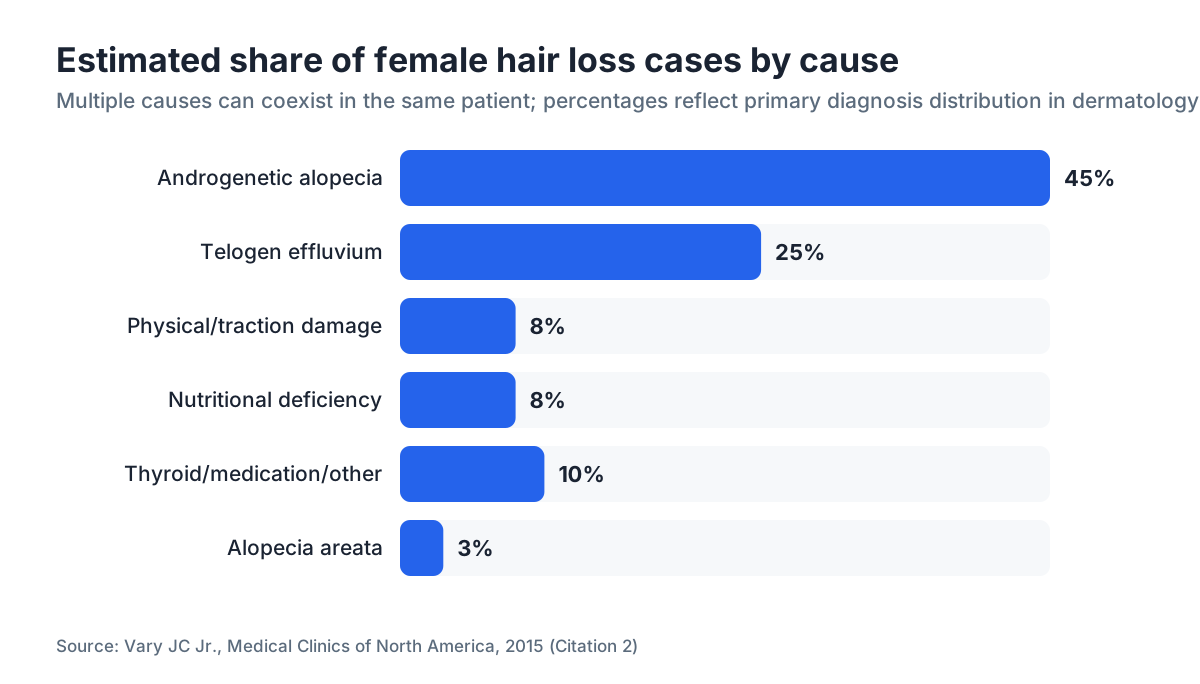
Here's a rough breakdown of how common each cause is, based on dermatology clinic data [2]:
| Cause | Estimated share of female hair loss cases |
|---|---|
| Androgenetic alopecia (female-pattern) | 40-50% |
| Telogen effluvium (stress/hormonal trigger) | 20-30% |
| Alopecia areata (autoimmune) | 2-3% |
| Traction/physical damage | 5-10% |
| Nutritional deficiency | 5-10% |
| Other (thyroid, medication, scalp disease) | 5-15% |
These numbers overlap because women often have two or more causes at the same time. A 45-year-old in perimenopause might have both androgenetic alopecia and iron-deficiency telogen effluvium, and treating only one gets you halfway.
How do hormones cause hair loss in women?
Hormones are the single biggest driver of ladies hair loss at every life stage. The hair follicle is exquisitely sensitive to estrogen, progesterone, androgens, thyroid hormone, and cortisol. When any of these shift, the follicle responds.
Estrogen and progesterone keep hair in the growing phase (anagen). When they drop, during the postpartum period, perimenopause, or after stopping hormonal birth control, follicles shift early into the resting and shedding phase (telogen). Postpartum shedding usually peaks around 3-4 months after delivery and resolves on its own by 12 months in most women [3]. It can look alarming. It is almost always reversible.
Androgens, particularly DHT (dihydrotestosterone), are the hormones behind female-pattern hair loss. Women have lower androgen levels than men, but their follicles can still be sensitive to DHT. Conditions that raise androgens, like polycystic ovary syndrome (PCOS), adrenal hyperplasia, or androgen-secreting tumors, can trigger or speed up thinning [4].
Thyroid dysfunction gets missed a lot. Both hypothyroidism and hyperthyroidism cause diffuse shedding, and the hair loss can show up months before other symptoms. If your hair is falling out with no obvious reason, thyroid labs (TSH, free T4) are among the first things to check. Most doctors include these in a standard hair loss panel [5].
Menopause is its own chapter. Falling estrogen after menopause unmasks a genetic sensitivity to androgens that may have been quiet for decades. The Ludwig scale (the female equivalent of the Norwood scale) was built to classify this pattern, which shows up as central scalp widening rather than a receding hairline. You can read more about how what causes hair loss differs by sex and pattern.
What is telogen effluvium and why is it so common in women?
Telogen effluvium is the medical name for the shedding spike that follows a physical or emotional shock to the body. The hair cycle has three main phases: anagen (growing, 2-7 years), catagen (transition, 2-3 weeks), and telogen (resting, 3-4 months). A stressor pushes a large batch of follicles into telogen at once. Three to four months later, they all shed together.
The delay is the part that confuses everyone. You notice heavy shedding in March and assume something is wrong right now. The trigger was actually illness, crash dieting, surgery, or high stress back in November.
Common triggers include:
- Fever above 39°C (102°F) or severe infection, including COVID-19
- Rapid weight loss (more than about 15 pounds over 3-4 months)
- Major surgery or general anesthesia
- Emotional trauma or prolonged psychological stress
- Crash diets or very low calorie intake
- Starting or stopping hormonal contraceptives
- Delivery and the postpartum hormonal drop
- Iron or ferritin deficiency [6]
Acute telogen effluvium usually clears within 6-9 months once the trigger is gone. Chronic telogen effluvium (lasting more than 6 months) is trickier and often has a driver that hasn't been fixed. You can get a deeper look at the hair cycle mechanics in our article on hair loss telogen.
Does female-pattern hair loss (androgenetic alopecia) look different from men's?
Yes. The classic male pattern, a receding hairline and temple recession leading to a bald crown, is rare in women. Female androgenetic alopecia (FPHL) usually shows up as diffuse thinning across the crown and top of the scalp, with the hairline itself mostly intact. The part widens. The scalp becomes visible under direct light. The Ludwig classification grades this as Type I (minimal widening), Type II (significant widening), and Type III (diffuse thinning with a sparse frontal band) [7].
The mechanism is the same as in men: follicles sensitive to DHT miniaturize over years, producing finer and finer hair until the follicle can't make a visible shaft. The difference is that the female pattern tends to be more diffuse and slower, and total baldness is uncommon.
FPHL is genetic. If your mother, maternal grandmother, or father's side shows significant thinning, your risk is meaningfully higher. Genetics are not destiny, though. Follicle sensitivity varies, and treating it early, before follicles permanently close, gives better outcomes.
If you're seeing diffuse thinning and want an objective read of your pattern and density before deciding what to spend money on, MyHairline's free AI scan can analyze photos and flag which Ludwig stage your pattern most closely matches. That baseline is useful to bring to your first dermatology appointment.
Can nutritional deficiencies cause hair loss in women?
Yes, and this is one of the most under-diagnosed causes, because the thresholds doctors call "normal" don't always match the levels a hair follicle needs to work.
Iron is the clearest example. Serum ferritin (stored iron) below 30 ng/mL is tied to increased telogen shedding in several studies, even when hemoglobin is technically normal [6]. Some dermatologists target ferritin above 70 ng/mL for optimal hair growth, though that upper number is debated. Women who menstruate heavily, vegetarians, and distance runners are at particular risk.
Vitamin D receptors sit in the hair follicle. Low vitamin D (below 20 ng/mL per standard lab reference ranges) has been linked to alopecia areata and non-scarring alopecia [8]. The evidence for supplements directly reversing hair loss is modest, but correcting a documented deficiency is a reasonable, low-risk step.
Zinc, biotin, and protein status also matter. Severe biotin deficiency as a cause of hair loss in otherwise healthy adults without a specific metabolic condition is much rarer than supplement marketing implies. A 2017 FDA Safety Communication warned that high biotin supplementation can interfere with thyroid and cardiac lab tests [9], so big biotin doses before bloodwork can hand you a false thyroid result and delay finding your actual cause.
A standard hair loss blood panel should cover: CBC, serum ferritin, TSH and free T4, total and free testosterone, DHEA-S, prolactin, zinc, vitamin D, and a metabolic panel. Ask your doctor for that specific list by name. If you're also weighing supplements, see what the evidence actually supports in our hair loss supplements breakdown.
Does stress really make your hair fall out?
Yes. This is not a myth. The mechanism runs through corticotropin-releasing hormone (CRH) and substance P, both released locally in the scalp during stress, both able to disrupt the hair cycle. Chronic psychological stress has been shown to trigger telogen effluvium and to worsen autoimmune alopecia [10].
Here's the trap. Finding out your hair is falling out creates more stress, which can keep the cycle going. Managing the original stressor matters, and so does staying out of the anxiety spiral about the hair itself.
Acute telogen effluvium from a single event (a death in the family, a divorce, a severe illness) usually self-limits. The shed hair is genuinely replaced. Chronic stress with no resolution is harder: the follicle cycles keep getting disrupted, and total volume stays down even as individual shedding episodes come and go.
No supplement or topical fully compensates for unmanaged chronic stress. That's the honest statement most product ads skip.
What autoimmune conditions cause alopecia hair loss in women?
Alopecia areata is the most common autoimmune hair loss condition. The immune system mistakenly attacks follicles in anagen, producing patchy, usually round or oval areas of complete hair loss on the scalp or elsewhere on the body. The patches come and go. In most cases the follicle survives and regrowth is possible, but the condition is unpredictable [11].
Alopecia totalis (complete scalp hair loss) and alopecia universalis (total body hair loss) are more severe versions of the same autoimmune process. Together, alopecia areata and its variants affect roughly 2% of the population at some point, with women and men affected at similar rates [11].
Lupus (systemic lupus erythematosus) can cause both diffuse shedding and scarring alopecia at the site of discoid lupus plaques on the scalp. Unlike alopecia areata, scarring alopecia destroys the follicle for good in the affected area. Early diagnosis and treatment of the underlying lupus matters here, because what's already scarred won't regrow.
Frontal fibrosing alopecia (FFA) is a scarring alopecia that has become much more common in postmenopausal women over the past two decades. It shows as a slow, symmetrical receding of the frontal hairline with a telltale redness around the follicles. The cause is still debated, but immune dysregulation is part of it. Treatment slows progression. It doesn't reverse scarring that's already there.
Dermatomyositis, lichen planopilaris, and central centrifugal cicatricial alopecia (CCCA, most common in Black women) round out the autoimmune and inflammatory scarring causes. CCCA is underdiagnosed and undertreated. Any unexplained, spreading central scalp loss with tenderness or tingling in a Black woman warrants a biopsy.
Can hairstyles and hair treatments cause permanent hair loss?
Traction alopecia is real and underreported. Styles that pull the hair tight, high ponytails, braids, weaves, extensions, and tight buns, put chronic tension on the follicle at the hairline and temples. Early traction alopecia causes reversible inflammation and loss. Long-standing traction destroys the follicle permanently [12].
The American Academy of Dermatology has warned specifically against traction styles worn constantly, especially from childhood, because the follicle is still maturing and more vulnerable. The frontal hairline and temples usually go first, which is why the pattern can look like a receding hairline in women who wear tight styles.
Chemical relaxers, bleach, and heat damage break down the hair shaft itself rather than the follicle, so the damage is usually to the hair you can see rather than to future growth. But stacking tight styles on top of chemical treatments creates a compound risk for follicle scarring.
The practical advice is plain: vary your styles, keep tension low at the roots, take extensions out after 6-8 weeks maximum, and let the hairline breathe. Caught early, traction alopecia recovers. After years of repeated tension and scarring, it doesn't.
Which medications cause hair loss in women?
Plenty of drugs list alopecia in their side effect profile, but frequency and severity vary enormously. The ones that matter most clinically:
- Chemotherapy agents (cytotoxic drugs cause anagen effluvium, meaning the growing hair shaft is directly damaged, producing rapid, often complete shedding within weeks)
- Anticoagulants, particularly heparin and warfarin
- Antithyroid medications (carbimazole, propylthiouracil)
- Retinoids (isotretinoin, acitretin), especially at higher doses
- Beta-blockers
- Valproic acid (an anticonvulsant)
- Lithium
- High-dose vitamin A
- Some antidepressants (fluoxetine, sertraline) in a subset of patients
Hormonal contraceptives deserve their own mention. Pills with higher androgenic progestin activity (older formulations, norgestrel-containing pills) can trigger or worsen FPHL in women with genetic susceptibility. Switching to a less androgenic pill or a different method sometimes reverses this. The flip side: stopping the pill after long-term use can trigger a temporary telogen effluvium as the body adjusts.
If you started a new medication in the 2-4 months before the shedding began, bring that up plainly with your prescriber. Never stop a medication to chase hair loss without medical guidance.
What treatments for ladies hair loss actually have evidence behind them?
Here's where most articles get vague. The honest answer is that the evidence base for women is thinner than for men, largely because trials have historically enrolled more men. But there are real options.
Minoxidil is the only FDA-approved topical treatment for female-pattern hair loss [13]. The approved formulation for women was 2% topical solution, though 5% foam is now widely used off-label for women with good clinical results in practice. A Cochrane review found that 5% minoxidil produces modestly better hair count outcomes than 2% in women, with acceptable tolerability [14]. Oral low-dose minoxidil (0.25-1 mg/day) is an off-label option gaining ground in dermatology for women who prefer a pill to a topical. See our breakdown of oral minoxidil for what the current data shows.
Finasteride, the standard treatment for male-pattern loss, is generally not recommended for women who could become pregnant because of the risk of fetal harm (specifically feminization of a male fetus) [13]. Postmenopausal women can use it off-label, and some dermatologists prescribe it in that setting. Spironolactone (an antiandrogen) is a more common off-label choice in premenopausal women with androgenetic alopecia or PCOS-related loss, at doses of 50-200 mg/day. It works by blocking androgen receptors at the follicle.
For alopecia areata specifically, the FDA approved baricitinib (a JAK inhibitor) in 2022 for severe alopecia areata in adults, and it has shown significant regrowth in clinical trials. In the BRAVE-AA2 trial, 35% of patients on 4 mg baricitinib reached a SALT score of 20 or less (meaning 80% or more scalp hair coverage) at week 52, compared to 5% on placebo [15].
Hair transplant surgery works for stable androgenetic alopecia with enough donor density. For women, candidacy is more complicated than for men, because diffuse thinning affects the donor zone too in some cases. If you want to understand what that process involves and costs, the hair transplant and hair transplant expenses articles are worth reading before any consultation.
Not sure where your loss falls on the spectrum? A good first step before spending anything is an objective read of your pattern. MyHairline's free AI scan can help you document what's happening and track change over time, which is also useful data to bring to a dermatologist.
When should a woman see a doctor about hair loss?
Sooner than most women go. The average woman waits 3-5 years after noticing significant shedding before seeking medical advice. That delay matters, because some causes (scarring alopecias, prolonged iron deficiency) do cumulative damage that gets harder to reverse the longer it runs.
See a dermatologist promptly if:
- You notice patches of complete hair loss (smooth, clearly defined bald spots)
- Your scalp is itchy, tender, burning, or shows visible redness or scaling
- Your part is visibly wider than it was one year ago
- You're shedding more than roughly 100-150 hairs per day for more than 3 months
- Hair loss comes with irregular periods, acne, or unexpected weight changes (possible PCOS or hormonal disorder)
- Hair loss comes with fatigue, cold intolerance, or constipation (possible thyroid)
- You have a family history of autoimmune disease
A GP can order initial bloodwork. A board-certified dermatologist (especially one with a hair specialty, sometimes called a trichologist in other countries) can do a dermoscopy exam, read the pattern properly, and biopsy the scalp if a scarring process is suspected. Catching scarring alopecia before significant follicle destruction is the difference between slowing progression and being unable to halt it.
Are there differences in hair loss causes by age and life stage?
Yes. The dominant causes shift a lot across a woman's life.
In the teens and twenties, the usual culprits are nutritional deficiency (iron, vitamin D from restricted eating or heavy periods), hormonal contraceptive changes, PCOS, alopecia areata, and traction damage. Crash dieting for sport or appearance is an underappreciated cause in this age group.
In the thirties and forties, postpartum telogen effluvium, stress-driven shedding, early perimenopause, and early female-pattern thinning move up the list. This is also when FPHL often becomes noticeable for the first time in genetically susceptible women, even though the process started earlier.
After menopause, the estrogen drop unmasks androgenetic alopecia, and FPHL becomes the dominant diagnosis. Frontal fibrosing alopecia is more common in this group too. Thyroid disease climbs with age and stays a common reversible contributor.
At every stage, the approach is the same: bloodwork to rule out correctable causes, pattern assessment, and a treatment conversation built on what you actually have rather than what's being advertised to you.
Sources
- American Academy of Dermatology (AAD) - Hair Loss
- Vary JC Jr. (2015). Selected Disorders of Skin Appendages. Medical Clinics of North America
- American College of Obstetricians and Gynecologists (ACOG) - Postpartum Care
- NIH National Institute of Child Health and Human Development - PCOS
- American Thyroid Association - Hypothyroidism
- Trost LB, Bergfeld WF, Calogeras E. (2006). The diagnosis and treatment of iron deficiency and its potential relationship to hair loss. Journal of the American Academy of Dermatology
- Ludwig E. (1977). Classification of the types of androgenetic alopecia (common baldness) occurring in the female sex. British Journal of Dermatology
- Rasheed H et al. (2013). Serum ferritin and vitamin D in female hair loss. Skin Pharmacology and Physiology
- FDA - Safety Communication on biotin interference with lab tests
- Peters EMJ et al. (2006). Stress and the hair follicle. American Journal of Pathology
- National Institute of Arthritis and Musculoskeletal and Skin Diseases (NIAMS) - Alopecia Areata
- Khumalo NP et al. (2007). Traction alopecia. Journal of the American Academy of Dermatology
- FDA - Rogaine (minoxidil 2%) label for women
- van Zuuren EJ et al. (2016). Interventions for female pattern hair loss. Cochrane Database of Systematic Reviews
- King B et al. (2022). Two Phase 3 Trials of Baricitinib for Alopecia Areata (BRAVE-AA). New England Journal of Medicine