

TL;DR: Women get receding hairlines. The common causes are female-pattern hair loss (androgenetic alopecia), traction from tight styles, and hormonal shifts after pregnancy or menopause. Minoxidil 2% or 5% is the only FDA-approved topical for women. Catching it early changes the outcome. A dermatologist can confirm the cause with a quick scalp exam.
Can females get receding hairlines?
Yes. Women get receding hairlines, and it happens more than most people think. About 40% of women show noticeable hair loss by age 50, according to the American Academy of Dermatology [1]. The hairline is often the first place you notice it.
The pattern usually differs from men. Men lose hair at the temples and crown in a predictable arc. Women more often see diffuse thinning across the top or a slow retreat of the frontal hairline, sometimes with a widening part that shows up first. Some women, especially after menopause, do get a clearly receding temple line that looks a lot like early male-pattern loss.
This is a medical condition. It isn't a hygiene problem or a personal failure. It has identifiable causes, and for most women, at least one treatment slows or partly reverses it.
What does a receding hairline actually look like in women?
A receding hairline in women shows up in a few distinct patterns, and which one you have decides the cause and the treatment. Getting the pattern right early saves you from chasing the wrong fix.
Frontal fibrosing alopecia (FFA) is a slow, symmetric recession that moves back millimeter by millimeter, often with thinning eyebrows and eyelashes. Dermatologists now see FFA as one of the fastest-growing diagnoses in women's hair loss [2].
Female androgenetic alopecia (FAGA) thins the top and crown while the frontal hairline holds longer. But in some women, especially after menopause, the temples pull back noticeably. This is sometimes called the Ludwig or Sinclair pattern.
Traction alopecia starts at the temples and frontal edge. It looks like scattered short broken hairs or smooth bare patches right along the hairline. The giveaway: the scalp skin looks normal and slightly shiny, not scarred.
Scarring alopecias like FFA leave the scalp pale and shiny where hair used to grow, and that hair does not come back. Non-scarring forms (androgenetic, traction, telogen effluvium) can improve with treatment.
Why is my hairline receding? The 6 main causes in women
The cause is the whole game. Treating traction alopecia with finasteride does nothing; fixing your hairstyle does everything. Here are the six causes worth knowing.
1. Female androgenetic alopecia (FAGA) Genetics and androgens (male hormones that all women make in small amounts) shrink the follicle over time. The follicles miniaturize, put out thinner and shorter strands, and eventually stop producing visible hair. This is what causes hair loss for the largest share of women who see persistent shedding [3].
2. Frontal fibrosing alopecia (FFA) An autoimmune inflammatory process attacks the follicle right at the hairline. Nobody has pinned down the trigger, though sunscreen ingredients and hormones are being studied. A 2016 paper in the Journal of the American Academy of Dermatology reported a possible link with certain sunscreen chemicals, though causation isn't confirmed [2]. FFA is a scarring alopecia, so the damage is permanent if it isn't treated.
3. Traction alopecia Tight ponytails, braids, weaves, extensions, and relaxers all put steady mechanical stress on the follicles at your hairline. Worn long enough, the damage turns into permanent scarring. The good news: caught early, traction alopecia reverses completely once you change your styling habits.
4. Hormonal shifts Postpartum shedding (telogen effluvium) rarely causes true hairline recession, but the hormone drop at menopause can trigger both FAGA and FFA. Lower estrogen means less protection against androgens, which gives DHT more pull on the follicles.
5. Thyroid and other medical conditions Hypothyroidism, polycystic ovarian syndrome (PCOS), iron deficiency anemia, and lupus all affect hair. If your hairline is receding and you have other symptoms, ask for a blood panel before you assume it's pattern hair loss.
6. Medications Some drugs list hair loss as a side effect, including retinoids, anticoagulants, certain antidepressants, and lithium. If a hairline change followed a new prescription, tell the doctor who prescribed it.
How do I know if my hairline is receding or just a high natural hairline?
This is one of the most common questions women ask, and honestly it's hard to answer without comparison photos. The clearest sign is change over time.
If your hairline sits where it did five years ago, you probably have a naturally high or uneven hairline. If photos show it has moved back, or you're seeing wispy baby hairs where a dense hairline used to be, that's recession.
Other reliable signals: a wider part, temples that look hollow or see-through compared to before, or more hair than usual on your pillow, in the shower drain, or in your brush. Dermatologists treat shedding above 100 hairs per day (counted on purpose over a few days) as a rough threshold worth checking [1].
A trichoscopy exam, where a dermatologist magnifies the scalp with a handheld dermatoscope, can show miniaturized follicles before recession is visible to the naked eye. That's the best tool for catching it early.
Want a faster starting point? Tools like MyHairline's free AI scan compare your photos over time and flag patterns worth bringing to a dermatologist.
What treatments actually work for a receding hairline in women?
Here's the honest picture. A few treatments have real evidence. Others are popular and thin on data.
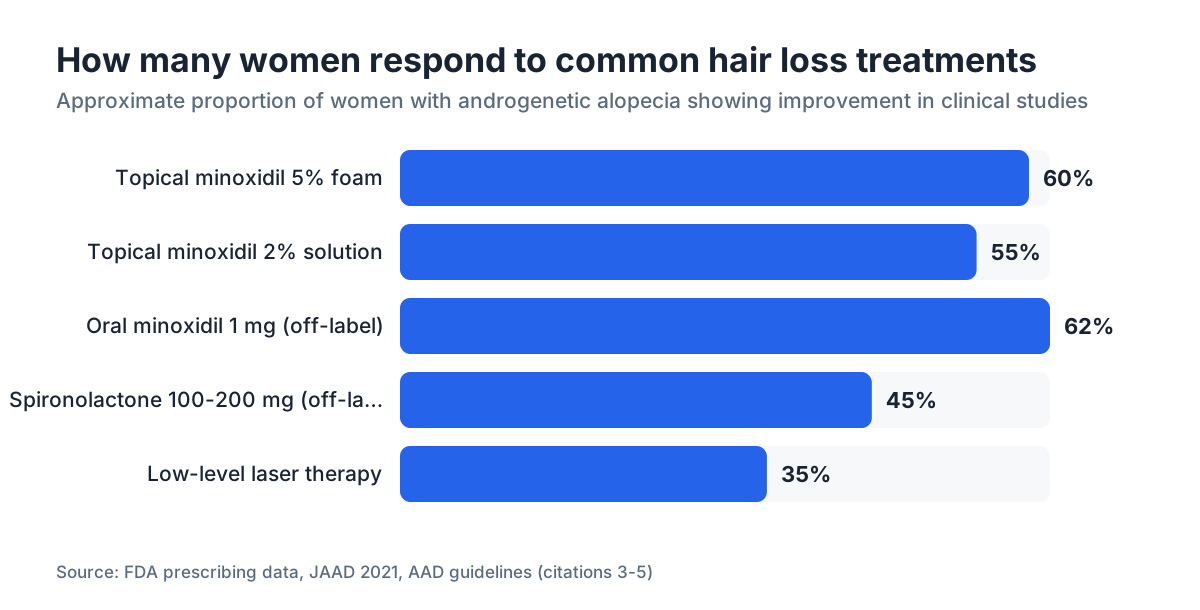
Minoxidil (topical) This is the only FDA-approved topical for female hair loss. The FDA cleared 2% minoxidil solution for women in 1991 and the 5% foam in 2014 [4]. Most studies show it slows further loss and produces modest regrowth in roughly 60% of women who use it consistently. It takes 4 to 6 months to show, and you have to keep using it or the benefit fades. The 5% foam once daily works about as well as the 2% solution twice daily, with fewer reports of scalp irritation. Read the full picture on minoxidil side effects before you start.
Oral minoxidil Low-dose oral minoxidil (0.25 mg to 2.5 mg daily for women) is an off-label option with growing evidence. A 2021 study in the Journal of the American Academy of Dermatology found 1 mg daily was effective and generally well-tolerated in women [5]. Fluid retention and facial hair growth are the main concerns at higher doses.
Finasteride and dutasteride Both are DHT blockers. Finasteride is FDA-approved for men and used off-label in postmenopausal women. It is absolutely contraindicated in women who could become pregnant because of the risk of male fetal genital abnormalities [6]. Evidence in postmenopausal women is mixed: some trials show benefit, others don't. There's more on how the drugs compare at finasteride. Combining drugs is also an option; see finasteride and minoxidil for how that works.
Spironolactone An anti-androgen used off-label for FAGA in premenopausal women. Doses run 50 mg to 200 mg daily. It needs monitoring for blood pressure and potassium. Some dermatologists call it the first-line oral treatment for FAGA in women who can't safely use finasteride.
Low-level laser therapy (LLLT) These devices are FDA-cleared, which means cleared for safety, not proven for efficacy. Evidence is modest. A randomized trial in the American Journal of Clinical Dermatology found statistically significant hair count increases versus sham devices [7]. Worth trying if you want a drug-free add-on. Not worth skipping proven treatments for.
Hair transplant For women with stable, non-scarring loss and enough donor density, a hair transplant can restore hairline density permanently. It doesn't work for active scarring alopecias or for diffuse thinning without a stable donor area. Costs run $4,000 to $15,000 depending on graft count and clinic location [8].
What doesn't work Shampoos sold as "hair-thickening" and most hair loss supplements don't have rigorous trial evidence for true hairline recession. Biotin helps only if you have a documented biotin deficiency, which is rare [1].
What hairstyles work for a receding hairline in women?
Hairstyles won't stop recession, but the right ones buy visual coverage and, more to the point, keep you from making traction alopecia worse.
Styles that help
A soft, side-swept fringe is one of the best options for a receding front. It covers the hairline directly and skips the tight pulling a blunt fringe needs. Keep it loose and textured, not plastered flat.
A middle or deep side part makes thinning temples less obvious. Switch your part now and then if you always wear it the same way, since a permanent part line creates its own traction stress.
Layered cuts with volume at the roots distract from a high or receding hairline by faking density. Ask your stylist for root-lift cuts, not lengths that weigh the hair down flat.
Bobs and lobs sit well for thinning hairlines because the bulk of the length pulls the eye away from the temples and crown.
Styles to avoid or modify
Sleek high ponytails, ballerina buns, and tight braids are the direct mechanical cause of traction alopecia. If you already see recession at the temples, these speed it up. Loose low buns and low ponytails without grippy elastics are much safer.
Extensions and weaves add real weight and tension. If you use them, rest your hairline between applications and insist on a method that doesn't anchor at the frontal edge.
Chemical relaxers weaken the hair shaft and make it break more easily at the hairline. Spacing out applications and using bond-strengthening treatments in between lowers the risk but doesn't erase it.
Styling that looks good while protecting the hairline is a real skill. A stylist who works with hair loss, or a trichologist who partners with stylists, can give you options built for your pattern instead of generic advice.
How is a receding hairline in women diagnosed correctly?
Get the diagnosis right before you spend money on treatment. Treating FAGA when you actually have FFA means missing the window to stop scarring, and that window doesn't reopen.
A dermatologist, ideally one with trichology training, is the right first stop. The visit usually includes a visual scalp exam, trichoscopy (magnified scalp imaging), and a pull test. They'll ask about family history, medications, stress, and diet.
Blood work usually covers TSH (thyroid), ferritin (iron stores), a complete blood count, and total and free testosterone or DHEA-S if PCOS or an adrenal issue is on the table. Some dermatologists also check zinc and vitamin D, though the evidence for those as primary causes is thin.
A scalp biopsy is sometimes needed to tell FFA apart from other scarring conditions. It's a minor in-office procedure and gives the clearest answer when the picture is murky.
Can't get a dermatology appointment soon? Your primary care doctor can order the blood panel and refer you, which cuts the timeline down a lot.
Does a receding hairline grow back in women?
It depends almost entirely on the cause and how early you catch it.
Non-scarring causes (FAGA, traction alopecia, telogen effluvium, most medication-related loss) can improve with treatment. Minoxidil produces visible regrowth in roughly 60% of women with FAGA, though the hair that returns is often finer than the original [4]. Traction alopecia caught before scarring sets in can fully reverse once you remove the tension.
Scarring alopecias like FFA are a different story. Once fibrosis destroys a follicle, it can't grow hair again. With FFA the goal is to stop the progression, not undo what's gone. Hydroxychloroquine, topical tacrolimus, and oral retinoids are used off-label to stabilize FFA, with modest but real evidence [2].
Here's the takeaway: time matters. The women with the best outcomes are the ones who didn't wait two years to see a doctor.
What's the connection between hormones and a receding hairline in women?
Hormones sit behind most causes of female hairline recession, which is why the changes tend to cluster around pregnancy, postpartum, and menopause.
Estrogen protects hair follicles. It stretches out the growth (anagen) phase and partly offsets DHT's effect on the follicle. When estrogen drops after childbirth or at menopause, DHT gains ground, and follicles in genetically susceptible women start to shrink.
DHT (dihydrotestosterone) is the androgen tied most closely to androgenetic alopecia. It's made from testosterone by the enzyme 5-alpha reductase. Women make far less testosterone than men, but even small amounts can act on sensitive follicles. DHT blockers like finasteride and dutasteride work by cutting DHT levels or blocking its receptor.
PCOS raises androgen levels and is one of the more common hormonal causes of hairline recession in women under 40. If your hairline is receding and you also have irregular periods, acne, or weight gain around the middle, a PCOS workup is worth doing.
Hormone replacement therapy (HRT) at menopause can slow or partly reverse FAGA in some women, though the evidence is mixed and the decision reaches well beyond hair. That's a conversation for your gynecologist, not your hairstylist.
How fast does a hairline recede, and when should I worry?
The pace varies widely by cause. Androgenetic alopecia is slow, taking years to decades to show real change. FFA can move fast once it starts, pulling back a centimeter or more per year without treatment.
See a dermatologist within a few weeks, not months, if any of these show up: recession that seems to move quickly, itching or burning at the hairline edge (a sign of active inflammation), loss of eyebrows or eyelashes alongside the recession (classic FFA), or recession that started after a new medication.
The Sinclair scale is the grading system most dermatologists use for female-pattern hair loss, rating severity from 1 (normal) to 5 (severe frontal and crown thinning) [9]. Unlike the Norwood scale used for men and covered in our receding hairline guide, it focuses on part width and crown density rather than temple recession.
Photos every three months in the same lighting help you and your doctor track change. Trichoscopy images from the clinic are even better.
Can lifestyle changes slow a receding hairline in women?
Lifestyle changes alone won't reverse genetic or autoimmune hair loss, but a few things genuinely move the needle.
Iron deficiency is one of the most common and correctable contributors to shedding in women. Ferritin below 30 ng/mL is linked to hair loss in multiple studies, even when hemoglobin is normal [10]. Fixing iron deficiency with diet or supplements can cut shedding in a meaningful way.
Protein intake matters too. Hair is almost all keratin, which is protein. Women eating under 50 grams of protein a day can see more shedding. That's a low bar, but crash diets and very restrictive eating patterns fall short of it all the time.
Chronic stress raises cortisol, which can push follicles into the shedding phase and is a known trigger for telogen effluvium. Whether stress directly drives hairline recession (as opposed to diffuse shedding) is less clear, but managing it helps your hair either way.
Sleep, sun protection at the scalp (relevant to FFA in particular), and dropping tight hairstyles are the lifestyle moves with the most support. Supplements like biotin, collagen, or hair loss supplements may help if you have a specific deficiency, but they won't stand in for medical treatment during active loss.
What should I expect at my first appointment for hairline recession?
Walk in with realistic expectations and the visit works harder for you.
Bring photos. A side-by-side of your hairline from two or three years ago next to now is real diagnostic information. Most dermatologists will also want a list of every medication and supplement you take, plus any recent illness or major stress.
The exam runs about 20 to 30 minutes. The doctor looks at your scalp under magnification, does a gentle pull test, and usually orders blood work. Expect to leave without a firm diagnosis on the first visit if labs are still pending.
If it's FAGA, the doctor will probably lead with minoxidil, since it has the strongest safety and evidence profile. If you're postmenopausal and want to talk about finasteride or spironolactone, say so directly. Some dermatologists are cautious with off-label prescribing and won't raise it unless you do.
If they suspect FFA, they may prescribe a topical corticosteroid or tacrolimus right away to slow the inflammation while further tests run.
Many women use a tool like MyHairline's free AI scan before the appointment to record their current hairline and track change between visits. It won't replace the exam, but it gives you something concrete to show the doctor.
Sources
- American Academy of Dermatology, Hair Loss in Women overview
- Aldoori N et al., Journal of the American Academy of Dermatology, 2016 (FFA and sunscreen association study)
- Vary JC, Medical Clinics of North America, 2015 (review of androgenetic alopecia)
- FDA, Drug approval history for Rogaine (minoxidil) for women
- Bergfeld WF et al., Journal of the American Academy of Dermatology, 2021 (oral minoxidil RCT in women)
- FDA, Finasteride (Propecia) prescribing information and label
- Leavitt M et al., American Journal of Clinical Dermatology, 2009 (LLLT RCT for hair growth)
- International Society of Hair Restoration Surgery, Practice Census 2022
- Sinclair R et al., British Journal of Dermatology, 2004 (Sinclair scale for female androgenetic alopecia)
- Kantor J et al., Journal of Investigative Dermatology, 2003 (ferritin and hair loss in women)
- Tosti A, Piraccini BM, Dermatologic Clinics, 2006 (traction alopecia review)