
TL;DR: Litfulo (ritlecitinib 50 mg daily) is an FDA-approved oral JAK inhibitor for severe alopecia areata in adults and teens 12 and up. In the Phase 3 ALLEGRO trial, 23% of patients on the 50 mg dose reached at least 80% scalp coverage at 24 weeks, versus 2% on placebo. It does not cure alopecia areata. Hair loss usually returns if you stop.
What is Litfulo and how does it work for alopecia areata?
Litfulo is the brand name for ritlecitinib, a once-daily oral capsule the FDA approved in June 2023 for severe alopecia areata in people 12 and older [1]. Pfizer makes it. It belongs to a drug class called JAK inhibitors, and it targets JAK3 plus the TEC family of kinases.
Alopecia areata is an autoimmune disease. The immune system mistakenly attacks hair follicles, which sets off inflammation that shuts down hair production. Nobody knows the exact trigger. What's clear is that signaling proteins called Janus kinases (JAKs) carry the attack signal, and ritlecitinib blocks those signals so follicles get a chance to come back online [2].
What sets Litfulo apart from older JAK inhibitors like tofacitinib is selectivity. Ritlecitinib was built to hit JAK3 and TEC-family enzymes more narrowly, on the theory that a tighter target might mean fewer side effects [8]. Whether that theory holds up in real practice is still being tested in longer follow-up.
One thing to be clear about: alopecia areata is a different mechanism from the androgenetic (DHT-driven) thinning most people picture. If you want the background, see what causes hair loss. Litfulo does nothing for androgenetic alopecia.
What did the FDA approval trial actually show?
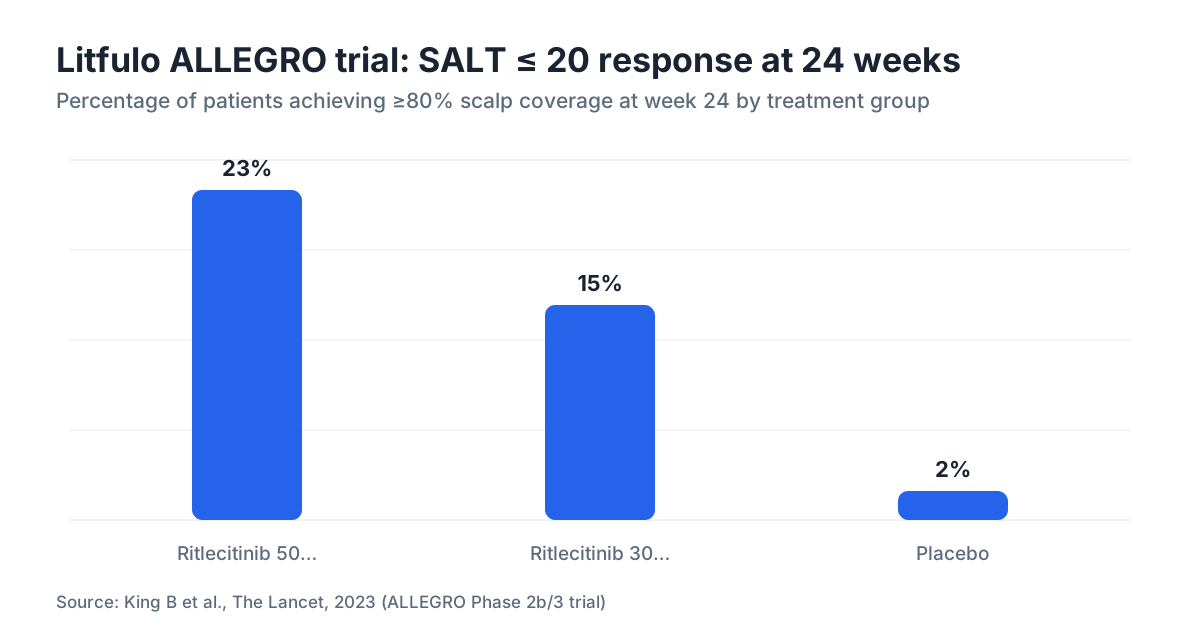
The approval rests on ALLEGRO, a Phase 2b/3 randomized controlled trial that enrolled 718 patients with severe alopecia areata, defined as at least 50% scalp hair loss [3]. Patients got ritlecitinib 50 mg, 30 mg, or placebo for 24 weeks.
The primary endpoint was the share of patients hitting a SALT score of 20 or below, which means 80% or more scalp coverage, at week 24. Here's what the numbers showed [3]:
| Group | Patients reaching SALT ≤ 20 at week 24 |
|---|---|
| Ritlecitinib 50 mg | 23% |
| Ritlecitinib 30 mg | 15% |
| Placebo | 2% |
That 23% versus 2% gap sounds decisive. Read it carefully. It means roughly 3 out of 4 patients on the approved dose still didn't hit that threshold at six months. A good number of patients who missed the primary endpoint still had visible improvement, just not enough to cross the SALT ≤ 20 line.
Eyebrows and eyelashes were measured too. At week 24, 22% of patients on 50 mg had full or near-full eyebrow regrowth versus 4% on placebo, and 20% had full or near-full eyelash regrowth versus 8% on placebo [1]. Those numbers matter because many people with severe alopecia areata lose brows and lashes as well.
The study also ran an extension past 24 weeks. Responders who kept treating generally held or improved their results. This is the part worth remembering: JAK inhibitors for alopecia areata seem to work better the longer you stay on them, and the disease commonly comes back when you stop [3].
How does Litfulo compare to Olumiant (baricitinib) for alopecia areata?
Baricitinib (Olumiant) was the first oral JAK inhibitor the FDA approved for alopecia areata, in June 2022, for adults only [4]. Ritlecitinib (Litfulo) followed in June 2023 and added approval for adolescents 12 and up, which is a real difference if you're treating a teenager.
Comparing the two head-to-head is tricky. There's no published head-to-head trial. You're stuck comparing across separate studies with different enrollment rules and different endpoints, and that's inherently imperfect.
In the BRAVE-AA trials for baricitinib 4 mg, roughly 35 to 40% of patients reached SALT ≤ 20 at 36 weeks, in a population that also started with at least 50% hair loss [4]. In ALLEGRO, ritlecitinib 50 mg hit 23% at 24 weeks, with a subset continuing to improve past that mark. The baricitinib numbers look higher. The studies ran different lengths and picked patients differently. Nobody should choose between these drugs on cross-trial arithmetic alone.
The practical differences matter more. Baricitinib carries an FDA Boxed Warning (the strongest warning level) for serious infections, malignancy, major cardiovascular events, and thrombosis [4]. Ritlecitinib carries these warnings too, though the labeling differs a bit because the target kinase profile differs. Both need a real conversation with a dermatologist who knows your full history.
For adolescents, Litfulo is currently the only FDA-approved oral systemic option.
Who is a candidate for Litfulo treatment?
The FDA indication is adults and pediatric patients 12 and older with severe alopecia areata [1]. "Severe" in the trial meant at least 50% scalp hair loss at baseline, measured by SALT.
In practice, dermatologists don't reach for Litfulo for mild or moderate alopecia areata, and they don't use it for other kinds of hair loss like telogen effluvium or androgenetic alopecia. It targets an autoimmune process, nothing else.
Before prescribing, a dermatologist will usually screen for:
- Active or chronic infections, including tuberculosis
- Viral hepatitis (B and C)
- History of lymphoma or other cancers
- Cardiovascular risk factors (JAK inhibitors carry warnings for major cardiac events in certain groups)
- Vaccine status (you cannot get live vaccines while on ritlecitinib)
Pregnancy is a hard contraindication. The FDA label states ritlecitinib can cause fetal harm based on animal studies, and patients who can get pregnant must use effective contraception during treatment and for one week after stopping [1].
People with a history of serious infections or a weakened immune system may not be candidates, or may need closer monitoring.
What are the side effects and safety risks of Litfulo?
The FDA label for ritlecitinib carries a Boxed Warning covering serious infections, mortality, malignancy, major adverse cardiovascular events (MACE), and thrombosis [1]. That's the class-wide warning shared across JAK inhibitors. It came largely from the ORAL Surveillance safety study of tofacitinib in rheumatoid arthritis patients, a group that skewed older and carried more cardiovascular risk than a typical alopecia areata patient [10]. Whether the same risk level applies to younger, healthier alopecia patients is genuinely uncertain.
In ALLEGRO itself, the most common adverse events in the 50 mg group were [3][8]:
- Headache (about 12%)
- Diarrhea (about 8%)
- Acne (about 8%)
- Rash (about 6%)
- Urticaria (hives)
- Folliculitis
- Nasopharyngitis (cold-like symptoms)
Serious adverse events were uncommon but did happen. Lab abnormalities included drops in lymphocytes and hemoglobin plus rises in certain liver enzymes. The label requires monitoring of lipids, liver function, complete blood count, and creatinine at baseline and periodically after [1].
Herpes zoster (shingles) reactivation is a known class risk with JAK inhibitors. The FDA and clinical guidance recommend considering the shingles vaccine (Shingrix) before starting. Shingrix is a non-live vaccine, so its timing is more flexible than a live vaccine's [9].
Honest answer on the long game: the five-year safety picture for ritlecitinib specifically is not yet fully drawn. Data past 48 weeks in the ALLEGRO extension is still coming in.
How long does it take Litfulo to show results?
This is the question patients ask most, and the answer is: be patient. Hair regrowth is slow.
In ALLEGRO, the first meaningful separation from placebo on SALT scores showed up around weeks 16 to 20 [3]. Most responders kept improving through the full 24 weeks, and some kept going in the extension. The working clinical expectation is that you need at least four to six months to judge whether the drug is doing anything for you.
Eyebrow and eyelash regrowth often lags scalp regrowth by several weeks. Some patients see scalp fuzz (vellus hair) before terminal hair shows up, which is an encouraging early sign.
What won't happen: a visible change at four to six weeks. A few patients notice early shifts, but no visible change at eight weeks is not a reason to quit. Stopping too early is one of the most common reasons people decide a JAK inhibitor "didn't work" when more time might have delivered.
If you've seen nothing at 24 weeks with consistent daily use, that's a fair point to reassess with your dermatologist.
How much does Litfulo cost, and is it covered by insurance?
The list price for Litfulo runs roughly $49,000 to $52,000 per year in the US as of 2024, which sits near other JAK inhibitors for skin conditions. Almost nobody pays that list price, because insurance, copay cards, and assistance programs change the real cost a lot.
Pfizer runs patient support and copay assistance for Litfulo. Eligible commercially insured patients can bring out-of-pocket costs down substantially through a copay card, and income-based programs may supply the drug at no cost for uninsured or underinsured patients [5]. Check current eligibility and terms directly, because these programs change year to year.
Insurance coverage is genuinely variable. Some commercial plans cover it with prior authorization that requires documented severe alopecia areata (SALT ≥ 50%) and sometimes proof you tried and failed topical or intralesional corticosteroids first. Medicare and Medicaid coverage varies by plan and state. You will not get this covered without paperwork.
Budget one to four weeks for the prior authorization to clear. Your dermatologist's office usually handles the submission, but following up and keeping records helps.
One comparison for scale: hair loss supplements and drugstore products cost far less, address a completely different mechanism, and do nothing for alopecia areata.
What happens if you stop taking Litfulo?
This is the part of the conversation that doesn't always happen before treatment starts.
Alopecia areata is a chronic autoimmune condition. Litfulo suppresses the immune attack on follicles. It does not retrain your immune system to stop attacking. When you stop the drug, the attack usually resumes and hair loss returns. In ALLEGRO, patients who discontinued in the extension phase generally saw hair loss come back, though the timeline varied [3].
The American Academy of Dermatology treats JAK inhibitors for alopecia areata as long-term, possibly indefinite therapy for patients who respond [6]. That carries weight for cost, monitoring, and the cumulative exposure to the risks above.
This is a hard conversation. Some patients whose quality of life took a heavy hit from severe alopecia areata decide long-term JAK inhibitor therapy is worth the trade. Others decide the risk and cost aren't. There's no universally right answer, and the call belongs with a dermatologist who knows your history.
If you're weighing whether your hair loss is severe enough to justify a systemic immunosuppressant, a free AI hair loss analysis at MyHairline can help you document your current coverage and track change over time. Any actual treatment decision still needs a licensed clinician.
Can Litfulo be used alongside other hair loss treatments?
ALLEGRO studied ritlecitinib as monotherapy, so there's no strong trial data on combinations. In practice, dermatologists sometimes add topical minoxidil to a JAK inhibitor for alopecia areata, on the logic that minoxidil can stimulate follicle activity through a separate pathway. There's no high-quality evidence the combination beats the JAK inhibitor alone, and no known harm either.
Topical corticosteroids or intralesional triamcinolone are sometimes continued during JAK inhibitor treatment, especially for patchy disease, though the systemic immunosuppression from the JAK inhibitor may leave little extra to gain.
What you should not combine without careful medical supervision: other immunosuppressants (methotrexate, cyclosporine) or biologic agents. The additive immunosuppression risk is real.
Litfulo is flat-out the wrong drug for androgenetic alopecia, the pattern baldness caused by dihydrotestosterone that hits most men and many women. For that, the evidence-based options are finasteride, oral minoxidil, or finasteride and minoxidil together. A hair transplant is an option for stable androgenetic alopecia. None of those apply to alopecia areata.
How does Litfulo differ from older alopecia areata treatments?
Before JAK inhibitors, the choices for severe alopecia areata were limited and often disappointing. The main approaches were:
- Intralesional corticosteroids (triamcinolone injected into bald patches): useful for small, stable patches, impractical once 50% or more of the scalp is involved
- Topical immunotherapy with diphenylcyclopropenone (DPCP) or squaric acid dibutyl ester: works by provoking a controlled allergic reaction, offered only at specialized centers, with regrowth rates that vary widely across the literature
- Systemic corticosteroids (prednisone): can trigger regrowth, but hair loss usually returns after stopping, and long-term steroid use carries serious risks
- Methotrexate and cyclosporine: off-label, modest evidence, meaningful toxicity
None of these were FDA-approved specifically for alopecia areata before 2022. Litfulo is the first and currently only FDA-approved treatment for adolescents with severe alopecia areata, and one of just two approved oral systemic options for adults.
The AAD points out that alopecia areata had no FDA-approved treatments in the US until the recent JAK inhibitor approvals [6]. That context shapes how you read the trial data: a 23% response rate is a real step forward against a backdrop of zero approved options, even if most patients still don't get full regrowth.
The disease also has a lot of spontaneous variability. Some patients regrow hair with no treatment at all [11], which muddies open-label reports and testimonials.
Is Litfulo approved for alopecia totalis or universalis?
Technically yes. The FDA label reads "severe alopecia areata," which can include alopecia totalis (complete scalp hair loss) and alopecia universalis (loss of all body hair) [1]. Both are severe forms of the same autoimmune condition [11].
ALLEGRO did include patients with totalis and universalis, and those patients had lower response rates than people with severe-but-not-complete scalp involvement. The public FDA review documents don't break out clean subgroup percentages for these patients [7], so the honest answer is this: the drug is approved and can be tried, but the odds of full or near-full regrowth in complete loss run lower than the headline 23% figure.
Dermatologists who specialize in alopecia tend to have more detailed experience with this group. If you have totalis or universalis, getting an opinion from a center with a dedicated alopecia clinic is worth the effort.
What monitoring is required while taking Litfulo?
The FDA label lays out several lab and clinical checks [1]. Before starting, your clinician should order:
- Complete blood count (CBC)
- Lipid panel
- Liver function tests (LFTs)
- Serum creatinine and estimated GFR
- Tuberculosis screening (TB test or interferon-gamma release assay)
- Hepatitis B and C serologies
- Pregnancy test if applicable
During treatment, CBC, lipids, and liver enzymes get rechecked periodically. The label doesn't pin down exact intervals for every test, which leaves some discretion to the prescriber, but most dermatologists run labs at baseline, at 4 to 8 weeks, then every 3 to 6 months on stable treatment.
You also need to be current on recommended vaccines before starting, because live vaccines are off the table during treatment [9]. Shingrix (non-live, recombinant) can go before or during treatment. The old live zoster vaccine (no longer recommended in the US anyway) cannot.
Report signs of infection fast: fever, chills, unusual fatigue, or skin infections. The immunosuppressive effect of JAK inhibitors means an infection can move faster than it would in an untreated person.
Should I try Litfulo if topical treatments haven't worked?
If you have severe alopecia areata (more than 50% scalp hair loss) that hasn't responded to topical or intralesional treatments, Litfulo is the most evidence-backed next step available for that specific diagnosis. Both the FDA approval data and the AAD's guidance support that position [6].
For milder alopecia areata in small patches, most dermatologists still start with intralesional corticosteroids, because the risk-benefit math looks better at that severity. Systemic JAK inhibition for a small, possibly self-resolving patch is hard to justify given the safety profile.
For androgenetic hair loss (the gradual thinning at the temples and crown that most men and some women see), Litfulo is simply the wrong drug. That thinning runs on DHT, not on the autoimmune mechanism ritlecitinib targets. If you're not sure which type of hair loss you have, resolving that is the first job, ideally with a dermatologist who can examine your scalp and, if needed, do a biopsy. Start with what causes hair loss.
If you want to track your own scalp coverage before and during treatment, myhairline.ai has a free AI scalp scan that documents hair density over time. It's a handy way to show your dermatologist how you're progressing between visits.
Sources
- FDA - Litfulo (ritlecitinib) Prescribing Information (Drugs@FDA)
- National Institute of Arthritis and Musculoskeletal and Skin Diseases (NIAMS) - Alopecia Areata
- King B et al. - ALLEGRO Phase 2b/3 Trial, The Lancet, 2023
- FDA - Olumiant (baricitinib) Prescribing Information (Drugs@FDA)
- Pfizer - Financial and Patient Support Resources
- American Academy of Dermatology - Alopecia Areata Resource Center
- FDA - Drugs@FDA Approval Package Search (ritlecitinib NDA 217173)
- Journal of the American Academy of Dermatology (JAAD)
- CDC - Altered Immunocompetence and Vaccination Guidance
- Ytterberg SR et al. - ORAL Surveillance trial (tofacitinib cardiovascular safety), New England Journal of Medicine, 2022
- National Alopecia Areata Foundation - Types of Alopecia Areata