

TL;DR: Yes, diabetes can cause hair loss. High blood sugar damages the tiny vessels that feed follicles, starving them of oxygen and nutrients. Alopecia areata and telogen effluvium both run higher in people with diabetes. Insulin resistance raises androgens, which hits women with PCOS hardest. Better blood sugar control often slows the shedding, but it rarely reverses everything.
How exactly does diabetes cause hair loss?
Diabetes doesn't kill follicles overnight. It wears them down through several overlapping mechanisms, and knowing which one is driving your loss tells you whether it's reversible.
The most direct pathway is vascular. Chronic high blood glucose damages small blood vessels, a process called diabetic microangiopathy. The capillaries feeding each hair follicle are some of the smallest vessels in the body. When they thicken, narrow, or stop working properly, follicles get less oxygen and fewer nutrients. Hair that should cycle normally through growth (anagen), transition (catagen), and shedding (telogen) instead stalls or sheds early [1].
The second pathway is inflammation. Type 1 and Type 2 diabetes both drive chronic low-grade systemic inflammation. That inflammatory environment can push follicles out of anagen too soon, producing the diffuse shedding known as telogen effluvium. A 2019 review in the Journal of Dermatological Treatment described systemic inflammation as a shared mechanism between metabolic diseases and hair loss disorders [2].
Third, insulin resistance disrupts the hormonal axis directly. Elevated insulin raises androgens, and elevated androgens miniaturize scalp follicles in genetically susceptible people. That's why women with polycystic ovary syndrome (PCOS), which is tied closely to insulin resistance, get androgenic alopecia at disproportionate rates [3].
Fourth pathway, and it applies mainly to Type 1: autoimmunity. Type 1 diabetes is itself an autoimmune disease, and autoimmune conditions travel in packs. People with Type 1 have a measurably higher prevalence of alopecia areata than everyone else, though researchers are still mapping the exact immune pathways they share [4].
What does the research actually say about rates of hair loss in diabetics?
The numbers are real, and they point in one direction.
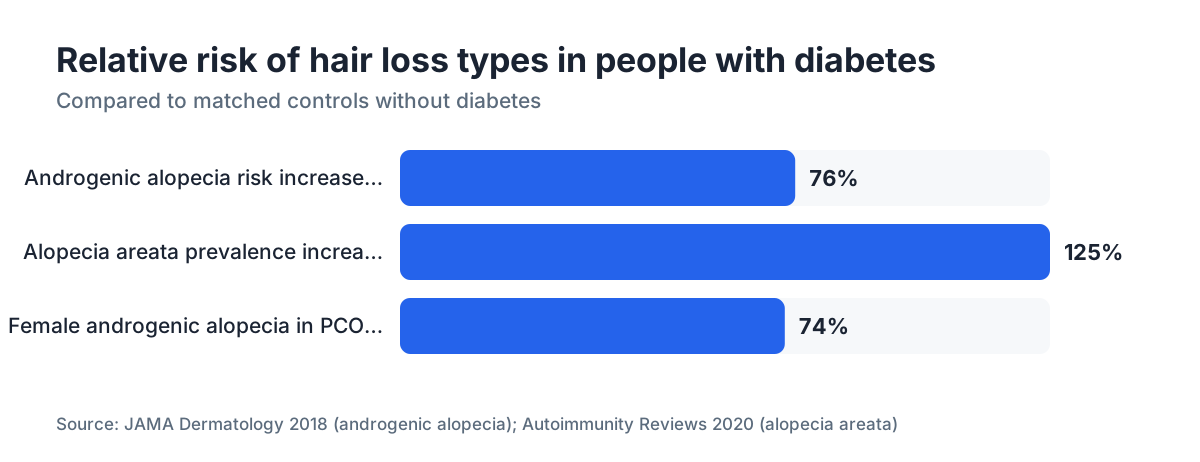
A population study in JAMA Dermatology in 2018 found that people with Type 2 diabetes carried roughly a 76% higher risk of androgenic alopecia compared to matched controls without diabetes [5]. That's not a small signal. The same study found that hyperinsulinemia, more than hyperglycemia, was independently linked to follicle miniaturization. That points at insulin resistance itself as a driver, separate from raw blood sugar numbers.
For alopecia areata, a 2020 meta-analysis pooled data from 12 studies and estimated that people with Type 1 diabetes carry roughly 2.0 to 2.5 times the prevalence of alopecia areata seen in the general population [4]. The authors flagged that most included studies had modest samples, so the confidence interval is wide. The direction of the association held across studies anyway.
Women with PCOS, most of whom have insulin resistance, show androgen-driven thinning at rates between 67% and 82% depending on the diagnostic criteria used, per a 2021 review in Frontiers in Endocrinology [3]. That's a wide range. Both ends of it sit far above the roughly 12% prevalence of androgenic alopecia in the general premenopausal female population.
Here's the honest caveat. Most of this literature is observational. Confounders like obesity, thyroid disease, and medication use are hard to fully separate from diabetes itself. The associations are solid. The causal pathways are plausible but not cleanly isolated.
Which type of hair loss does diabetes cause?
Diabetes doesn't produce one signature pattern. It's linked to at least three distinct types, and telling them apart decides your treatment.
| Hair loss type | Mechanism in diabetes | Pattern | Reversible? |
|---|---|---|---|
| Telogen effluvium | Metabolic stress, poor circulation | Diffuse scalp shedding | Often yes, with glucose control |
| Androgenic alopecia | Insulin-driven androgen excess | Temples and crown | Partial, with treatment |
| Alopecia areata | Autoimmune (Type 1 mainly) | Patchy bald spots | Variable; some regrowth |
Telogen effluvium is the most reversible form. Once blood sugar comes under control and systemic stress drops, follicles can re-enter the growth phase. Most people see noticeable regrowth within three to six months of the trigger resolving, though the timeline varies from person to person [2].
Androgenic alopecia moves slower and reverses less because it involves real structural miniaturization of the follicle. Bringing insulin down helps slow the slide, but follicles that have fully miniaturized rarely recover without medical help like minoxidil for men or finasteride.
Alopecia areata in the setting of Type 1 diabetes is the trickiest. It runs on autoimmune T-cell activity against the follicle, not on glucose. Managing your A1C does nothing to suppress that immune response, which is why alopecia areata gets treated separately, with topical or injected corticosteroids, or in worse cases with JAK inhibitors.
Does the same hair loss happen on the legs and arms, more than the scalp?
Yes, and hair loss on the lower legs is one of the more telling signs of diabetic vascular disease that clinicians actively look for.
Hair loss on the lower legs and feet in particular is a recognized sign of peripheral arterial disease (PAD), which is far more common in people with long-standing diabetes. The logic matches the scalp. Reduced blood flow to the skin of the lower extremities starves those follicles too. The American Diabetes Association lists peripheral vascular changes among the complications to monitor during routine diabetes care [1].
This kind of hair loss won't respond to minoxidil or finasteride. It reflects circulation damage, so the focus has to be cardiovascular risk reduction: better glucose control, blood pressure management, cholesterol treatment, and in severe cases, vascular intervention.
Losing hair mainly on your lower legs and feet, paired with cold extremities, slow wound healing, or skin changes? That warrants a conversation with your doctor about peripheral vascular assessment, more than a dermatology referral.
Can diabetes medications cause hair loss?
Some can, and this gets overlooked because people assume the disease is always the culprit.
Metformin is the most prescribed Type 2 diabetes drug, and there's evidence it interferes with vitamin B12 absorption over time. B12 deficiency is a recognized cause of diffuse hair shedding. A 2019 study in Diabetes & Metabolic Syndrome found that up to 30% of people on long-term metformin had significantly reduced B12 levels [6]. If you're on metformin and thinning, asking your doctor to check your B12 is a cheap, easy first move.
Insulin itself has no clear link to hair loss in the clinical literature. Some people report shedding after starting insulin, but that's probably telogen effluvium triggered by the metabolic shift, not the drug acting on the follicle.
GLP-1 receptor agonists like semaglutide (Ozempic, Wegovy) drew attention in 2023 and 2024 for hair loss reports. The FDA lists hair loss as a reported adverse event on the Wegovy label [7]. The leading explanation is telogen effluvium from rapid weight loss, not a direct effect on follicles. It's real, and it usually settles on its own.
Want to know whether your loss comes from the disease, the medication, or something else? A dermatologist can run a scalp biopsy and bloodwork panel that separates these causes. It's also worth reading through what causes hair loss to rule out contributors you haven't considered.
Can hair dye or colour cause hair loss?
This one comes up constantly. Hair colour rarely causes permanent hair loss, but it can cause heavy temporary shedding and, occasionally, scalp damage that disrupts follicles.
The active chemicals in permanent dye, mainly hydrogen peroxide and p-phenylenediamine (PPD), are harsh on the shaft and can trigger irritant or allergic contact dermatitis on the scalp. Severe scalp inflammation from a PPD allergy can, in rare cases, cause scarring alopecia if it runs deep and goes untreated [8]. The American Academy of Dermatology (AAD) recommends patch-testing any new dye 48 hours before full application, specifically to catch a PPD allergy before your whole scalp gets exposed [8].
Most of the time, what people blame on dye is breakage. Bleach and high-volume developers (30 or 40 volume peroxide) weaken the shaft until it snaps at the scalp, which reads as hair loss. The follicle is fine. New hair grows.
Repeated chemical processing can also create traction-like stress when weakened hair keeps breaking close to the scalp. Again, that's shaft damage, not follicle damage, and it reverses once you stop.
The one scenario where colour might feed true shedding is if it sets off a contact dermatitis flare bad enough to push follicles into telogen early. Uncommon, but real. If your scalp turns red, itchy, or scaly after dyeing and shedding ramps up a few weeks later, that sequence is your explanation.
If you have diabetes, how do you tell whether diabetes is actually causing your hair loss?
Ask this before you spend a dollar on treatment.
Start with bloodwork. A full hair loss panel for someone with diabetes should cover fasting glucose and HbA1c, fasting insulin, complete blood count, ferritin (a more sensitive marker of iron stores than hemoglobin), B12, folate, TSH for thyroid, total and free testosterone, DHEA-S, and SHBG where relevant. Nutritional deficiencies and thyroid disease both cause hair loss that looks identical to diabetes-related shedding, and both run more common in people with diabetes [2].
A dermatologist can add trichoscopy, which is dermoscopy of the scalp, to spot miniaturized follicles (androgenic alopecia), exclamation-mark hairs (alopecia areata), or signs of inflammation. It takes about five minutes and tells you far more than a naked-eye look ever will.
Want a low-friction first read before your dermatology appointment? The free AI hair scan at MyHairline shows you which loss pattern you're presenting with and how it lines up against the standardized Norwood or Ludwig scales.
Once you have a diagnosis, the treatment choice sharpens. Telogen effluvium from poor glycemic control mostly needs better glucose management. Androgenic alopecia with an insulin-resistance driver may respond to metabolic control plus topical minoxidil, or finasteride and minoxidil together.
What treatments actually work for diabetes-related hair loss?
There's no single answer, because the right treatment tracks the mechanism driving your specific loss.
For telogen effluvium from metabolic stress, treat the root cause. Get your HbA1c into a healthier range, correct any nutritional deficiencies (B12 and iron especially), and fix thyroid function if that's off too. Telogen effluvium generally clears within three to six months of the trigger being controlled [2]. Minoxidil can speed regrowth here, though its evidence is stronger for androgenic alopecia.
For androgenic alopecia in men with insulin resistance, the standard toolkit applies: topical minoxidil (5% for men) once or twice daily, and finasteride 1 mg daily if you're male and comfortable with the side-effect profile [9]. The finasteride article covers the evidence and the honest risks. For women with PCOS-driven androgenic alopecia, spironolactone gets used off-label alongside lifestyle changes that reduce insulin resistance.
For alopecia areata, intralesional corticosteroid injections are the most evidence-backed first-line treatment for patchy disease. JAK inhibitors like baricitinib and ritlecitinib carry FDA approval for alopecia areata and show significant regrowth in trials [10]. They don't fix the diabetes or broad immune dysregulation, but they can quiet the localized autoimmune attack on follicles.
Hair transplant is an option for androgenic alopecia once loss has stabilized, but no reputable surgeon will operate during active shedding or poor metabolic control, because healing and graft survival both suffer. The hair transplant overview covers timing and candidacy.
One practical note on hair loss supplements: the evidence for biotin, saw palmetto, and most marketed products is weak in the general population. In someone with diabetes-related loss, fixing actual deficiencies (B12, iron, vitamin D) beats piling supplements on top of an uncontrolled disease.
Does improving blood sugar actually stop hair loss?
For telogen effluvium and vascular-driven loss, yes. There's genuine evidence that better glycemic control slows progression and can allow regrowth.
The mechanism is direct. Lower blood glucose cuts oxidative stress and inflammatory cytokine activity, both of which were damaging follicles. Better insulin sensitivity trims androgen excess. Less small-vessel damage improves follicle perfusion over time.
The honest caveat: these gains take months, and they won't reliably reverse loss that's already set in. A follicle underperfused for years may carry permanent structural changes. The AAD's position is that early intervention, before miniaturization becomes fixed, gives the best shot at meaningful regrowth [8].
For alopecia areata, glucose control isn't a treatment at all. The autoimmune component has its own drivers, and while managing systemic inflammation broadly probably helps, it doesn't reliably push active patchy loss into remission.
So here's the bottom line. If you have diabetes and hair loss, getting your blood sugar under control is the right move for your hair, your circulation, and your health. It's rarely a sufficient standalone treatment, but it's the foundation everything else sits on.
When should you see a doctor instead of trying to manage this yourself?
Some situations need prompt medical attention, not watch-and-wait.
See a dermatologist if you're losing hair in patches (possible alopecia areata, which needs specific treatment), shedding more than roughly 100 to 150 hairs a day for longer than three months, or your scalp shows visible inflammation, scaling, or scarring. That last one matters most, because scarring alopecia destroys follicles permanently if it goes untreated.
See your primary care doctor or endocrinologist if you have hair loss on your lower legs and feet alongside any signs of peripheral vascular disease. That's a cardiovascular signal, more than a cosmetic one.
If you're a woman with hair loss, irregular periods, and other signs of androgen excess (acne, unwanted facial hair), ask to be screened for PCOS and insulin resistance. These get missed for years in women who show up complaining of hair loss first.
Already on treatment and wondering whether to add something? The receding hairline guide and the what causes hair loss overview give useful context for fitting your pattern into the broader diagnostic picture before your appointment.
Sources
- American Diabetes Association, Microvascular Complications and Foot Care Standards
- Journal of Dermatological Treatment, 2019 review on metabolic disease and hair loss
- Frontiers in Endocrinology, 2021 review on PCOS and androgenic alopecia
- Autoimmunity Reviews, 2020 meta-analysis on Type 1 diabetes and alopecia areata
- JAMA Dermatology, 2018 population study on Type 2 diabetes and androgenic alopecia
- Diabetes & Metabolic Syndrome, 2019 study on metformin and B12 deficiency
- FDA, Wegovy (semaglutide) prescribing information and label
- American Academy of Dermatology, Hair Loss Resource Center
- FDA, Propecia (finasteride 1mg) prescribing information
- FDA, Litfulo (ritlecitinib) approval for alopecia areata